Appliances · Buying Guide
Best Small Strainer With Handle Options For Kitchen Tasks
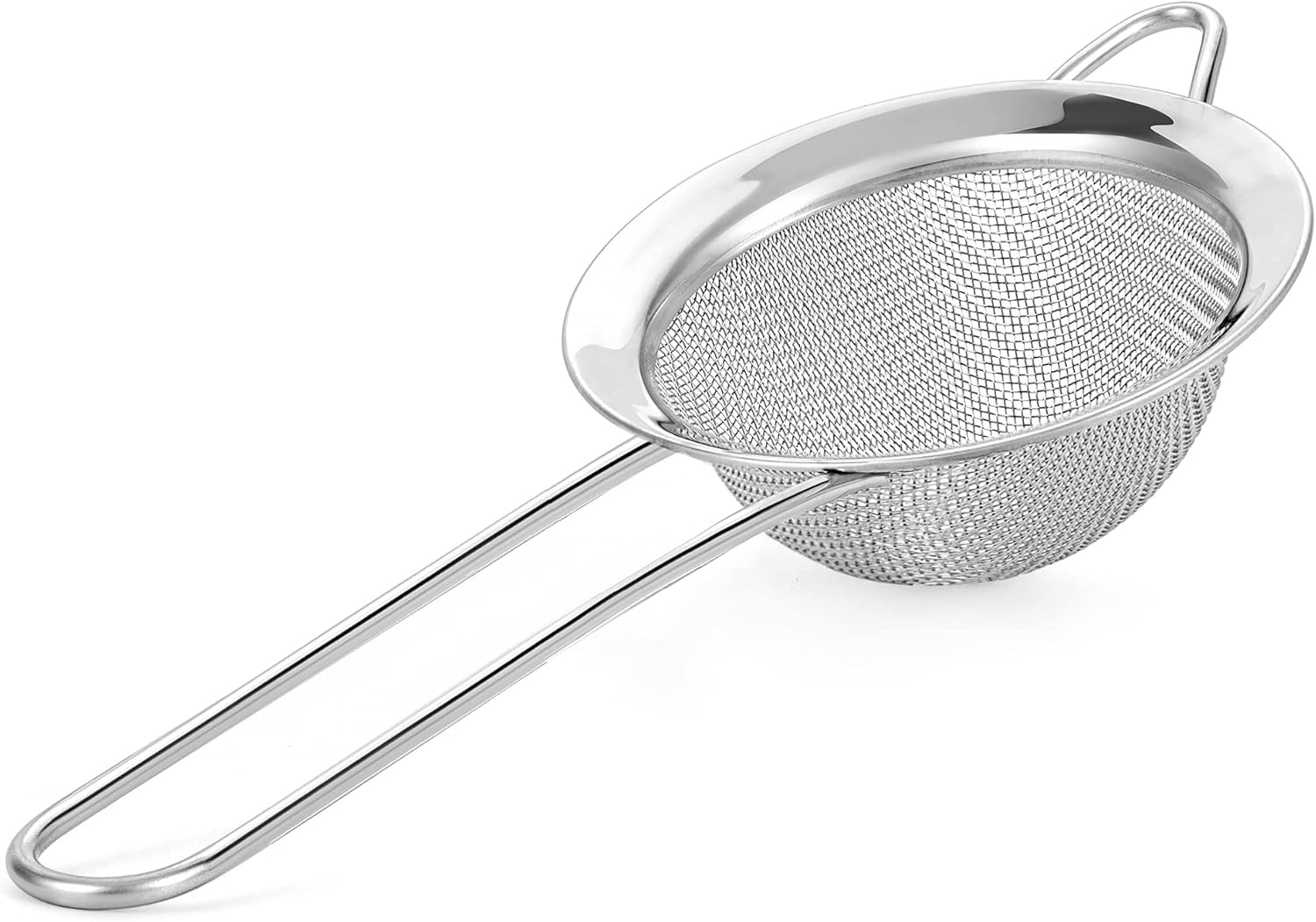
Finding the right small strainer with handle can significantly simplify everyday kitchen tasks like sifting flour, steeping loose leaf tea, or straining single servings of fresh juice. These compact culinary tools combine fine wire mesh with supportive metal frames to catch tiny seeds and unwanted particles efficiently during food preparation.
Different models offer varied handle materials, rim constructions, and basket depths to match specific cooking and baking routines. Reviewing the physical dimensions, mesh openings, and structural designs helps buyers select a durable tool that fits neatly over mugs, bowls, and small pots without unnecessary bulk, awkward balancing acts, or storage difficulties during busy food prep moments.
As an Amazon Associate, StacyLaughs earns from qualifying purchases.
Buying guide
Material Composition and Durability
Choosing a small strainer with handle starts with evaluating the primary metal alloy used in its construction. Food-grade 304 stainless steel and 18/8 stainless steel provide reliable resistance against rust, corrosion, and everyday kitchen stains. These high-grade materials ensure the wire mesh and frame withstand frequent exposure to acidic fruit juices, boiling water, and damp storage environments without degrading.
Selecting durable metals also impacts long-term maintenance. Stainless steel models typically tolerate dishwasher cycles and rigorous hand scrubbing, preventing the structural weakening common in lesser alloys. Buyers should verify that the manufacturer specifies food-safe metals to guarantee safe food preparation across years of regular kitchen use, ensuring the sieve remains a dependable pantry staple.
Mesh Density and Hole Sizing
The density of the wire mesh directly dictates what types of ingredients a strainer can process effectively. Finer mesh options featuring 30 mesh counts or 0.5 to 0.6 millimeter openings excel at capturing tiny tea leaves, coffee grounds, and powdery sugar lumps. These tight apertures ensure smooth liquid flow while preventing fine particles from slipping through into your final beverage or batter.
Conversely, slightly more open mesh designs allow faster liquid drainage when rinsing grains or filtering pulpy juices. Buyers must match the mesh specification to their primary cooking habits. Choosing an overly dense screen for coarse filtering can slow down workflows, while too loose a weave fails to trap fine spices or seeds during food preparation tasks.
Handle Design and Ergonomics
Handle construction plays a pivotal role in comfort and safety during food preparation tasks. Models with ergonomically shaped handles reduce hand fatigue during extended sifting sessions. Some strainers incorporate silicone coatings to provide a softer, slip-resistant grip, while others utilize traditional all-metal frames with reinforced connection points like rivets or double rods to prevent breakage under heavy loads.
Buyers should also consider handle length relative to their cookware and storage spaces. Longer handles offer greater leverage over wide pots, while shorter configurations fit easily inside compact utensil drawers. Examining how the handle connects to the rim ensures the tool can support heavy ingredients like flour without bending or snapping away from the basket mesh.
Basket Dimensions and Shape
Small strainers typically feature basket diameters ranging from 2.8 inches to nearly 4 inches. Narrower baskets fit securely over individual coffee mugs, teacups, and drinking glasses, making them ideal for single-serving beverage preparation. Cone-shaped baskets concentrate liquids toward the center for rapid drainage, whereas flatter, cylindrical profiles provide more surface area for dry sifting.
Selecting the correct dimension prevents spills and awkward positioning on narrow rims. If your daily routine involves sifting flour into small bowls or rinsing minor portions of quinoa, a slightly wider basket prevents overflowing. Matching the physical footprint of the strainer to your existing kitchenware ensures seamless daily operation without stability issues.
Rims, Hooks, and Container Stability
Stability during straining depends heavily on integrated resting loops and rim design. Many small strainers feature a small wire hook or loop opposite the handle, allowing the tool to rest securely across the edges of bowls, pots, and mugs. This hands-free stabilization prevents the basket from tipping into your beverage or food during pouring tasks.
Sealed steel edges around the perimeter also improve durability by preventing loose food particles from lodging in hidden crevices. Checking for reinforced outer rims ensures the strainer maintains its circular geometry even when pressed against container edges, reducing long-term wear and tear during busy kitchen sessions.
Cleaning and Maintenance Practicality
Maintaining hygiene requires a strainer that cleans easily after handling sticky ingredients like jams, teas, and doughs. Smooth, burr-free wire screens prevent food fibers from snagging, allowing quick rinsing under running water. Many stainless steel strainers are dishwasher safe, saving time during post-meal cleanup without risking structural damage to the mesh screen.
Buyers should inspect how the mesh connects to the outer frame. Tightly sealed junctions prevent trapped residue accumulation that can lead to corrosion over time. Selecting a dishwasher-safe model with smooth welded or riveted joints simplifies regular upkeep, ensuring your small strainer remains sanitary and ready for daily use across years of cooking.
Frequently asked questions
Can a small strainer with handle be washed in the dishwasher?
Yes, multiple reviewed models are explicitly designated as dishwasher safe, constructed from corrosion-resistant 304 or 18/8 stainless steel that withstands automated washing cycles. Placing the strainer securely on the top rack helps prevent warping of the delicate wire mesh or handle joints. However, checking manufacturer guidelines is always recommended before washing. Hand washing with warm soapy water and a soft brush also works effectively to clear out tiny particles trapped in the mesh without exposing the tool to harsh dishwasher detergents.
What size bowl or mug fits a mini fine mesh strainer?
Mini strainers with diameters between 2.8 and 3.9 inches are specifically designed to rest securely across standard coffee mugs, teacups, drinking glasses, and small mixing bowls. Many models feature an integrated resting hook opposite the handle to anchor the tool stably in place. When selecting a strainer, comparing your common container rim widths to the specified basket diameter ensures a secure fit, preventing accidental tipping or spills during single-serving beverage and food preparation tasks.
Are riveted handles better than spot-welded handles on kitchen strainers?
Riveted handles generally offer superior durability when processing heavy ingredients like dense flours, sugars, or large batches of wet purees. A reinforced connection using a steel plate and rivets distributes physical stress across a wider area of the frame, reducing the likelihood of the handle breaking off. While spot-welded handles work well for lightweight tasks such as sifting tea or dusting powdered sugar, heavy-duty users benefit significantly from the added structural security provided by riveted designs.
How do I choose between a cone-shaped and flat-bottomed small strainer?
Cone-shaped small strainers concentrate liquids toward a central point, making them exceptionally efficient for rapidly filtering beverages, cocktails, and loose-leaf tea directly into narrow cups. Flat-bottomed or shallower mesh sieves provide more surface area, which is advantageous when sifting dry powdery ingredients like flour or cocoa evenly across mixing bowls. Your choice depends primarily on whether your daily routine leans toward beverage filtering or dry baking sifting tasks.
What is the benefit of a 30 mesh screen in a fine strainer?
A 30 mesh screen typically features aperture openings around 0.6 millimeters, striking an ideal balance for kitchen tasks. This density is fine enough to capture tiny seeds, coarse pulp, and small lumps from juices, broths, and teas without letting unwanted debris pass through. At the same time, the spacing is wide enough to prevent liquids from pooling or requiring excessive shaking, allowing smooth, efficient flow during food preparation and baking routines.