Appliances · Buying Guide
Best Heat Resistant Silicone Spatulas for Every Kitchen Task
Finding the right cooking tools involves looking closely at how materials handle high temperatures and daily food preparation. Silicone spatulas offer a flexible, non-scratch surface that protects coated pots and pans while standing up to high heat applications like baking, stirring, and sautéing. Choosing a set depends largely on whether you need seamless one-piece designs, specialized turners, or wooden-handled spoonulas for deep pots.
Different kitchen routines require specific shapes, from wide spoon-style heads for scooping to thin spreaders and flexible turners. Material cores also vary, ranging from flexible silicone throughout to reinforced nylon or stainless steel support. Reviewing these distinct physical attributes helps match a spatula set directly to your everyday cooking, flipping, and mixing tasks without guessing about performance.
As an Amazon Associate, StacyLaughs earns from qualifying purchases.
Buying guide
Material Composition and Core Support
Silicone spatula sets rely heavily on internal core materials to determine structural stiffness and flexibility during heavy mixing tasks. All-silicone models offer seamless designs that bend easily and clean without trapped debris. Conversely, versions featuring reinforced nylon or stainless steel cores provide enhanced rigidity for flipping dense foods or heavy doughs. Understanding these core differences ensures you select a tool that matches your specific cooking style and physical pressure requirements.
Choosing between flexible all-silicone builds and metal-supported turners also influences how tools handle high-heat pans and baking sheets. While flexible heads protect delicate non-stick coatings from scratches, rigid internal cores prevent excessive bending when lifting heavier items like burgers or large portions of roasted vegetables. Reviewing core construction alongside your typical menu helps narrow down the most practical option for your kitchen setup without unnecessary trial and error.
Temperature Thresholds and Heat Resistance
High heat resistance is a defining attribute for silicone kitchen utensils used in active stovetop cooking, baking, and candy making. Many modern silicone sets boast temperature thresholds reaching up to 600 degrees Fahrenheit, allowing them to rest against hot pan edges or stir boiling mixtures without melting or degrading. Evaluating your typical cooking temperatures helps determine whether a standard 450-degree rating suffices or if a higher heat threshold is necessary.
Exceeding manufacturer temperature limits can compromise the structural integrity of silicone heads or cause discoloration over time. When working with high-heat searing or deep frying, selecting utensils explicitly rated for elevated temperatures provides essential peace of mind. Always verify the maximum heat tolerance listed for each specific product to ensure safe, long-lasting performance during demanding culinary tasks on your stovetop or inside the oven.
Handle Design and Ergonomic Comfort
Handle construction directly affects user comfort during extended cooking sessions, meal prep, and frequent mixing tasks. Ergonomic handles featuring wider grip zones and tapered ends help reduce hand fatigue while offering precise control over the utensil head. Whether made from solid silicone, rubber, or natural beechwood, the handle should feel balanced and secure in your palm during repetitive stirring motions.
Material choices for handles also dictate maintenance requirements and reach capabilities in the kitchen. Extended wooden handles allow cooks to reach deep into tall pots while keeping hands away from steam, though they typically require hand washing. In contrast, silicone or rubber handles integrate seamlessly into dishwasher routines for effortless cleanup. Weighing handle length against your preferred cleaning method ensures your new utensils fit smoothly into daily kitchen habits.
Set Composition and Specialized Shapes
Kitchen utensil bundles vary widely in size and shape count, ranging from compact two-pack turners to comprehensive five-piece collections. A multi-piece set usually includes small spreaders, large spoon-style spatulas, and standard turners to cover everything from icing cakes to scrambling eggs. Assessing your regular cooking habits helps clarify whether a minimal pair of utensils meets your needs or if a diverse assortment of specialized shapes is required.
Purchasing a larger set provides greater versatility for varied recipes, but it also demands additional drawer or hanging storage space. If kitchen real estate is limited, choosing a focused two-piece set avoids clutter while handling core flipping and stirring duties. Matching the number of included pieces to your available storage capacity prevents overcrowding and keeps your frequently used tools within easy reach during busy meal prep.
Non-Stick Cookware Compatibility
Protecting delicate non-stick pots, ceramic skillets, and enamel bakeware requires utensils with smooth, non-abrasive edges. Silicone heads naturally prevent scratching and marking on coated surfaces, making them ideal companions for modern cookware collections. When stirring sauces or scraping bowls, a flexible silicone edge conforms to curved walls without damaging the protective finish of your favorite pans.
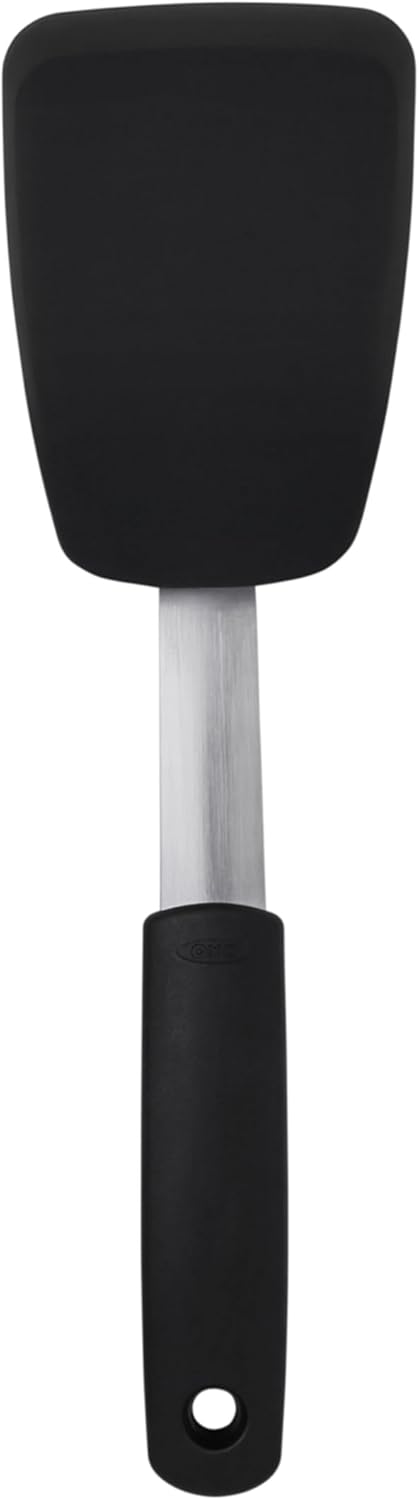
While silicone is inherently gentle, pairing it with the correct structural core ensures you do not sacrifice scraping efficiency for surface safety. Turners with thin, flexible profiles slide easily beneath delicate foods like eggs or fish without gouging the pan. Reviewing how the spatula head flexes against curved cookware surfaces helps maintain your pots and pans in pristine condition over years of regular daily use.
Cleaning and Maintenance Routines
Proper cleaning routines help preserve the lifespan and appearance of silicone kitchen tools, preventing residue buildup over time. Many all-silicone and nylon-core spatulas feature seamless dishwasher-safe construction that eliminates crevices where food particles can hide. This simplifies post-cooking cleanup and ensures hygienic storage between uses without requiring tedious manual scrubbing around tight joints or seams.
Utensils incorporating natural materials like beechwood handles require alternative maintenance steps, such as hand washing and immediate drying, to prevent wood damage. Avoiding prolonged soaking or direct flame exposure protects natural handles from splitting or warping. Aligning your cleaning preferences with the manufacturer guidelines ensures your spatula set remains durable and visually appealing through countless meals.
Frequently asked questions
Can silicone spatulas melt if left resting in a hot pan?
Most high-quality silicone spatulas are engineered to withstand significant heat, often ranging from 450 to 600 degrees Fahrenheit depending on the specific model. This high threshold allows them to rest briefly against hot pan edges or stir boiling mixtures without melting or degrading. However, leaving any utensil directly over an open burner flame or exceeding the stated manufacturer temperature limit can cause permanent damage, discoloration, or structural failure. Checking the exact heat rating of your specific spatula set is always recommended before high-heat cooking.
Are silicone spatulas safe to use on non-stick cookware?
Yes, silicone is exceptionally gentle on non-stick pots, ceramic skillets, enamel cookware, and bakeware surfaces. The soft, flexible rubber heads prevent scratching, marking, or chipping the delicate coatings found on modern cookware. This makes silicone tools ideal for scraping bowl sides, stirring sauces, and flipping delicate foods like eggs or pancakes without compromising the protective finish of your pans. You can cook confidently knowing the soft edges will not harm your coated kitchenware.
What is the difference between seamless one-piece and multi-piece spatula designs?
Seamless one-piece spatulas are molded entirely from silicone around an internal core, eliminating any gaps or crevices between the handle and the head. This design prevents food particles and moisture from getting trapped, making them exceptionally hygienic and easy to clean in a dishwasher. Multi-piece or joined designs may feature separate handles made of wood or rigid plastics attached to silicone heads. While these often offer specialized grips or extended reach, they require careful cleaning around the connection points.
How should I clean spatulas with wooden handles?
Spatulas featuring natural wooden handles, such as beechwood, require manual hand washing rather than dishwasher cycles. Dishwasher heat and prolonged water exposure can cause natural wood handles to dry out, warp, or split over time. To maintain them properly, wash the utensils promptly with mild soap and warm water, dry them thoroughly with a towel immediately afterward, and avoid soaking them in water or exposing them to direct open flames.
How do I choose between a flexible turner and a deep spoonula?
Selecting between a flexible turner and a spoonula depends primarily on your cooking tasks. Flexible turners feature thin, flat profiles designed specifically for sliding beneath burgers, eggs, cookies, and fish during flipping or transferring. In contrast, spoon-style spatulas combine a deep bowl with flexible scraping edges, making them versatile tools for stirring sauces, scooping rice, mixing batter, and serving meals. Assessing your typical recipes will help determine which head shape best serves your daily kitchen needs.