Appliances · Buying Guide
Best Stainless Steel Cooking Utensils: Choosing the Right Set for Daily Meals
Outfitting a busy kitchen with reliable tools completely changes how you prepare everyday family meals. Stainless steel cooking utensils offer a sturdy, long-lasting alternative to plastic or wooden gadgets, handling high stovetop heat without melting, warping, or absorbing food odors over extended periods of daily use. Choosing metal also ensures a food-grade surface free from unwanted chemical additives.
Whether you need a massive collection for comprehensive holiday baking or a streamlined assortment for basic weeknight dinners, metal kitchen tools provide dependable utility. Exploring different piece counts, comfortable handle designs, and included storage holders helps match a specific set to your exact cooking style, storage space, and kitchen layout requirements. Careful selection keeps your workspace organized.
As an Amazon Associate, StacyLaughs earns from qualifying purchases.
Buying guide
Material Composition and Durability
Choosing stainless steel kitchen utensils starts with evaluating the grade of metal used in their construction. High-quality sets utilize food-grade, non-reactive alloys like 304 stainless steel, which resist rust and corrosion over years of exposure to moisture and acidic foods. Unlike plastic or silicone alternatives, metal will not melt when accidentally left resting on a hot pan edge, and it avoids absorbing stubborn food odors or stains.
Thickness also dictates long-term durability. Look for thicker gauge metal, such as 2.5mm options, which prevent bending under heavy loads like dense potato mashers or frozen dough. Selecting robust materials ensures your investment withstands daily scrubbing, high heat, and frequent dishwasher cycles without compromising structural integrity.
Handle Comfort and Ergonomics
The way a utensil feels in your hand directly impacts your comfort during extended cooking sessions. Metal handles come in various profiles, including solid rounds, flat strips, and hollow ergonomic tubes. Hollow handles reduce overall tool weight while providing a balanced, secure grip that minimizes hand fatigue when stirring thick stews or batter for long periods.
Additionally, check for heat-proof design features on the handle. Some metal utensils incorporate specialized thermal barriers to keep the grip cool even when the business end rests inside a boiling pot. Prioritizing comfortable, well-balanced handles prevents hand strain and gives you precise control over flipping, turning, and serving.
Piece Count and Tool Variety
Assessing your daily cooking habits helps determine the ideal piece count for your kitchen. Comprehensive collections offering fifty or more pieces cover every conceivable culinary task, from flipping pancakes to serving pasta and straining broth. These large bundles eliminate the need to hunt for separate specialty tools as your cooking repertoire expands over time.
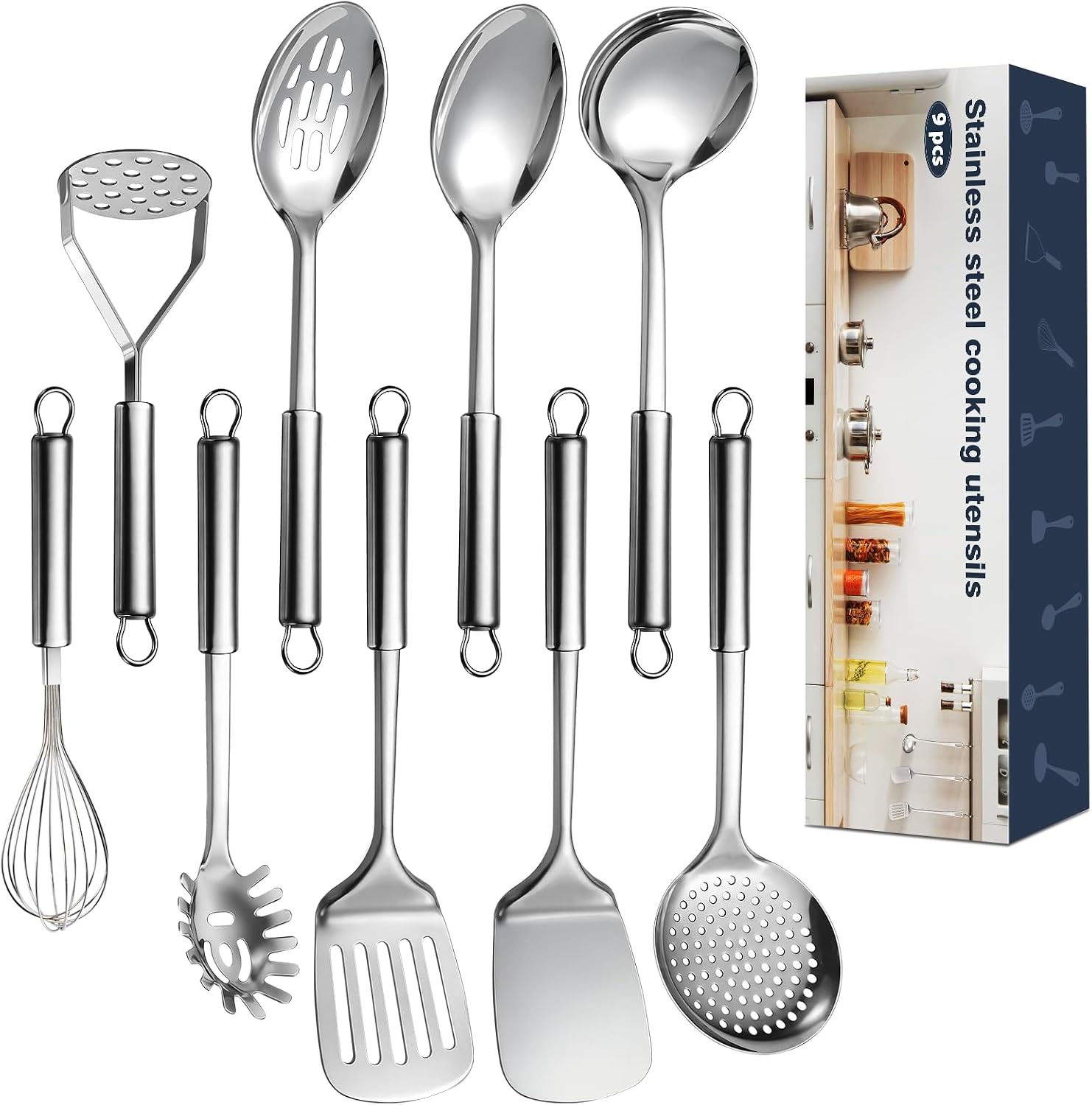
Conversely, smaller sets containing eight to thirteen pieces focus purely on core essentials like turners, ladles, and serving spoons. These streamlined options reduce clutter in modest kitchens where drawer space is at a premium. Matching the piece count to your actual cooking needs ensures you use every tool you own without storing unused items.
Storage Options and Countertop Fit
Storage requirements vary significantly depending on the set you choose and your kitchen layout. Many stainless steel utensil packages include a matching countertop caddy or holder, allowing you to display polished mirror finishes right next to your stove. This keeps frequently used turners and spoons instantly accessible during fast-paced meal preparation without cluttering drawer space.
If your counter space is limited, consider sets designed with built-in hanging holes on the handles. These allow you to store your tools vertically on wall racks or hanging bars. Evaluating your available cabinet, drawer, or counter space beforehand prevents storage frustration and keeps your culinary workspace tidy and efficient.
Cookware Compatibility and Protection
Using metal utensils requires careful attention to how their edges interact with your existing pots and pans. High-quality stainless steel tools feature smooth, polished edges designed to work safely with heavy cast iron skillets and multi-clad stainless steel cookware without causing surface damage. When used attentively, smooth metal edges slide easily beneath delicate foods like eggs or delicate pancakes.
For nonstick cookware, look for manufacturer guidance confirming that the stainless steel tools have rounded or smooth profiles that protect delicate pan coatings from scratching during rigorous cooking tasks. Selecting compatible utensils extends the lifespan of your nonstick investment while delivering the rigid strength required for efficient scraping and stirring across diverse cookware surfaces.
Cleaning and Maintenance Requirements
Keeping your stainless steel utensils looking pristine involves understanding routine cleaning and maintenance needs. Most quality metal tools are dishwasher safe, allowing for effortless cleanup after heavy meal preparation sessions. However, to preserve a brilliant mirror-polish finish, many manufacturers recommend washing items by hand using soft cloths and avoiding abrasive steel wool scrubbers or harsh chlorine-based cleaning products.
Prompt drying with a soft towel immediately after washing helps prevent unsightly mineral water spots, particularly on highly reflective mirror-polish surfaces. Taking a few extra moments to dry and store your utensils properly ensures they maintain their bright, professional aesthetic for years of dependable daily kitchen service without losing their original luster.
Frequently asked questions
Can stainless steel utensils scratch nonstick cookware pans?
While stainless steel is harder than typical nonstick coatings, many modern metal utensil sets feature smooth, rounded edges designed to minimize scratching when used carefully. However, pushing down forcefully with sharp angles can still damage delicate nonstick surfaces. To protect your pans, check manufacturer recommendations, stir gently, and consider using silicone or wooden tools if you prefer aggressive scraping. Selecting utensils with smooth, polished surfaces helps reduce friction against delicate cookware layers during everyday meal preparation.
Are stainless steel cooking utensils safe for the dishwasher?
Yes, most stainless steel cooking utensil sets are explicitly rated as dishwasher safe for easy cleanup after meals. Placing them in the dishwasher saves time, but you should avoid using harsh detergents containing chlorine bleach or abrasive steel wool scrubbers, as these can dull the metal finish. Additionally, prompt removal and hand drying right after the dishwasher cycle finishes helps prevent water spots and mineral deposits from forming on highly polished surfaces, keeping your tools bright.
Do stainless steel utensil handles get hot during cooking?
Metal is a natural thermal conductor, meaning standard solid steel handles can absorb heat if left resting on the edge of a hot pan for extended periods. Many modern stainless steel utensil sets address this by incorporating hollow tube designs or specialized heat-proof handle structures that stay cooler to the touch during normal use. Even with these features, it is always wise practice to avoid leaving your utensils resting directly inside a boiling pot or hot skillet.
Why do some stainless steel utensils require immediate drying?
Sets featuring a high-gloss mirror-polish finish are particularly susceptible to water spots when allowed to air dry slowly, as minerals in tap water leave behind visible cloudy residues. While these spots do not affect the structural strength or food safety of the metal, wiping your utensils down with a soft cloth immediately after washing preserves their shiny, reflective appearance. Taking this quick step ensures your countertop holder display remains bright and pristine.
What is the advantage of choosing a large piece count set?
Selecting a massive multi-piece collection ensures you have a specialized instrument for every conceivable recipe, from deep soup ladles and pasta forks to egg whisks and basting brushes. This variety eliminates the frustration of lacking the right tool for complex baking projects or holiday feasts. However, larger sets require significantly more storage space in drawers or on counters, so balancing your actual cooking repertoire against your available kitchen storage room is essential before purchasing.