Appliances · Buying Guide
Best Stainless Steel Food Mill Options for Canning and Pureeing
Preparing homemade applesauce, smooth tomato sauces, and fresh vegetable purees relies on the right manual food processing equipment. A stainless steel food mill streamlines this kitchen task by mechanically separating skins, seeds, and cores from the soft flesh of cooked fruits and vegetables. Home cooks processing garden harvests or preparing fresh baby food often turn to these manual grinders because they operate without electricity.
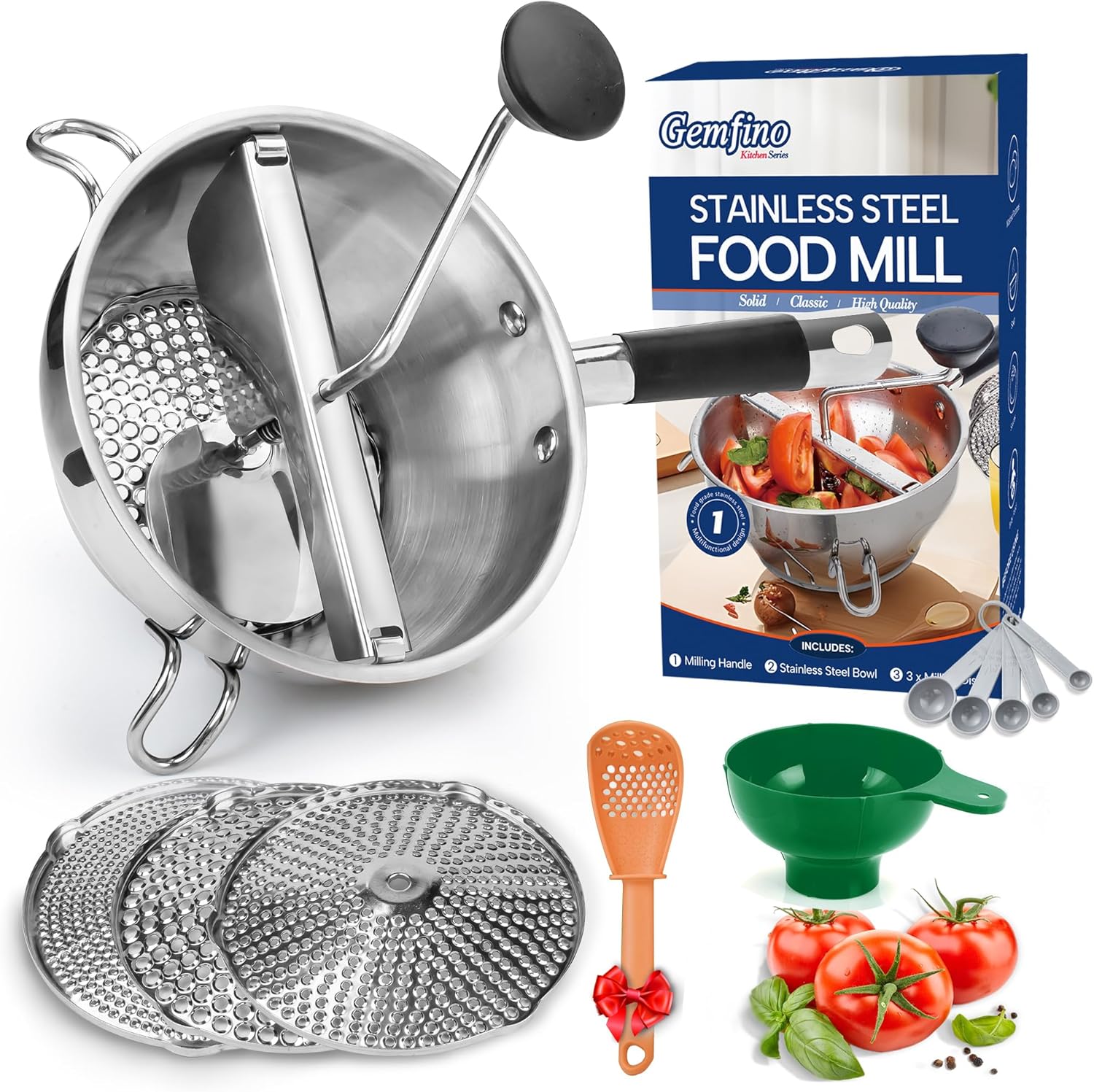
Choosing the right model depends on batch size, bowl compatibility, disc options, and handling comfort during extended canning sessions. Different designs incorporate varying disc counts, handle coatings, and stability supports to fit bowls and pots of multiple diameters. Reviewing the specific attributes of available stainless steel food mills helps match a tool to your exact cooking routine.
As an Amazon Associate, StacyLaughs earns from qualifying purchases.
Buying guide
Material Composition and Durability
Selecting a food mill constructed from quality stainless steel ensures long-term reliability across multiple cooking and canning seasons. Stainless steel resists rust, corrosion, and staining when continuously exposed to highly acidic ingredients like tomatoes, berries, and citrus fruits. This material neutrality preserves the natural flavor profiles of your ingredients without imparting metallic tastes during the grinding process.
Certain designs incorporate supportive elements such as silicone-coated handles for improved grip security or protective plastic exterior layers to shield hands from heat. Evaluating how these metallic and auxiliary materials interact with hot purees helps determine daily maintenance requirements, dishwasher compatibility, and overall product longevity within your specific kitchen environment.
Capacity and Batch Size
Matching the bowl capacity of a stainless steel food mill to your typical cooking volume prevents unnecessary interruptions during food preparation tasks. Smaller capacities around two to three quarts suit everyday meal preparation, light pureeing, and small batch sauces for immediate dinner use without occupying excessive counter space or requiring heavy physical lifting during operation.
Larger capacities exceeding three quarts comfortably accommodate substantial harvests of fruits and vegetables, making them highly practical for intensive canning days and preserving seasonal garden yields. Consider your regular recipe quantities carefully to choose a volume that minimizes refilling frequency while fitting securely over your largest cooking pots and storage cabinets.
Grinding Discs and Textures
The inclusion of multiple milling discs allows home cooks to customize the final texture of applesauce, tomato purees, and mashed potatoes according to exact recipe requirements. Interchangeable stainless steel discs typically offer fine, medium, and coarse sieve options to separate seeds, skins, and fibrous cores from the soft fruit flesh effectively during manual processing.
Reviewing the disc exchange mechanism is essential for smooth kitchen workflows, as spring-loaded levers, drop-in trays, or secure locking configurations simplify transitions between different recipes. Selecting a model with a diverse set of disc apertures ensures you can produce everything from velvety smooth infant food to rustic, textured vegetable soups and fruit jams.
Stability and Bowl Rests
Maintaining stability during manual cranking prevents messy spills and significantly reduces physical arm fatigue when processing dense food mixtures or tough vegetable purees in large batches. Food mills equipped with multiple support legs, dual hooks, or specialized base rests anchor securely atop mixing bowls and cooking pots of varying rim diameters without shifting position.
These stabilizing elements form a reliable triangle or multi-point structure that keeps the bottom of the milling sieve elevated safely above the processed food collected underneath. Evaluating pot diameter compatibility beforehand ensures the appliance sits firmly in place without slipping or wobbling during vigorous rotary handle turns across extended cooking sessions and canning projects.
Handle Design and Ergonomics
Ergonomic handle design directly influences user comfort during prolonged grinding sessions where repetitive rotary motions are continuously required across large batches of produce. Knobs and cranks covered with soft silicone provide a secure, non-slip grip that eases hand strain when processing firm ingredients like cooked potatoes, apples, and root vegetables into smooth purees.
Traditional wooden handles, bare metal arms, or smooth turning knobs offer alternative tactile experiences depending on personal preference and dishwasher cleaning routines. Assessing how the crank handle is shaped, angled, and positioned helps guarantee smooth mechanical leverage and reduces physical hand fatigue over long food processing tasks and busy canning afternoons.
Cleaning and Maintenance
Cleaning food processing tools efficiently after sticky fruit and vegetable canning sessions is an essential factor for daily kitchen convenience and overall kitchen hygiene. Models featuring seamless stainless steel construction, polished exterior surfaces, or easily removable disks simplify washing routines by eliminating trapped food particles in hidden crevices and welding seams.
Reviewing manufacturer guidelines regarding dishwasher safety or manual washing instructions helps preserve the polished finish of your stainless steel components over time. Choosing a mill with straightforward disassembly mechanisms ensures quick cleanup routines so the appliance remains hygienic and ready for future cooking tasks without demanding excessive scrubbing effort.
Frequently asked questions
How do I choose the right disc texture for my recipe?
Choosing the right disc texture depends entirely on the specific food item you are processing and the desired consistency of your finished dish. Fine discs work exceptionally well for removing tiny seeds from berries, straining tomatoes for smooth sauces, or preparing lump-free baby food. Medium discs suit standard applesauce and vegetable purees, while coarse discs leave more texture for chunky fruit jams or rustic mashed potatoes. Reviewing the included disc options on your selected mill ensures you match the sieve aperture properly to your culinary goals.
Can stainless steel food mills be washed in the dishwasher?
Cleaning methods vary depending on the specific model construction and manufacturer guidelines provided for each stainless steel food mill. Many food mills feature dishwasher-safe stainless steel components, but reviewing the specific care instructions for your chosen product is always recommended before loading it into a machine. Parts featuring silicone grips, wooden handles, or specialized coatings may require manual hand washing with warm soapy water to preserve their materials. Prompt cleaning after processing sticky fruits like tomatoes or apples prevents residue buildup in crevices.
What is the purpose of the bowl rests or legs on a food mill?
Bowl rests and support legs are designed to secure the food mill safely atop mixing bowls, pots, and saucepans during the manual grinding process. These supports typically form a stable triangle or multi-point structure that prevents the appliance from sliding around while you turn the crank handle. Additionally, these legs keep the bottom of the milling sieve elevated above the processed food accumulating in your container, ensuring the blade never drags through the puree. This stable positioning reduces arm fatigue and minimizes messy spills.
Do I need an electrical outlet to operate a manual food mill?
Manual food mills operate entirely through hand-crank power, meaning they require no electricity or cords to function during food preparation. This lack of electrical dependence allows you to set up your food mill anywhere in the kitchen, on a porch, or even during outdoor canning sessions away from standard wall outlets. The ergonomic rotary handle lets you control the speed and pressure of the grinding process manually. This portability makes manual mills convenient for seasonal batch cooking, garden harvesting days, and off-grid food preservation.
How do I prevent food from getting stuck under the blade?
Preventing food buildup involves proper loading techniques and utilizing the features provided with your specific food mill model. Cutting fruits and vegetables into manageable quarters or smaller pieces before loading helps the blades engage the flesh more efficiently. Some food mills include specialized multi-purpose kitchen spoons or scrapers designed to press ingredients downward through the filter and clear food stuck at the bottom of the sieve pan. Ensuring tight blade-sieve alignment also minimizes gaps where food can slip underneath without being properly processed.