Appliances · Buying Guide
Best Stainless Steel Mesh Colander Sets for Every Kitchen Task

Choosing the right stainless steel mesh colander transforms how home cooks handle daily kitchen meal preparation tasks. These dependable metal sieves manage everything from rinsing delicate fresh berries to draining heavy pots of boiling pasta water safely and efficiently. Premium construction materials provide sturdy frameworks that resist daily wear while handling diverse ingredients. Understanding the available sizes and structural designs helps you find tools that integrate seamlessly into your regular cooking routine.
Selecting a suitable colander set involves reviewing capacity options, handle configurations, and structural resting bases that fit your specific kitchen storage space. Different configurations offer specialized advantages for sifting dry baking ingredients or washing bulky produce quantities. Examining the physical attributes of each option ensures you pick reliable strainers built to accommodate your household cooking volume without taking up excessive cabinet or pantry storage areas.
As an Amazon Associate, StacyLaughs earns from qualifying purchases.
Buying guide
Evaluating Material Composition and Grade
Selecting a durable kitchen strainer begins with examining the metal grade used in its construction. High-quality options utilize food-grade stainless steel such as 18/8 alloy, which resists rust and prevents metallic tastes from transferring to sensitive ingredients during food preparation. This grade provides a reliable barrier against daily exposure to water, acidic fruit juices, and salty cooking liquids.
Choosing certified food-safe materials ensures your cookware remains dependable over years of regular washing and rinsing. Avoiding substandard metals protects your investment from premature corrosion. Prioritizing robust stainless steel frameworks ensures the mesh netting stays firmly attached to the outer rim during heavy rinsing tasks.
Understanding Size and Capacity Variations
Colander sets vary widely in capacity, typically ranging from compact mini strainers up to large six-quart baskets. Matching the capacity to your typical household cooking volume ensures you can comfortably strain family-sized batches of pasta or wash large heads of lettuce without overflowing the edges.
Smaller baskets measuring under four inches excel at precision tasks like sifting small amounts of flour or steeping loose tea leaves. Larger multi-quart models accommodate heavy produce and boiling stock pots. Assessing your regular recipes helps determine whether a two-piece set or a comprehensive five-piece collection fits your cooking style.
Examining Handle Configurations and Ergonomics
Handle design dictates how safely and comfortably you can maneuver a heavy, water-filled colander over a sink basin. Long single handles keep your knuckles elevated above rising steam and hot pot rims, making them ideal for rapid straining tasks over boiling water.
Alternatively, dual side-handle configurations provide balanced two-handed control when lifting heavy loads of wet vegetables or dense grains. Riveted handle attachments offer enhanced structural strength compared to welded joints, reducing the risk of handle separation under heavy weight conditions during daily kitchen routines.
Base Stability and Countertop Placement
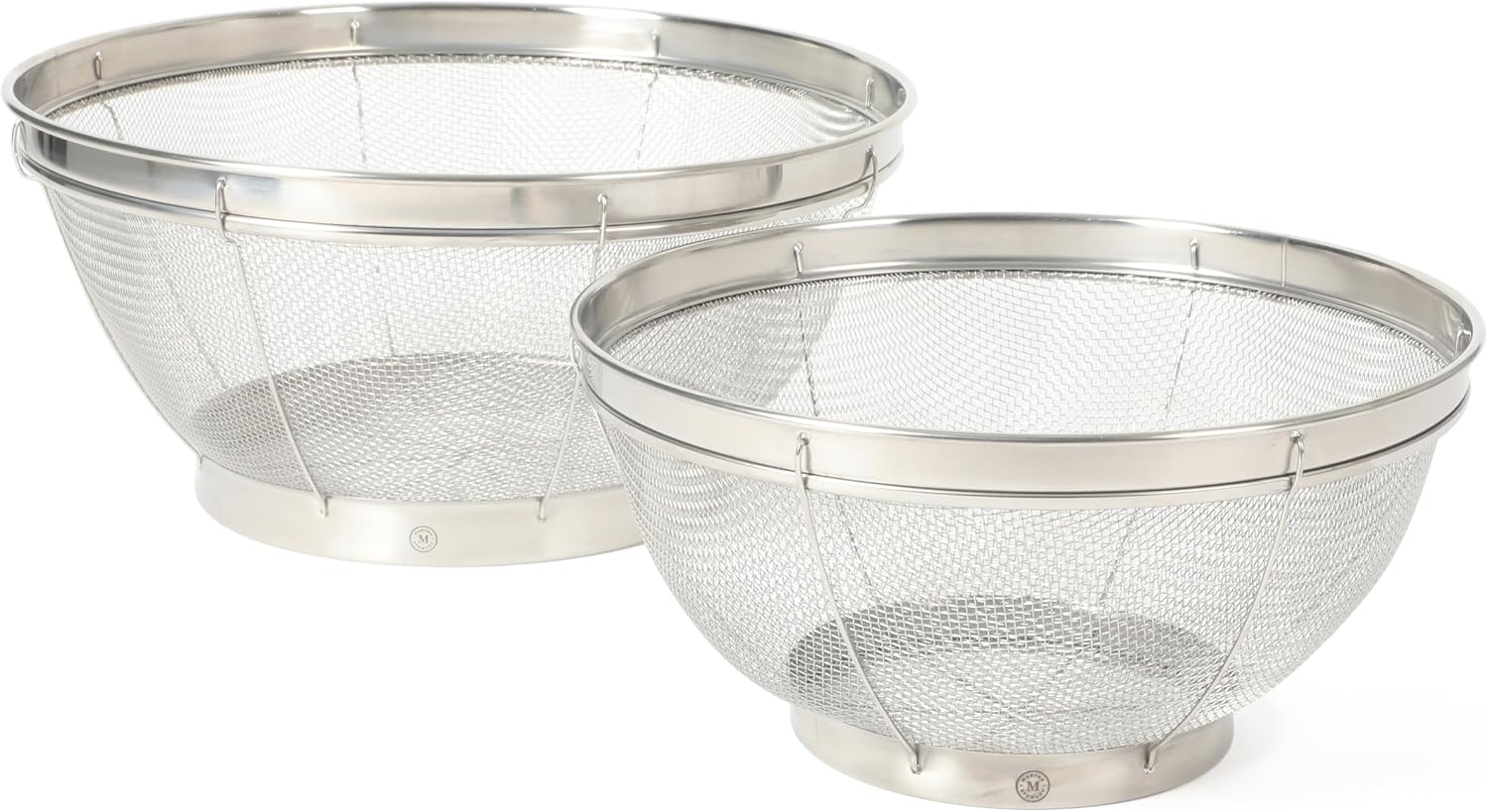
The base design of a mesh colander influences how stably the unit rests inside sink basins or on flat countertops. Models featuring a dedicated resting base ring or elevated pedestal lift the mesh basket away from draining liquids, preventing water from splashing back onto your food.
A sturdy base also allows you to set the colander directly inside the sink while you pour heavy stock pots, freeing your hands from supporting the full weight. Evaluating whether a flat resting ring or a raised pedestal better matches your sink depth ensures optimal performance.
Mesh Density and Weave Construction
The density of the stainless steel mesh determines which food items the colander can successfully retain. Closely woven fine mesh netting prevents tiny grains like quinoa, rice, or loose tea leaves from slipping through, while still allowing liquids to drain rapidly away.
Reinforced wire frames surrounding the mesh perimeter provide essential structural support, keeping the flexible netting taut and preventing sagging under heavy ingredient loads. Checking the mesh weave structure ensures the strainer handles both fine dry baking ingredients and coarse wet produce effectively.
Storage Practicality and Maintenance Ease
Kitchen storage space is frequently at a premium, making nestable colander designs a valuable feature for crowded cupboards. Sets that stack neatly inside one another reduce their overall footprint, allowing you to store multiple capacities in the space typically required for a single large bowl.
Additionally, selecting dishwasher-safe stainless steel models simplifies post-cooking cleanup routines. Smooth metal surfaces and riveted joints resist food particle buildup, ensuring quick rinses keep your kitchen tools hygienic and ready for the next meal preparation session.
Frequently asked questions
Can I use a stainless steel mesh colander for draining boiling pasta water?
Yes, stainless steel mesh colanders are designed to handle hot liquids, including boiling water drained from pasta pots. The metal framework and secure wire mesh withstand high temperatures without warping or degrading. When pouring boiling water, ensure you use proper handle grips—such as long ergonomic handles or stable dual side grips—to keep your hands safely positioned away from rising steam and hot pot edges during the straining process.
What is the advantage of a resting base on a colander?
A resting base or pedestal ring provides structural stability by elevating the bottom mesh basket off the surface of your sink or countertop. This elevation prevents drained liquids from pooling back up against your food. Furthermore, a resting base allows you to place the colander securely inside the sink basin, freeing both of your hands to safely manage heavy pots or large mixing bowls without needing to support the strainer mid-air.
Are stainless steel mesh colanders safe for the dishwasher?
Most quality stainless steel mesh colanders feature dishwasher-safe construction, making cleanup convenient after preparing messy foods like starches, sauces, or coated vegetables. The smooth stainless steel surfaces resist food odors and stains. To maintain optimal condition over time, ensure the colander is dried properly after completing the dishwasher cycle, especially around wire joints and rim seams where residual moisture might accumulate.
How do I choose the correct colander size for my cooking needs?
Choosing the correct size depends on the volume of food you typically prepare. Smaller strainers around three inches to four inches work best for precision kitchen tasks like sifting baking flour, rinsing berries, or steeping loose tea. Medium and large colanders ranging from four to six quarts accommodate family-sized portions of pasta, steamed vegetables, and bulky salad greens. Multi-piece sets offer the greatest versatility for handling varied recipe scales.
Do nested colander sets save noticeable storage space?
Yes, nestable colander sets provide significant space-saving benefits for crowded kitchen cabinets and pantries. Because each strainer is graduated in size, the smaller units fit directly inside the larger bowls, collapsing multiple standalone tools into a single compact footprint. This stackable design keeps your cupboards organized while ensuring you still have access to a wide range of basket capacities whenever meal preparation requires them.