Appliances · Buying Guide
Best Stand Up Cheese Graters for Fast and Easy Kitchen Food Prep
Finding the right stand up cheese grater transforms how you handle everyday meal preparation, turning tedious chopping tasks into quick kitchen work. Whether you are prepping blocks of cheddar for a family taco night or slicing vegetables for a fresh salad, having a reliable tool makes all the difference. Box graters and rotary shredders offer distinct advantages depending on your countertop space and the types of ingredients you regularly use in your favorite recipes.
Modern designs incorporate features like non-slip bases, detachable containers for catching food, and multiple blades to handle everything from soft mozzarella to hard carrots. Selecting the ideal model depends on your physical setup, preferred grating style, and cleanup routine. Exploring the key attributes of top-rated upright options will help you choose a reliable tool that matches your cooking habits without unnecessary complications.
As an Amazon Associate, StacyLaughs earns from qualifying purchases.
Buying guide
Choosing the Right Grating Surface Configuration
Selecting a stand up cheese grater starts with examining the cutting surfaces available on the body. Box designs typically offer four distinct sides featuring coarse, medium, and fine holes alongside a flat slicing blade. Matching these varying textures to your favorite recipes ensures you get the exact cheese fluff, vegetable thickness, or chocolate zest you need.
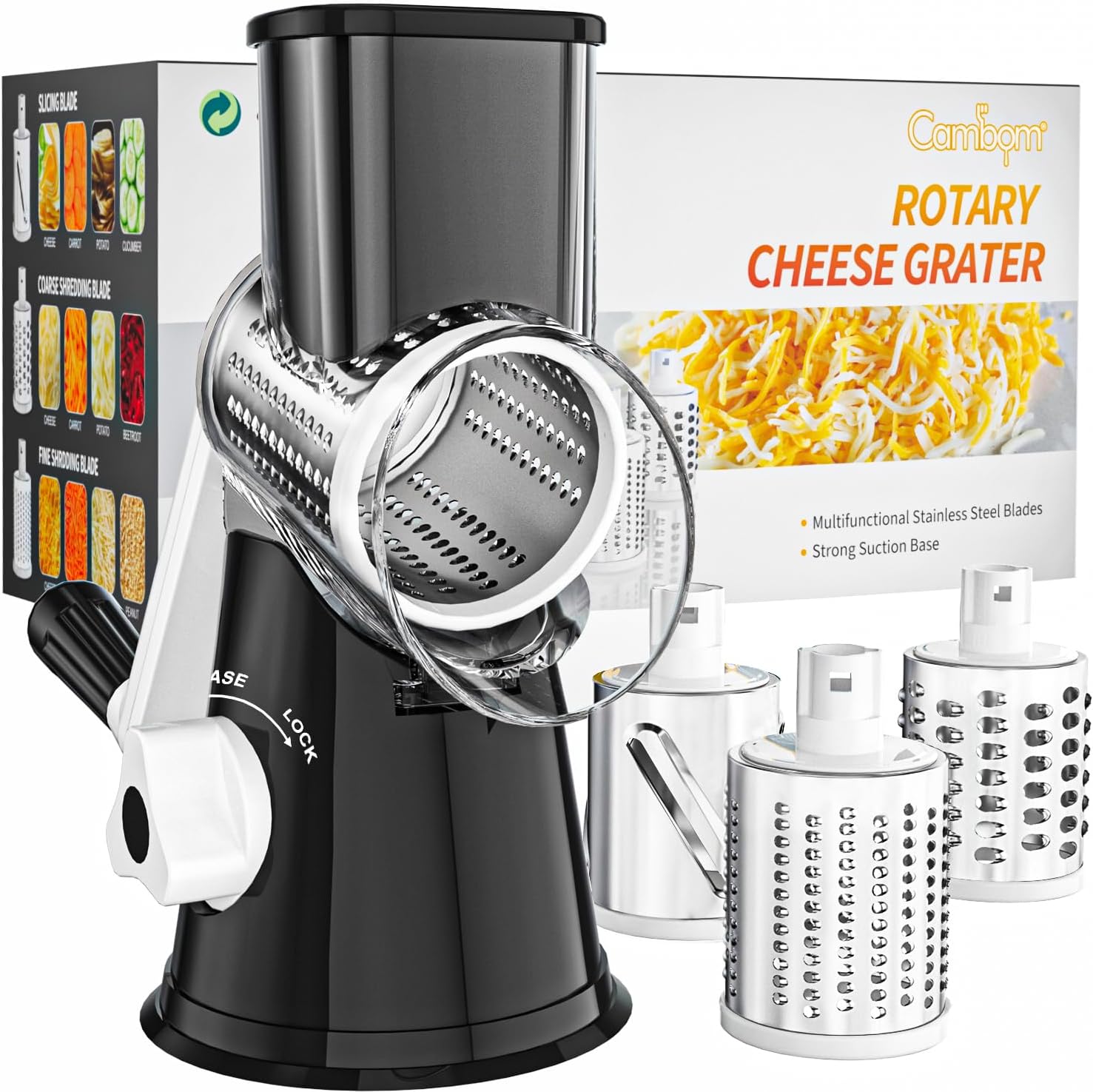
Consider what ingredients you prepare most frequently during everyday cooking. If you regularly grate hard parmesan and soft mozzarella, having multiple hole sizes prevents clogging and food waste. Traditional stainless steel surfaces provide reliable sharpness, while rotary drums offer specialized cylindrical blades for high-speed shredding without manual hand motion across flat panels.
Evaluating Base Stability and Countertop Safety
Safety during food preparation depends heavily on how securely your grater anchors to the work surface. Many vertical box graters feature rubber or TPE material along the bottom rim to prevent sliding against countertops, cutting boards, or dinner plates. This physical friction reduces accidental slips when applying downward pressure on hard cheese blocks.
Alternatively, rotary models utilize powerful suction cup bases that lock firmly onto smooth surfaces like glass or polished marble. While suction mechanisms offer exceptional stability during rapid hand-cranking, they require clean, non-porous countertops to maintain their grip properly. Assessing your kitchen counter material helps determine which stabilization method works best for your home cooking setup.
Material Selection and Long-Term Durability
The materials used in constructing a stand up grater dictate its overall lifespan and daily maintenance needs. High-grade stainless steel cutting surfaces resist corrosion and maintain sharp edges through repeated slicing and shredding tasks. Selecting models built with robust metals ensures the grating holes will not bend under heavy pressure from dense root vegetables.
Rotary style graters often combine stainless steel blades with food-grade plastic housings and removable drums. Checking that these plastic components are certified BPA-free guarantees safe food contact during daily meal preparation sessions. Balancing metal durability with lightweight housing materials makes it easier to maneuver the tool without sacrificing structural integrity over time.
Managing Storage Space and Kitchen Footprint
Countertop space and cabinet dimensions play a major role in choosing the right grater style for your kitchen. Traditional box graters feature a tall vertical profile that slips easily into narrow gaps between pantry items or slides onto crowded shelves. Their single-piece construction means you do not have to worry about storing separate loose parts.
In contrast, rotary models with multiple detachable drums and hand cranks require organized storage boxes or dedicated drawer space. While they take up more permanent room during active food preparation, their modular design often breaks down into flat components. Reviewing your available storage capacity prevents kitchen clutter and keeps all included accessories neatly arranged.
Understanding Cleaning and Maintenance Requirements
Keeping your kitchen tools sanitary requires understanding manufacturer cleaning guidance for every component. Many stainless steel box graters are fully dishwasher safe, allowing for quick cleanup after heavy cheese preparation sessions. However, washing food residue from tiny grating holes immediately prevents dried cheese from hardening and becoming difficult to scrub away later.
Rotary shredders feature multiple detachable parts, including drums, food pushers, and hand cranks, which often require individual rinsing. Some units support top-rack dishwasher cycles, while others benefit from quick hand washing with a specialized brush. Following manufacturer instructions regarding heat cycles ensures that plastic housings and steel blades remain undamaged over years of regular use.
Assessing Container and Collection Features
Collecting freshly grated ingredients efficiently keeps your countertops clean and streamlines your recipe preparation. Several modern box graters include attachable container boxes that fit snugly beneath the cutting surfaces. These clear collection bases catch shreds instantly and often feature measurement markings to track exact ingredient quantities as you work.
Some collection containers also include matching storage lids, allowing you to cover leftover cheese or vegetables and place them directly into the refrigerator or freezer. If you prefer grating straight over mixing bowls, pots, or plates, an open-bottom design offers greater flexibility. Evaluating how you prefer to gather prepared food helps narrow down your ideal model choice.
Frequently asked questions
How do I choose between a traditional box grater and a rotary hand crank grater?
Choosing between a traditional box grater and a rotary hand-crank model depends on your physical preferences and the types of food you prepare regularly. Box graters provide a stationary stainless steel body with multiple fixed cutting sides, making them simple to rinse and store without assembly. Rotary graters use interchangeable cylindrical drums and a hand-crank mechanism, which keeps your fingers away from sharp blades and accelerates high-volume shredding. If you value mechanical speed and finger safety, a rotary unit fits best, whereas box graters suit straightforward daily use.
Can stand up cheese graters handle vegetables and other foods besides cheese?
Stand up cheese graters are highly versatile kitchen tools capable of processing a wide variety of soft and hard vegetables, chocolate, and nuts. Box graters and rotary shredders feature slicing and shredding surfaces designed to handle items like potatoes, zucchini, carrots, cucumbers, cabbage, onions, and radishes. Whether you are slicing cucumbers for a fresh salad or shredding potatoes for homemade hash browns, these tools eliminate the need for separate slicing gadgets. Always match the ingredient firmness to the appropriate coarse or fine blade surface for optimal results.
Are stainless steel box graters safe to clean in the dishwasher?
Most stainless steel box graters and their detachable collection containers are dishwasher safe for convenient cleanup after meal preparation. However, following manufacturer maintenance instructions is important to preserve blade sharpness and prevent cosmetic wear over time. For rotary models with plastic housings and removable drums, checking whether the specific parts are top-rack dishwasher safe prevents heat warping. Hand washing with a soft brush can also help remove stubborn food particles from tight grating holes without risking damage to the cutting edges.
What prevents a stand up cheese grater from slipping during use?
Stand up cheese graters use different stabilization methods depending on their design to prevent slipping on countertops. Traditional box graters typically feature a rubber or TPE material along the bottom rim that creates friction against countertops, cutting boards, or plates, keeping the unit steady during manual motion. Rotary shredders rely on powerful suction cup bases that lock securely onto smooth, non-porous surfaces such as glass or polished marble. Ensuring your countertop surface is clean and matching the stabilization style to your kitchen setup guarantees safe operation.
Do box graters with collection containers allow for accurate food measuring?
Several box grater models feature detachable collection containers that fit snugly underneath the cutting surfaces to catch freshly prepared food as you grate. These built-in containers often include clear measurement markings along the side, such as half-cup intervals up to two cups, allowing you to track exact ingredient quantities directly during food prep. Some containers also come with storage lids, enabling you to cover leftover grated cheese or vegetables and place them straight into the refrigerator. This integrated design reduces extra dish usage and simplifies kitchen storage.