Appliances · Buying Guide
Best strainer with long handle options for every cooking and kitchen task

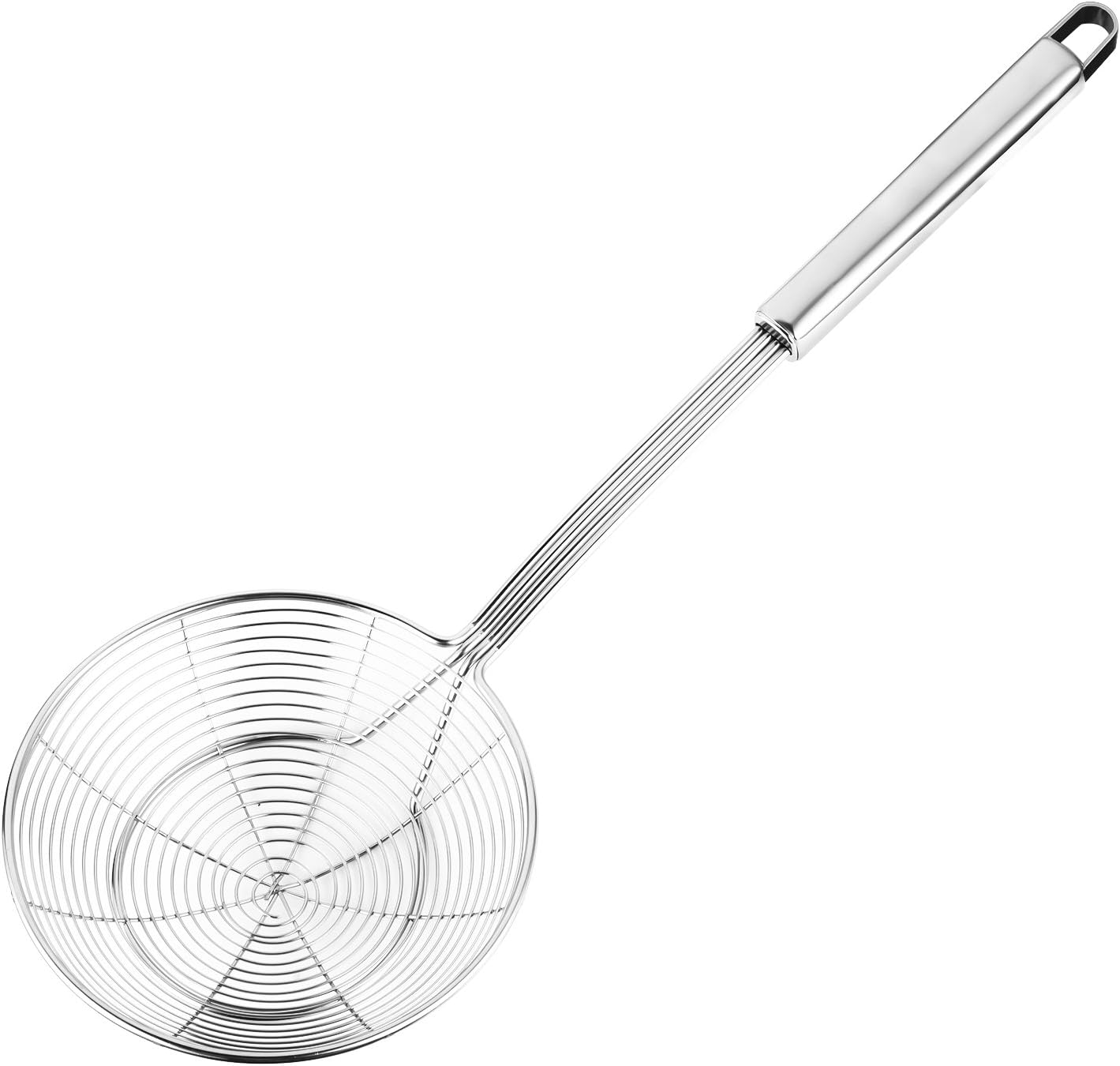
Finding the right kitchen tool can completely change how you handle everyday meal preparation, especially when boiling, frying, or rinsing ingredients. A reliable strainer with a long handle keeps your hands safely distanced from hot liquids, steam, and splattering oils while you work over a stove or deep pot. Whether you are skimming foam from a simmering broth, draining freshly cooked pasta, or sifting fine dry goods for baking, having an extended grip provides both physical comfort and steady control during busy cooking routines.
Different culinary tasks demand specific mesh designs, bowl depths, and overall lengths to achieve the best results without frustration. Standard colanders work well for massive pasta batches, but smaller grains, delicate broths, and hot frying oil require specialized wire skimmers and fine sieves. Exploring the distinct construction features of various stainless steel models helps match your specific kitchen habits with a tool designed to last through frequent use, high heat exposure, and routine dishwasher cleaning cycles.
As an Amazon Associate, StacyLaughs earns from qualifying purchases.
Buying guide
Evaluating Overall Handle Length and Reach
When selecting a strainer with a long handle, matching the handle length to your cookware is an essential first step. Deep pots and commercial fryers require significantly extended handles to keep your hands safely away from splattering oil and rising steam. Shorter handles provide better agility and control for light tasks like sifting flour or rinsing small portions over a standard sink basin.
Consider how you store your cooking tools before choosing an oversized model. Extremely long handles can make it difficult to fit utensils into standard kitchen drawers or shallow cabinets. Finding the right balance between safe reach and convenient storage ensures your tool remains accessible rather than getting pushed to the back of the pantry.
Understanding Mesh Density and Sieve Types
The density of the wire mesh directly determines what types of ingredients your strainer can handle effectively. Fine mesh screens with tightly woven layers excel at trapping microscopic particles, making them ideal for quinoa, rice, and dry baking flour. Coarser wire weaves and slotted metal designs allow liquids to pass through rapidly while supporting heavier items like fried potatoes or boiled eggs.
Choosing the incorrect mesh density can lead to frustrating meal prep experiences where ingredients either fall straight through the openings or drain too slowly. Matching the weave style to your most frequent cooking habits ensures smooth liquid separation and prevents food waste during everyday kitchen routines.
Material Composition and Durability Factors
Kitchen tools encounter high heat, boiling water, acidic foods, and harsh detergents on a regular basis. Premium stainless steel construction, such as 18/8 grades, provides reliable resistance against rust, corrosion, and bending under heavy loads. Plated handles and sturdy wire frames add structural integrity to ensure the tool withstands frequent daily use without degrading.
Avoiding cheap plastics or poorly bonded joints prevents unexpected breakage when lifting heavy amounts of boiled pasta or hot foods. Investing in solid, riveted metal construction guarantees long-term dependability and safe performance across years of family meal preparation and baking projects.
Bowl Depth and Storage Capacity Needs
The depth and diameter of the strainer bowl dictate how much food you can process in a single movement. Deep bowls function effectively as colanders, allowing you to drain family-sized portions of pasta or wash large batches of fruit at once. Shallow bowls provide specialized surface area for skimming foam, fat, or tea leaves without unnecessary bulk.
Evaluate your typical batch sizes to determine whether a compact bowl or a high-capacity basket fits your routine. Keep in mind that larger bowls require more cabinet or wall hanging space, so balance your volume needs with your available kitchen storage layout.
Cleaning Maintenance and Dishwasher Compatibility
Keeping kitchen utensils sanitary should be a straightforward part of your cleanup routine after cooking meals. Many stainless steel strainers feature dishwasher-safe construction, allowing you to place them directly into machine cycles for effortless washing. However, extra-fine mesh weaves often trap tiny food particles that require manual rinsing under a faucet.
Reviewing manufacturer guidelines helps preserve the finish and structural integrity of your tool over time. Selecting designs that resist food sticking and staining minimizes the effort required to keep your strainers ready for the next cooking session.
Handle Ergonomics and Secure Grip Design
Comfortable handling prevents hand strain and accidental slips when working with heavy pots of boiling liquid. Ergonomic handles shaped for a natural grip make lifting heavy ingredients significantly safer and more comfortable. Features like integrated side attachments or wider hanging hooks help secure the tool over pot rims during hands-free draining.
Testing or reviewing the grip structure ensures that wet or greasy hands will not compromise your control during fast-paced cooking tasks. A solid, well-balanced handle transforms a simple wire mesh tool into a reliable extension of your kitchen workflow.
Frequently asked questions
Can I use a stainless steel strainer with a long handle for frying foods?
Yes, many stainless steel wire strainers and spider skimmers are explicitly designed for high-temperature frying tasks. Their heat-resistant metal construction and long handles protect your hands from hot oil splashes while allowing quick retrieval of items like French fries, doughnuts, and chicken. Always verify that the specific model features heat-resistant metal rather than plastic components before submerging it into hot cooking oil.
How do I clean fine mesh strainers that trap tiny food particles?
Cleaning fine mesh strainers requires a bit of attention because tiny grains like quinoa or flour can lodge tightly between the wires. Running warm water through the reverse side of the mesh immediately after use helps dislodge most stubborn residue before it dries. While many stainless steel strainers are dishwasher safe, a quick manual scrub with a brush can ensure the microscopic openings remain completely clear.
What is the advantage of choosing an 18/8 stainless steel strainer?
An 18/8 stainless steel construction provides superior durability, heat resistance, and protection against rust and corrosion compared to lower-grade metals or plastic alternatives. This grade of stainless steel will not bend easily under heavy food loads, withstands boiling liquids and hot oil without deforming, and ensures that the material does not affect the taste of your food during routine kitchen food preparation.
Are long handle strainers difficult to store in standard kitchen cabinets?
The storage requirement depends entirely on the overall length of the specific tool you select. Standard models with moderate handles easily fit into regular drawers or hang neatly from hooks using built-in end holes. However, oversized options featuring extended handles exceeding thirty inches require significantly more vertical or wall storage space to accommodate their total length safely.
Do nested strainer sets offer better value than single standalone tools?
Nested strainer sets provide exceptional versatility by offering multiple bowl diameters, ranging from small tea steepers to large stockpot strainers, all stored compactly together. If your cooking habits involve a wide variety of tasks like sifting baking flour, rinsing grains, and draining pasta, a multi-piece set covers every job without requiring you to purchase separate individual utensils.