Appliances · Buying Guide

Best Super Fine Mesh Strainer Options for Baking and Teas

Finding the right super fine mesh strainer involves matching the screen density, frame material, and handle design to your everyday kitchen tasks. Whether you are sifting delicate baking flours, straining homemade broths, or preparing loose leaf teas, the physical build determines how efficiently liquid and powders pass through the barrier without clumping or spilling over the rim.

Different models feature stainless steel wire weaves or nylon netting tailored for specific culinary applications. Exploring these distinct constructions helps you select a tool that fits comfortably over your mixing bowls, pots, or teacups while offering practical durability for regular cleaning routines and demanding straining jobs in a busy home kitchen.

As an Amazon Associate, StacyLaughs earns from qualifying purchases.

Tiawudi 9 Inch Large Stainless Steel Fine Mesh Strainer
#1 Best Overall

Tiawudi 9 Inch Large Stainless Steel Fine Mesh Strainer

Built from food-grade 18/8 stainless steel, this nine-inch strainer features a double-layer thirty mesh screen designed for filtering fine grains like quinoa, rice, and flour. The deep bowl collects larger food quantities, while the solid riveted handle includes a wider hook to prevent slipping when resting over mixing bowls or pots during heavy tasks.

Best for Large scale baking and straining

Stainless steel constructionExtra fine meshSolid sturdy handleLarge deep bowlLifetime guarantee
View on Amazon →

What stands out

  • Double-layer thirty mesh stainless steel construction effectively filters fine baking ingredients and tiny grains without letting particles slip through.
  • Deep bowl design allows the strainer to function like a colander for draining larger pasta batches or rinsing produce.
  • Solid riveted handle features a wider hook to prevent slipping and provide secure placement over deep pots.

What to consider

  • Measuring seventeen point five inches in total overall length, this larger model requires substantial storage space inside standard kitchen drawers or hanging racks.
  • Weighing nearly ten ounces, extended one-handed use with heavy wet ingredients may cause arm fatigue compared to lighter plastic frame alternatives.
Key specifications
Item Dimensions L x W x H
17.5"L x 9"W x 3"H
Item Weight
9.6 ounces
Mesh Opening Size
0.03 inches
Material Type
Stainless Steel
Color
Silver
Style Name
Fine

The practical verdict

This nine-inch stainless steel strainer is best for home cooks needing a high-capacity tool to handle large batches of flour, quinoa, or pasta draining. Avoid it if you have limited storage space or prefer an ultralight tool for quick single-cup tasks. The main trade-off involves balancing a heavy-duty, deep-bowl capacity with a larger physical footprint that demands more room for storage.

#2
Kitchen Ultra Fine Nylon Mesh Strainer 5.51 Inch
Nylon Liquid Filtering

Kitchen Ultra Fine Nylon Mesh Strainer 5.51 Inch

Best for Fine liquid and juice filtering

Constructed from food-grade polypropylene and nylon materials, this five point five one inch strainer offers specialized high-efficiency filtering. The lightweight frame features a comfortable handle with a hanging hole for easy storage. It is suitable for separating fine particles and seeds from liquids like soy milk, juices, honey, and delicate teas while remaining dishwasher safe for simple cleanup.

What stands out

  • Food-grade nylon netting provides high-efficiency filtering for smooth liquids like soy milk, honey, and fresh fruit juices.
  • Lightweight plastic frame and comfortable handle isolate heat effectively to prevent hand burns during hot liquid straining.
  • Integrated hanging hole on the handle allows for convenient wall storage inside compact kitchen spaces.

What to consider

  • Plastic frame construction may lack the heavy load-bearing rigidity of solid stainless steel frames when pressing dense food items.
  • Smaller five point five one inch diameter limits the volume of dry ingredients you can sift in a single pass.
Key specifications
Item Dimensions L x W x H
9.45"L x 5.9"W x 5.9"H
Item Weight
1.76 ounces
Mesh Opening Size
0.04 millimeters
Material Type
Plastic
Color
White
Style Name
Mesh Strainer

The practical verdict

This nylon mesh strainer is best for filtering liquids, juices, soy milk, and small batches of loose tea. Avoid it if you frequently strain heavy, dense food items or need a rigid metal frame for aggressive pressing. The main trade-off is gaining a lightweight, heat-isolating plastic build that excels at liquid filtering while sacrificing the heavy load capacity found in metal models.

#3
Pure Matcha Stainless Steel Very Fine Mesh Tea Sifter
Matcha Powder Sifting

Pure Matcha Stainless Steel Very Fine Mesh Tea Sifter

Best for Matcha and loose tea sifting

Designed for precision powder work, this matcha sifter uses durable three hundred four grade stainless steel with a fine forty-mesh screen. The compact build features a long handle for easy sifting over small bowls and cups. It breaks up stubborn clumps in green tea powder, loose-leaf tea, and confectioner sugar before quickly cleaning up in the dishwasher.

What stands out

  • Fine forty-mesh screen effectively breaks up stubborn clumps in matcha green tea powder for a smooth beverage consistency.
  • Durable three hundred four grade stainless steel construction provides reliable rust resistance during daily use.
  • Compact design with a long handle allows for effortless sifting directly over small teacups and mugs.

What to consider

  • Small overall physical dimensions restrict its primary use to minor powder sifting tasks rather than bulk baking flour preparation needs.
  • Narrow diameter and compact bowl capacity prevent efficient straining of large pasta portions or bulky food items.
Key specifications
Item Dimensions L x W x H
7.09"L x 2.95"W x 2.95"H
Item Weight
0.02 kg
Mesh Opening Size
40 mesh_count_per_square_inch
Material Type
Stainless Steel
Color
Stainless Steel
Style Name
Fine

The practical verdict

This compact stainless steel sifter is best for tea enthusiasts seeking to eliminate lumps from matcha powder or loose-leaf blends. Avoid it if you need a large tool for rinsing grains or sifting family-sized portions of baking flour. The main trade-off is enjoying a specialized, space-saving design optimized for fine powders while accepting a smaller capacity that cannot handle bulk kitchen tasks.

#4
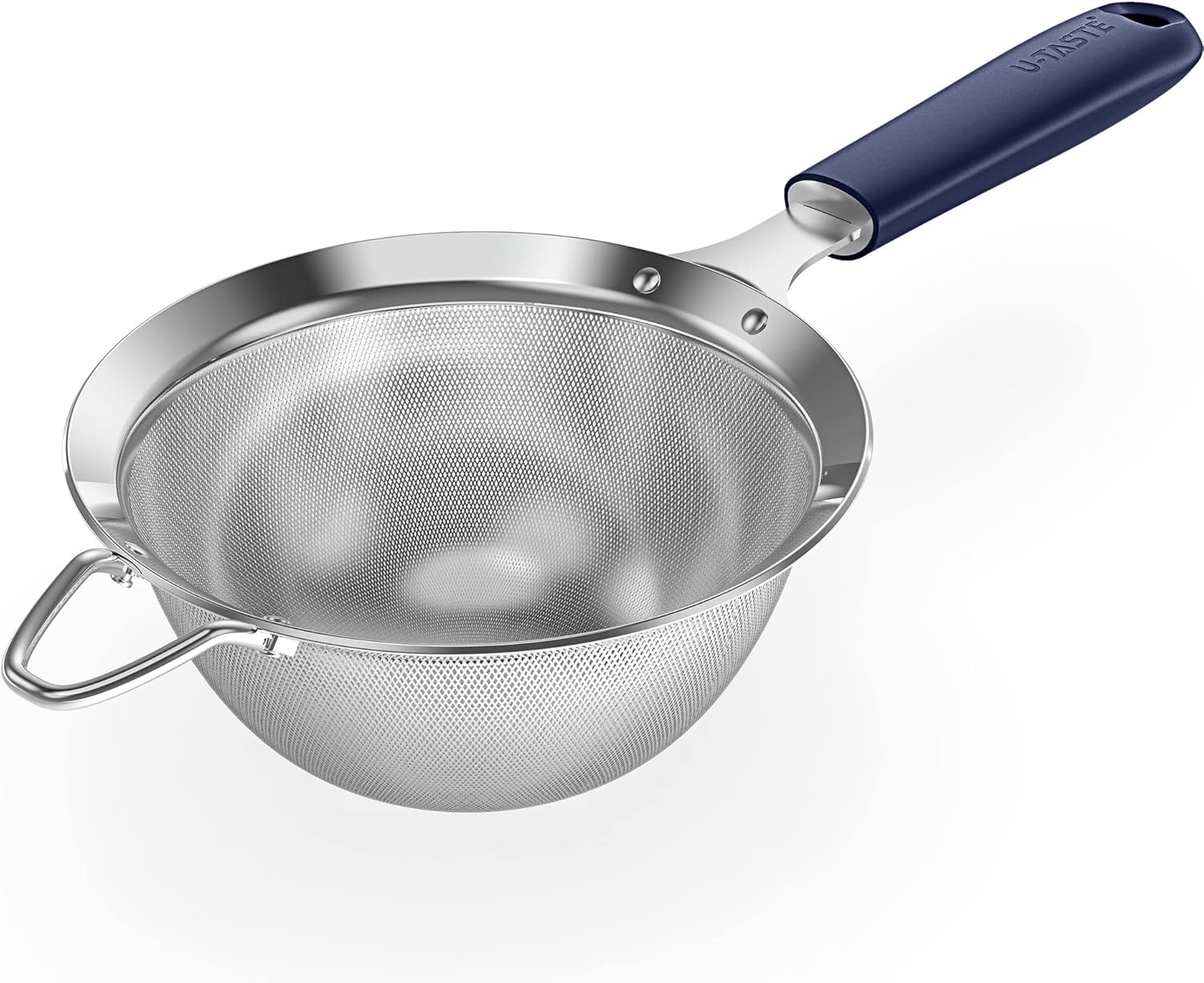
U-Taste 5.5 Inch Stainless Steel Fine Mesh Kitchen Sieve
Silicone Handle Comfort

U-Taste 5.5 Inch Stainless Steel Fine Mesh Kitchen Sieve

Best for Comfortable baking and rinsing

Featuring food-grade eighteen-slash-eight stainless steel with a thirty-mesh screen, this five point five inch strainer is built for durability. It includes a riveted silicone-coated handle for a comfortable grip and a small top loop for resting over containers. The tight mesh connection prevents tearing when pressing ingredients, and the tools nest together for storage.

What stands out

  • Silicone-coated handle offers an ergonomic grip and better control during extended baking and straining sessions.
  • Thirty-mesh screen with zero point six millimeter holes prevents small seeds from falling through without causing blockages.
  • Small top loop riveted to the basket allows the strainer to rest securely over cups and mixing bowls.

What to consider

  • Silicone handle coating requires careful drying and maintenance to prevent moisture retention underneath the rubberized grip surface.
  • Medium five point five inch sizing may prove too restrictive when preparing large family batches of baked goods.
Key specifications
Item Dimensions L x W x H
12.99"L x 5.31"W x 2.83"H
Item Weight
161 g
Mesh Opening Size
0.6 millimeters
Material Type
Stainless Steel
Color
(3) Midnight Blue
Style Name
Stainless Steel with Solid Riveted Handle

The practical verdict

This stainless steel strainer is best for home bakers and cooks who prioritize comfortable handling and secure resting loops over mixing bowls. Avoid it if you require a massive bowl capacity for large bulk food prep. The main trade-off is receiving an ergonomic, slip-resistant silicone grip and secure resting loop while accepting a moderate size that requires multiple batches for large recipes.

#5
Rösle 7.9 Inch Stainless Steel Fine Mesh Kitchen Strainer
Precision Culinary Straining

Rösle 7.9 Inch Stainless Steel Fine Mesh Kitchen Strainer

Best for General kitchen straining and sifting

Crafted from durable eighteen-slash-ten stainless steel, this seven point nine inch strainer delivers precision straining and sifting performance. It features a fine mesh screen with zero point five millimeter openings, an ergonomic long handle for comfortable gripping, and a dishwasher-safe design that simplifies kitchen cleanup after handling broths, sauces, and baking powders.

What stands out

  • Durable eighteen-slash-ten stainless steel construction ensures long-lasting performance for frequent kitchen food preparation tasks.
  • Zero point five millimeter fine mesh openings provide precise filtering for smooth broths, sauces, and powdered sugar.
  • Ergonomic long handle measuring eight point seven five inches offers a comfortable grip during active straining.

What to consider

  • Long handle design combined with a seven point nine inch diameter requires dedicated storage space in shallow kitchen drawers.
  • Smooth handle shape lacks rubberized grips, which might feel less secure if hands become wet or greasy during cooking.
Key specifications
Item Dimensions L x W x H
10.24"L x 0.2"W x 1.18"H
Item Weight
1.28 ounces
Mesh Opening Size
0.5 millimeters
Handle Length
8.75 inches
Material Type
Stainless Steel
Color
Fine Mesh

The practical verdict

This stainless steel kitchen strainer is best for cooks who want a balanced, mid-sized tool for general sifting and liquid straining. Avoid it if you prefer specialized rubber grips or smaller tea sifters. The main trade-off is utilizing a premium eighteen-slash-ten stainless steel build with an ergonomic handle while managing a longer overall profile that takes up extra storage room.

Buying guide

Mesh Density and Hole Size

Selecting the correct mesh density directly impacts how effectively a strainer handles specific ingredients in your kitchen. Fine mesh counts ranging from thirty to forty mesh, along with millimeter-specific openings, determine whether tiny quinoa grains or fine baking powders pass through smoothly. A denser weave catches microscopic debris, while slightly wider openings prevent thick liquids from clogging the screen during rapid food prep tasks.

Evaluating your primary recipes helps clarify which mesh opening size serves your daily needs best. Baking enthusiasts require tight weaves to aerate flour, whereas tea drinkers benefit from specialized fine screens that trap loose leaves and powder clumps. Matching the mesh specification to your routine ingredients ensures efficient filtering without demanding excessive shaking or causing frustrating blockages during busy cooking sessions.

Material Construction and Durability

Kitchen strainers typically employ stainless steel or food-grade plastic and nylon materials for their main frames and filtering screens. Stainless steel grades like eighteen-slash-eight or three hundred four offer exceptional rust resistance and structural rigidity, making them ideal for heavy foods and frequent washing. Plastic and nylon alternatives provide lightweight handling and heat isolation, making them particularly useful for hot liquids and delicate filtering.

Assessing how often you cook and what items you process guides your material selection. Durable metal frames withstand heavy pressure when pressing dense ingredients, whereas nylon options protect against heat transfer while preventing chemical reactions with acidic juices. Choosing the appropriate frame material ensures your tool withstands daily wear and maintains structural integrity over years of regular kitchen use.

Handle Design and Ergonomics

Comfortable handle design plays a crucial role when you are straining large batches of pasta or sifting heavy cups of flour. Solid metal handles provide permanent stability, while silicone coatings or textured plastics offer an enhanced grip that reduces hand strain. Ergonomically shaped handles make it easier to maintain control when tilting heavy bowls or shaking powdered ingredients evenly across baked goods.

Riveted attachments further reinforce handle durability, preventing the frame from bending or snapping under heavy loads. Considering how your hand rests on the grip during extended food preparation tasks helps you avoid fatigue. Selecting a comfortable handle design turns routine kitchen chores into more manageable and secure experiences for cooks of all skill levels.

Bowl Capacity and Depth

The physical volume and depth of the strainer bowl dictate how much food you can process in a single operation. Deep bowls prevent powdery ingredients like confectioner sugar or flour from spilling over the edges during vigorous sifting. Wide diameters provide ample surface area for straining liquids or rinsing bulky produce items like fresh berries and leafy greens without overcrowding the mesh barrier.

Matching bowl dimensions to your typical portion sizes prevents the frustration of splitting recipes into multiple batches. Larger strainers function similarly to colanders for draining pasta, while compact bowls excel at targeted tea and spice filtering. Evaluating your recipe volumes ensures you select a bowl capacity that streamlines your cooking workflow efficiently.

Storage and Kitchen Integration

Finding adequate storage space for kitchen tools depends heavily on overall dimensions, handle lengths, and integrated hanging features. Many models feature hanging holes on their handles or top resting loops that allow them to hang neatly on kitchen racks. Nesting capabilities let you combine multiple strainer sizes together, significantly reducing the footprint required inside standard kitchen drawers or crowded cabinets.

Reviewing your available drawer and wall space before purchasing helps prevent cluttered countertops and storage frustrations. Compact tea strainers slip easily into shallow drawers, whereas larger multi-inch models require dedicated hanging hooks or wide cabinet shelves. Planning for proper storage keeps your kitchen organized and ensures your favorite tools remain easily accessible.

Cleaning and Maintenance Routines

Maintaining kitchen hygiene requires selecting tools that clean easily after exposure to sticky batters, broths, and fine powders. Many stainless steel and nylon mesh strainers feature dishwasher-safe construction, allowing for effortless cleanup inside automatic dishwashers. However, paying attention to tight mesh junctions and silicone handle crevices ensures that trapped food particles are completely removed during washing routines.

Following manufacturer cleaning guidelines preserves the lifespan of both metal frames and delicate mesh screens. Prompt rinsing after handling sticky liquids prevents residues from hardening within microscopic weave openings. Choosing a strainer designed for straightforward maintenance saves valuable time and keeps your kitchen tools sanitary for every culinary project.

Frequently asked questions

What is the difference between thirty mesh and finer nylon screens?

Thirty mesh stainless steel screens feature robust metal wires with standardized openings ideal for filtering grains like quinoa, sifting baking flour, and straining general kitchen liquids. In contrast, ultra-fine nylon screens, such as four-hundred mesh variants, provide much denser micro-filtering capabilities down to fractions of a millimeter. These nylon nets excel at separating microscopic impurities, fine tea particles, and seed fragments from liquids like soy milk or honey. However, metal mesh offers superior structural rigidity for heavy food pressing, whereas nylon prioritizes delicate liquid clarity and heat isolation.

Can I put a stainless steel fine mesh strainer in the dishwasher?

Yes, many stainless steel fine mesh strainers are manufactured with dishwasher-safe materials designed to withstand regular automatic washing cycles without rusting or degrading. When placing them in the dishwasher, positioning the strainer securely prevents bending from water jets or heavier dishware. For models featuring silicone-coated handles or delicate welded joints, ensuring proper drying after the wash cycle helps prevent moisture trapping. Checking specific manufacturer maintenance guidance ensures your metal strainer maintains its structural integrity and clean appearance over years of regular home kitchen usage.

How do I prevent flour and powdered sugar from spilling over the edges?

Preventing spills when sifting dry ingredients depends largely on selecting a strainer with a deep bowl capacity and appropriate diameter. Deep-wall designs provide a vertical barrier that contains powdery substances like confectioner sugar and flour even when you tap or shake the frame vigorously. Additionally, matching the strainer size to your mixing bowl ensures the rim rests securely across the opening without slipping. Tapping the handle gently rather than shaking it violently also keeps powdery ingredients directed downward through the mesh screen rather than escaping outward onto countertops.

Are nylon mesh strainers durable enough for hot liquids like broths and teas?

Food-grade nylon mesh strainers are specifically engineered with high-temperature resistance capabilities, making them fully suitable for contact with boiling water, hot teas, broths, and cooked pasta liquids. The nylon material handles hot temperatures without melting or leaching harmful substances into your food or beverages. Furthermore, plastic and nylon frames often feature heat-isolating properties that prevent the handle from becoming uncomfortably hot during active straining tasks. This makes nylon strainers practical options for filtering hot infusions and homemade stocks safely in a home kitchen environment.

Why is handle attachment construction important for heavy food straining?

Handle attachment construction determines how well a strainer withstands the intense physical pressure of pushing heavy food items like thick batters, wet quinoa, or dense batches of flour through the mesh. Spot-welded handles can weaken and snap under heavy loads, whereas solid riveted designs with reinforced steel plates distribute weight evenly across the frame. A sturdy, riveted handle provides the necessary leverage and stability required for demanding kitchen tasks without bending or breaking away from the bowl, ensuring long-term durability and safe everyday food preparation.

Final thoughts

Choosing the right super fine mesh strainer depends on matching your specific cooking habits with the appropriate screen density, frame material, and bowl capacity. Whether you need a heavy-duty stainless steel model for bulk baking or a delicate nylon net for smooth teas, understanding these physical attributes ensures reliable daily performance.

Reviewing handle designs, resting hooks, and storage dimensions helps you select a tool that integrates seamlessly into your kitchen routine. By evaluating these practical factors carefully, you can invest in a durable strainer that streamlines food preparation tasks and delivers consistent straining results for years to come.