Appliances · Buying Guide
Best Cheese Grater Options for Fast and Safe Kitchen Food Preparation
Finding the right tool to process blocks of cheese and fresh vegetables can significantly simplify daily meal preparation. Whether you prefer a traditional manual box style or a modern hand-crank rotary mechanism, selecting a dependable cheese grater depends on how much food you process, your available counter space, and the specific textures you require for everyday recipes.
Different kitchen setups require specific designs, ranging from compact suction-base units to multi-sided stainless steel towers and high-powered electric appliances. Reviewing the physical characteristics, blade variations, and operational mechanisms helps match a practical shredder to your routine cooking tasks without guesswork, ensuring you can tackle meal prep efficiently and safely.
As an Amazon Associate, StacyLaughs earns from qualifying purchases.
Buying guide
Manual Versus Electric Operation
Choosing between a manual hand-crank mechanism and an electric motor shapes your entire food preparation routine. Manual graters rely entirely on physical turning or pushing food across stationary stainless steel surfaces, offering complete control without needing an electrical outlet or cord management. These models suit light to moderate cooking tasks where simplicity and portability matter most.
Electric alternatives introduce motorized power to process large blocks of cheese and firm vegetables rapidly. While they eliminate physical fatigue during heavy cooking sessions, they require clear counter space near an active power outlet. Evaluating your typical batch size and kitchen layout clarifies whether a manual crank or electric motor fits your daily workflow best.
Blade Variety and Cutting Options
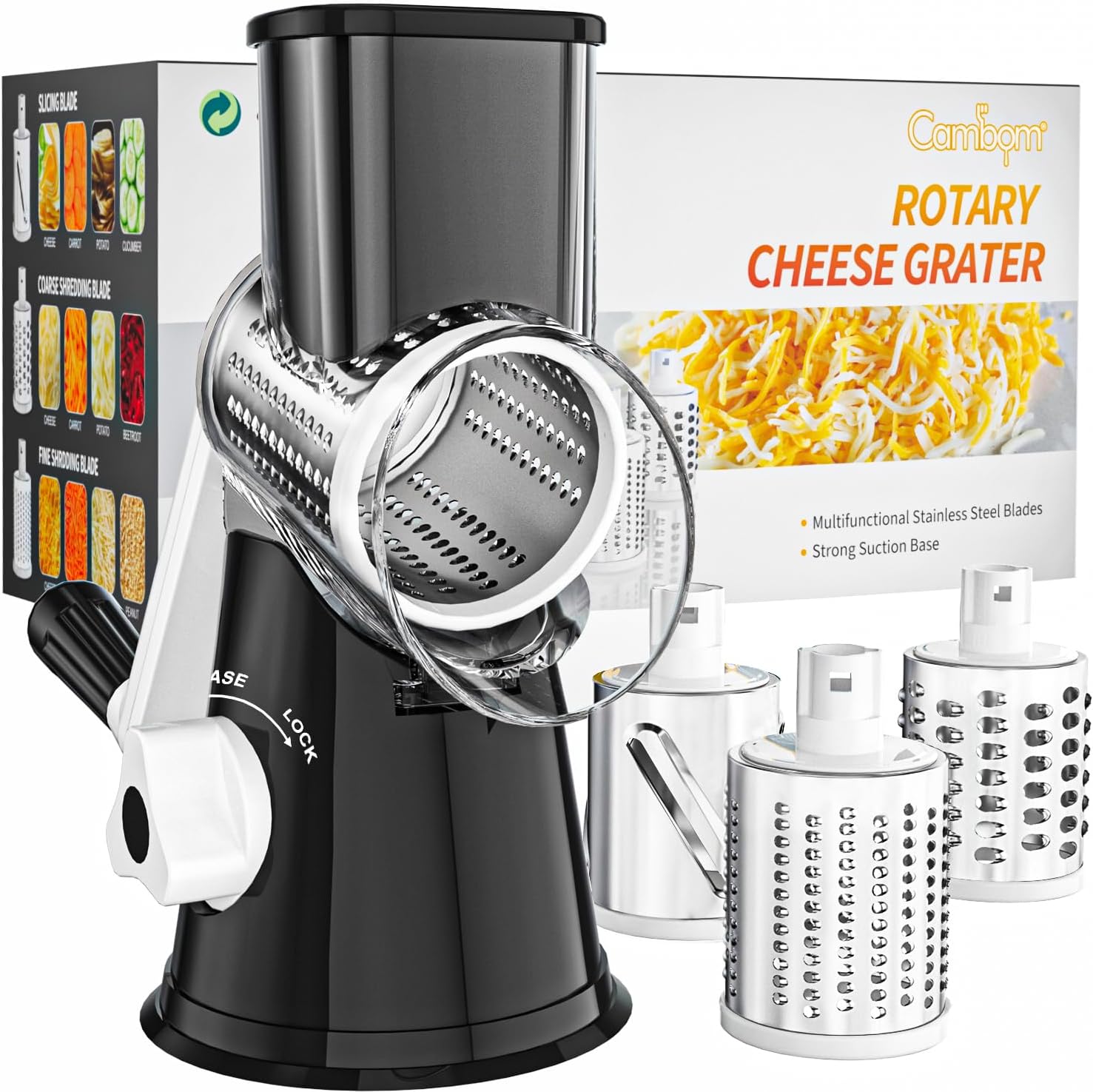
The number and style of included blades dictate how versatile your grater can be for various recipes. Basic models often feature coarse and fine shredding options alongside a flat slicer for standard vegetable prep. Multi-blade systems expand these capabilities by adding dedicated fine zesters, thick slicing drums, or specialized wavy cut attachments for distinctive textures.
Matching your ingredient needs to the available blade selections ensures you can handle everything from fluffy Parmesan cheese to crisp cucumber ribbons. Consider whether you routinely prepare diverse dishes requiring different thicknesses or if a simple two-blade setup satisfies your cooking habits. Reviewing blade configurations prevents purchasing unnecessary attachments you may never use.
Base Stability and Counter Safety
Keeping a grater stable during vigorous movement is essential for preventing accidental slips on slick kitchen surfaces. Many modern rotary models utilize powerful suction cup bases designed to lock securely onto smooth countertops made of glass, granite, or polished marble. This suction grip anchors the unit firmly while you turn the crank or push ingredients through.
Traditional box graters rely on removable rubber borders or weighted bottom edges to grip cutting boards and plates while catching loose debris. Evaluating how a grater anchors itself helps ensure safe operation, especially when applying downward pressure or rapid rotational force on firm cheese blocks and dense root vegetables.
Feeding Chute Size and Pre-Cutting
The dimensions of the feeding chute directly influence how much preparation work you must complete before grating begins. Narrow openings require you to slice large blocks of cheese or bulky vegetables into smaller segments before loading them into the barrel. This extra step adds time to your overall meal preparation workflow.
Wide-mouth chutes and oversized drums accommodate entire blocks of cheese, potatoes, and zucchini without requiring preliminary cutting steps. Choosing a model with an expanded opening streamlines your cooking process significantly. Assess your typical ingredient sizes to determine if a wide feeding chute will save you valuable time during busy kitchen meal preparations.
Storage Footprint and Disassembly
Kitchen cabinet and drawer space often dictates which physical grater design fits your home best. Rotary units typically feature detachable barrels, handles, and suction bases that separate into individual pieces for compact storage inside standard drawers or cabinets. Some options even include dedicated storage cases to keep multiple blades organized safely in one place.
Traditional box graters maintain a rigid, multi-sided tower shape that cannot be taken apart, requiring dedicated vertical clearance on pantry shelves or cabinets. Consider your available storage space when choosing between a multi-piece rotary shredder and a stationary stainless steel tower to ensure your kitchen remains organized and uncluttered.
Material Composition and Durability
The materials used in constructing a cheese grater affect its longevity, weight, and maintenance requirements. Stainless steel components, such as 430 or 304 grades, provide robust cutting surfaces that resist rust and maintain their sharp edges through frequent use. Plastic housings constructed from food-grade ABS offer lightweight bodies that remain easy to handle during food prep sessions.
Reviewing cleaning guidelines is equally important for preserving your tool over time. Many manual units feature dishwasher-safe parts or detach completely for straightforward hand washing under running water. Ensuring your chosen model aligns with your preferred cleaning routine helps maintain hygienic food preparation standards without adding unnecessary maintenance effort.
Frequently asked questions
How do I prevent cheese from jamming inside a rotary grater?
To minimize ingredient jamming, ensure you load moderately firm cheeses like cheddar, parmesan, or mozzarella rather than excessively soft varieties that can smear against the drum. Many rotary graters feature an inclined curvature on the transparent barrel specifically designed to guide shredded pieces smoothly toward the output chute. Additionally, avoiding excessive downward pressure on the food pusher allows the stainless steel blades to slice cleanly through blocks without clogging the internal mechanism or stalling the crank.
Are rotary cheese graters safe to use for children or elderly family members?
Rotary cheese graters generally offer enhanced safety compared to traditional flat graters because the enclosed drum design keeps fingers completely away from the sharp cutting edges. The included hand crank replaces direct hand contact during rotation, and the food pusher safely guides ingredients down the feeding chute. Furthermore, powerful suction bases anchor the entire unit securely onto smooth countertops, preventing accidental sliding or tipping while family members help with everyday kitchen food preparation tasks.
Can I put all parts of my cheese grater in the dishwasher?
Cleaning guidelines vary depending on the specific model and manufacturer instructions. Many manual rotary graters and stainless steel box graters feature top-rack dishwasher-safe components for convenient cleaning. However, when using a dishwasher for plastic barrels or stainless steel blades, selecting a normal or low-temperature cycle is often recommended to avoid high-heat drying that can dull edges or warp plastic parts over time. Hand washing removable parts under running water is also a safe alternative.
What types of food can I process besides cheese?
Beyond blocks of cheese like cheddar and parmesan, cheese graters handle a wide variety of firm vegetables and dry ingredients. You can successfully process potatoes for hash browns, carrots, cucumbers, zucchini, cabbage, garlic, and radishes using the slicing or shredding blades. Many multi-blade models also accommodate hard items such as chocolate, peanuts, almonds, and cookies, transforming a standard grater into a versatile tool for salads, taco toppings, and dessert preparation.
Do I need to pre-cut cheese blocks before using a rotary grater?
The necessity of pre-cutting depends directly on the dimensions of the feeding chute on your chosen grater model. Standard manual rotary units often feature smaller openings that require you to slice large blocks of cheese or vegetables into manageable segments before loading. Conversely, models equipped with extra-wide feeding chutes or oversized drums accept whole blocks of cheese, potatoes, and zucchini directly, allowing you to skip tedious pre-cutting steps and speed up meal preparation.