Appliances · Buying Guide
Best Thermopro Digital Food Thermometer Options for Every Kitchen
Selecting the right digital food thermometer helps ensure meats, baked goods, and confectioneries reach proper internal temperatures without guesswork. TempPro offers various models designed for home cooking, outdoor smoking, and quick spot checks on the stove. Finding the ideal instrument depends entirely on whether you monitor long oven roasts or need instantaneous feedback during fast-paced frying tasks in a busy home kitchen environment.
Whether you need a leave-in probe for slow barbecue sessions or an instant-read tool for everyday pan-searing, understanding the core specifications allows you to match a device to your typical cooking habits and kitchen setup. Each design incorporates unique mounting options, display types, and temperature ranges to support diverse culinary tasks safely and efficiently.
As an Amazon Associate, StacyLaughs earns from qualifying purchases.
Buying guide
Evaluating Probe Types and Cooking Styles
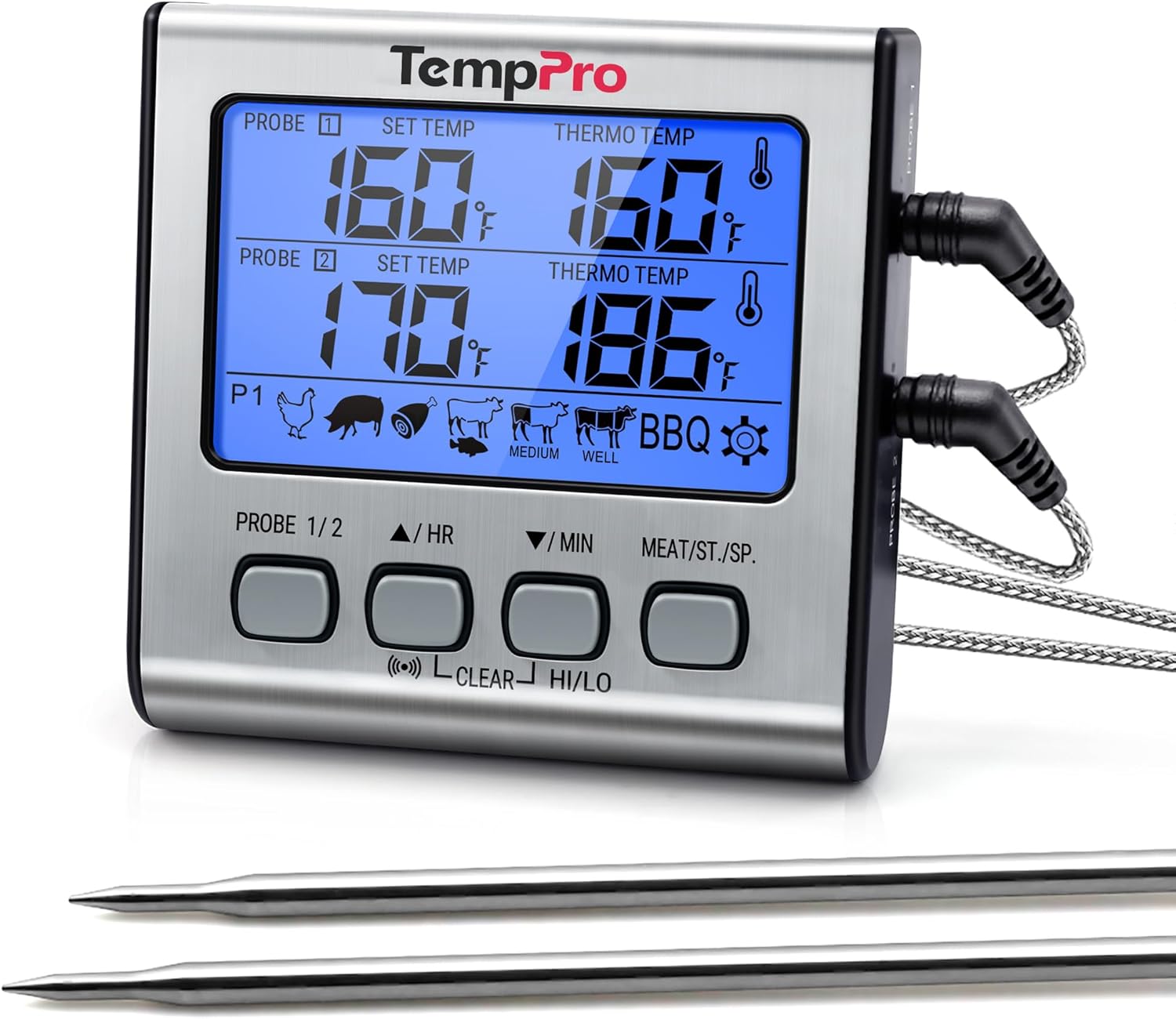
Choosing the correct thermometer style depends heavily on your preferred cooking methods and typical meal preparation routines. Leave-in probe models utilize long stainless steel cables to monitor roasts, poultry, and briskets inside closed ovens or outdoor smokers without requiring you to open doors and let accumulated heat escape. This setup works exceptionally well for slow-cooking techniques.
Conversely, folding instant-read variants provide rapid spot checks for stovetop frying, baking, and grilling tasks where speed matters most. Matching the tool design to your typical recipes ensures optimal kitchen convenience and prevents equipment strain. Consider whether you need continuous unattended tracking or quick, portable measurements before selecting a specific model configuration.
Understanding Temperature Range and Heat Resistance
Temperature limits dictate how safely and effectively a thermometer performs in extreme cooking environments. Models rated for higher maximum temperatures, such as those with heat-resistant wires and probes, withstand intense smoker conditions and high-heat oven roasting without melting or failing. Always review the upper threshold to ensure the device handles your specific culinary temperatures.
Standard kitchen tasks like boiling water or checking milk require lower ranges, but frying oil and candy making demand higher upper limits. Selecting a device with an appropriate thermal span prevents sensor degradation. Verifying these technical specifications safeguards your investment and guarantees reliable performance across diverse baking, grilling, and stovetop applications.
Display Readability and Ergonomic Design
Clear, luminous screens and intuitive button layouts significantly improve your cooking experience, especially during evening grilling sessions or rushed kitchen tasks. Large digits and backlighting eliminate guesswork, allowing you to check thermal metrics at a glance without straining your eyes in dim lighting or bright outdoor sun.
Ergonomic considerations also involve physical orientation. Auto-rotating displays accommodate both left-handed and right-handed cooks effortlessly, while folding bodies or magnetic backs simplify storage on refrigerators and metal surfaces. Prioritizing these design details ensures the thermometer remains comfortable and accessible whenever you prepare meals.
Accuracy and Calibration Capabilities
Precision is vital when cooking delicate proteins, confectioneries, and baked goods where a few degrees determine success. Devices featuring tight accuracy margins provide dependable feedback, minimizing food safety risks and texture issues. Look for models equipped with calibration functions to maintain long-term precision over years of regular kitchen use.
While factory calibration ensures immediate reliability, user-adjustable calibration lets you fine-tune the sensor whenever necessary. This capability preserves measurement integrity across changing environments and frequent handling. Evaluating accuracy specifications helps you choose a dependable instrument that delivers consistent, trustworthy results for every recipe you tackle at home.
Cleaning and Maintenance Requirements
Proper maintenance extends the functional lifespan of any kitchen tool. Thermometers feature varying care instructions, ranging from simple wipe-clean surfaces on base units to fully waterproof bodies that withstand gentle rinsing under running water. Understanding these cleaning guidelines prevents moisture damage to internal electronic components and keeps your device hygienic.
Always adhere to manufacturer recommendations regarding water exposure, avoiding harsh immersion or dishwasher cycles unless explicitly permitted. Taking a few moments to wipe down probes and store units correctly prevents residue buildup and corrosion. Establishing a consistent cleaning routine safeguards your thermometer against premature wear and tear over time.
Power Sources and Battery Longevity
Power efficiency directly impacts how often you need to replace batteries during busy cooking seasons. Many modern digital thermometers rely on standard AAA batteries, which offer extended operational hours and simplify replacements compared to hard-to-find button cells. Evaluating power requirements ensures your device remains ready for action whenever inspiration strikes.
Automatic shutoff and motion-sensing wake features further enhance battery longevity by preventing accidental power drains when the unit sits idle on a countertop or metal surface. These smart energy-saving functions reduce maintenance overhead significantly, allowing you to focus entirely on cooking without worrying about sudden dead batteries mid-recipe.
Frequently asked questions
Can leave-in probe thermometers stay inside the oven during high-heat roasting?
Leave-in probe thermometers typically feature heat-resistant cables and probes designed to withstand elevated temperatures, with some models handling ranges up to 716 degrees Fahrenheit. However, you must ensure that only the stainless steel probe and wire enter the hot oven or smoker enclosure, keeping the plastic base unit safely outside away from direct heat sources. Always check the manufacturer's specified upper temperature limits before using a thermometer in extreme roasting environments to prevent permanent damage to internal components.
How do instant-read thermometers achieve such fast response times?
Instant-read digital food thermometers utilize advanced thermocouple technology or sensitive thermistor sensors combined with thin stepdown tips. This design minimizes the mass required to absorb heat, allowing the instrument to capture temperature changes rapidly and deliver accurate readings in just one second. Such speed is especially helpful when checking multiple items on a grill or monitoring time-sensitive frying tasks where minimizing heat loss is essential for maintaining consistent cooking conditions.
Are digital food thermometers waterproof and safe to wash under running water?
Waterproof ratings vary significantly across different thermometer models. Some instant-read devices feature IP65 waterproof constructions or fully sealed bodies that allow safe cleaning under running tap water to remove grease and food residue easily. Other variants, particularly base units with attached wired probes, require careful wiping with a damp cloth and should never be submerged or placed in a dishwasher. Always consult the specific product care instructions provided by the manufacturer before washing.
Why is thermometer calibration important and how often should it be done?
Calibration ensures that your digital thermometer provides accurate, trustworthy temperature readings over time, which is critical for food safety and achieving precise cooking results. While factory calibration guarantees initial accuracy, physical impacts or extreme thermal shifts can occasionally alter sensor precision. Many models feature built-in calibration functions that let you check accuracy using ice water or boiling tests and make adjustments as needed, helping maintain reliable performance throughout years of regular kitchen use.
What are the advantages of motion-sensing sleep and wake features?
Motion-sensing sleep and wake features automatically activate your digital thermometer when you pick it up or open the probe, and transition it into a low-power sleep mode after a period of inactivity. This intelligent design eliminates the need to press power buttons constantly, streamlining your workflow during busy meal preparation. Furthermore, it preserves battery life effectively, ensuring the device remains charged and ready for use without draining power while sitting on your kitchen counter.