Appliances · Buying Guide
Best Rotary Cheese Graters for Fast Kitchen Prep
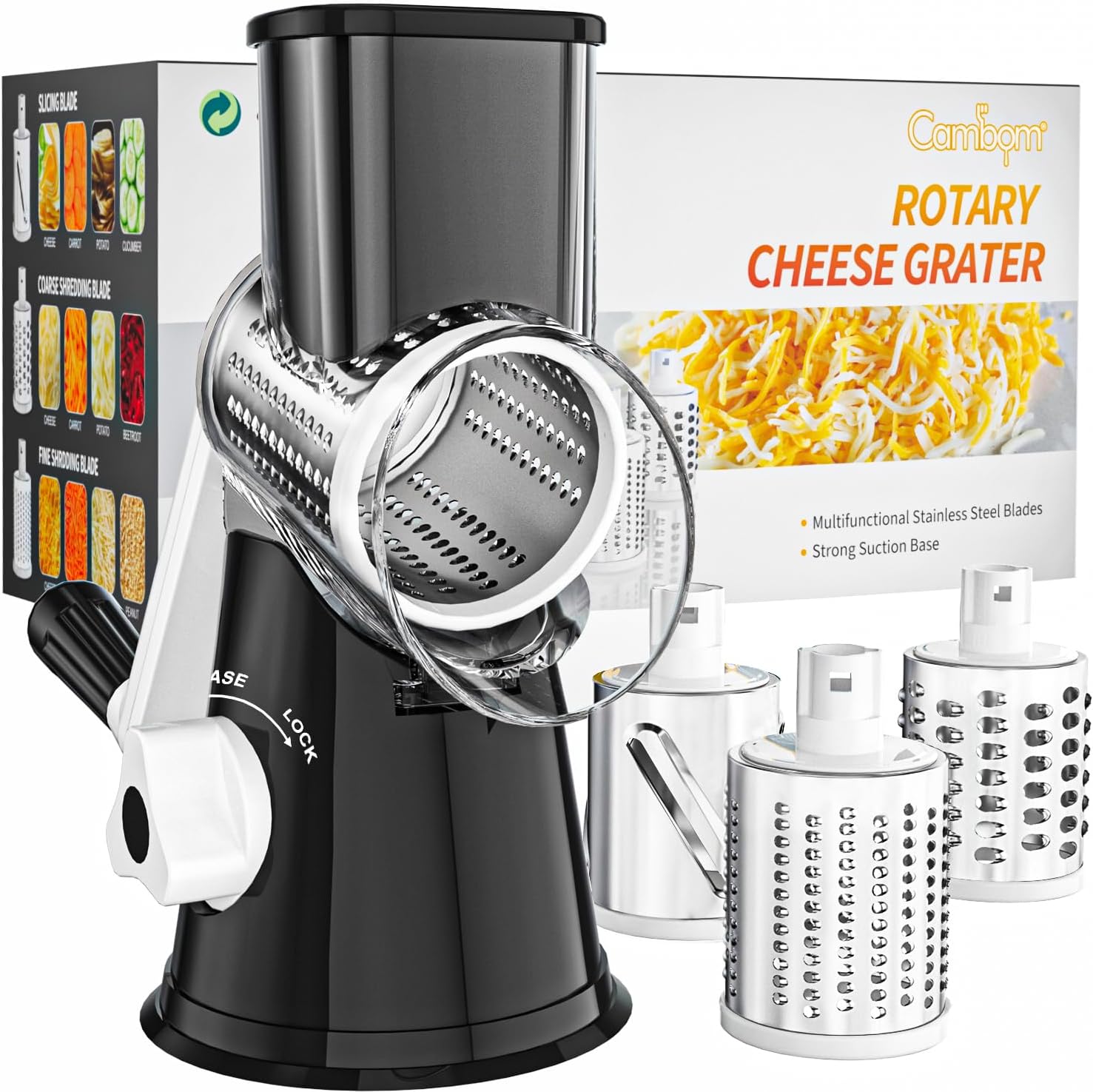
Selecting the right food preparation tool depends heavily on the specific ingredients you handle most often and the amount of physical effort you want to save during cooking. Hand-crank rotary models offer a practical alternative to traditional flat graters by using an enclosed drum mechanism and a turning handle to process cheese, vegetables, and nuts quickly.
These manual units rely on suction bases to secure themselves firmly to smooth countertops, keeping hands safely away from exposed stainless steel edges during operation. Understanding the variations in blade counts, physical footprints, and material builds helps you choose a functional design for your daily kitchen setup without introducing unnecessary complexity or clutter.
As an Amazon Associate, StacyLaughs earns from qualifying purchases.
Buying guide
Blade Variety and Cutting Options
When evaluating manual kitchen graters, the number and style of included blades dictate the range of recipes you can prepare. Basic models typically offer three interchangeable attachments for coarse shredding, fine shredding, and standard slicing. Advanced units expand this selection to include extra-fine grates, thick slices, or specialized wavy cuts. Reviewing your typical cooking routine helps determine whether a standard setup suffices.
Selecting a model with a broader blade selection allows you to tackle diverse ingredients like nuts, chocolate, and hard cheeses without purchasing extra gadgets. However, managing additional blades requires careful storage planning. Balancing your recipe requirements against the complexity of managing multiple metal attachments ensures you choose a tool that matches your actual kitchen habits.
Base Stability and Suction Security
Countertop stability remains a critical factor when operating a hand-crank food shredder. Most rotary graters utilize a suction base designed to anchor the appliance firmly to smooth surfaces such as glass or polished marble. This suction mechanism prevents the unit from sliding or tilting during vigorous turning, keeping your hands safely away from the rotating stainless steel drum throughout the food preparation process.
Ensuring your kitchen countertops feature a compatible smooth texture is essential for maximizing suction strength during use. Textured or porous surfaces may prevent the base from locking correctly. Checking your workspace compatibility ahead of time ensures reliable operation and prevents frustrating movement while you crank ingredients through the feeding barrel.
Material Composition and Food Safety
The materials used in construction directly influence product longevity and daily food safety. Quality rotary graters combine food-grade, BPA-free plastic bodies with robust stainless steel blades that resist rust and dulling over time. Stainless steel components maintain their sharp cutting edges through repeated use, ensuring clean cuts on hard cheeses, vegetables, and nuts without bending under normal manual pressure.
Inspecting the listed material specifications helps confirm that all food-contact surfaces meet safety standards. Choosing durable plastics and corrosion-resistant metals guarantees that the appliance withstands frequent washing and heavy preparation tasks. Prioritizing solid construction materials reduces the likelihood of premature wear and maintains reliable mechanical performance across years of regular kitchen food processing.
Physical Dimensions and Storage Space
Evaluating the physical dimensions and overall weight of a rotary grater helps ensure it fits comfortably within your available cabinet or drawer storage spaces. Compact models often weigh under a pound, making them exceptionally easy to lift, maneuver, and stow away after use. Larger units with oversized drums or multiple attachments require designated storage areas to accommodate their broader frames.
Measuring your available kitchen storage before purchasing prevents appliance clutter on your countertops. While larger configurations offer expanded capacity, smaller lightweight alternatives excel in kitchens with restricted storage space. Aligning the physical footprint of the tool with your cabinet dimensions ensures seamless integration into your daily cooking routine.
Cleaning Maintenance and Disassembly
Ease of cleaning is a major practical consideration for any kitchen gadget used in daily food preparation. Many rotary graters feature fully detachable parts that separate without tools, allowing you to rinse components quickly under a stream of water. Several models also support top-rack dishwasher cleaning, streamlining post-cooking cleanup routines and saving valuable time after preparing family meals.
Reviewing manufacturer maintenance guidance ensures your blades and plastic components remain in optimal condition over time. Avoiding high-heat drying cycles in a dishwasher helps preserve the sharpness of stainless steel cutting drums. Selecting a model designed for effortless disassembly and straightforward washing promotes hygienic upkeep without demanding tedious scrubbing sessions.
Feeding Chute Capacity and Design
The size and geometry of the feeding chute and barrel directly impact how much food preparation time you save. Units featuring oversized drums and wide output chutes allow you to load larger vegetable chunks or cheese blocks without extensive pre-cutting. Inclined barrel designs also help reduce jamming, ensuring ingredients move smoothly through the rotating drum during fast-paced cooking tasks.
Matching the chute dimensions to the types of vegetables or cheeses you regularly process prevents unnecessary prep work. Narrower barrels require slicing produce into smaller pieces before feeding them into the hopper. Considering how much pre-cutting you prefer to do guides you toward the most efficient chute design for your kitchen.
Frequently asked questions
How do rotary cheese graters attach to countertops?
Most hand-crank rotary graters rely on a powerful suction base located at the bottom of the unit. To secure the grater, you place it on a clean, smooth surface such as marble, glass, or finished laminate, and activate the suction mechanism. This creates a strong hold that anchors the appliance firmly during the turning process, preventing sliding or tipping. It is important to ensure your countertop surface is completely smooth, as textured or porous surfaces can prevent the suction base from locking properly.
Can these rotary graters handle hard cheeses and nuts?
Yes, these manual graters are designed to process a variety of moderately firm and hard cheeses such as Parmesan, cheddar, mozzarella, and Romano. Additionally, many models effectively handle nuts like peanuts and almonds, as well as vegetables like carrots, cucumbers, and potatoes. The stainless steel blades provide the necessary cutting strength for these dense ingredients. However, you should always consult the specific manufacturer guidelines regarding suitable food items to ensure optimal performance and prevent potential damage to the blades.
Are rotary cheese grater parts dishwasher safe?
Most components of these manual rotary graters are top-rack dishwasher safe, making cleanup straightforward after food preparation. The detachable parts separate easily without requiring specialized tools, allowing you to place them directly into the dishwasher or rinse them thoroughly under running water. When utilizing a dishwasher, it is generally recommended to use normal or low-temperature cycles and avoid high-heat drying to help preserve the sharpness of the stainless steel blades and extend the lifespan of the plastic components over time.
Do I need to pre-cut vegetables before using a hand-crank shredder?
Whether you need to pre-cut vegetables depends on the size of the feeding chute and the diameter of the internal drum. Models featuring oversized drums and wide output chutes can accommodate larger pieces of produce with minimal pre-cutting, allowing you to process ingredients quickly. Conversely, units with narrower barrels or smaller feeding jars typically require you to slice vegetables into smaller segments so they fit comfortably inside the hopper before you turn the hand crank mechanism.
How do I choose between a three-blade and five-blade rotary grater?
Choosing between a three-blade and five-blade rotary grater depends on the variety of cutting styles you require for your regular recipes. Three-blade models typically cover basic coarse shredding, fine shredding, and standard slicing, making them well-suited for everyday cheese and vegetable prep. Five-blade variants expand your options by adding extra-fine grates, thick or thin slices, wavy cuts, or even ice-crushing capabilities. Consider your cooking habits and available drawer storage space to determine which accessory set best matches your culinary needs.