Appliances · Buying Guide
Best Kitchen Utensil Holders to Organize Your Countertop Tools
Finding the right container for spatulas, whisks, and large spoons transforms a chaotic cooking space into an efficient, orderly zone. A dedicated utensil holder keeps everyday cooking tools within arm reach while protecting counter surfaces from clutter. Selecting the ideal caddy depends heavily on your available counter space, the quantity of long-handled instruments you own, and how frequently you pull items during meal preparation.
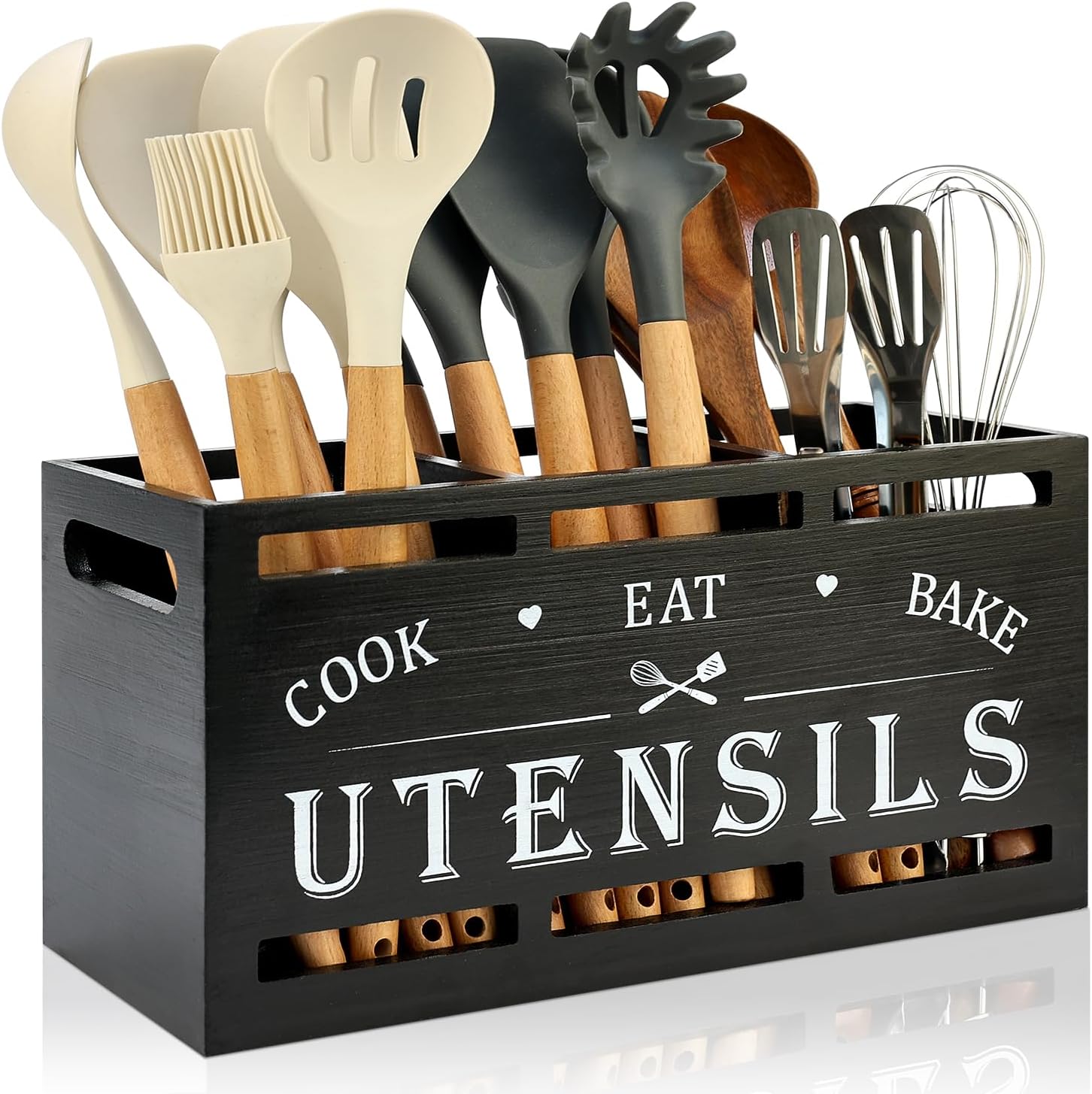
Materials range from gleaming stainless steel and warm natural acacia wood to heavy glazed ceramic finishes designed for stability. Some models incorporate rotating mechanisms for rapid access from any angle, while others utilize multi-compartment dividers to separate flatware from oversized turners. Evaluating these structural attributes ensures your chosen organizer matches both your aesthetic preferences and daily cooking habits seamlessly.
As an Amazon Associate, StacyLaughs earns from qualifying purchases.
Buying guide
Countertop Space and Footprint Management
Assessing your available kitchen counter space before selecting an organizer prevents frustrating workspace overcrowding during active meal preparation. Compact cylindrical caddies fit neatly beside busy stoves or in narrow kitchen corners, demanding minimal square inches while holding essential daily tools. Conversely, wide rectangular models require more linear surface area but easily accommodate extensive tool collections without crowding individual instruments together.
Measuring the exact clearance beneath upper cabinets ensures tall holders slide into position without physical obstruction. Evaluating your overall kitchen layout helps determine whether a singular compact vessel or a dual-piece set distributes storage more effectively across different preparation zones in your home.
Material Selection and Surface Maintenance
Choosing the right material involves balancing aesthetic preferences with daily maintenance requirements. Stainless steel options resist fingerprints and withstand dishwasher cleaning, making them practical for busy environments. Wood finishes add warm, natural charm to rustic decor but typically demand gentle hand wiping and careful moisture management to preserve their lacquered or unfinished surfaces over extended periods of use.
Heavy ceramic crocks provide rigid durability and substantial weight, though their glazed surfaces require simple wipe-downs rather than aggressive scrubbing. Understanding how each material reacts to everyday kitchen moisture and heat ensures your organizer remains visually appealing while supporting your preferred cleaning routine without excessive effort.
Capacity Requirements for Long Utensils
Accounting for the total number of cooking instruments you own prevents overcrowding and keeps tools accessible. Standard holders comfortably fit ten to fifteen items, while extra-large vessels accommodate twenty to thirty pieces, including oversized ladles and whisks. If you frequently use long spatulas or specialized turners, verifying the internal height ensures tall tools do not tip the caddy over.
Reviewing your collection helps determine if a single deep crock or a multi-compartment organizer provides the best fit. Matching your utensil volume to the container size maintains a tidy countertop without burying frequently needed items at the bottom.
Rotation Mechanisms Versus Stationary Designs
Rotating holders function like a lazy susan, allowing users to spin the entire vessel to reach instruments positioned on the far side. This spinning capability reduces fumbling during fast-paced cooking routines. Stationary crocks, however, remain completely fixed on the counter, offering absolute stability without moving parts that might collect dust or require mechanical clearance around the base.
Deciding between these two styles depends on your preference for quick tool retrieval versus a completely immovable storage base. Both designs support efficient organization depending on how densely your countertop area is arranged.
Compartment Sorting Versus Open Storage
Multi-compartment organizers allow users to segregate different tool types, keeping knives, spoons, and whisks separated for instant visual identification. This structured sorting prevents smaller flatware items from getting lost beneath large turners. Single open-compartment vessels offer more flexible placement for bulky instruments but require manual searching when you need to grab a specific item quickly from a crowded bunch.
Choosing between structured dividers and open storage depends on whether you value strict categorization or maximum interior volume for irregular shapes. Both layouts serve distinct organizing styles effectively.
Stability and Weight Considerations
A stable base prevents tipping when pulling heavy or long utensils from the holder during busy cooking moments. Weighted ceramic vessels and models equipped with non-slip rubber feet stay firmly planted on smooth countertops. Lightweight stainless steel or thin wooden caddies offer excellent portability but may require mindful loading to avoid shifting if heavy tools are placed unevenly on one side.
Balancing weight with ease of movement ensures the holder matches your daily habits. Selecting a sturdy base protects delicate kitchen surfaces from scratches while keeping your cooking tools secure and upright.
Frequently asked questions
How do I clean and maintain a wooden utensil holder?
Cleaning a wooden utensil holder requires gentle hand washing with a damp cloth and mild soap rather than full submersion in water or placement in a dishwasher. Because wood reacts to prolonged moisture, wiping the surface dry immediately helps preserve the lacquered or natural finish. Periodically applying food-safe mineral oil can also maintain the wood grain pattern and prevent drying over time. Always follow the manufacturer instructions for specific wood care to ensure the container retains its appearance and structural integrity through years of daily countertop use in your kitchen.
Can rotating utensil holders support heavy cooking tools without tipping?
Rotating utensil holders typically incorporate weighted bases, non-slip rubber feet, or sturdy internal bearings designed to keep the vessel stable during rapid spinning. While heavy-duty ceramic and wooden rotating models stay firmly planted even when loaded with numerous instruments, lightweight stainless steel rotating caddies benefit from balanced tool distribution. Distributing heavy spatulas and ladles evenly across the interior prevents uneven weight shifts. Reviewing the product specifications regarding base weight and non-slip features helps ensure reliable stability during your active cooking routines.
What is the advantage of using a multi-compartment utensil organizer?
A multi-compartment organizer allows you to physically separate different kitchen tools by category, keeping knives, spoons, whisks, and spatulas in dedicated sections. This structured sorting eliminates the frustration of digging through a cluttered single opening to find a specific instrument. By keeping flatware and bulky cooking tools isolated, you gain instant visual access and maintain a cleaner, more orderly countertop workspace. Multi-compartment designs are especially helpful for households with large collections of mixed utensil sizes and specialized culinary accessories.
Are ceramic utensil holders too heavy for everyday countertop placement?
Ceramic utensil holders possess substantial weight by design, which actually serves as a primary advantage for countertop placement. This heavy base prevents the crock from sliding or tipping over when you pull out long or heavy cooking tools during busy meal preparation. While they are heavier to lift and transport than stainless steel or thin wood alternatives, ceramic vessels remain stationary on most kitchen surfaces. Their solid construction provides exceptional stability, making them ideal for cooks who prioritize a secure, immovable storage base near the stove.
How many utensils can a standard kitchen holder accommodate?
Standard kitchen utensil holders typically accommodate between ten and fifteen full-sized cooking tools, making them suitable for everyday collections of spatulas, spoons, and turners. Extra-large models expand this capacity to hold anywhere from twenty to thirty instruments, easily storing longer tools ranging from ten to sixteen inches in length. When selecting a holder, reviewing your specific tool count ensures you choose a caddy size that prevents overcrowding while keeping your essential countertop accessories neatly organized and instantly accessible for daily cooking tasks.