Appliances · Buying Guide
Best Zyliss Classic Rotary Cheese Grater Choices for Every Kitchen

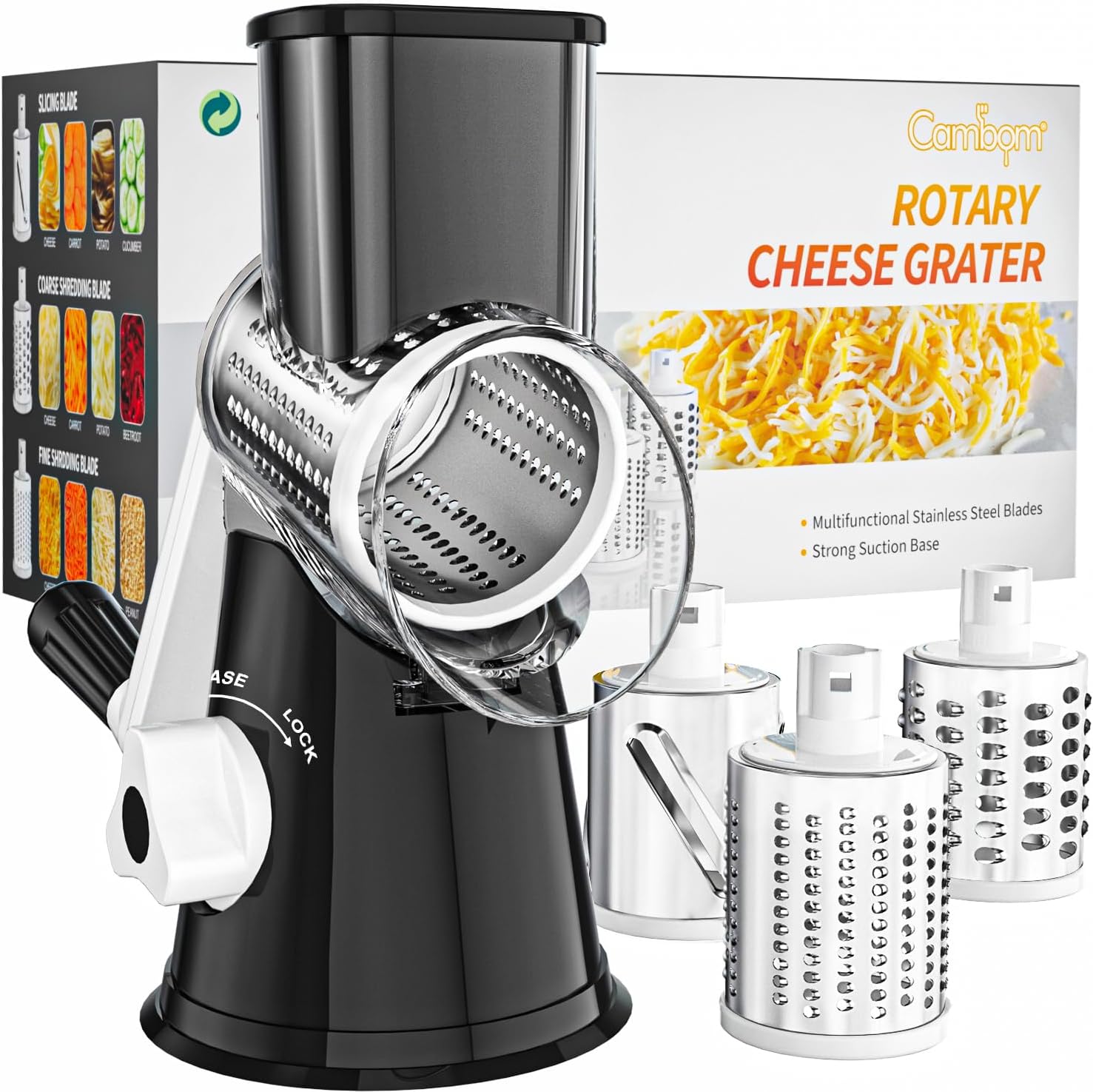
Rotary cheese graters provide a practical, hands-free way to process hard cheeses, nuts, and vegetables without risking direct contact with sharp blades. Whether you are prepping toppings for a weeknight pasta dish or slicing produce for a large family gathering, these manual crank tools streamline food preparation through smooth mechanical action. Models featuring interchangeable stainless steel drums and secure mounting bases offer versatile performance across different types of ingredients, helping home cooks maintain efficiency and neatness on their kitchen countertops.
Choosing the right manual food processor involves looking closely at blade materials, mounting mechanisms, cleaning requirements, and included drum options. While some designs emphasize multi-blade versatility for fine shredding and slicing, others focus on compact storage or specialized sealing features to keep leftover ingredients fresh. Reviewing the specific design attributes of each tool ensures you select a model that matches your daily cooking habits, counter space availability, and preferred maintenance routine without relying on unnecessary gimmicks.
As an Amazon Associate, StacyLaughs earns from qualifying purchases.
Buying guide
Evaluating Blade Materials and Options
Rotary graters rely heavily on the quality of their metal drums to process hard cheeses and tough vegetables efficiently. Stainless steel blades resist rust and maintain their sharp edges over extended periods of frequent use in home kitchens. Selecting a model with acid-etched teeth ensures cleaner cuts that glide through food rather than tearing it apart during the manual cranking process.
Many modern units offer interchangeable drums that allow you to switch between fine shreds, coarse flakes, and flat slices easily. Consider whether your cooking routine benefits from a single dedicated drum or a multi-blade set that accommodates diverse ingredients ranging from chocolate to nuts and root vegetables.
Understanding Countertop Stability Bases
A secure mounting base is essential for safe and efficient rotary grater operation on your kitchen counter. Models featuring strong suction feet anchor firmly to smooth surfaces like glass, marble, or polished granite. This suction grip prevents the device from sliding around while you turn the handle with one hand and feed food with the other.
For kitchens with textured or rough wooden countertops, look for units that also provide table clamps. Combining a suction foot with a physical clamp ensures maximum stability regardless of your kitchen surface texture, reducing accidental tipping during heavy grating tasks.
Assessing Cleanup and Maintenance Routines
Cleaning food preparation tools requires careful attention to manufacturer guidelines to preserve material integrity over time. Many rotary graters feature removable drums and barrels that disassemble quickly for thorough washing under running water. Always check whether the specific model permits automatic dishwasher cycles or requires manual hand washing.
Hand washing stainless steel drums and sharp cutting edges often protects them from dulling and extends their operational lifespan. Removable components that detach without complex tools make it much easier to scrub away stubborn cheese residue from tight crevices.
Storage and Space Considerations
Kitchen appliance footprint plays a significant role in determining how practical a tool is for daily use. Rotary graters with tall vertical profiles and wide bases require adequate cabinet clearance or dedicated pantry shelf space. Evaluating your available storage prevents countertop clutter when the appliance is not active.
Some manufacturers include dedicated storage tubes or compact nesting designs for spare drums, keeping all loose attachments organized in one place. Choosing a model with thoughtful accessory storage helps prevent lost parts inside deep kitchen drawers.
Food Capacity and Hopper Design
The size of the grating chamber directly affects how much food you can process in a single pass. Larger hoppers accommodate bigger chunks of cheese or wider vegetable segments, reducing the need for extensive pre-cutting. However, larger hoppers also increase the overall physical dimensions of the appliance.
Ergonomic plungers and angled feed chutes improve user comfort by maintaining steady downward pressure on ingredients. A well-designed pusher ensures that food reaches the rotating drum efficiently while keeping your fingers safely away from sharp edges.
Specialized Storage and Dispensing Features
Certain rotary grater designs incorporate built-in storage seals and adjustable windows to manage ingredients more effectively. An interior silicone seal allows you to store leftover cheese directly inside the grater housing inside your refrigerator without drying out. This eliminates the need for extra plastic bags or storage containers.
Adjustable dispensing windows give you direct control over how much cheese falls onto your plate or mixing bowl. This feature allows for precise portioning during meal service, combining grating, storage, and dispensing into a single streamlined kitchen tool.
Frequently asked questions
Can rotary cheese graters handle very hard cheeses like aged parmesan?
Yes, many stainless steel rotary graters process hard cheeses efficiently when equipped with fine or coarse metal drums. The mechanical hand crank provides the leverage needed to push dense blocks against the sharp blade surface without requiring direct hand contact. However, extremely hard cheese blocks may need to be cut into smaller pieces that fit comfortably inside the hopper chamber before you begin turning the handle for smooth operation.
What is the difference between suction bases and table clamps?
Suction bases rely on negative pressure to anchor the grater securely onto smooth, non-porous surfaces such as glass, laminate, or polished granite countertops. Table clamps use a physical screw mechanism to lock the appliance onto the edge of rougher or textured surfaces where suction cups cannot maintain a reliable seal. Choosing a model that offers both mounting options provides maximum versatility across different kitchen work areas and countertop materials.
Are rotary grater parts safe to wash in an automatic dishwasher?
Dishwasher safety varies by manufacturer and specific model construction, so checking the product guidelines is essential. Many plastic barrels and stainless steel drums are labeled as top-rack dishwasher safe for easy cleanup convenience. Conversely, certain aluminum or specialized metal components recommend hand washing to prevent discoloration, preserve sharp cutting edges, and extend the overall lifespan of the appliance.
How do I prevent cheese from getting stuck inside the grating chamber?
Preventing cheese jams involves using the included ergonomic food pusher to apply steady, moderate pressure as you turn the crank. Cutting cheese blocks into appropriately sized pieces that match the internal dimensions of the hopper also stops binding. Avoid forcing excessively large or warm, soft cheese chunks into the drum, as softer dairy items perform best when chilled properly before processing.
Can I use a rotary grater for vegetables and chocolate as well?
Rotary graters are versatile kitchen tools designed to process a wide variety of foods beyond hard cheese. You can use coarse or slicing drums to prep vegetables like zucchini, potatoes, and carrots, as well as shred chocolate and nuts for baking recipes. Reviewing the included drum options on your chosen model will clarify which blade attachments support specific fruits, vegetables, and confectionery ingredients.