Appliances · Buying Guide
Best Zyliss Classic Rotary Grater Options for Easy Food Prep
Finding the right kitchen tool for daily food preparation involves looking closely at how manual crank mechanisms and stainless steel blades handle different ingredients. Rotary graters offer a direct, hands-on approach to processing hard cheeses, vegetables, nuts, and chocolate without relying on electrical outlets or complex motor setups.
Exploring various designs helps home cooks match specific countertop footprints, material weights, and mounting styles to their unique cooking spaces. Whether selecting single-drum units or multi-blade systems with specialized storage components, understanding these physical attributes ensures a practical, reliable fit for everyday meal preparation tasks across different kitchen surfaces. Many households appreciate the simplicity of manual operation, keeping fingers safely away from sharp cutting surfaces while transforming blocks of cheese into fine shreds or slices within seconds.
As an Amazon Associate, StacyLaughs earns from qualifying purchases.
Buying guide
Choosing Blade Configurations for Your Ingredients
Selecting the right blade configuration depends entirely on the types of food you process most frequently in your kitchen. Single drum models handle basic coarse grating tasks efficiently for hard cheeses, root vegetables, and chocolate blocks. These straightforward setups simplify operation when you only require one consistent texture for daily meal preparation routines without managing extra parts.
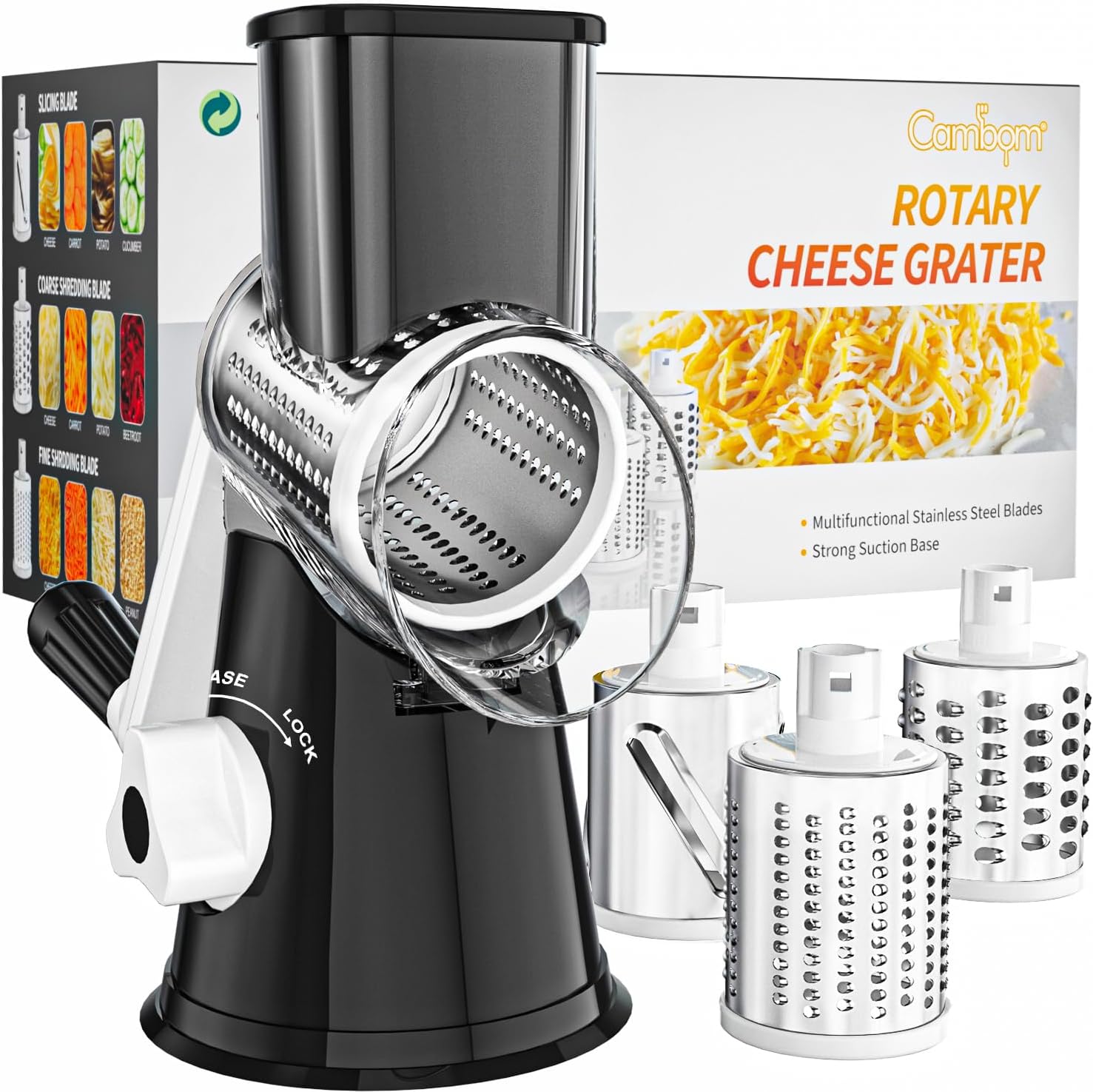
Multi-blade systems expand your preparation capabilities by including fine shredding, slicing, and grinding attachments. Evaluating your daily recipes ensures you choose a drum assortment that matches your cooking style. While extra blades provide versatility for salads and tacos, they also require dedicated storage space within your kitchen cabinets or drawers between cooking sessions.
Understanding Countertop Mounting and Stability Mechanisms
Maintaining stability during manual cranking requires reliable anchoring systems suited to your specific kitchen countertop materials. Suction bases create a firm grip on smooth glass, laminate, or polished marble surfaces by generating powerful downward suction pressure. This mechanism keeps the appliance stationary while you turn the handle, preventing accidental slips during fast processing tasks.
Textured or tiled surfaces frequently prevent rubber suction feet from sealing correctly, making physical table clamps an essential alternative for secure operation. Reviewing your countertop finish helps determine whether a suction-only design or a dual-mount setup with an adjustable clamp provides the necessary mechanical security during heavy grating sessions.
Material Selection and Long-Term Durability Factors
Kitchen tools constructed from stainless steel, aluminum, and food-grade ABS plastic offer distinct structural advantages regarding weight, maintenance, and daily durability. Stainless steel cutting drums provide robust resistance against dulling and wear during intensive cheese, nut, and vegetable processing tasks. These metallic elements maintain their sharp edges and structural integrity over years of regular kitchen use.
Molded plastic housings and lightweight frames reduce the overall weight of the appliance, making it significantly easier to lift, position, and store in kitchen cabinets. Balancing these material choices ensures your chosen grater withstands regular culinary demands while remaining portable and convenient to manage during routine countertop setup and breakdown.
Evaluating Cleaning Requirements and Maintenance Guidelines
Maintaining hygiene in food processing equipment involves understanding manufacturer cleaning instructions for removable parts and blades. Many rotary graters feature fully detachable components that separate quickly for thorough washing under running water or placement on top dishwasher racks. Quick disassembly prevents food particles from trapping in hidden crevices during heavy meal preparation tasks.
Hand washing is frequently recommended for specialized metal drums and aluminum frames to preserve edge sharpness and prevent surface discoloration over extended periods of use. Reviewing these maintenance routines helps you select an appliance that fits comfortably into your daily cleanup habits without demanding excessive manual scrubbing effort after preparing meals.
Storage Space and Appliance Footprint Considerations
Assessing your available kitchen storage space ensures that larger multi-drum graters fit comfortably inside lower cabinets or wide kitchen drawers without causing clutter. Compact models equipped with dedicated storage tubes keep extra blades organized and protected safely without crowding your pantry shelves. Proper component organization prevents lost parts and keeps your food preparation workspace completely tidy.
Devices featuring permanent suction bases or heavier metal frames require dedicated countertop footprints if you prefer leaving them fully assembled between daily cooking sessions. Measuring your storage areas beforehand prevents unexpected spatial inconvenience when housing appliances that include multiple interchangeable attachments, hand cranks, and bulky feed jars alongside food pushers.
Safety Design and Hand Protection Features
Protecting your fingers from sharp stainless steel blades is a primary design benefit of modern rotary grating appliances efficiently. Enclosed grating barrels and mechanical food pushers keep your hands and skin safely distanced from active cutting surfaces during high-speed operation. This physical separation prevents accidental contact while processing firm cheeses, nuts, chocolate, and root vegetables efficiently.
Hand cranks replace direct manual manipulation of cheese blocks against traditional flat plates, significantly reducing the risk of painful scrapes and cuts during fast tasks. Selecting a model with robust safety guards and stable mounting bases ensures confident, worry-free food preparation routines for everyday home cooks handling diverse kitchen ingredients.
Frequently asked questions
How do rotary graters attach securely to different kitchen countertops?
Rotary graters typically utilize one of two primary stabilization methods depending on the countertop material and surface texture. Strong rubber suction feet create a powerful vacuum seal when pressed down firmly onto smooth, non-porous surfaces such as glass, laminate, or polished marble. For textured, tiled, or rough surfaces where suction fails to grip properly, manufacturers frequently include mechanical table clamps that physically secure the appliance base to prevent slipping during intensive manual cranking operations.
Can rotary graters process items other than hard cheese?
Yes, rotary graters are highly versatile kitchen tools designed to handle a wide variety of food items far beyond traditional hard cheeses. Depending on the installed blade or drum, these appliances efficiently process root vegetables like carrots and potatoes, nuts such as almonds and peanuts, blocks of chocolate, and various semi-soft cheeses. Interchangeable stainless steel drums allow home cooks to switch easily between coarse shredding, fine grating, and flat slicing depending on recipe requirements.
Are rotary grater components safe to wash in an automatic dishwasher?
Cleaning guidelines vary by manufacturer specification, though many plastic-bodied rotary graters feature components that are top-rack dishwasher safe for everyday convenience. However, specific models constructed with aluminum frames or specialized stainless steel cutting drums frequently recommend manual hand washing to preserve blade edge sharpness and prevent surface discoloration over extended periods of use. Reviewing the provided product instructions ensures you maintain the structural integrity and longevity of your specific grating appliance over time.
What safety features protect hands during grating operations?
Modern rotary graters incorporate several deliberate design elements to keep your fingers safely away from sharp cutting blades during food preparation. Enclosed rotating barrels house the metal blades securely inside a protective chamber while a mechanical food pusher applies downward pressure on the ingredients. Additionally, manual hand cranks replace the need to press blocks of cheese or vegetables directly against exposed cutting surfaces, significantly minimizing the risk of accidental cuts and scrapes.
Why do some models include multiple interchangeable drums or blades?
Models featuring multiple interchangeable drums or blades provide greater versatility for different culinary tasks within the kitchen. While a single coarse drum works well for basic cheese shredding, having access to fine shredding, grinding, and flat slicing attachments allows you to prepare ingredients for salads, hash browns, tacos, and desserts using a single machine. Storage tubes included with certain units help keep these extra blades organized and protected when not attached to the main body.