Appliances · Buying Guide
Best Zyliss Rotary Cheese Grater Picks for Every Kitchen

Finding the right kitchen tool to process blocks of cheese, nuts, and vegetables efficiently often leads home cooks to manual rotary shredders. These mechanical devices rely on hand cranks and interchangeable stainless steel drums to reduce food preparation time without requiring electrical outlets. Manual crank designs give users direct control over speed and pressure, transforming solid ingredients into fine shreds, coarse flakes, or uniform slices directly onto prep surfaces or bowls.
Selecting an appropriate model involves evaluating stability features, blade configurations, and physical dimensions to match specific counter spaces and storage cabinets. Dual mounting options like suction bases and table clamps accommodate different kitchen surfaces, while detachable components simplify cleanup routines. Reviewing these mechanical shredders helps identify which design elements align with daily cooking requirements and ingredient types.
As an Amazon Associate, StacyLaughs earns from qualifying purchases.
Buying guide
Understanding Blade Configurations
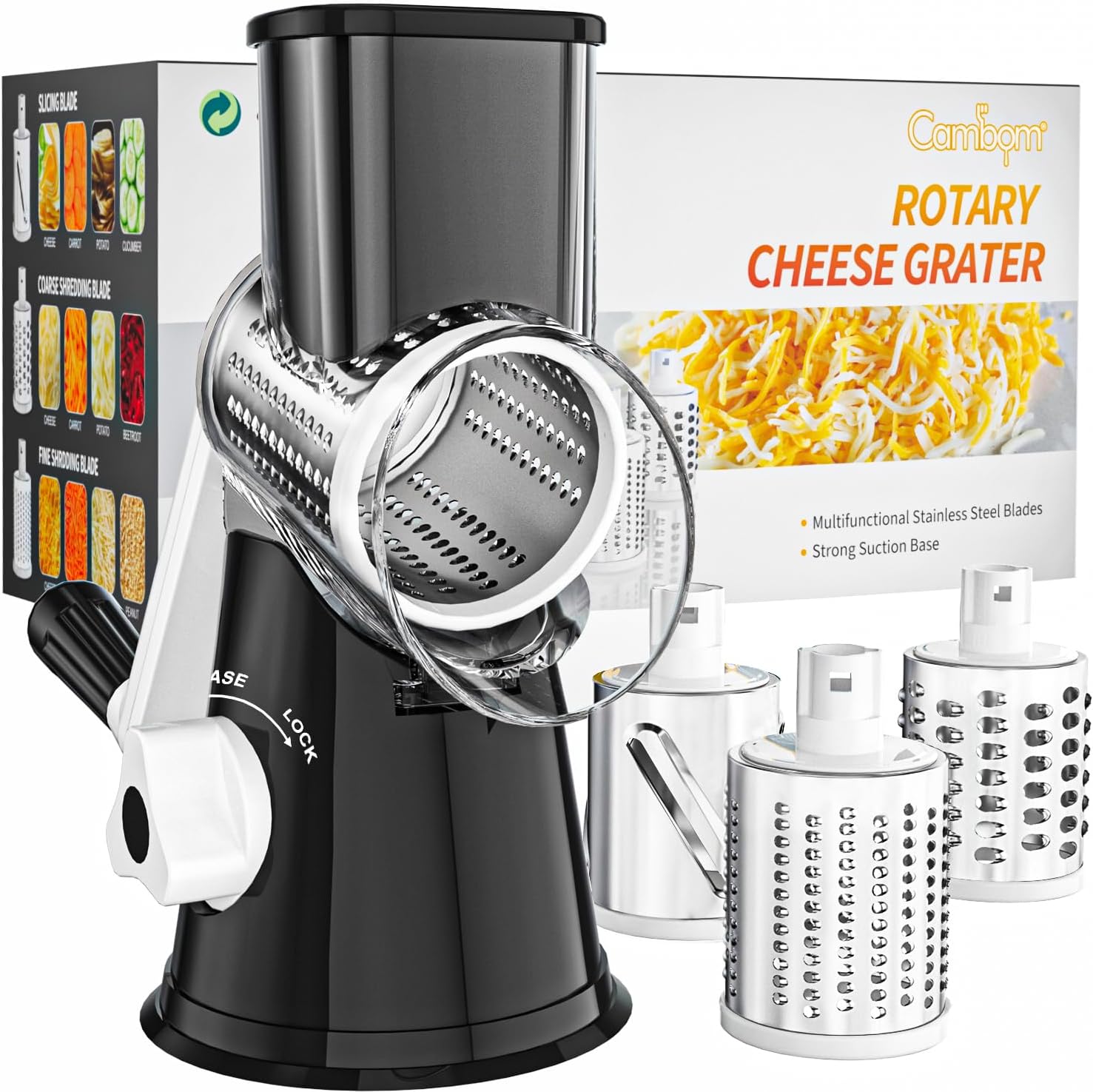
Rotary cheese graters typically offer single or multiple drum configurations, each designed to handle specific preparation tasks. Single-drum models focus on coarse shredding, making them straightforward for daily cheese and vegetable needs. Multi-drum options provide fine, coarse, and slicing cylinders, expanding culinary flexibility for cookies, nuts, and vegetables. Buyers should evaluate whether they need varied cuts or a single dedicated shredder.
Interchangeable drums store easily inside cabinets or specialized tubes depending on the appliance design. Selecting the correct blade configuration prevents cabinet clutter and ensures the grater matches actual cooking habits. Reviewing included accessories avoids purchasing redundant tools while securing the exact texture variations required for everyday recipes, salads, and toppings.
Evaluating Countertop Stability Bases
Countertop stability is critical during manual cranking to prevent sliding or tipping while processing hard foods. Suction bases create a powerful vacuum seal against smooth surfaces like marble, glass, or polished laminate. Buyers must ensure their kitchen counters feature appropriate textures, as suction mechanisms require non-porous areas to maintain a secure grip during heavy food preparation tasks.
Alternative mounting methods include physical table clamps designed to secure units on rough or textured surfaces where suction fails. Dual-mount designs combine both features, offering maximum versatility across different kitchen layouts. Assessing countertop materials beforehand helps buyers choose between suction-only models and clamp-equipped units for reliable safety.
Material Composition and Durability
Rotary grater construction generally combines stainless steel cutting drums with either lightweight plastic housings or heavy metal frames. Stainless steel drums resist rust and maintain sharp cutting edges through repeated cheese and vegetable processing cycles. Plastic bodies reduce overall appliance weight and simplify handling, whereas aluminum or metal structures offer enhanced structural rigidity under heavy downward pressure.
Food-grade ABS plastics used in modern shredders ensure safety without containing harmful chemical additives like BPA. Buyers preferring long-term durability often lean toward metal-reinforced frames, while those prioritizing lightweight convenience select sturdy plastics. Understanding material trade-offs ensures the chosen appliance withstands regular use without premature mechanical wear over years of meal preparation.
Cleaning and Maintenance Requirements
Maintaining hygiene in manual food processors depends heavily on how easily components disassemble and wash after use. Many plastic-bodied graters feature top-rack dishwasher-safe parts, allowing quick and convenient cleanup routines for busy households. Conversely, specific metal models explicitly recommend hand washing to preserve specialized finishes and protect internal mechanical parts from harsh automatic dishwasher detergents.
Transparent barrels and detachable chambers prevent food residue buildup by allowing users to rinse pulp away easily under running tap water. Cleaning brushes included with certain models assist in clearing fine cheese particles from tight blade perforations. Evaluating cleaning instructions ensures the appliance fits smoothly into post-meal routines without creating excessive maintenance friction or difficult scrubbing tasks.
Ergonomics and User Safety Features
Hand-crank operation relies on thoughtful ergonomic design to minimize hand fatigue during large food preparation tasks and family meal gatherings. Angled feeding chambers and comfortable hand cranks reduce the physical force required to rotate cutting drums against solid ingredients. Food pushers protect fingers from exposed stainless steel blades, keeping hands safely away from active cutting surfaces throughout operation.
Transparent viewing barrels let users monitor processing progress closely, helping prevent overfilling and annoying ingredient jams. Streamlined handle designs provide a secure grip, accommodating various hand sizes comfortably during continuous cranking. Prioritizing ergonomic features ensures smooth food shredding without causing strain on wrists or fingers during meal assembly.
Storage and Kitchen Space Management
Compact storage capabilities matter significantly for kitchen tools equipped with multiple interchangeable drums and bulky attachments. Many rotary grater components disassemble into small parts that fit easily inside standard kitchen drawers or low pantry cabinets. Dedicated drum storage tubes help keep spare metal blades organized and protected from accidental damage when not actively in use.
Assessing overall appliance dimensions helps buyers determine whether a unit can remain permanently on countertops or requires frequent disassembly for storage. Lightweight plastic models offer high portability, moving effortlessly between pantries and food prep stations. Selecting a space-efficient design prevents kitchen counter clutter while maintaining immediate accessibility for daily cooking activities and quick snack preparation.
Frequently asked questions
How do rotary cheese graters attach to kitchen countertops?
Rotary cheese graters typically rely on either a suction base or a mechanical table clamp to stay anchored during operation. Suction bases use a vacuum lever to create a firm grip against smooth, non-porous surfaces like glass, marble, or polished laminate. For textured or uneven countertops where suction fails, table clamps provide a secure mechanical fastening solution. Versatile models often combine both systems, giving users the flexibility to operate the grater safely across different kitchen surfaces without slipping or tipping.
Can these rotary graters handle foods other than cheese?
Yes, these rotary kitchen appliances process a wide variety of ingredients beyond standard blocks of cheese. Interchangeable stainless steel drums easily slice, shred, or grind firm vegetables like carrots, cucumbers, and radishes, as well as fruits and potatoes for hash browns. Additionally, many models effectively chop nuts, almonds, chocolate, and cookies for baking toppings or dessert garnishes. Using the correct drum blade ensures clean cuts, prevents jamming, and expands everyday hand-crank shredder utility.
Are rotary cheese grater parts safe for dishwasher cleaning?
Dishwasher safety varies depending on specific manufacturer guidelines and materials used in each grater model. Many plastic-bodied units feature detachable components rated safe for top-rack dishwasher cleaning, simplifying daily maintenance. However, certain stainless steel or aluminum drum graters explicitly recommend hand washing to protect specialized metal finishes and prevent structural wear from harsh detergents. Always review the included product care instructions to determine whether hand washing or automated cleaning is appropriate.
How do food pushers protect hands during operation?
Food pushers are specifically designed to eliminate direct contact between human fingers and sharp rotating stainless steel blades inside the chamber. When feeding blocks of cheese or vegetables into the top hopper, the user inserts the matching plastic pusher to guide ingredients downward against the spinning drum. This mechanical barrier ensures fingers remain safely outside the grinding enclosure while allowing you to process food completely down to the end with minimal waste and maximum safety.
What causes food jamming inside a rotary grater?
Food jamming typically occurs when soft, overly warm ingredients are forced too quickly into the grating chamber or when incompatible food textures clog blade perforations. Using moderately firm cheeses straight from the refrigerator rather than room-temperature blocks significantly reduces sticking and clumping. Additionally, appliances designed with inclined curvature barrels help direct food smoothly toward the exit point. Turning the hand crank steadily and applying gentle, consistent pressure with the food pusher prevents internal buildup.