Appliances · Buying Guide
Best 1 1 2 quart saucepan options for everyday cooking
Finding the right small saucepan changes how you approach everyday cooking tasks like warming milk, melting butter, simmering single-serving sauces, and boiling grains. Compact cookware heats quickly and stores easily, making it an essential addition to apartment kitchens, dorm rooms, RVs, and busy family homes alike. Choosing the correct capacity ensures you prepare ideal portions without managing oversized pots.
This overview examines various 1.5-quart and multi-size stainless steel and nonstick options designed for daily meal preparation. Each selection highlights distinct material builds, handle designs, and stovetop compatibilities to help you match a small pot to your cooking routine without taking up excess cabinet space. Practical features guide your choice toward reliable daily performance.
As an Amazon Associate, StacyLaughs earns from qualifying purchases.
Buying guide
Material Selection and Build Quality
Choosing the right material for your small saucepan dictates how the pot handles heat and resists wear over time. Stainless steel offers exceptional durability and non-reactive cooking surfaces that do not alter food flavors.
Aluminum cores and multi-clad layers improve thermal conductivity, while ceramic or granite nonstick coatings simplify food release and cleanup. Assess your cooking habits to determine whether uncoated metal or treated surfaces suit your meals.
Understanding Heat Distribution
Even heat distribution prevents hot spots that can scorch delicate sauces, milk, or melted butter. Impact-bonded aluminum bases and tri-ply stainless steel constructions disperse thermal energy uniformly across the bottom of the pot.
Pots with consistent heat control allow precise simmering and boiling, ensuring that grains and liquids cook evenly without constant stirring or temperature adjustments on your stovetop burner.
Stovetop Compatibility
Modern kitchens feature diverse cooktop types, including gas, electric, ceramic, and induction ranges. Magnetic stainless steel bases are essential for induction cooktop functionality, allowing the pan to generate heat efficiently.
Verify that your chosen saucepan includes a compatible magnetic base if you use induction heating, while gas and electric users can generally rely on most aluminum or steel pan bottoms.
Handle Design and Ergonomics
Comfortable handles ensure safe transport of filled saucepans from the stove to the sink or countertop. Look for ergonomic shapes, stay-cool bakelite materials, or securely riveted stainless steel grips.
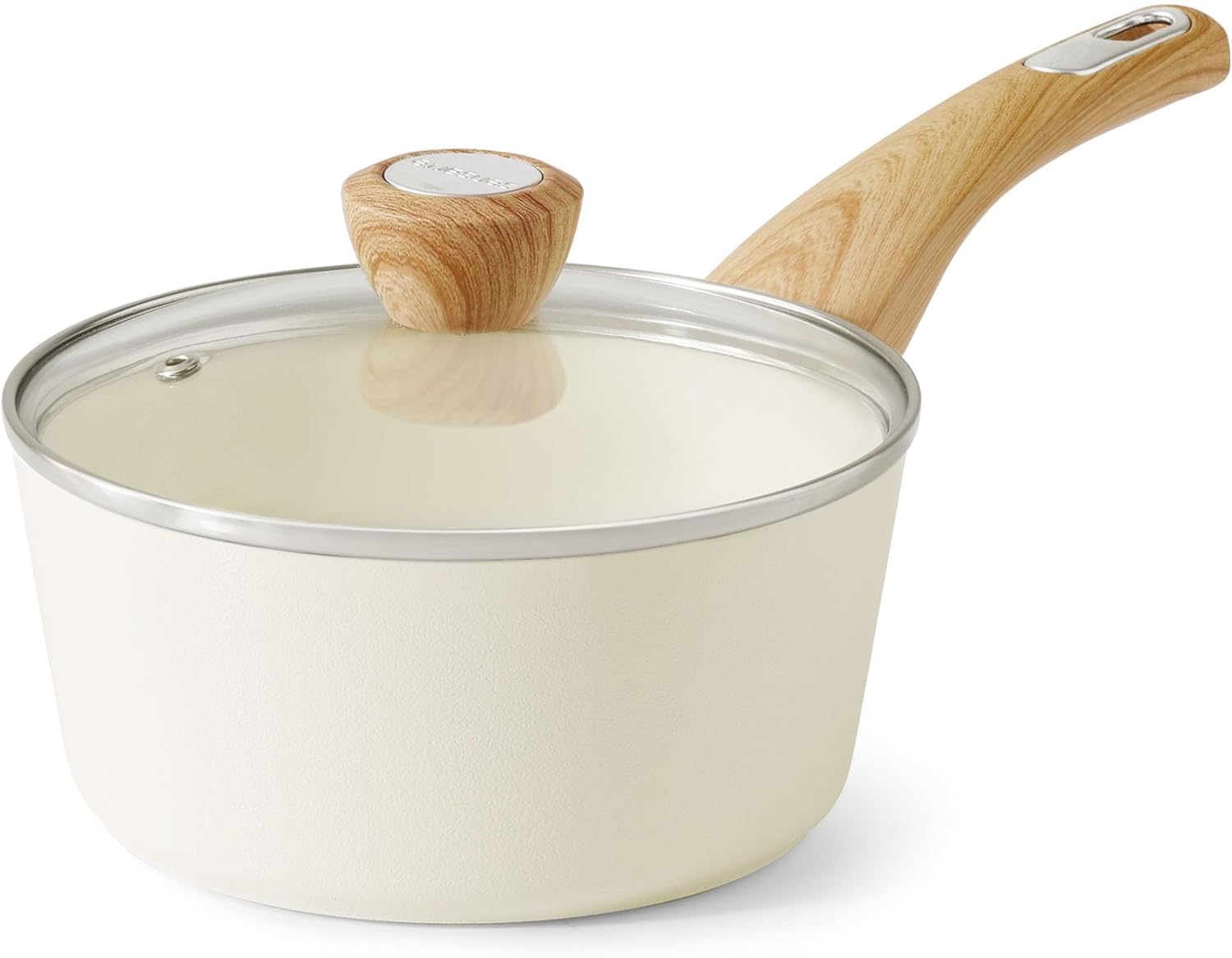
Handle construction also impacts oven safety ratings, as wooden or plastic components limit maximum temperature thresholds, whereas all-metal handles withstand much higher heat levels inside an oven.
Lid Types and Moisture Control
Tempered glass lids allow you to monitor cooking progress without lifting the cover, locking in heat, moisture, and nutrients effectively. Clear visibility reduces the likelihood of boil-overs and stovetop messes.
Well-fitting lids help maintain consistent internal temperatures for simmering soups, melting ingredients, or steaming grains, contributing to efficient everyday cooking performance.
Cleanup and Maintenance Requirements
Maintenance routines vary depending on the pan's finish and construction materials. Nonstick and ceramic coatings generally clean easily with mild soap and a sponge, often discouraging harsh scrubbing.
Uncoated stainless steel pots and dishwasher-safe models withstand aggressive cleaning methods, while polished finishes may require occasional attention to maintain their visual appeal over years of use.
Frequently asked questions
What is a 1.5-quart saucepan best used for?
A 1.5-quart saucepan is ideally sized for small-batch tasks such as warming milk, melting butter, heating single portions of soup, boiling a few eggs, or preparing small amounts of oatmeal and sauces. Its compact volume prevents overcrowding when cooking for one or two people.
Can small saucepans be used on induction cooktops?
Many modern small saucepans work on induction cooktops if they feature a magnetic stainless steel base or an embedded induction-compatible plate. Always check the manufacturer specifications to confirm whether the specific pan bottom is magnetized for induction ranges.
Are stainless steel saucepans difficult to clean?
Stainless steel saucepans are generally straightforward to clean and often dishwasher safe. Uncoated stainless steel withstands scrubbing and scouring pads if food residue sticks, though using proper heat levels and cooking oils minimizes stubborn stuck-on food.
What are the benefits of nonstick ceramic coatings?
Ceramic nonstick coatings provide smooth food release with minimal oil usage, supporting lower-fat cooking routines. They are typically formulated without PFOA, PTFE, or PFAS chemicals, offering a healthy alternative for preparing sticky sauces, grains, and eggs.
How do multi-clad bases improve cooking performance?
Multi-clad or impact-bonded bases combine layers of aluminum and stainless steel to spread heat rapidly and evenly across the bottom of the pot. This construction eliminates localized hot spots that cause food to burn, ensuring consistent simmering and boiling.