Appliances · Buying Guide
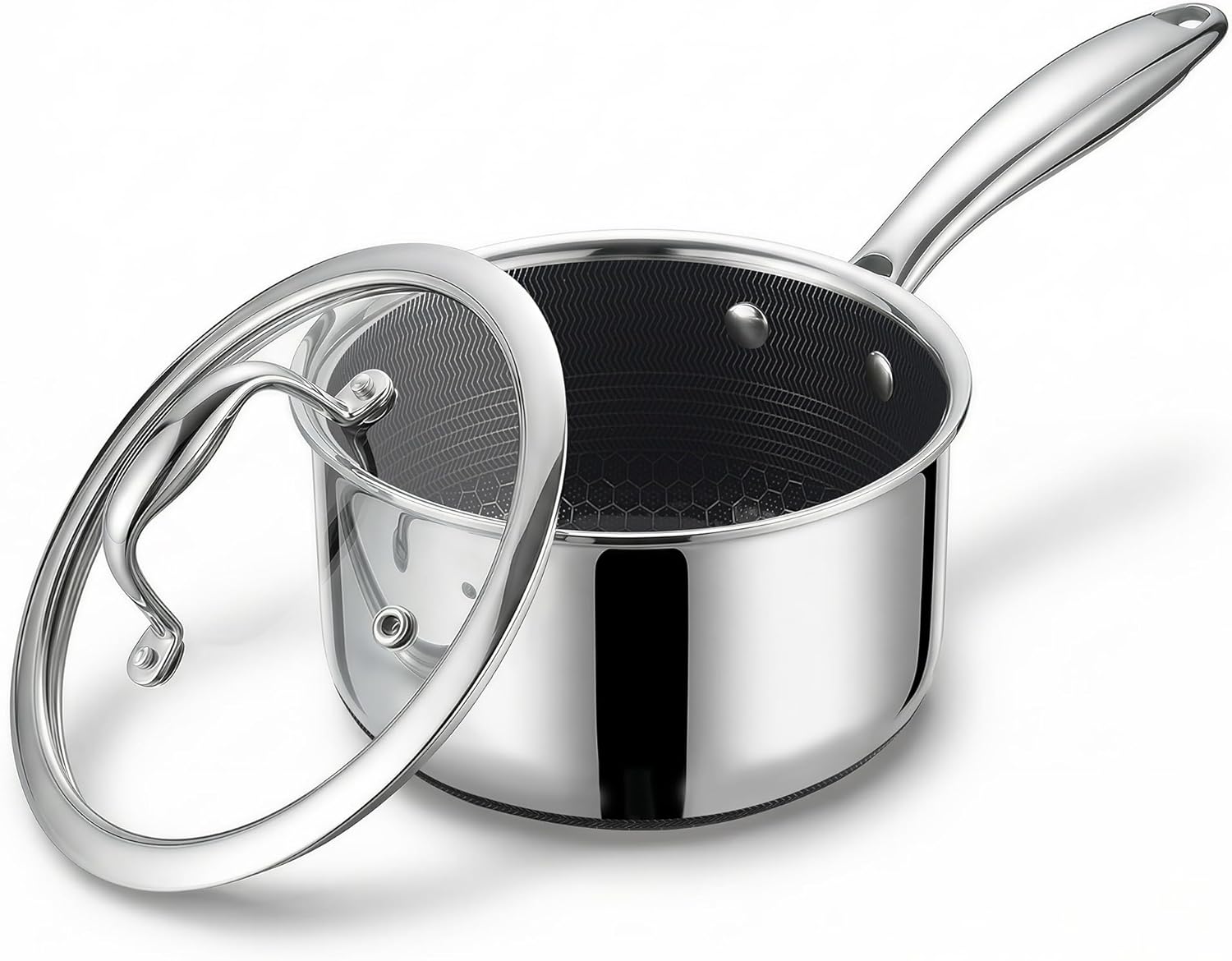
Best 1 Quart Non Stick Saucepan Choices for Every Kitchen Space

Finding the right cooking vessel for small culinary tasks can significantly streamline daily meal preparation. A compact 1 quart non stick saucepan handles everyday kitchen assignments like melting butter, simmering delicate reductions, and warming single portions without occupying excessive stovetop real estate. Selecting an appropriate model involves balancing core material construction, handle ergonomics, and specific heat source compatibilities to ensure dependable daily performance.
Manufacturers design these petite pots using diverse metallic cores and specialized nonstick coatings to facilitate effortless food release and cleanup. Whether evaluating hard-anodized aluminum or tri-ply stainless steel variations, understanding how each construction influences heat distribution helps match the vessel to your cooking style. Exploring available options ensures you find a reliable everyday companion tailored precisely to your kitchen workflow and cleaning preferences.
As an Amazon Associate, StacyLaughs earns from qualifying purchases.
Buying guide
Evaluating Core Material Construction
The structural material of a 1 quart saucepan dictates how efficiently it absorbs and transfers thermal energy from your burner. Aluminum cores provide rapid and even heat distribution, making them ideal for delicate reductions and fast warming tasks. Hard-anodized variations add structural durability to the base metal.
Stainless steel bonded bases offer alternative durability benefits but rely heavily on inner conductive layers to prevent scorching. Assessing your typical cooking menu helps determine whether fast-heating aluminum or rugged multi-ply metal best suits your daily culinary routines.
Understanding Nonstick Coating Varieties
Modern compact saucepans utilize various nonstick surface treatments, including ceramic, titanium-infused ceramic, and proprietary compounds like Quantanium. These coatings minimize food sticking and reduce the amount of oil required for simmering soups or heating syrups. Reviewing coating descriptions ensures you select a surface aligned with your health and maintenance preferences.
Ceramic options offer smooth release properties without traditional chemical concerns, while reinforced metal matrices resist daily wear. Proper matching of your utensil types to the specific coating prevents premature scratching and extends product utility over years of regular kitchen service.
Verifying Stovetop and Oven Compatibility
Before purchasing a compact cookware piece, check its compatibility with your specific heat source. Many aluminum and ceramic saucepans function seamlessly on gas, electric coil, and smooth ceramic cooktops, but explicitly exclude magnetic induction ranges. Confirming your range type prevents frustrating functional mismatches.
Oven safety thresholds also vary significantly among models, with some rated up to 350 degrees Fahrenheit while others withstand up to 500 degrees. Reviewing these thermal limits ensures you can transition your small pot safely from stovetop burners to baking enclosures.
Assessing Handle Design and Ergonomics
A secure handle design is critical for maintaining control when lifting and pouring hot liquids from a heavy or full saucepan. Look for riveted stainless steel configurations that offer structural longevity compared to glued or single-screw attachments. Ergonomic contours fit naturally into your hand during everyday kitchen tasks.
Many handles feature stay-cool engineering designed to minimize heat transfer from the burner to your grip area. Evaluating how the handle attaches and balances against the lightweight body ensures comfortable, confident maneuvering during intensive food preparation sessions.
Examining Lid and Pouring Features
Lid construction significantly influences moisture retention and cooking visibility during simmering processes. Tempered glass covers allow you to monitor food progress without releasing heat, while steel rims maintain a tight seal against the pot rim. Reviewing lid materials helps you choose between transparent observation and heavy-duty retention.
Additionally, specialized details like tapered rims support drip-free liquid pouring, minimizing countertop messes. Evaluating these functional additions ensures your chosen vessel simplifies both the cooking process and the subsequent kitchen cleanup routine.
Prioritizing Cleanup and Maintenance Needs
Maintenance requirements vary depending on whether a manufacturer approves a saucepan for automatic dishwasher cycles or mandates manual washing. Nonporous surfaces and seamless construction generally rinse clean effortlessly, saving time after preparing sticky sauces or melted dairy products. Reviewing care instructions protects your investment.
Adhering to recommended cleaning tools, such as non-abrasive pads and mild dish soaps, preserves delicate interior coatings. Balancing your desire for machine-washable convenience against manual care guidelines ensures long-term satisfaction with your kitchen tool.
Frequently asked questions
Can I use a 1 quart non stick saucepan on an induction cooktop?
Stovetop compatibility depends entirely on the specific product design and underlying core materials. Several aluminum-based ceramic saucepans explicitly state they are suitable for gas, electric, and ceramic stoves but note they are not compatible with induction ranges. Always review the manufacturer specifications and compatibility guidelines before attempting to use any small pot on a magnetic induction burner surface to avoid heating failures.
Are ceramic nonstick coatings safe for everyday cooking use?
Ceramic coatings utilized on these compact saucepans provide smooth food release properties designed for low-to-medium heat applications. Manufacturers frequently highlight that these interior finishes are formulated without traditional chemicals, offering a reliable surface for warming syrups, melting butter, and simmering delicate sauces. Following recommended temperature guidelines helps preserve the integrity of the nonstick surface over extended periods of regular kitchen food preparation.
What is the maximum oven-safe temperature for these saucepans?
Oven safety limits vary widely depending on the individual manufacturing specifications of each cookware model. Some ceramic-coated aluminum saucepans are rated safe inside ovens up to 350 degrees Fahrenheit, while advanced hard-anodized or ceramic models withstand temperatures up to 500 degrees Fahrenheit. Always verify the exact thermal rating provided by the manufacturer before transitioning your small pot from stovetop burners into an active oven environment.
How should I clean my nonstick saucepan to prevent damage?
Proper maintenance typically involves washing the vessel by hand using warm soapy water and a soft sponge or non-abrasive scrub pad. While certain models feature dishwasher-safe construction, adhering to gentle manual cleaning habits helps protect sensitive interior nonstick coatings from premature scratching and wear. Avoid harsh metallic scouring pads or abrasive chemical cleaners that can degrade the exterior finish or compromise the cooking surface performance over time.
What tasks are best suited for a 1-quart capacity pot?
A 1-quart saucepan is exceptionally well-suited for small-scale kitchen assignments that do not require large cookware vessels. Common tasks include heating maple syrup, melting butter or cheese sauces, simmering single portions of soup, warming milk, or boiling small amounts of vegetables and grains. Its compact size allows for precise temperature control and quick thermal response during delicate culinary preparations.