Appliances · Buying Guide
Best 10 Inch Saute Pan Options for Everyday Home Kitchen Cooking

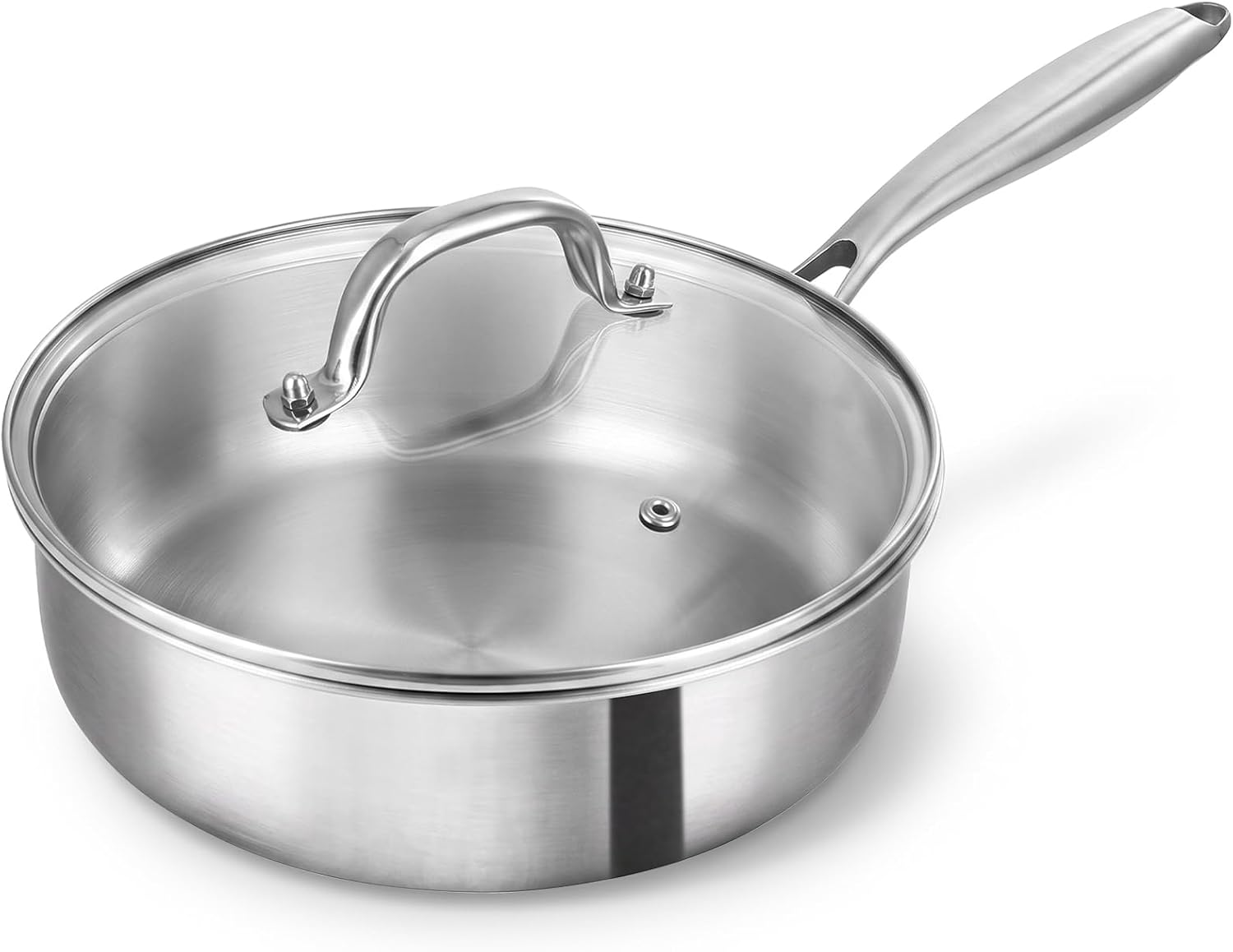
Finding the right cookware for daily meal preparation involves balancing materials, heat distribution, and lid designs. A reliable 10 inch saute pan handles everything from morning eggs to evening stir-fries with ease, providing enough surface area for versatile cooking tasks while fitting standard kitchen storage spaces. Selecting the correct pan depends on your preferred stovetop type and whether you need specialized non-stick coatings or durable stainless steel surfaces for searing and simmering.
Different manufacturing materials—ranging from aluminum and ceramic to tri-ply stainless steel—offer distinct advantages for heat retention, weight, and stovetop compatibility. Some models require careful hand washing or specific preheating steps, while others support dishwasher cleanup and oven use up to high temperatures. Reviewing these specific construction details helps match a pan directly to your everyday cooking habits and maintenance preferences.
As an Amazon Associate, StacyLaughs earns from qualifying purchases.
Buying guide
Material Composition and Heat Distribution
The material of your 10 inch saute pan dictates how quickly it heats up and how evenly it cooks food. Aluminum pans offer lightweight handling and rapid thermal response, making them popular for everyday tasks. Stainless steel options provide robust durability and resistance to warping, though they often require an aluminum or copper core to distribute heat effectively across the entire base.
Ceramic and granite coatings introduce non-stick properties directly onto metal bases, reducing the need for excess oils during cooking. When evaluating materials, consider your willingness to manage preheating steps or hand-wash delicate surfaces. Matching the material to your routine ensures long-term satisfaction without unexpected maintenance burdens.
Stovetop Compatibility and Cooktop Types
Before selecting any 10 inch saute pan, verify its compatibility with your specific kitchen stove. Gas and electric coil ranges accommodate nearly all metal cookware types, including standard aluminum and traditional stainless steel models. However, modern induction cooktops require a specialized magnetic stainless steel base to generate heat efficiently through electromagnetic induction fields, meaning standard aluminum pans will not register on these units.
Checking the manufacturer specifications prevents purchasing a pan that fails to heat on glass-ceramic or induction surfaces. If you plan to upgrade your kitchen appliances in the future, choosing an induction-compatible pan provides extra flexibility for your cookware collection. Always confirm whether the outer base contains the necessary magnetic properties for your exact cooking setup to avoid disappointing heating failures.
Coating Types and Non-Stick Performance
Non-stick coatings vary widely among 10 inch saute pans, influencing both food release and cleaning ease. Titanium, granite, and ceramic coatings provide smooth surfaces where eggs and delicate proteins slide off with minimal added oil. These non-stick options simplify cleanup significantly after meals but often require non-metal utensils to prevent scratching and surface degradation over extended periods of daily home cooking.
Alternatively, bare stainless steel surfaces offer a lifetime of durability without applied chemical coatings, allowing for aggressive high-heat searing and professional deglazing. Stainless steel requires proper preheating routines and oil application to achieve natural food release during cooking. Weighing coated convenience against uncoated longevity helps determine the ideal surface for your daily cooking style and maintenance habits.
Capacity, Depth, and Practical Dimensions
A 10 inch diameter provides a reliable cooking footprint for typical family portions, but depth determines total capacity and culinary versatility. Shallower frying pans excel at flipping pancakes and shallow frying, while deeper 3.5-quart saute pans easily accommodate soups, braises, and complex one-pot meals without spilling over the outer edges. Pour spouts integrated into deep models add extra convenience when transferring liquids or excess oils.
Consider what types of dishes you prepare most frequently when choosing between shallow profiles and high-walled deep designs. Cabinet storage space, handle length, and lid heights also factor into daily kitchen usability, especially in compact apartment spaces. Matching the pan depth and capacity to your typical meal volume ensures you always have enough room for stirring ingredients safely without messes.
Handles, Lids, and Ergonomic Design
Ergonomics play a major role in how comfortable a 10 inch saute pan feels during extended cooking sessions and heavy lifting. Riveted silicone, woodgrain bakelite, and solid stainless steel handles offer different grip textures and heat resistance levels. Stay-cool handles prevent accidental burns on the stovetop, while all-metal handles allow the entire pan to transition directly into a hot oven for baking tasks.
Glass lids equipped with steam vents provide clear visibility into the cooking process, letting you monitor food moisture without lifting the cover and losing heat. Detachable handles on certain advanced models simplify compact storage in crowded kitchen cabinets. Reviewing handle attachments and lid features ensures safe, comfortable transport from burner to oven and dining table.
Cleaning, Maintenance, and Temperature Limits
Proper maintenance preserves the lifespan of your 10 inch saute pan and maintains its cooking performance. Dishwasher-safe models offer quick cleanup after busy weeknight dinners, whereas hand-wash-only pans protect specialized granite or ceramic coatings from harsh detergents. Always verify maximum temperature ratings before placing any cookware into the oven or broiler to prevent warping or handle damage.
Following manufacturer guidelines for cleaning and heat limits prevents premature wear and maintains non-stick efficacy. Taking care to avoid thermal shock—such as putting a hot pan into cold water—protects the structural integrity of aluminum and stainless steel bases alike. Establishing a consistent care routine safeguards your cookware investment over years of daily use.
Frequently asked questions
What can I cook in a 10 inch saute pan?
A 10 inch saute pan accommodates a wide variety of everyday cooking tasks, ranging from morning eggs and pancakes to evening stir-fries, searing meats, and simmering sauces. Deeper 3.5-quart versions handle one-pot meals, boiling, braising, and shallow frying with ease due to their tall sides. Shallower models work exceptionally well for quick sautées and flipping delicate items. The generous surface area provides enough room for family portions while remaining manageable on standard burners, making it one of the most versatile pan sizes in any home kitchen collection.
Can I use metal utensils on non-stick saute pans?
Using metal utensils on coated non-stick saute pans is generally discouraged because sharp edges can scratch, chip, or degrade titanium, ceramic, and granite surfaces over time. Scratched coatings lose their smooth food-release properties and may cause food to stick during cooking. To protect your non-stick investment, opt for silicone, wood, or heat-resistant plastic utensils. If you prefer using metal spatulas or whisks without worrying about surface scratches, choosing an uncoated tri-ply stainless steel pan provides a durable metal-safe cooking surface instead.
How do I know if my saute pan works on an induction stove?
To determine if a saute pan is compatible with an induction cooktop, check the bottom of the pan for a magnetic stainless steel base or an induction symbol in the manufacturer specifications. You can also perform a quick test by placing a refrigerator magnet against the outer bottom surface; if the magnet holds firmly, the pan contains the necessary magnetic properties to generate heat on induction ranges. Standard aluminum or pure copper pans without a bonded magnetic base will not heat on induction cooktops.
Are all 10 inch saute pans dishwasher safe?
Not all 10 inch saute pans are safe for dishwasher cleaning, as specific manufacturer care instructions dictate how each model should be washed. While many stainless steel and standard aluminum pans support dishwasher cycles for convenience, certain granite or ceramic non-coated exterior models mandate hand washing with warm soapy water to protect specialty coatings and wooden or bakelite handle components from harsh dishwasher detergents and high water temperatures. Always check the product specifications before placing any pan into the dishwasher.
What is the difference between a fry pan and a deep saute pan?
The primary difference lies in the depth and shape of the sidewalls. Traditional fry pans feature flared, shallow sides designed primarily for quick flipping, sliding out eggs, and shallow frying. In contrast, deep saute pans possess straight, vertical sides and a larger fluid capacity, often around 3.5 quarts. These tall walls minimize oil splatter, hold more liquid for simmering sauces, braising meats, and boiling pasta, and provide the versatility of a pot combined with the convenience of a skillet in a single vessel.