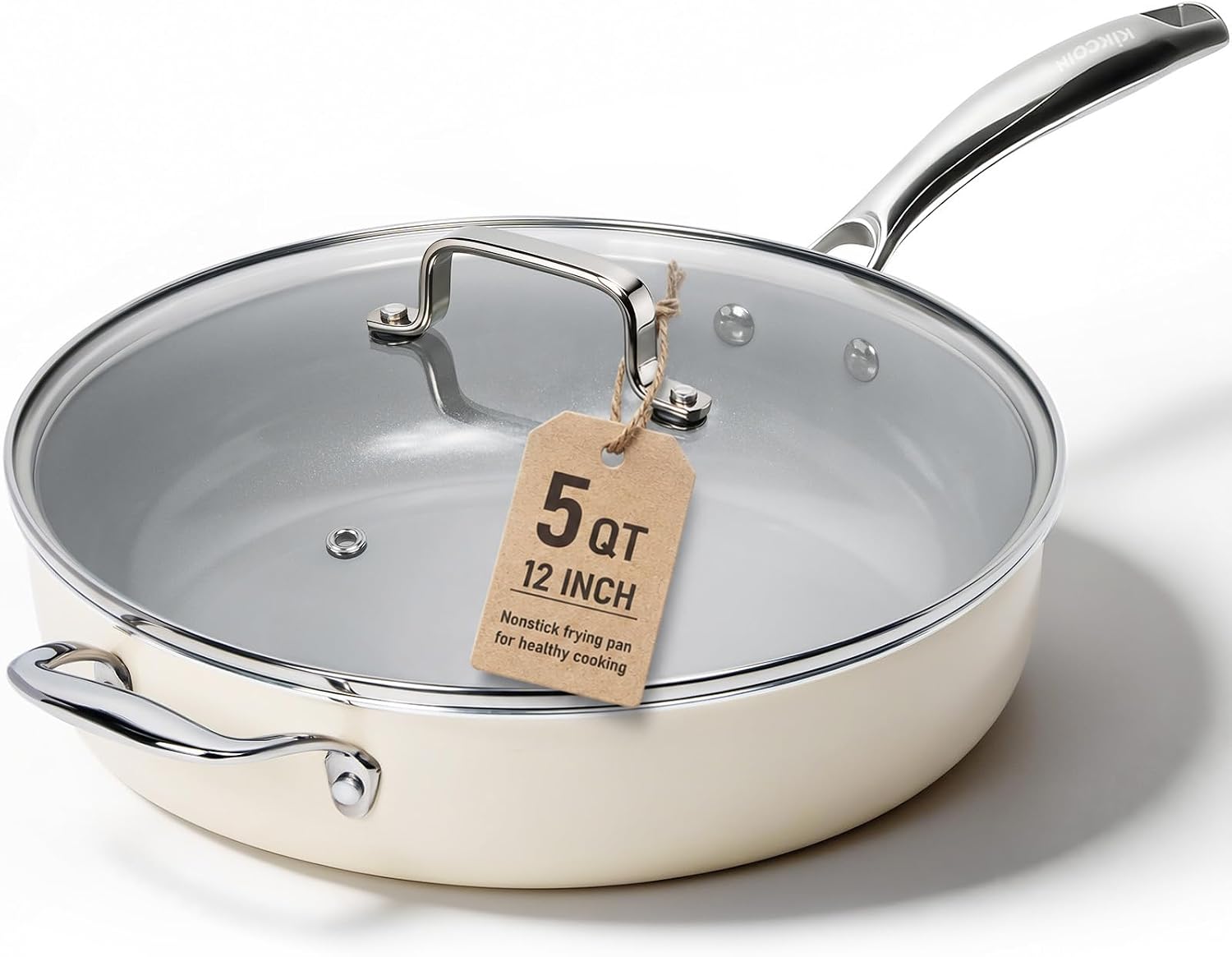
Appliances · Buying Guide
Best 12 Inch Ceramic Frying Pans for Everyday Stovetop Cooking
Choosing a reliable 12 inch ceramic frying pan involves matching your cooking style, stovetop type, and preferred meal portions to the right surface and body material. Ceramic nonstick options provide smooth food release with minimal oil, making them a common choice for quick breakfasts, searing meats, and simmering large family meals.
Manufacturers design these large skillets with various handle configurations, lid inclusions, and heat tolerances to accommodate different culinary tasks. Evaluating core specifications like base compatibility, oven safety limits, and capacity helps you select a cookware piece that fits your kitchen routine without unnecessary guesswork.
As an Amazon Associate, StacyLaughs earns from qualifying purchases.
Buying guide
Evaluating Cookware Materials
Cookware materials dictate how fast a pan heats up and how evenly it distributes thermal energy across the base. Aluminum bodies offer rapid heating responses, while hard-anodized versions add extra scratch resistance for longevity.
Understanding these foundational materials helps you choose a pan that matches your stove type and cooking intensity. Selecting the right body construction prevents warping and ensures consistent results during daily meal preparation.
Understanding Coating Technologies
Ceramic nonstick coatings provide smooth food release without relying on traditional polytetrafluoroethylene chemicals. Diamond or titanium reinforcements are frequently added to strengthen the coating against everyday utensil contact.
Reviewing coating specifications ensures you pick a surface that balances easy cleanup with appropriate durability. Proper care guidelines help maintain the nonstick properties over extended periods of regular kitchen use.
Matching Stovetop Compatibility
Not every frying pan works on every type of cooktop, particularly modern magnetic induction ranges. Induction-compatible pans feature specialized metal bases that interact directly with magnetic burner coils for efficient heating.
Checking compatibility details prevents purchasing a skillet that fails to heat on your specific kitchen range. Always verify whether a model supports gas, electric coil, glass ceramic, or induction surfaces before buying.
Assessing Capacity and Depth
Pan capacity and wall height determine the volume of food you can cook comfortably at one time. A shallow skillet works well for flipping eggs and pancakes, whereas deep-walled saute pans accommodate stews and family portions.
Matching the capacity to your household size ensures you can prepare adequate food without overcrowding ingredients. Consider whether you need vertical depth for liquids or a wider base for flat searing.
Handle Design and Ergonomics
Handle construction influences how securely you can lift, tilt, and maneuver a heavy frying pan. Options include stainless steel riveted handles, stay-cool bakelite designs, and detachable mechanisms for compact storage.
Ergonomic shapes reduce strain on your wrist when handling filled pans, while helper handles offer extra support for larger models. Evaluate handle materials against your preferred oven-use temperatures.
Maintenance and Cleaning Guidelines
Cleaning requirements vary depending on whether a pan is certified dishwasher safe or requires hand washing. Hand washing with mild soap generally extends the lifespan of ceramic nonstick coatings.
Following manufacturer instructions for cleaning and maintenance keeps your cookware functioning properly. Consider your willingness to hand wash versus your reliance on automatic dishwasher cycles.
Frequently asked questions
Are ceramic frying pans safe to use on induction cooktops?
Induction compatibility depends entirely on the specific pan's base construction. Many modern ceramic frying pans feature bonded steel plates in the aluminum base specifically designed for induction ranges. However, some traditional or lightweight models lack this magnetic base and only function on gas or electric coil stovetops. Always check the manufacturer specifications for compatible devices before purchasing a skillet for an induction cooktop.
Can I put my ceramic frying pan into the oven?
Oven safety varies widely depending on the materials used in the handle and body of the skillet. Pans featuring full stainless steel handles and metal bodies often withstand temperatures up to 500 degrees Fahrenheit or higher. Conversely, models equipped with plastic or woodgrain bakelite handles usually have much lower temperature limits or are restricted from oven use entirely. Reviewing the stated maximum temperature and handle construction is essential.
What is the benefit of a diamond or titanium reinforced ceramic coating?
Reinforcements like diamonds or titanium particles are blended into the ceramic coating to increase surface durability and scratch resistance. Standard ceramic nonstick surfaces provide great food release initially, but reinforcements help the coating withstand daily friction from spatulas and frequent cleaning. This added structural integrity helps the nonstick properties endure longer under regular kitchen conditions, reducing premature wear.
How should I clean my ceramic nonstick frying pan?
Most manufacturers recommend washing ceramic frying pans by hand using warm soapy water and a soft sponge or towel. Although several models are rated as dishwasher safe, running harsh automatic cycles frequently can degrade exterior finishes and nonstick performance over time. Avoiding abrasive metal scouring pads prevents permanent scratches on the ceramic surface, ensuring smooth food release remains intact for future cooking tasks.
Why do some 12 inch frying pans include a helper handle?
Large 12-inch frying pans with deep five-quart capacities hold significant weight when filled with food, liquids, or heavy ingredients. A secondary helper handle positioned opposite the main handle provides balanced, two-handed stability when lifting the pan from the stovetop or carrying it to the sink. This extra grip reduces wrist strain and improves safety when maneuvering heavy cookware filled with hot meals.