Appliances · Buying Guide
Best 12 Qt Stock Pot Options for Large Family Meals and Soups
Choosing a large cooking vessel for family gatherings or daily meal prep requires careful evaluation of capacity, material durability, and overall heat performance. A twelve-quart stock pot offers ample room for boiling pasta, simmering rich broths, and cooking large batches of hearty stews without constant overflow concerns during busy kitchen routines.
Home cooks and culinary enthusiasts benefit from understanding how base constructions and riveted handles affect heat distribution across various stovetops. Selecting the right model ensures reliable performance whether you are preparing holiday feasts, canning garden harvests, or simply boiling corn for a casual weeknight dinner with family and friends.
As an Amazon Associate, StacyLaughs earns from qualifying purchases.
Buying guide
Material Composition and Durability
Selecting the right metal alloy ensures your cookware withstands daily boiling, simmering, and cleaning without pitting or rusting. High-grade stainless steel resists food reactions, making it safe for acidic tomato sauces and long-simmering broths. Investing in robust materials prevents warping over time, ensuring the pot sits flat on your burner for years of dependable service.
Beyond basic corrosion resistance, the exterior finish impacts how easily food residue washes away after heavy use. Mirror-polished surfaces offer a sleek appearance and smooth tactile feel, while brushed interiors hide minor scuffs from utensils. Evaluating these structural traits helps you choose a reliable companion for preparing large family meals without premature wear.
Base Construction and Heat Distribution
The bottom of your cooking vessel dictates how efficiently heat transfers from the burner to your ingredients. Multi-layer designs, including impact-bonded tri-ply or five-layer bases, incorporate aluminum cores to eliminate hot spots and scorching. This thermal engineering is essential when reducing thick sauces or bringing massive quantities of liquid to a rolling boil quickly.
Matching the base type to your cooking style prevents burned meals and ensures uniform flavor development across batches. Encapsulated bases also protect internal layers from direct flame exposure, extending the overall lifespan of the cookware. Prioritizing advanced bottom construction delivers consistent culinary results whether you cook on gas, electric, or ceramic surfaces.
Capacity and Dimensional Fit
A twelve-quart volume provides substantial room for boiling corn, cooking spaghetti, or preparing massive batches of holiday soup. However, large capacities inherently mean wider footprints and taller profiles that demand careful measurement of your storage spaces. Checking cabinet clearance and shelf heights beforehand prevents frustrating storage dilemmas in compact kitchens.
Consider how much food you routinely prepare to ensure a twelve-quart size aligns with your household needs. While extra room prevents messy boil-overs during heavy liquid use, an oversized pot can prove cumbersome to wash in standard sinks. Balancing your batch requirements with physical storage dimensions guarantees practical daily convenience.
Lid Types and Monitoring Features
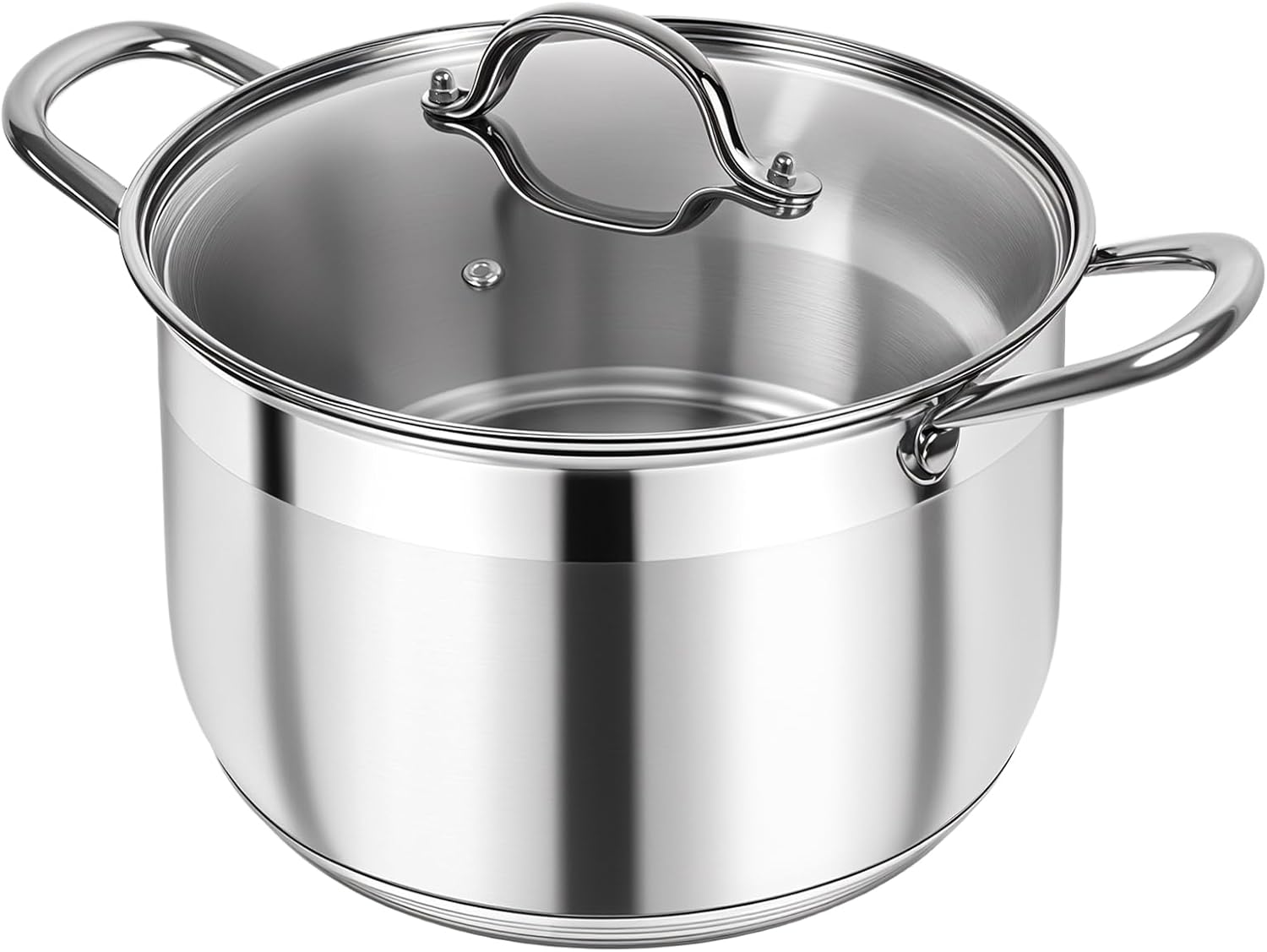
Lids play a critical role in trapping heat, retaining moisture, and speeding up cooking times for large liquid batches. Transparent glass lids let you check internal progress without lifting the cover and losing valuable thermal energy. Integrated steam vents further enhance safety by preventing excessive pressure buildup during vigorous boiling tasks.
Alternatively, solid stainless steel lids offer maximum durability and high-temperature oven resilience without fragile glass components. Your choice depends on whether visual monitoring outweighs the rugged simplicity of all-metal construction during heavy-duty cooking routines. Evaluating lid features ensures your cookware matches your preferred cooking habits and safety priorities.
Handle Security and Ergonomics
Lifting a heavy pot filled with twelve quarts of water requires secure, well-fastened handles for safe transport. Riveted stainless steel handles provide superior structural strength, anchoring firmly to the body to support heavy loads without loosening. Ergonomic shaping ensures a comfortable grip when moving the pot from counter to stove.
Handle placement also affects how easily you can store the pot in crowded kitchen cabinets or dishwashers. Side loops must offer enough clearance for oven mitts while remaining compact enough for tight storage slots. Prioritizing robust handle attachment safeguards against spills and accidents during kitchen transport.
Stovetop and Oven Compatibility
Confirming your cooktop type is vital before purchasing a large stock pot, as certain multi-layer bases lack induction support. Gas, electric, ceramic, and halogen cooktops generally accept most stainless steel pots, but induction surfaces require magnetic exterior layers. Checking stove compatibility prevents purchasing cookware that fails to heat properly on your specific appliance.
Oven safety ratings dictate whether your pot can transition from surface simmering to final baking or roasting steps. While many stainless steel models withstand moderate oven heat, exceeding specified temperature limits can damage handles or glass lids. Aligning thermal tolerances with your recipes ensures safe, versatile cooking performance.
Frequently asked questions
How do I clean stubborn food residue from a stainless steel stock pot?
Cleaning stubborn food residue from a stainless steel stock pot is straightforward when you use warm soapy water and a non-abrasive sponge. For stuck-on particles or minor scorching resulting from high-heat simmering, soak the pot in warm water before washing. Avoid harsh steel wool pads that can scratch the polished exterior finish. Dishwasher-safe models offer added convenience, though routine hand drying helps maintain the brilliant shine of your stainless steel cookware over years of regular kitchen use.
Can a 12-quart stock pot be used on an induction cooktop?
Compatibility with induction cooktops depends entirely on the specific magnetic properties of the pot's exterior base construction. Models featuring dedicated magnetic stainless steel outer layers work efficiently on induction stoves by utilizing magnetic fields to generate direct heat. However, certain multi-layer pots or alternative core designs explicitly exclude induction support. Always review the manufacturer specifications for your chosen stock pot model to confirm proper stovetop pairing before attempting to cook on an induction glass surface.
What is the main advantage of a glass lid over a solid metal lid?
A transparent glass lid allows you to monitor the cooking progress of soups, broths, and pasta without lifting the cover. This visual access helps retain internal heat and moisture, preventing unnecessary temperature drops during long simmering tasks. Many glass lids also include built-in steam vents to release excess pressure safely and reduce the risk of accidental scalding when opened. Solid metal lids provide superior durability and higher temperature oven limits but require lifting to check food.
How much storage space do I need for a 12-quart stock pot?
Storing a twelve-quart stock pot requires evaluating both your cabinet shelf height and overall interior width. Because these large cooking vessels generally measure between ten and fifteen inches across and up to fourteen inches in height with the lid attached, standard shallow cabinets may present clearance challenges. Dedicating a lower pantry shelf or a wide cabinet space ensures you can store both the pot body and its matching lid comfortably without risking accidental tipping or scratching.
Are riveted handles better than welded handles for heavy stock pots?
Riveted handles offer exceptional structural strength and long-term security for heavy stock pots filled with large quantities of liquid and food. By fastening the handles directly to the pot body using sturdy metal rivets, manufacturers ensure the assembly can support the substantial weight without loosening over time. While welded handles provide a smooth interior wall, riveted designs give home cooks greater confidence when lifting and transporting a heavy twelve-quart pot safely from the stove.