Appliances · Buying Guide
Best 12 Quart Nonstick Stock Pot Options for Large Batch Cooking
Cooking for a crowd requires dependable cookware designed to handle high-capacity meals without demanding constant attention at the stove. A twelve-quart stock pot bridges the gap between everyday cookware and commercial-grade vessels, offering ample space for large batches of soup, chili, pasta, and stews. These oversized pots are tailored for households that frequently host gatherings, meal prep in advance, or cook for nine or more people.
Navigating the options available for large-capacity cooking involves balancing core materials, interior coatings, and handle designs. Ceramic and granite nonstick surfaces streamline food release and cleanup, while aluminum cores support even heat distribution across various stovetops, including induction. Examining specific design traits helps identify which configuration matches your kitchen setup and cooking habits.
As an Amazon Associate, StacyLaughs earns from qualifying purchases.
Buying guide
Material Composition and Heat Distribution
Selecting a stock pot begins with understanding the core metal used in its construction. Aluminum is widely favored in large twelve-quart vessels due to its superior thermal conductivity. This material transfers heat rapidly across the entire base, minimizing hot spots that can scorch thick soups, dense chili, or delicate sauces during long simmers.
When paired with a magnetic base, aluminum pots gain full compatibility with induction cooktops while retaining their handling advantage over heavier cast iron alternatives. Evaluating how the metal thickness and flat bottom design support consistent thermal contact helps ensure predictable results when preparing family-sized portions across gas, electric, or induction burners without warping concerns.
Nonstick Coating Variations
The interior coating dictates how easily food releases from the cooking surface and how much effort post-meal cleanup requires. Ceramic and granite nonstick surfaces provide smooth barriers that allow thick sauces, melted cheese, and caramelized ingredients to slide off effortlessly. These specialized coatings significantly reduce the need for excessive oil or butter during high-volume cooking tasks.
Choosing a non-toxic formulation free of PTFE, PFOA, PFOS, lead, and cadmium provides added peace of mind for daily family meal preparation. While these nonstick layers simplify washing with a soft sponge, users should follow manufacturer guidelines regarding utensil selection and moderate heat levels to preserve coating longevity over years of frequent batch cooking and entertaining.
Handle Design and Thermal Safety
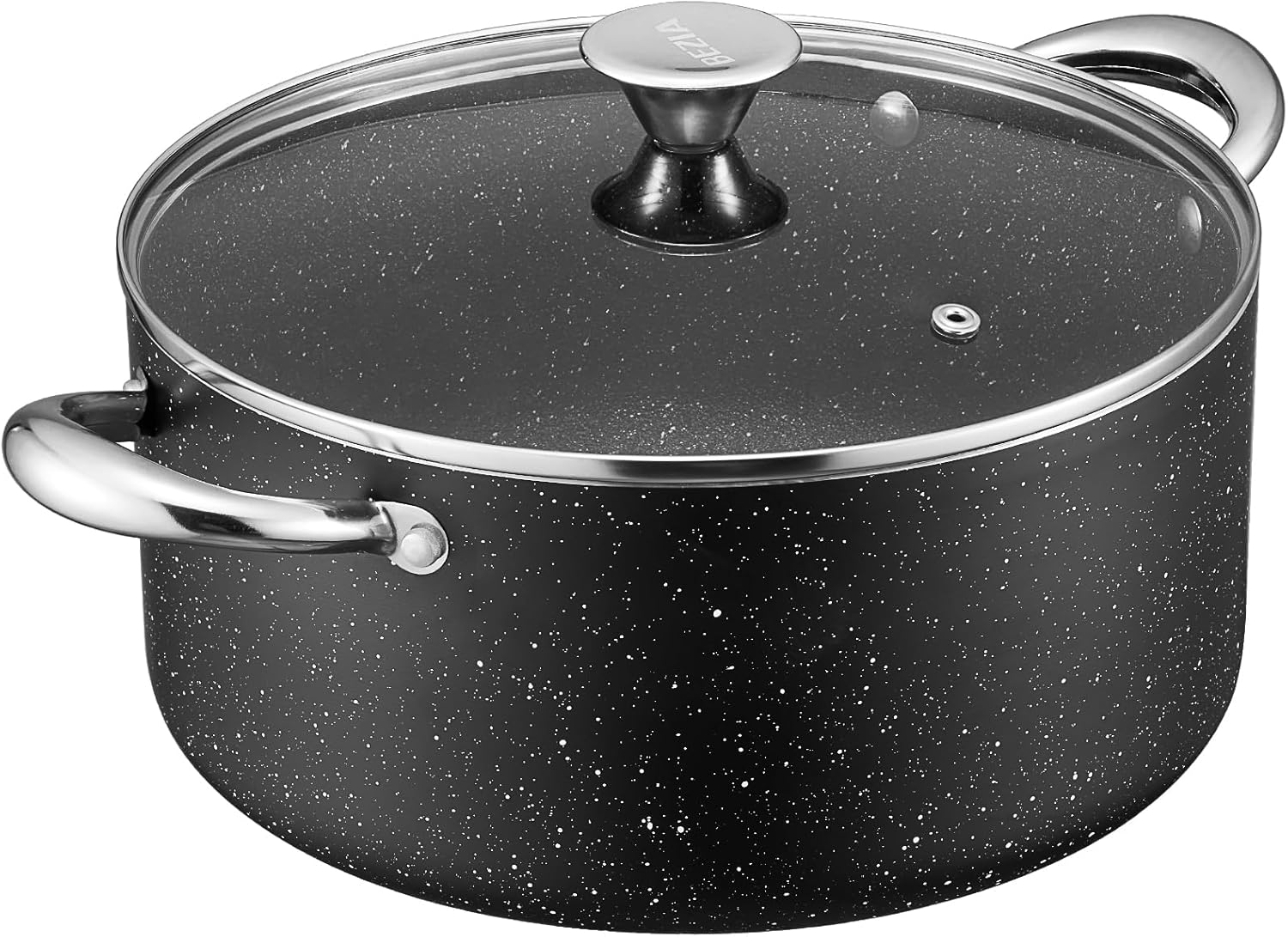
Managing a twelve-quart pot filled with boiling water or heavy stew requires secure, ergonomic handle construction. Stainless steel handles offer robust attachment and long-term durability, but they can conduct heat during prolonged cooking sessions, necessitating protective oven mitts. Alternative designs incorporate silicone grips or specialized cast steel configurations intended to stay comfortable during stovetop use.
Assessing your comfort level with handle temperatures helps prevent accidental burns when transferring a heavy vessel from the stovetop to a dining table or kitchen counter. Reviewing whether handles are riveted or welded provides clear insight into structural stability under heavy loads, ensuring the pot can be balanced and maneuvered safely when completely filled with dense holiday meals.
Lid Configuration and Monitoring
A well-fitted lid is essential for trapping moisture, accelerating boiling times, and maintaining consistent internal temperatures during long simmers. Tempered glass lids allow cooks to monitor simmering progress visually without lifting the cover and losing valuable heat. Many lids feature integrated steam vents or perforated openings designed to release excess water vapor safely while retaining rich food flavors.
Checking whether the lid includes an insulated handle matching the pot ensures seamless handling during quick visual checks. Evaluating how securely the rim rests on the vessel helps determine how effectively moisture circulates back into broths, enhancing flavor development for stocks, soups, and braised dishes over hours of unattended cooking without requiring constant adjustment.
Stovetop Versatility and Oven Compatibility
Modern stock pots must adapt to diverse kitchen environments, including gas, electric, ceramic, and induction cooktops. A flat, warp-resistant magnetic base ensures optimal contact with induction burners for rapid and uniform heating. For recipes that require finishing in an oven, checking maximum temperature ratings is crucial before transitioning cookware from the burner to the cavity.
While some pots withstand high oven temperatures up to 450 degrees Fahrenheit, accompanying glass lids often carry separate temperature restrictions and must remain on the countertop during baking. Reviewing these compatibility details prevents accidental damage and expands your cooking repertoire, allowing seamless movement from stovetop browning to oven baking for complex casseroles, stews, and roasted poultry.
Capacity Needs and Storage Planning
Choosing a twelve-quart capacity requires carefully evaluating your typical batch sizes and household requirements. These large pots are ideal for feeding nine or more people, canning seasonal produce, preparing weekly meal prep batches, or hosting large holiday gatherings. However, their generous dimensions demand prior measurement of cabinet clearance and pantry shelf spacing to avoid storage frustrations.
Oversized cookware can occupy significant footprint space, so ensuring your storage areas can accommodate wider diameters and taller vertical profiles is essential. Balancing your ambition for large-batch cooking with practical kitchen storage realities ensures your new stock pot integrates smoothly into your daily routine without causing unnecessary clutter issues in cramped kitchen cabinets.
Frequently asked questions
Can a twelve-quart stock pot be used on an induction cooktop?
Many twelve-quart stock pots feature a magnetized aluminum base specifically optimized for rapid and consistent heating on induction burners, alongside traditional gas and electric stovetops. The flat, warp-resistant bottom ensures full contact with the burner surface for efficient thermal transfer. However, it remains important to verify that your specific burner diameter aligns well with the base size of the pot. Checking the manufacturer specifications ensures your chosen vessel delivers reliable performance across your particular kitchen setup without compatibility issues.
How should nonstick ceramic or granite stock pots be cleaned?
Cleaning nonstick ceramic or granite stock pots is typically straightforward due to the smooth surface that prevents food from burning onto the bottom. Most manufacturers recommend washing the pot by hand using warm soapy water and a soft sponge, avoiding abrasive scrubbers or harsh metal utensils that can scratch the coating. While certain models feature dishwasher-safe construction, hand washing generally helps preserve the longevity of the nonstick layer. Following these simple maintenance practices keeps the cooking surface performing smoothly over years of use.
Are the handles on a twelve-quart pot safe to touch during cooking?
Handle safety depends entirely on the specific material and design of the stock pot you select. Some models feature silicone-wrapped grips or specialized cast steel construction engineered to stay cool during stovetop cooking, allowing secure transport without potholders. Other pots use traditional stainless steel handles that can conduct heat during prolonged boiling or simmering sessions, requiring protective oven mitts. Reviewing the handle specifications and testing them cautiously during initial use helps ensure safe handling when moving a heavy vessel.
What is the main advantage of choosing a twelve-quart capacity?
The primary advantage of a twelve-quart capacity is the ability to cook massive batches of food in a single vessel, making it ideal for large families, holiday hosts, and meal prep enthusiasts. This size easily accommodates food for nine or more people, large quantities of soup, whole chickens, big pots of chili, and canning projects. It eliminates the need to split ingredients across multiple smaller pans, saving time and simplifying cleanup. However, users should ensure their stovetop and storage space can accommodate the larger dimensions.
Can these large stock pots be placed inside an oven?
Oven compatibility varies by model, with certain stock pots rated safe for oven use up to specific temperature thresholds like 450 degrees Fahrenheit. When oven safety is supported, it allows recipes to transition smoothly from stovetop browning to oven baking. It is critical to note that accompanying glass lids often carry different temperature restrictions and should generally be kept out of the oven. Always consult the manufacturer guidelines regarding maximum oven temperatures and lid limitations before attempting baking tasks.