Appliances · Buying Guide
Best 14 Inch Carbon Steel Wok Options for Home Cooking
Choosing the right cooking vessel transforms your kitchen routine, especially when preparing high-heat meals. A fourteen-inch carbon steel wok provides ample surface area for tossing ingredients while maintaining rapid thermal responsiveness across the cooking surface. Whether you favor modern induction cooktops or traditional open flames, matching your stove type to the correct base design ensures optimal performance during daily meal preparation.
These versatile pans excel at everything from fast stir-frying to deep-frying, searing, and braising large family meals. Because materials, metal gauges, and handle configurations vary across different manufacturers, carefully understanding individual product specifications helps you select a model tailored specifically to your everyday cooking habits and kitchen setup requirements.
As an Amazon Associate, StacyLaughs earns from qualifying purchases.
Buying guide
Material Composition and Gauge Thickness
Carbon steel represents the gold standard for wok cooking because it bridges the gap between cast iron and stainless steel. It heats up rapidly, responds instantly to temperature adjustments, and develops a natural nonstick patina over time. When shopping for a fourteen-inch model, pay close attention to the metal gauge or thickness. Thicker gauges resist warping under intense heat and retain warmth better, which is crucial for achieving restaurant-quality searing.
However, heavier carbon steel pans require more physical effort to lift and manipulate during cooking. Lighter alternatives are easier to toss ingredients with but may be more susceptible to warping if overheated rapidly. Balancing your personal physical comfort with your cooking style ensures you select a pan you will enjoy using frequently without strain.
Base Design and Stove Compatibility
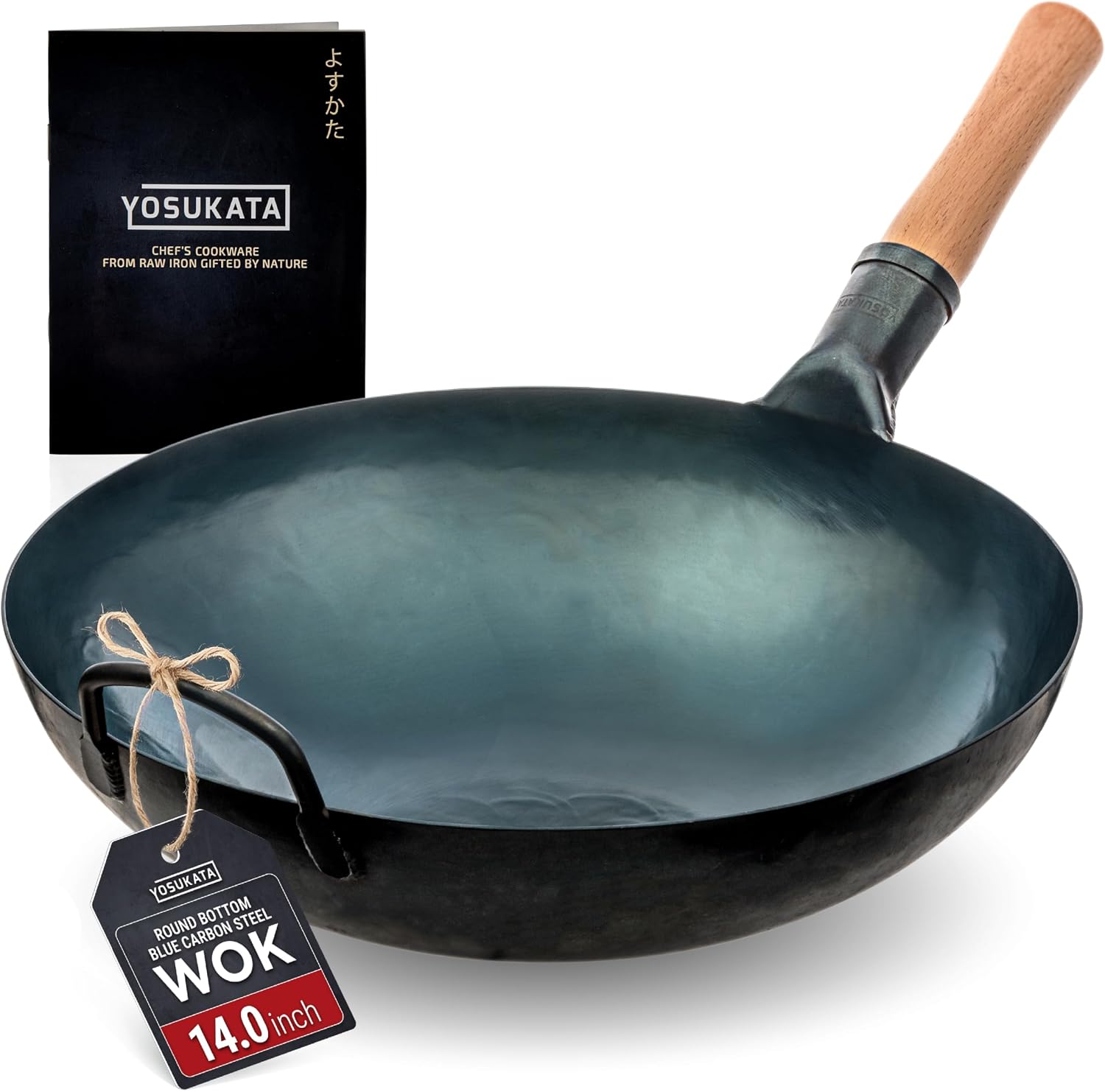
The shape of your wok's base dictates which cooktops you can safely use in your kitchen. Traditional round bottom woks cradle open flames perfectly, concentrating intense heat at the center for authentic stir-frying. However, they are entirely unsuited for flat electric glass or induction surfaces unless you use a stabilizing ring. Flat bottom woks feature a flattened base area that makes direct contact with modern electric, ceramic, and induction cooktops.
Before purchasing, verify your stove type to avoid compatibility issues. If you cook on an induction range, a flat bottom model is mandatory. Gas stove owners enjoy the freedom to choose either style depending on their preference for traditional wok tossing or flat-surface stability.
Seasoning Requirements and Surface Maintenance
Carbon steel cookware relies entirely on oil seasoning rather than synthetic chemical coatings to achieve nonstick performance. Some models arrive pre-seasoned from the factory at high temperatures, allowing you to begin cooking almost immediately after a quick rinse. Unseasoned or factory-coated pans require an initial burn-in process with oil to build a protective layer. Over time, continuous use darkens the metal and enhances food release properties naturally.
Maintaining this surface requires simple hand-washing habits. Never place carbon steel woks in an automatic dishwasher, as harsh detergents and prolonged moisture will strip the seasoning and cause rust. Always dry the pan thoroughly after washing and apply a very thin coat of oil before storing it away.
Handle Design and Ergonomic Comfort
Because fourteen-inch woks hold substantial quantities of food, the handle design plays a critical role in safety and maneuverability. Traditional wooden handles remain cool to the touch during high-heat cooking, protecting your hands from burns. Many models feature securely riveted wooden grips or detachable designs that simplify storage and oven transfer. Ergonomic contours help reduce wrist fatigue when you are tossing heavy ingredients across the wide cooking surface.
Examine how the handle attaches to the bowl. Riveted connections provide long-lasting stability under heavy loads. Removable handles offer added convenience for compact storage or specialized cleaning tasks. Selecting a comfortable, secure grip ensures you can transfer cooked meals from the stove to your serving table with total confidence.
Capacity and Sizing Considerations
A fourteen-inch diameter offers an exceptionally versatile cooking capacity suitable for families and dinner parties alike. The wide rim and deep sloping walls allow you to toss generous portions of vegetables, meats, and rice without spilling contents over the edge. This size provides enough room to push cooked ingredients up the sides while searing fresh batches in the center, mimicking professional cooking techniques.
While larger sizes accommodate crowd-pleasing meals easily, they also require adequate storage space in your kitchen cabinets or pantry. Measure your storage area before buying to ensure the wide rim and protruding handle fit comfortably. Choosing the right capacity means balancing your desire for generous meal portions against your available kitchen storage layout.
Included Accessories and Lid Options
Some carbon steel wok packages include helpful extras like matching glass lids or specialized cleaning tools to enhance your purchase value. A visible glass lid is particularly useful when you want to trap moisture for braising or steaming dishes without lifting the cover constantly. However, many traditional woks are sold as standalone pans to keep costs focused entirely on the heavy-duty metal construction.
Decide whether accessories like lids or auxiliary helper handles matter for your specific cooking routines. If you frequently braise vegetables or steam dumplings, a lid is an indispensable addition. If you only practice rapid stir-frying, a basic pan without extra components may serve your daily kitchen needs perfectly.
Frequently asked questions
Do I need to season a pre-seasoned carbon steel wok before using it?
While factory pre-seasoned woks arrive treated with high-temperature protective oils, most manufacturers recommend washing the pan thoroughly and applying a fresh layer of cooking oil before your very first official meal preparation. This initial home maintenance strengthens the developing nonstick patina and removes any lingering manufacturing residues. Ongoing oil seasoning after subsequent cooking sessions ensures the metal remains completely rust-free and continues to build a naturally slick cooking surface over time.
Can I use a round bottom wok on a standard electric or induction cooktop?
Traditional round bottom woks are specifically engineered for gas stovetops and open fire cooking setups where flames can cradle the curved exterior. They cannot make proper flat contact with standard electric coil, smooth ceramic, or induction cooktops, resulting in poor heating efficiency and instability. If your kitchen relies on modern flat-surface cooktops, you must select a wok featuring a flat bottom design to ensure safe, secure heat transfer and stability during cooking.
How should I clean and maintain my carbon steel wok after cooking?
You should always wash your carbon steel wok by hand using warm water and a soft sponge or brush, avoiding harsh automatic dishwashers entirely. Do not use abrasive steel wool unless you are intentionally stripping the seasoning to remove heavy rust. After washing, dry the pan completely over a warm burner to eliminate residual moisture. Finally, rub a very thin coat of cooking oil over the entire interior surface with a paper towel before storing it.
Why is carbon steel preferred over stainless steel or nonstick for stir-frying?
Carbon steel is favored for stir-frying because it combines the rapid heating responsiveness of cast iron with a much lighter physical weight. It can withstand extremely high cooking temperatures necessary to achieve authentic flavors without degrading synthetic chemical coatings found on standard nonstick pans. Furthermore, carbon steel builds its own natural nonstick surface through regular oil seasoning, whereas stainless steel often causes delicate ingredients like eggs and rice to stick firmly to the pan.
What causes a carbon steel wok to rust, and how can I fix it?
Carbon steel woks rust when moisture is left on the bare metal surface, often caused by air-drying instead of heat-drying or storing the pan without a protective oil coating. To fix rust, scrub the affected area thoroughly with an abrasive pad or steel wool until the bare metal is exposed. Wash and dry the pan completely, then reheat it on your stove and apply a fresh layer of oil to rebuild the protective seasoning.