Appliances · Buying Guide
Best 14 Inch Ceramic Frying Pans for Large Family Meals
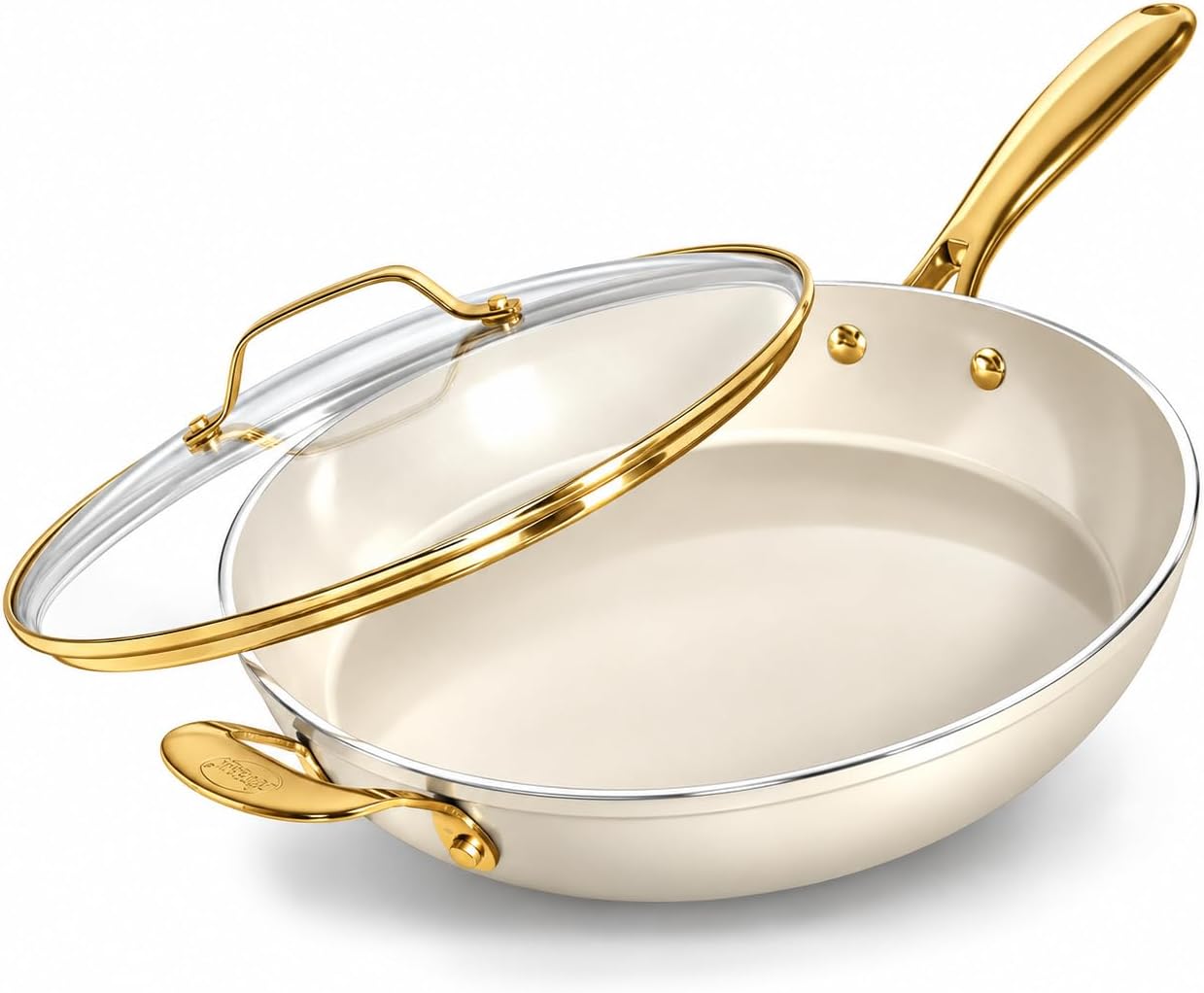
Finding the right cookware to handle bulk cooking without crowding ingredients can change how you prepare daily meals. A 14 inch ceramic frying pan provides an expansive cooking surface designed for large batches, multi-serving sautés, and family-style dinners. These oversized skillets let you sear, simmer, and stir-fry large quantities of food simultaneously, minimizing the need for multiple batches.
When evaluating these large ceramic pans, shoppers must consider heat distribution, lid compatibility, handle design, and cleaning requirements. Ceramic nonstick surfaces offer smooth food release with minimal oil, though proper heat management and care instructions vary across different manufacturer models. Reviewing specific construction details helps you select a reliable pan that fits your kitchen routines and stovetop type.
As an Amazon Associate, StacyLaughs earns from qualifying purchases.
Buying guide
Evaluating Surface Coatings and Toxicity
When selecting a 14 inch ceramic frying pan, examining the coating composition is a primary consideration for daily meal preparation. Quality ceramic cookware utilizes natural mineral-based coatings free from synthetic chemicals like PTFE, PFOA, and PFOS. These non-toxic formulations ensure that high-heat cooking does not release unwanted fumes into your kitchen environment.
Shoppers should verify that manufacturer specifications explicitly state freedom from lead and cadmium. Selecting a certified non-toxic surface provides peace of mind when preparing meals for family members with sensitivities or specific health-conscious dietary preferences.
Understanding Base Construction and Heat Distribution
A wide 14-inch diameter requires robust base construction to prevent uneven heating across the expansive cooking surface. Aluminum is the predominant core material used in these large pans due to its exceptional thermal conductivity and lightweight properties. A thick forged aluminum base ensures that heat spreads rapidly from the center to the outer edges.
Eliminating hot spots prevents food from burning in certain zones while remaining undercooked elsewhere. Buyers should check cooktop compatibility, ensuring the pan features a bonded stainless steel induction plate if they plan to cook on magnetic smooth-surface induction ranges.
Analyzing Capacity and Wall Depth Options
The 14-inch category spans multiple design formats, ranging from shallow skillets to deep 6-quart sauté pans. Shallow pans excel at flipping pancakes, searing steaks, and frying fish fillets where wide access is essential. Deep pans with high walls accommodate large liquid volumes, stews, and generous stir-fries.
Assessing your typical recipes helps determine whether a shallow rim or a high-walled deep body best serves your culinary workflow. Matching pan depth to your portion sizes prevents accidental spills and crowding during large meal preparations.
Reviewing Lid Inclusion and Gasket Performance
Many large ceramic frying pans include matching lids that transform the skillet into a versatile braising vessel. Tempered glass lids allow cooks to monitor food progress without lifting the cover and losing accumulated heat and moisture. Some models feature silicone rims or steam vents to regulate internal pressure.
A secure lid traps steam effectively, helping tenderize tough cuts of meat and simmer large batches of vegetables evenly. Buyers should inspect whether the lid handle stays cool during extended simmering sessions to prevent accidental burns.
Assessing Handle Ergonomics and Attachment Styles
Handling a heavy 14-inch pan filled with food requires secure, ergonomically shaped handles. Stainless steel or cast metal handles attached with multiple rivets offer robust stability under heavy loads. Some designs incorporate silicone grips or stay-cool metallic properties to minimize heat transfer.
For specialized storage or multi-use flexibility, certain models feature detachable handles that allow the skillet to transition directly into compact oven spaces. Evaluating handle attachment strength ensures safe transport from heavy stovetop cooking to dining presentation.
Comparing Maintenance Guidelines and Oven Limits
Maintaining a ceramic nonstick coating requires adherence to manufacturer cleaning and temperature guidelines. While many pans are advertised as dishwasher safe, hand washing with mild soap and a soft sponge often prolongs the lifespan of the nonstick layer. Avoid abrasive scouring pads that can scratch the ceramic surface.
Additionally, pay close attention to maximum temperature limits, which typically range from 450 to 500 degrees Fahrenheit. Respecting these threshold ratings prevents thermal shock and preserves coating integrity during oven-roasting tasks.
Frequently asked questions
Can I use metal utensils on a 14 inch ceramic frying pan?
Using metal utensils on ceramic nonstick coatings is generally discouraged because sharp edges can scratch or chip the smooth surface over time. Manufacturers typically recommend switching to wooden, silicone, or heat-resistant plastic utensils to preserve the integrity of the nonstick layer. While some titanium-infused or diamond-reinforced ceramic surfaces offer enhanced scratch resistance, gentle tools help extend the lifespan of the pan and maintain effortless food release during daily cooking sessions.
Are 14 inch ceramic frying pans compatible with induction cooktops?
Many 14 inch ceramic frying pans feature induction-compatible bases, but compatibility depends entirely on the specific manufacturer construction. Because ceramic and aluminum are non-magnetic materials, pans require an embedded stainless steel or magnetized iron plate bonded to the bottom to function on induction ranges. Always review the product specifications for compatible devices to confirm whether a particular skillet works on induction, gas, electric coil, or smooth glass cooktops before purchasing.
How do I clean stubborn food residue from a ceramic nonstick pan?
Cleaning stubborn food residue from a ceramic nonstick pan starts with allowing the skillet to cool completely to prevent warping from thermal shock. Soak the pan in warm, soapy water for a short period to loosen stuck-on bits, then gently wipe the surface using a soft sponge or microfiber cloth. Avoid abrasive scouring pads, steel wool, or harsh oven cleaners, as these harsh materials can permanently damage or strip the smooth ceramic coating over time.
What is the advantage of choosing a deep 14 inch pan over a shallow skillet?
Choosing a deep 14 inch pan provides higher sidewalls and a larger capacity, making it ideal for preparing one-pot meals, stews, soups, and generous stir-fries without overflowing. While shallow skillets excel at flipping eggs, pancakes, and searing flat cuts of meat with easy spatula access, deep pans contain splatters more effectively. Evaluating your typical menu items helps determine whether you need the high-volume containment of a deep pan or the open access of a traditional skillet.
Do I need to use cooking oil with ceramic nonstick frying pans?
Ceramic nonstick frying pans are specifically designed to support cooking with minimal oil or butter compared to traditional stainless steel cookware. The smooth surface allows foods like eggs, fish, and vegetables to release easily without sticking. However, applying a very light coating of high-smoke-point oil or butter can enhance flavor, improve browning during searing, and further protect the ceramic layer against wear during high-temperature cooking tasks.