Appliances · Buying Guide
Best 18 Inch Roasting Pan Options for Holiday Meals
Preparing a large holiday meal or a family-sized roast requires cookware designed to handle substantial cuts of meat and poultry. An 18 inch roasting pan provides the expansive interior space needed to cook whole turkeys, large hams, and generous batches of vegetables all at once. Choosing the right pan involves evaluating materials, heat distribution properties, and whether a lid or rack is included to suit your specific cooking style.
Different designs offer distinct advantages for everyday baking, high-heat searing, and long-term kitchen durability. Carbon steel, multi-ply stainless steel, and enamel-coated options each bring unique thermal behaviors and maintenance requirements to your kitchen. Examining these core attributes helps you select a reliable roasting vessel that fits your oven and matches your preferred cooking techniques without unnecessary complications.
As an Amazon Associate, StacyLaughs earns from qualifying purchases.
Buying guide
Material Composition and Thermal Performance
Choosing an 18 inch roasting pan begins with understanding how different metals and coatings affect heat transfer. Stainless steel offers durability, while carbon steel provides rapid heating capabilities. Multi-ply constructions layer aluminum between steel to eliminate hot spots and maintain steady temperatures. Enamel coatings add a smooth, non-porous layer that simplifies food release. Evaluating these material properties helps match your cooking style to the right thermal behavior.
Materials dictate where you can safely use your cookware. While stainless steel and hybrid options transition to induction cooktops, carbon steel and enameled variants frequently carry specific heat source restrictions. Reviewing guidelines ensures your chosen pan handles stovetop searing or oven roasting safely. Selecting a compatible material prevents unexpected damage and guarantees consistent results for every meal.
Sizing and Oven Clearance
An 18 inch roasting pan provides substantial interior volume for large poultry and holiday roasts. However, exterior dimensions vary based on handle designs and outer walls. Measuring your oven cavity, rack spacing, and interior depth before purchasing prevents frustrating fit issues. A pan that is too wide or tall will not sit flat on your oven racks or allow adequate airflow for browning.
Consider the typical batch sizes you prepare throughout the year. While an oversized model accommodates a massive turkey, it may prove bulky for everyday weeknight side dishes or smaller chicken roasts. Balancing maximum capacity with your standard oven constraints ensures the cookware remains practical for frequent use rather than sitting idle in storage.
Inclusion of Lids and Racks
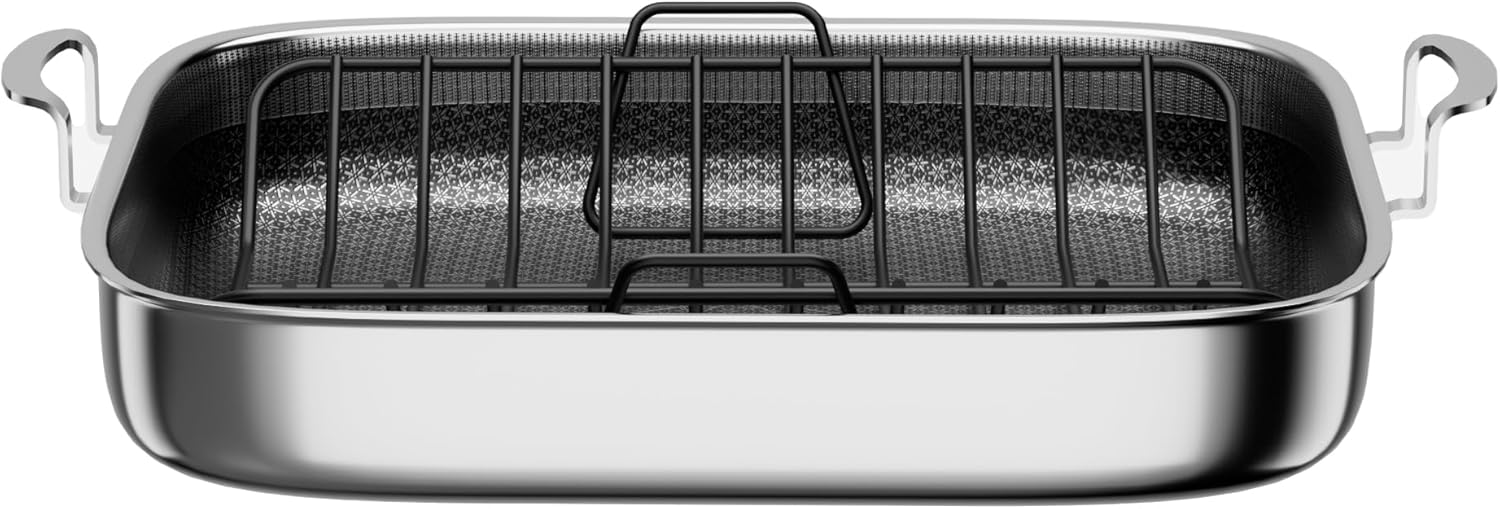
Many 18 inch roasting pans come packaged with fitted lids and elevated metal racks designed to optimize cooking outcomes. Racks lift meats above accumulating juices, promoting even heat circulation and preventing boiling textures on the bottom of your roast. Lids trap steam and moisture inside an enclosed chamber, which proves particularly useful for keeping leaner cuts tender and juicy during extended roasting cycles.
Assess whether your preferred recipes benefit from a covered roasting environment or an open-pan browning technique. Lidded configurations alter moisture retention significantly compared to open pans with lowered side walls. Choosing a set that includes these extra components saves you from making separate purchases while aligning directly with your favorite preparation methods.
Handle Design and Ergonomics
Transporting a fully loaded 18 inch roasting pan requires secure, well-designed handles that provide a confident grip. Riveted stainless steel handles or sturdy metal loops offer reliable attachment points when moving heavy pans from hot ovens to countertops. Adequate clearance between the handle and the pan body prevents accidental burns and lets you maneuver the cookware safely while wearing thick oven mitts.
Pay close attention to how handle placement affects storage and oven fit. Extended side handles increase the overall footprint of the pan, which can impact narrow oven interiors. Selecting ergonomic handles that balance a secure lifting grip with a streamlined profile ensures effortless transport without compromising your oven's usable rack space.
Cleaning and Maintenance Requirements
Maintaining your roasting pan depends heavily on its exterior finish and surface coatings. Dishwasher-safe stainless steel and modern enamel surfaces simplify cleanup after preparing sticky holiday feasts. However, abrasive pads or harsh chemical cleaners can scratch polished metal or damage delicate enamel coatings over time. Following manufacturer cleaning instructions preserves the integrity and appearance of your cookware across years of use.
Nonstick surfaces require gentle washing tools to maintain their scratch-resistant properties, especially when paired with etched patterns or specialized ceramic glazes. Taking a few moments to soak baked-on residues rather than aggressively scrubbing prevents premature wear. Proper maintenance guarantees that your investment continues to release food cleanly and resist staining through countless family gatherings.
Temperature Limits and Versatility
Different roasting pan materials handle extreme heat differently, establishing strict upper temperature limits for oven use. While some carbon steel and multi-ply stainless steel models withstand very high temperatures approaching or exceeding 800 degrees Fahrenheit, enameled and hybrid options often cap out between 500 and 572 degrees. Matching your cookware's maximum heat rating to your intended cooking techniques prevents warping or structural damage.
Versatility also extends to stovetop capability, allowing you to sear meats or build pan gravies directly on burners before transferring the dish to the oven. Verifying whether a pan supports induction cooktops or open flames ensures maximum flexibility. Selecting a versatile design expands your cooking repertoire beyond simple roasting into multi-step culinary preparations.
Frequently asked questions
What size turkey fits into an 18 inch roasting pan?
An 18 inch roasting pan typically accommodates whole turkeys weighing between 15 and 18 pounds, depending on the depth of the walls and whether an enclosed lid is used. Models featuring high-domed lids or extra-deep walls provide vertical clearance that prevents the poultry from pressing against the top. Always check the specific internal dimensions and weight capacity listed for your chosen model to ensure your holiday bird fits comfortably with adequate room for heat circulation.
Can I use an 18 inch roasting pan on my stovetop?
Stovetop compatibility depends entirely on the construction materials of the specific roasting pan. Multi-ply stainless steel and hybrid induction-compatible pans can be safely used on gas, electric, and induction cooktops to sear meats or make gravies. However, certain carbon steel or enameled models carry explicit manufacturer restrictions against induction cookers or specific heat sources. Always review the product specifications to confirm whether stovetop usage is supported before placing the pan on a burner.
Why is a roasting rack included with many 18 inch pans?
A roasting rack elevates your meat or poultry above the bottom of the pan, preventing the food from sitting directly in its own accumulating juices and fats. This elevation promotes superior hot air circulation all around the cut, ensuring even browning and crispier skin. Additionally, draining excess fats away from the meat supports healthier cooking results while making it easier to collect pan drippings for gravies and sauces after the roasting process finishes.
Are 18 inch roasting pans dishwasher safe?
Many stainless steel and enameled roasting pans are rated dishwasher safe, allowing for convenient cleanup after large holiday meals. However, maintenance guidelines vary by manufacturer and surface finish. Some models require gentle hand washing with non-abrasive tools to protect natural enamel coatings or specialized nonstick surfaces from scratching and chipping. Reviewing the care instructions provided with your specific pan ensures you maintain its finish and avoid accidental damage during routine cleaning.
What is the difference between stainless steel and enameled carbon steel roasters?
Stainless steel roasters offer exceptional durability, corrosion resistance, and high-heat tolerance, with multi-ply versions providing superior heat conduction and potential stovetop versatility. Enameled carbon steel roasters feature a metal core covered by a smooth ceramic-like coating that absorbs and distributes heat evenly while providing natural food release without chemical treatments. Stainless steel handles intensive scrubbing well, whereas enameled carbon steel requires careful handling to prevent chipping its protective coating against hard impacts.