Appliances · Buying Guide
Best 3 Layer Steamer Pot Options for Multi-Dish Cooking
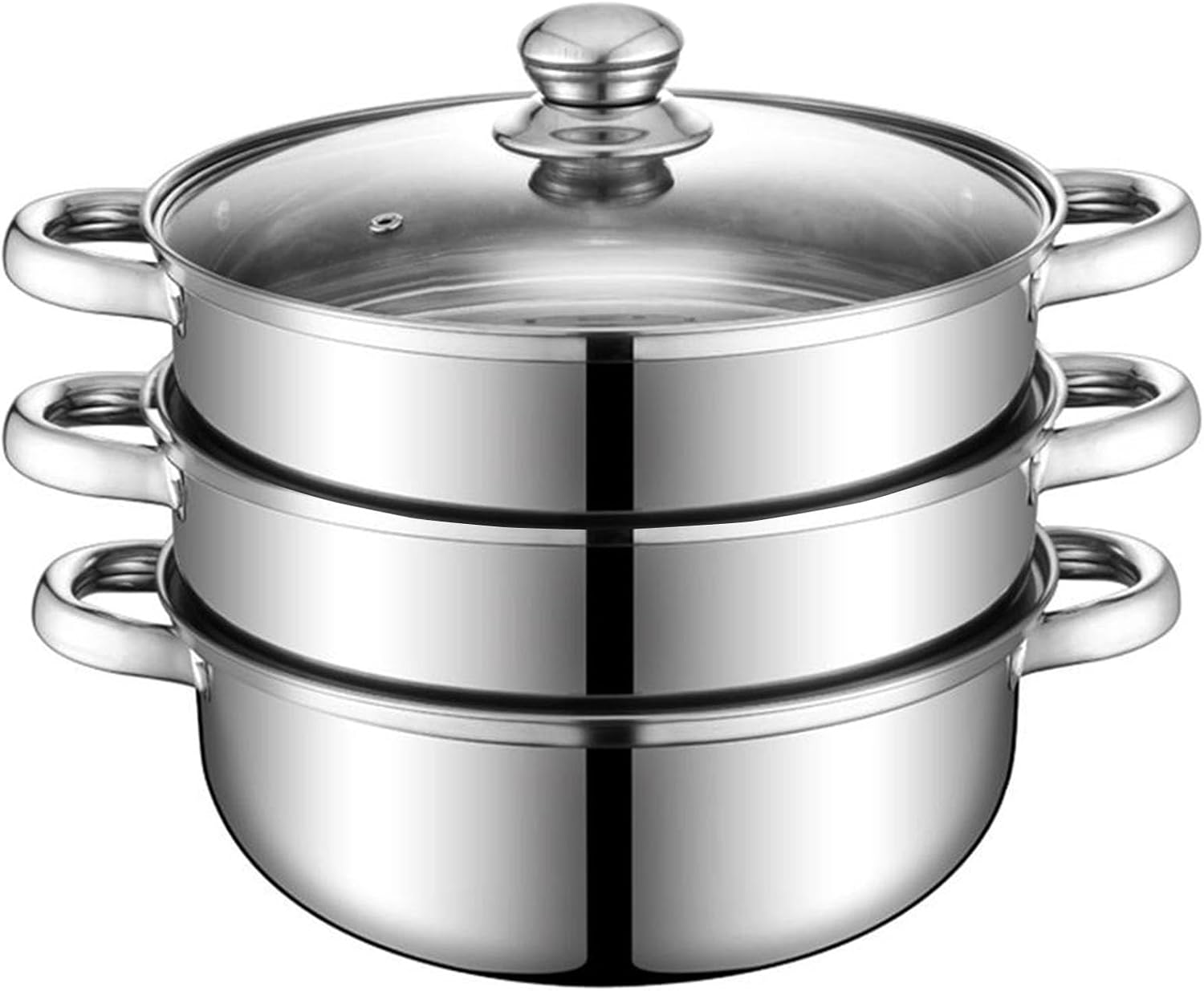
Choosing a reliable 3 layer steamer pot helps home cooks prepare multiple dishes simultaneously without mixing flavors or crowding the main stovetop burners. These multi-tiered cooking vessels effectively utilize vertical kitchen space, allowing users to boil soups or broths in the base while steaming vegetables, dumplings, or seafood in the upper stackable baskets.
Different models offer distinct configurations, ranging from interchangeable tray designs with specialized hole sizes for rice or buns to large capacities suited for heavy family meal prep. Evaluating stovetop compatibility, base construction materials, and tier flexibility ensures the selected cookware matches your daily cooking routines and household size requirements.
As an Amazon Associate, StacyLaughs earns from qualifying purchases.
Buying guide
Stovetop Compatibility and Base Construction
Evaluating stovetop compatibility is essential before purchasing any multi-tier steamer pot. Traditional models rely on standard gas and electric burners, utilizing heavy multi-layer bottoms to spread heat evenly. Induction-compatible pots require specialized magnetic stainless steel bases, such as capsule or triply designs, to conduct heat effectively across flat glass surfaces.
Choosing the correct base construction prevents hot spots and ensures delicate foods like fish and custards cook uniformly. Always check whether your chosen model supports induction ranges or is limited strictly to conventional gas and electric cooktops.
Capacity and Household Size Matching
Matching pot capacity to your household size prevents wasted effort and ensures you can prepare enough food in a single batch. Smaller 5.5-quart units work well for couples or small families making side dishes. Larger 8-quart to 14.7-quart models handle bulky ingredients like whole chickens, large tamale batches, and heavy seafood boils.
Consider how many people you regularly cook for when selecting your pot dimensions. A larger volume base pot provides greater liquid capacity for soups, while wider diameters accommodate broad food items without crowding.
Tier Configurations and Interoperability
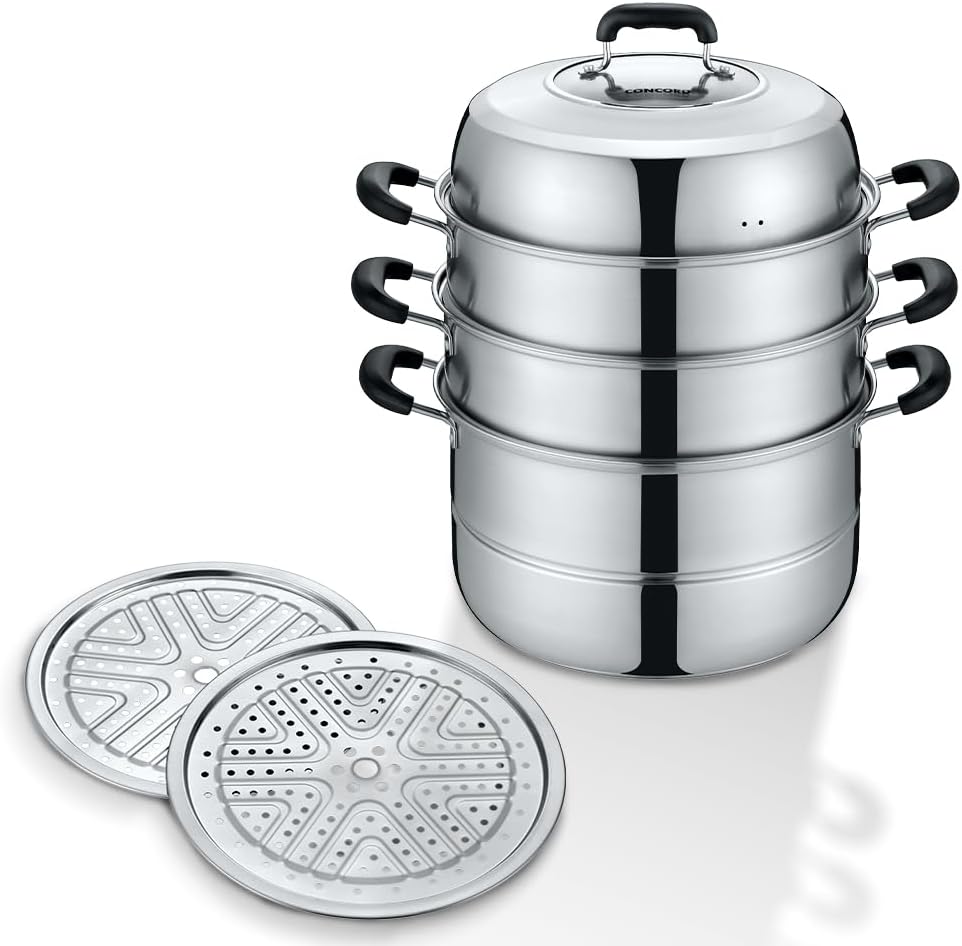
Tier flexibility determines how many different dishes you can prepare simultaneously without flavor transfer. Many steamer sets offer modular designs that function as two, three, or even four separate levels depending on your recipe requirements. Interchangeable trays with varying hole patterns allow you to steam fine grains like rice alongside larger vegetables.
Assessing how easily tiers stack and unstack helps streamline your cooking workflow. Flexible modular systems give you the freedom to remove upper baskets when you only need a standard single-level stockpot.
Lid Materials and Visibility Options
Lid construction directly influences how well a steamer retains heat and moisture during long cooking cycles. Transparent glass lids let users monitor the cooking progress and steam levels without lifting the cover and losing valuable heat. Stainless steel lids offer rugged durability and secure sealing properties for heavy commercial-style tasks.
Some dome lids feature integrated steam vents and rim designs that redirect condensation away from the food. Selecting between glass and metal lids depends entirely on your personal preference for visual monitoring versus traditional ruggedness.
Handle Design and Ergonomic Safety
Handling heavy, water-filled steaming vessels requires secure, ergonomic grip features. Stay-cool handles constructed from durable stainless steel help prevent accidental burns when moving the pot from the hot burner to the serving table. Well-anchored side handles provide stability during heavy lifting.
Pay close attention to handle placement and material insulation on multi-tier pots. Solid grips give you the confidence to maneuver tall, stacked cookware safely around a busy kitchen environment.
Maintenance and Dishwasher Cleanliness
Keeping your steamer pot in top condition requires understanding its material finish and cleaning requirements. Most food-grade stainless steel pots feature mirror-polished or brushed interiors that resist sticking and simplify post-cooking cleanup. Many models are rated dishwasher-safe for effortless routine maintenance.
Following manufacturer cleaning guidelines preserves the polished exterior shine and prevents surface spots caused by mineral deposits. Durable stainless steel withstands frequent washing far better than traditional bamboo alternatives.
Frequently asked questions
Can a 3 layer steamer pot be used as a standard stockpot?
Yes, almost all multi-tier steamer sets allow you to remove the upper steaming baskets entirely. This leaves the deep bottom section to function as a traditional single-level stockpot for boiling soups, pasta, or broths.
Are stainless steel steamer pots compatible with induction cooktops?
Compatibility depends entirely on the specific model's base construction. Units equipped with a heavy triply bottom or an induction-safe capsule base work on induction cooktops, while traditional non-induction models are restricted to gas and electric ranges.
How do interchangeable steamer trays differ in function?
Interchangeable trays feature different hole sizes tailored to specific food types. Trays with smaller holes prevent loose items like rice, momos, and small grains from falling through, while trays with regular holes suit larger items like buns and vegetables.
Can multiple different foods be steamed at the same time?
Yes, the multi-tier design allows you to stack different baskets vertically. This enables home cooks to steam vegetables, dumplings, and seafood simultaneously across separate levels while a soup boils in the base pot.
Are these multi-tier steamer pots safe to place in the dishwasher?
Many food-grade stainless steel steamer pots and their included lids are rated dishwasher-safe by manufacturers. However, checking specific product care instructions ensures proper maintenance and long-lasting exterior shine.