Appliances · Buying Guide
Best 6 Qt Frying Pan Options for Family Meals
Finding the right cookware for large batch cooking can completely transform your daily kitchen routine. A spacious six-quart frying pan offers deep vertical walls and ample cooking surface area, making it exceptionally ideal for preparing family-sized meals, simmering rich stews, braising meats, and frying large portions without messy stovetop splatters during busy weeknights.
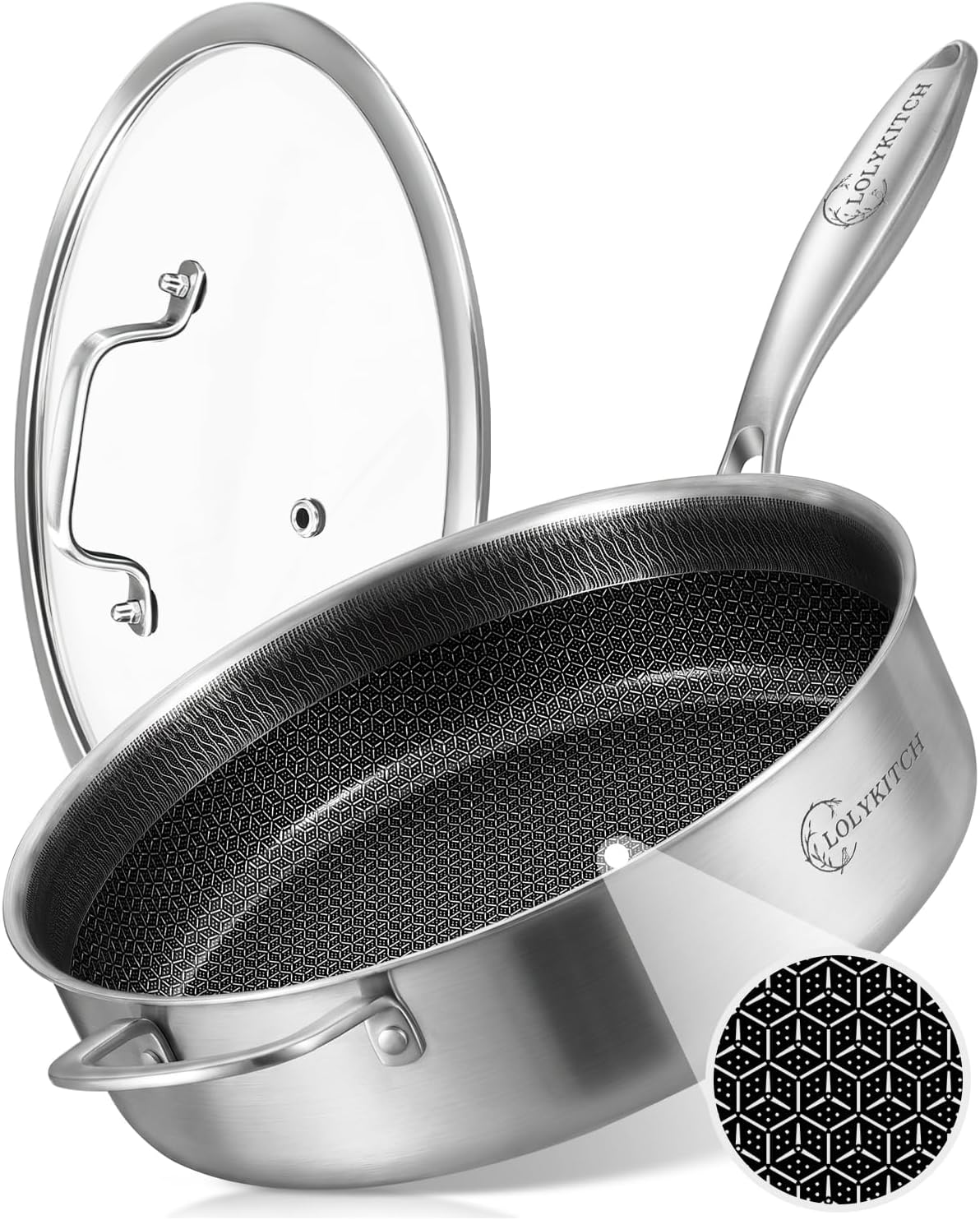
Whether you prefer the effortless food release of modern nonstick ceramic coatings or the rugged durability of multi-clad stainless steel, these versatile pans handle diverse cooking tasks seamlessly from stovetop to oven. Reviewing specific design elements ensures you select a reliable model that precisely matches your daily cooking style, stovetop compatibility, and overall kitchen storage setup.
As an Amazon Associate, StacyLaughs earns from qualifying purchases.
Buying guide
Material Construction and Heat Distribution
Choosing the right material composition directly impacts how your six-quart frying pan handles daily cooking tasks. Aluminum models heat up rapidly and offer lightweight handling, while tri-ply stainless steel options provide exceptional durability and even heat distribution across sidewalls. Understanding these core materials helps you match your cookware to your favorite recipes and everyday stovetop preferences.
Heavy-duty metal cores prevent warping over time, ensuring your pan stays flat against induction cooktops. Evaluating how a pan conducts heat prevents hot spots that burn food during long simmering sessions or high-heat searing.
Nonstick Coatings Versus Uncoated Surfaces
Deciding between a nonstick coating and traditional uncoated stainless steel depends heavily on your typical meal preparation style. Ceramic and traditional nonstick surfaces require very little oil and make flipping delicate foods like eggs effortless. Conversely, uncoated stainless steel surfaces support high-heat browning, metal utensils, and rich pan sauces without degrading delicate chemical layers over time.
Consider whether you prioritize effortless food release or long-term durability when selecting your next kitchen workhorse for family dinners.
Stovetop Compatibility and Base Design
Modern kitchens feature diverse stovetop types, making universal compatibility a vital purchasing criterion. Ensure your chosen six-quart frying pan features an induction-ready magnetic base if you use smooth-surface cooktops. A flat, heavy bottom prevents the pan from spinning or warping when exposed to high thermal outputs across gas, electric coil, or ceramic burners.
Checking stove requirements beforehand guarantees seamless performance whether you are boiling pasta, braising chicken, or searing thick steaks.
Handle Design and Ergonomic Control
The handle configuration determines how safely and comfortably you can maneuver a heavy, food-filled six-quart pan. Bakelite handles stay cool during stovetop use but limit oven compatibility due to lower melting thresholds. Dual stainless steel loop handles or riveted metal grips offer secure two-hand control and seamless transitions from burner to oven cavity.
Reviewing your storage space also helps, as detachable handles or loop designs change how easily the cookware fits inside tight cabinets.
Cleaning and Maintenance Requirements
Maintenance needs vary significantly between different frying pan constructions and protective coatings. Many ceramic and nonstick aluminum pans require gentle hand washing to preserve their slippery surfaces over years of service. Fully clad stainless steel options often tolerate dishwasher cycles and aggressive cleaning methods, making them ideal for busy cooks seeking low-maintenance kitchen tools.
Following manufacturer guidelines protects your investment and ensures reliable food release throughout the lifespan of your cookware.
Capacity and Overall Physical Dimensions
A six-quart capacity provides generous depth for family-sized portions, but outer dimensions dictate real-world usability. A wide fourteen-inch diameter offers immense surface area for searing multiple cutlets, yet it demands substantial storage space and large sink basins. Measuring your oven interior and cabinet depth ensures your new pan integrates smoothly without crowding your kitchen.
Balancing pan width and wall height helps you achieve optimal results whether you are simmering stews or frying big batches.
Frequently asked questions
Can I use a six-quart frying pan on an induction cooktop?
Yes, many six-quart frying pans are specifically designed with induction-compatible magnetic metal bases that work seamlessly across smooth-surface induction cooktops, gas burners, and electric coils. However, you should always check the manufacturer specifications to confirm base compatibility before purchasing. Aluminum pans require a bonded magnetic stainless steel plate on the bottom to function correctly on induction ranges, whereas multi-clad stainless steel models naturally support induction heating due to their layered metallic construction, ensuring rapid and even thermal transfer during meal preparation.
Are ceramic nonstick frying pans safe and free of toxic materials?
Sourced ceramic nonstick pans feature natural coatings that are explicitly manufactured without harmful chemical compounds such as PFOA, PTFE, PFOS, lead, and cadmium. This design ensures that no toxic substances or hazardous fumes are released into your home environment, even if the cookware is accidentally overheated on the stovetop. They provide a safe alternative for health-conscious households looking to cook family meals with minimal oil, though you must follow proper hand-washing guidelines to maintain their smooth surface integrity over time.
How do I clean a stainless steel frying pan properly?
Cleaning a stainless steel frying pan depends on whether the model is dishwasher safe or requires manual care. For routine cleaning, let the pan cool completely before washing it with warm soapy water and a non-abrasive sponge. Stubborn food residue or minor discoloration can be managed using specialized stainless steel cleaners or baking soda pastes. Avoid thermal shock by never plunging a hot pan into cold water, as sudden temperature changes can warp the metal base and compromise its flat contact with your stovetop.
Can I put my six-quart frying pan inside the oven?
Oven compatibility depends entirely on the specific materials used in the pan body and handle construction. Models featuring all-metal tri-ply stainless steel construction and stainless steel handles can often withstand high oven temperatures up to 500 degrees Fahrenheit, allowing you to transition seamlessly from searing on the stovetop to roasting in the oven. In contrast, pans equipped with bakelite handles or glass lids with lower thermal limits usually restrict maximum oven exposure, so checking manufacturer ratings is essential before baking.
What is the advantage of choosing a tri-ply stainless steel pan?
Tri-ply stainless steel pans feature multiple bonded metal layers, typically combining a responsive aluminum core wrapped in durable outer stainless steel sheets. This advanced construction allows heat to transfer rapidly and evenly from the bottom base up the vertical sidewalls, preventing localized hot spots that can burn your food. They offer exceptional structural durability, resist warping under high heat, accommodate metal utensils on uncoated surfaces, and provide reliable long-term performance for demanding everyday cooking workflows.