Appliances · Buying Guide
Best Affordable Non Stick Cookware Sets for Everyday Kitchens
Finding the right cookware balance means carefully evaluating daily durability, straightforward cleaning requirements, and reliable stove compatibility without overspending your household budget. Modern kitchens vary wildly from compact urban apartments to busy family homes, making versatile pots and pans sets an absolute staple for everyday meal preparation tasks, family dinners, and routine cooking chores.
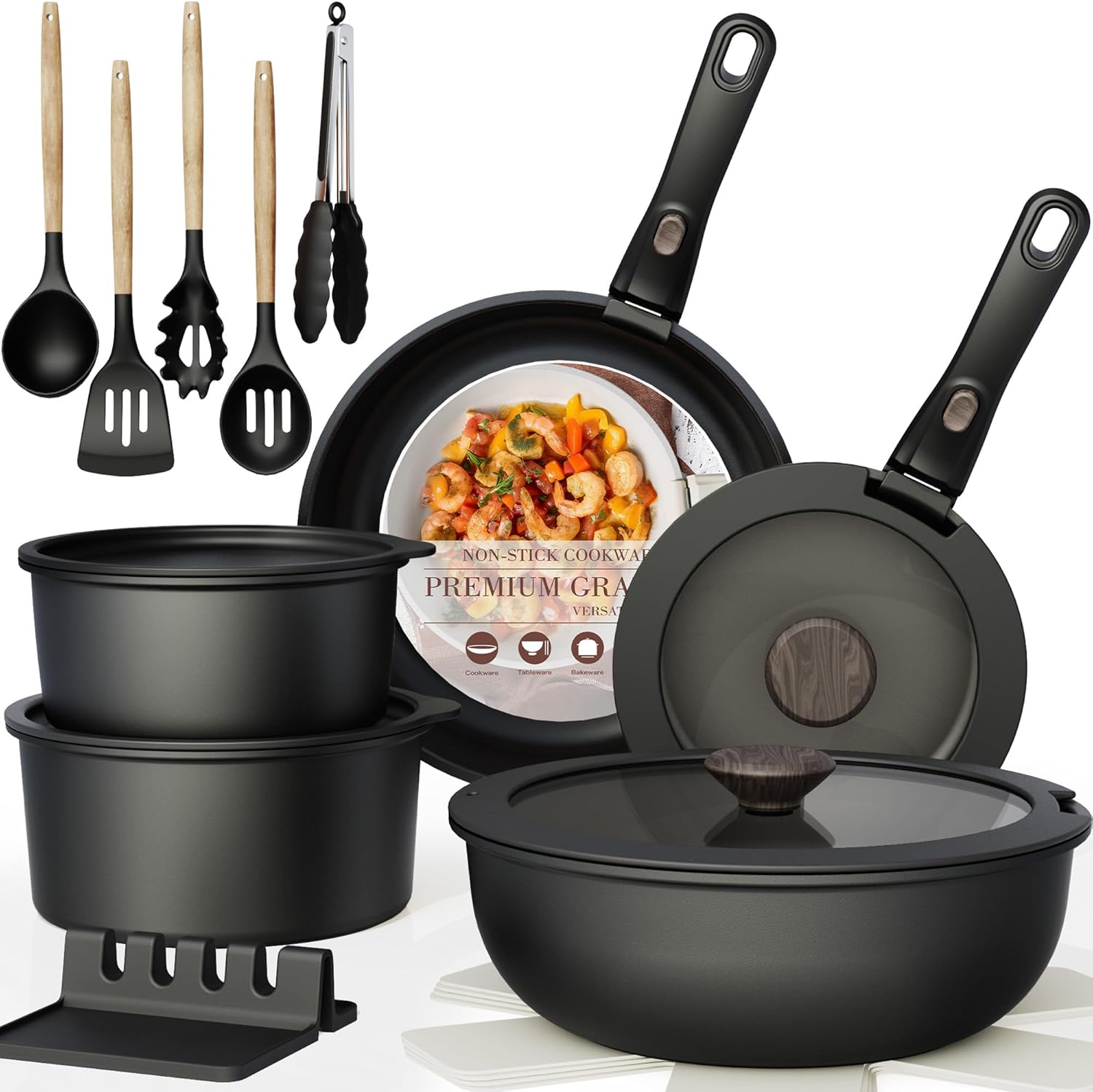
Contemporary budget-friendly options leverage advanced nonstick coatings and clever physical designs, such as detachable handles or robust multi-ply construction, to streamline cooking routines across diverse stovetops. Carefully reviewing these leading choices helps buyers seamlessly match specific kitchen layouts, strict storage limitations, and personal cooking habits to the ideal cookware set for reliable long-term satisfaction.
As an Amazon Associate, StacyLaughs earns from qualifying purchases.
Buying guide
Evaluating Cookware Materials and Heat Distribution
Cookware materials dictate how rapidly pans respond to heat changes during meal preparation. Aluminum provides fast, even heating, making it popular for budget-friendly sets. Hard-anodized aluminum undergoes an electrochemical process that reinforces the metal, increasing scratch resistance and longevity. Tri-ply stainless steel incorporates layered metal construction to optimize heat retention and distribute warmth uniformly across the cooking surface for reliable results.
Choosing the right material depends on your typical cooking style and preferred heat sources. Heavy-gauge metals resist warping under high temperatures, maintaining flat contact with burners over years of regular use. While lighter aluminum pans offer quick adjustments, heavier multi-ply options excel at maintaining steady temperatures for simmering or searing. Assessing these structural differences ensures your cookware handles daily demands without premature wear.
Understanding Nonstick Coating Types and Durability
Nonstick coatings simplify cooking by preventing food from sticking, allowing you to use less oil and clean surfaces effortlessly. Traditional polytetrafluoroethylene and titanium-reinforced coatings offer exceptionally smooth food release. Newer ceramic nonstick options provide an alternative surface made without intentionally added PFAS, appealing to buyers seeking specific chemical-free attributes. Understanding these coating variations helps you select a surface that aligns with your daily cooking preferences and cleaning habits.
Durability varies significantly based on how coatings are reinforced and how the cookware is treated over time. Diamond-reinforced ceramic surfaces and titanium-infused layers provide enhanced scratch resistance compared to basic nonstick options. While many modern coatings support dishwasher cleanup, hand washing with soft sponges often extends their usable lifespan. Reviewing utensil compatibility is also crucial, as some ceramic and titanium surfaces tolerate metal tools, while others require silicone or nylon utensils.
Stovetop Compatibility and Heat Source Requirements
Ensuring your new cookware matches your kitchen's stove is a critical purchasing step. Gas burners and electric coil cooktops generally accommodate any cookware material, from basic aluminum to stainless steel. Glass ceramic smooth tops require flat-bottomed pans to ensure efficient heat transfer without scratching the glass surface. Induction cooktops have stricter requirements, demanding magnetic base materials such as stainless steel or specially bonded aluminum bases to generate heat effectively.
Always verify stove compatibility specifications before purchasing a cookware set to avoid heating issues. Some hard-anodized aluminum sets explicitly exclude induction cooktops, limiting their use to gas and electric ranges. If you plan to upgrade your kitchen appliances or currently use an induction burner, prioritizing induction-ready sets prevents compatibility frustrations. Checking these details guarantees that every pot and pan functions seamlessly on your specific kitchen stove.
Storage Solutions and Handle Design Options
Kitchen storage space heavily influences which cookware set works best for your home. Traditional pots and pans feature fixed handles that provide a secure, permanent grip but take up significant cabinet room during stacking. In contrast, modern sets with detachable handles allow you to nest pans inside one another, saving up to seventy percent of storage space. This design benefits compact apartments, RV kitchens, and crowded home cabinets significantly.
Handle materials also impact comfort and multi-room versatility during meal preparation. Silicone-over-stainless-steel handles and cast riveted grips offer secure, comfortable holds while remaining cool to the touch on stovetops. Removable bakelite handles enable seamless transitions from stovetop to oven, refrigerator, or dining table in a single click. Weighing your cabinet capacity against your preference for fixed or removable handles ensures a practical kitchen setup.
Piece Counts and Essential Kitchen Vessel Selection
Cookware sets range from compact core collections to expansive twenty-one-piece assortments. Smaller sets typically include basic frying pans and saucepans, suiting single cooks or couples with modest meal prep needs. Larger sets add stockpots, sauté pans, griddles, steamers, and matching utensils, accommodating complex family dinners and diverse cooking techniques. Evaluating your typical cooking menu helps you determine whether a streamlined or comprehensive set provides better practical value.
Beyond piece counts, consider the specific vessel types included in the package. Saucepans with lids handle boiling grains and simmering sauces, while wider sauté pans accommodate shallow frying and one-pan meals. Stockpots are essential for large batches of soup, and specialty items like egg wonder pans or griddles address specific breakfast tasks. Matching the included vessel variety to your favorite recipes ensures you utilize every piece in the collection.
Maintenance Routines and Cleaning Recommendations
Proper maintenance preserves the appearance and cooking performance of your nonstick cookware over years of regular use. While many budget-friendly sets claim dishwasher safety, manufacturers frequently recommend hand washing with warm soapy water and a soft sponge to protect delicate coatings. Avoiding abrasive scouring pads and harsh chemical cleaners prevents surface scratching and premature wear. Following these basic cleaning guidelines keeps your pots and pans releasing food smoothly.
Temperature management also plays a vital role in cookware longevity and safety. Avoiding high heat settings when cooking with nonstick surfaces prevents coating degradation and warping. Allowing hot pans to cool naturally before submerging them in water protects the metal structure from thermal shock. Adhering to manufacturer temperature limits for both oven use and stovetop cooking ensures your investment remains durable and reliable for daily meal preparation.
Frequently asked questions
Can nonstick cookware sets be used on induction cooktops?
Induction cooktops require magnetic base materials to generate heat efficiently, meaning not all nonstick cookware sets are compatible. Sets featuring stainless steel bases or specially bonded induction-ready aluminum can work seamlessly on induction ranges. However, many traditional aluminum cookware sets explicitly exclude induction compatibility, functioning only on gas, electric coil, and glass ceramic cooktops. Always verify the manufacturer's stove compatibility specifications before purchasing to ensure your chosen set works properly with your specific kitchen stove type, avoiding frustrating heating issues and unusable pots.
Are detachable handle cookware sets safe and secure during cooking?
Modern cookware sets featuring detachable handles utilize engineered locking mechanisms designed to provide a stable, reliable grip during active stovetop cooking. When properly attached, these handles hold firmly and support the weight of filled pans. However, users must ensure the locking mechanism is securely engaged before lifting heavy vessels. The primary adjustment involves attaching and removing the handle during cooking workflows, but the design offers substantial storage benefits by allowing pans to nest compactly inside crowded kitchen cabinets or RV storage spaces.
Is metal utensil use safe on nonstick pots and pans?
Traditional nonstick coatings are easily scratched by metal forks, spoons, and spatulas, which can compromise food release performance over time. Manufacturers typically recommend using silicone, nylon, or wooden utensils to protect standard nonstick surfaces. Certain advanced collections featuring diamond-reinforced ceramic or specialized titanium technology are engineered to withstand metal utensils without scratching. Even with metal-safe claims, many cooks continue using silicone tools to maximize the longevity of their cookware coatings, ensuring smooth food release throughout years of daily meal preparation tasks.
Should nonstick cookware be washed in the dishwasher?
Many cookware sets advertise dishwasher-safe construction for convenient cleanup after meals. Despite this convenience, manufacturers often recommend hand washing pots and pans with warm soapy water and a soft sponge. Harsh dishwasher detergents and intense wash cycles can degrade nonstick coatings and discolor exterior finishes over extended periods. Hand washing helps preserve the nonstick performance and aesthetic appearance of your cookware, ensuring food continues to slide smoothly. Balancing dishwasher convenience with occasional hand washing can help maintain your kitchen investment effectively.
What is the benefit of hard-anodized aluminum cookware?
Hard-anodized aluminum cookware undergoes an electrochemical manufacturing process that transforms standard aluminum into a dense, durable material twice as hard as stainless steel. This treatment creates a strong exterior that resists scratching, corrosion, and warping under high cooking temperatures. Hard-anodized pots and pans excel at conducting heat rapidly and evenly across the entire cooking surface, eliminating hot spots that can burn food. Paired with advanced nonstick coatings, hard-anodized sets offer exceptional durability and reliable cooking performance for daily family meal preparation.