Appliances · Buying Guide
Best All-Clad Deep Saute Pan Options for Home Kitchens
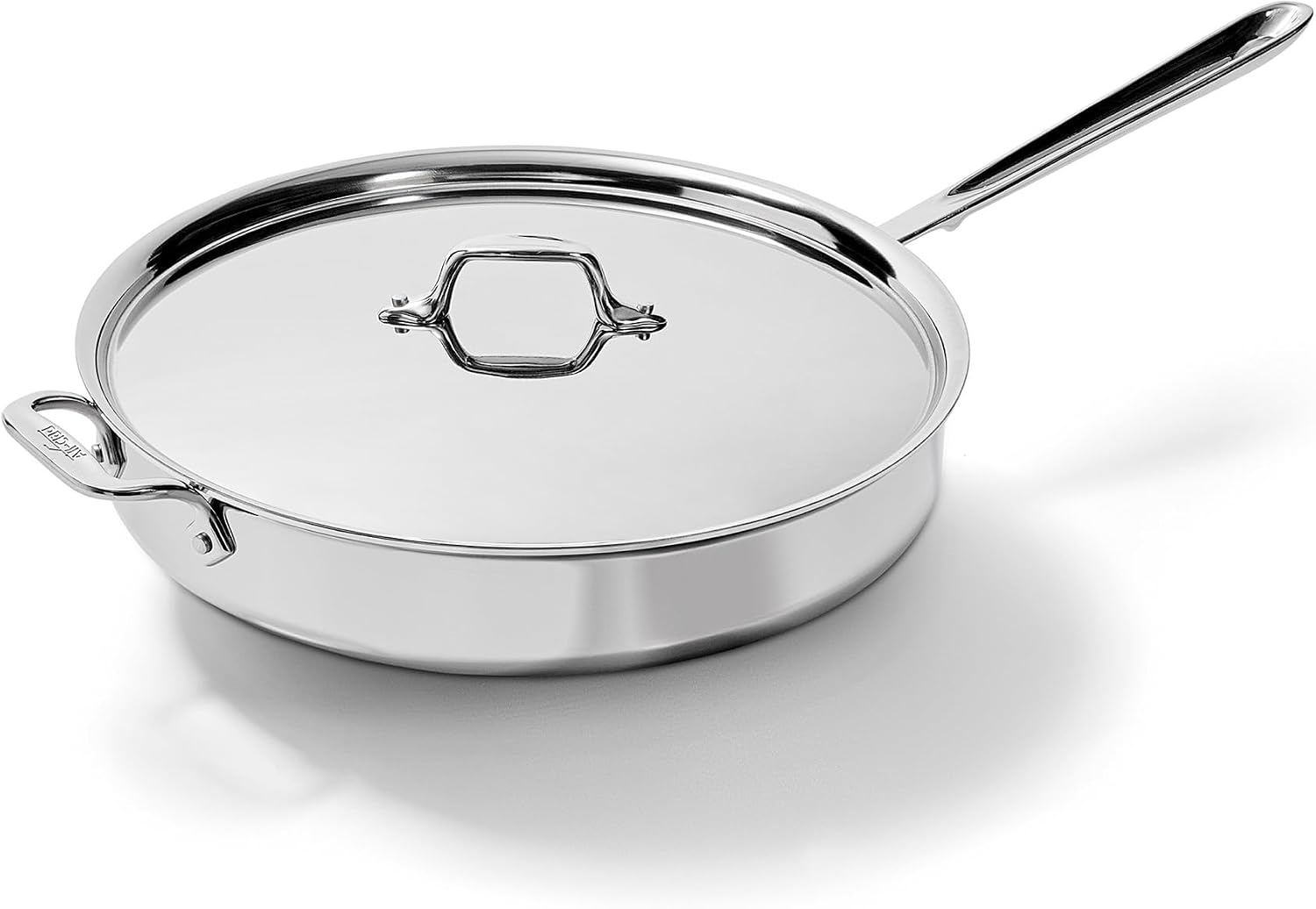
Finding the right cookware for daily family meals or multi-portion cooking requires careful balancing of heat distribution, cooking capacity, and cleaning preferences in the kitchen. All-Clad produces versatile deep saute pans designed with wide flat bases and straight sides to handle browning, simmering, braising, and complete one-pan meals efficiently across various recipes.
Whether you prefer the traditional styling of fully bonded tri-ply stainless steel for high-heat searing or the effortless food release of hard-anodized nonstick and ceramic surfaces, these choices accommodate various stovetops, including energy-saving induction. Evaluating exact capacity and material maintenance requirements helps match a pan directly to your household cooking routine and lifestyle.
As an Amazon Associate, StacyLaughs earns from qualifying purchases.
Buying guide
Material Construction and Heat Distribution
Choosing a deep sauté pan begins with understanding material construction options. Fully bonded tri-ply stainless steel pairs an aluminum core with stainless layers for rapid, even heat across the entire base. Hard-anodized aluminum provides durable performance and consistent heat retention, often paired with nonstick coatings. Evaluating how these materials react to burners helps ensure predictable results for everyday cooking tasks.
Selecting the right foundation directly influences how well a pan handles high-heat searing, simmering sauces, or delicate braising. Stainless steel models endure very high oven temperatures without warping coatings. Conversely, aluminum bodies with specialized nonstick interiors simplify food release during daily meal preparation. Matching the material to your preferred recipes guarantees long-term satisfaction in the kitchen.
Capacity and Batch Cooking Volume
Capacity determines how much food you can comfortably prepare in a single vessel without overcrowding. Three-quart models suit smaller households, single portions, and compact storage spaces. Four-quart sizes offer a balanced middle ground for everyday family dinners and standard recipes. Six-quart pans provide expansive room for bulk meal preparation, large roasts, and multi-portion braising tasks.
Assessing your typical household size and common meal types prevents overcrowding ingredients during cooking. Overcrowding traps unwanted moisture and prevents proper browning when searing meats or sautéing vegetables. Choosing a larger volume ensures adequate space for liquids when simmering stews or building complex one-pan meals. Selecting the correct size keeps your cooking efficient and prevents messy stove splatters.
Interior Coatings and Food Release
Interior surface coatings dictate how food interacts with the pan during cooking and cleaning. Traditional stainless steel interiors offer unmatched durability and tolerate metal utensils and high-heat broiling. PTFE nonstick and ceramic coatings provide effortless food release, allowing you to cook with minimal oil and clean up quickly afterward. Understanding these coating differences helps align your purchase with your daily cooking habits.
While nonstick surfaces simplify delicate tasks like flipping fish or cooking eggs, they require careful handling and non-abrasive tools to prevent scratching. Stainless steel demands more attention during cleaning and cooking techniques but delivers superior browning and longevity. Weighing the convenience of nonstick performance against the robust nature of bare metal guides you toward the ideal cooking surface for your kitchen.
Stovetop Compatibility and Heat Limits
Modern kitchens feature diverse cooktop technologies, making universal burner compatibility an essential purchasing criterion. Quality deep sauté pans support gas, electric coil, smooth surface, and energy-saving induction cooktops through optimized magnetic bases. Checking compatibility ensures your new cookware functions seamlessly on your specific stove without encountering cold spots or energy inefficiencies.
Temperature limits also dictate how versatile a pan can be across stovetop and oven environments. Stainless steel models frequently withstand extreme oven and broiler temperatures up to six hundred degrees Fahrenheit. Nonstick or ceramic options often feature lower temperature thresholds, particularly when glass lids are attached. Reviewing these manufacturer limits prevents accidental damage during high-heat baking or finishing tasks.
Handle Design and Ergonomic Control
Handle design significantly impacts comfort and safety when maneuvering heavy, food-filled pans around the kitchen. Classic riveted stainless steel handles provide a secure, balanced grip, often tailored for a professional chef underhand hold. Ergonomic contours reduce wrist strain during long cooking sessions, while specialized stacking rivets protect neighboring cookware from scratches during cabinet storage.
Evaluating how a handle attaches and feels in your hand ensures confident control when pouring liquids or transferring hot vessels to the oven. Long handles provide essential leverage, though they require careful clearance planning on crowded stovetops. Paying attention to handle placement and grip comfort prevents hand fatigue and enhances overall kitchen safety during busy meal preparations.
Maintenance and Cleaning Requirements
Cookware maintenance requirements vary widely depending on the chosen materials and surface coatings of your sauté pan. Stainless steel models often require manual hand washing to maintain their polished appearance, though they resist harsh scrubbing. Nonstick and ceramic pans demand gentle sponges and mild dish soap to protect their specialized coatings from premature wear.
Understanding cleaning guidelines helps preserve your investment and ensures consistent cooking performance over years of regular use. While certain nonstick models permit dishwasher cycles, hand washing remains widely recommended by manufacturers to extend coating life. Factoring daily upkeep into your decision ensures your cookware stays in top condition without adding unnecessary frustration to your post-meal routine.
Frequently asked questions
What is the main benefit of a deep sauté pan?
A deep sauté pan combines a wide, flat bottom surface with high, straight sides, making it exceptionally versatile for multiple culinary tasks. The flat base provides ample room for browning meats or searing vegetables, while the elevated straight walls effectively contain liquids, prevent splatters, and hold extra ingredients for braising, simmering, or making complete one-pan meals. This design reduces the need to switch between different pots and pans during complex recipes, streamlining your cooking process from stovetop to oven.
Can these sauté pans be used on induction cooktops?
Yes, all the featured All-Clad sauté pans are fully compatible with energy-saving induction cooktops, alongside traditional gas and electric coil stoves. Models featuring fully bonded stainless steel construction or optimized stainless-steel exterior bases create the necessary magnetic connection required for induction heating. This broad compatibility ensures you can use the cookware across different kitchen setups or if you decide to upgrade your stove in the future without replacing your favorite pans.
Are stainless steel sauté pans safe for oven use?
Stainless steel sauté pans from All-Clad are engineered to handle high-temperature environments and are typically oven and broiler safe up to 600 degrees Fahrenheit. This high thermal threshold allows you to start a dish on the stovetop by searing meat and then transfer the entire pan directly into the oven to finish roasting or baking. However, models equipped with glass lids or nonstick coatings generally feature lower temperature limits, so always verify specific manufacturer guidelines before baking.
How should I clean nonstick versus stainless steel sauté pans?
Cleaning requirements depend entirely on the specific material and coating of your sauté pan. Stainless steel models demand hand washing to maintain their exterior polish, though they can tolerate more vigorous cleaning tools when tackling stubborn residues. In contrast, nonstick and ceramic pans require gentle care, meaning you should wash them by hand using a soft sponge, mild dish soap, and non-abrasive utensils to protect the delicate release coating from premature scratching and wear.
Why choose a 3-quart versus a 6-quart sauté pan?
Choosing between a 3-quart and a 6-quart sauté pan depends primarily on your household size and the volume of food you regularly prepare. A 3-quart model offers a compact footprint that works well for single portions, side dishes, and smaller kitchens with limited storage space. A 6-quart pan provides generous capacity for bulk meal preparation, large family roasts, and expansive braising tasks, though it requires more storage room and weighs significantly more when filled.