Appliances · Buying Guide
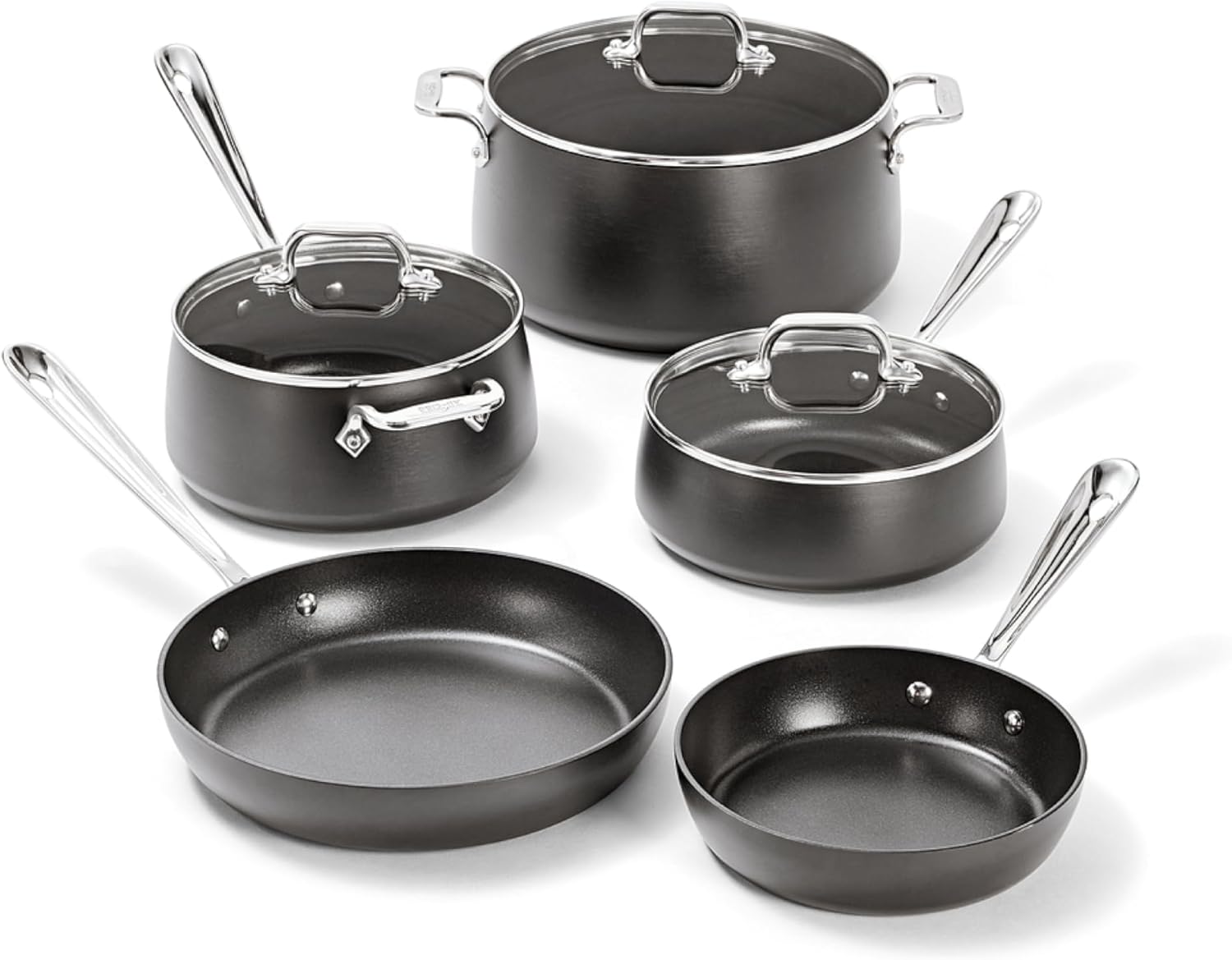
Best All-Clad Saucepan Sets and Cookware Collections for Home Cooks
Finding the right cookware involves balancing material preferences, heat distribution needs, and daily maintenance routines. All-Clad offers multiple collections tailored to different cooking styles, ranging from hard-anodized nonstick surfaces to bonded stainless steel metals designed for precise temperature control. Evaluating your everyday recipes helps clarify which materials and piece counts will best serve your culinary tasks.
Whether you need dedicated saucepans for delicate reductions or comprehensive multi-piece sets for large family dinners, understanding the specific construction helps match your stovetop and storage requirements. Exploring these options ensures you select cookware that fits your kitchen habits, cleaning preferences, and available cabinet space without compromising on reliable daily performance across varied stovetop heat sources.
As an Amazon Associate, StacyLaughs earns from qualifying purchases.
Buying guide
Material Composition and Heat Distribution
Selecting cookware materials directly influences how evenly heat transfers across your ingredients during meal preparation. Aluminum options provide rapid thermal response, making them popular for quick temperature adjustments during delicate tasks. Hard-anodized versions add enhanced durability and warp resistance to standard aluminum cores, creating a sturdy foundation for everyday kitchen use and reliable heat control.
Stainless steel collections often utilize bonded multi-ply construction, sandwiching an aluminum core between protective steel layers. This specialized design combines the durability and searing capabilities of exterior steel with the conductive properties of inner metals. Understanding these material differences ensures you choose pots and pans that match your cooking style, whether you prioritize fast thermal response or sturdy heirloom longevity.
Cooktop Compatibility and Induction Support
Modern kitchens feature diverse stovetop technologies, ranging from traditional gas burners to electric coils and magnetic induction surfaces. Before purchasing any cookware set, verify that the base materials match your specific cooktop type. While standard aluminum pans function well on gas and electric ranges, they require specialized magnetic bases to operate successfully on induction cooktops.
Stainless steel sets typically offer universal compatibility across all heat sources because of their magnetic outer layers. Checking these compatibility details prevents heating issues and ensures optimal thermal transfer. Selecting versatile cookware also guarantees your investment remains functional if you eventually upgrade your kitchen appliances or move to a home with a different stove setup.
Piece Count and Kitchen Versatility
The number of items included in a cookware collection determines how many recipes you can tackle simultaneously. Smaller sets focusing on saucepans or basic multi-piece bundles suit compact kitchens, single cooks, or those with limited storage space. These targeted assortments provide essential vessels for boiling liquids, making sauces, and frying eggs without cluttering your cabinets.
Larger ten-piece sets provide comprehensive coverage for complex multi-course meals, offering specialized vessels like large stockpots and sauté pans. Evaluating your typical cooking habits helps determine whether a minimal starter bundle or an extensive collection fits your lifestyle. Matching the piece count to your household size prevents unused pots from taking up valuable kitchen real estate.
Handle Design and Ergonomic Control
Comfortable handles are essential for maintaining safety and control while moving heavy pots filled with liquids. Look for securely riveted stainless steel handles designed to withstand frequent lifting and oven heat. Contoured shapes and ergonomic angles help reduce hand fatigue, especially when you are transferring heavy cookware from the stovetop to the oven or dinner table.
Some handles feature specialized underhand grip designs inspired by professional chefs to improve balance and maneuverability. Evaluating how a handle feels in your hand prevents awkward lifting angles during busy cooking sessions. Sturdy attachment methods also ensure long-term reliability, preventing loose fittings that could compromise safety when handling hot liquids and heavy meals.
Lid Options and Cooking Monitoring
Lids play a critical role in trapping heat, retaining moisture, and speeding up boiling times for soups and sauces. Tempered glass lids offer the distinct advantage of letting you monitor food progress visually without lifting the cover and releasing valuable heat. This feature is especially convenient when simmering delicate reductions or tracking boiling liquids closely.
Metal lids provide maximum durability and higher oven temperature tolerances compared to glass alternatives. When choosing between lid types, consider your typical baking habits and whether visual monitoring matters more than heavy-duty oven resilience. Ensuring the lids fit tightly against the rim of each saucepan or stockpot maximizes thermal efficiency across all your everyday recipes.
Maintenance and Cleaning Requirements
Keeping your cookware in top condition requires following manufacturer guidelines regarding cleaning methods and utensil choices. Nonstick surfaces generally require gentle hand washing with mild soap and soft sponges, paired with wooden or silicone utensils to prevent scratching. Respecting these care instructions preserves the nonstick coating and maintains effortless food release over years of regular daily use.
Stainless steel collections often demand manual washing to maintain their polished or brushed exterior finishes, though some materials withstand dishwasher cycles. Understanding these upkeep commitments before buying helps you select cookware that fits your cleaning routine. Proper maintenance not only extends the lifespan of your pots and pans but also ensures they continue performing reliably across every recipe.
Frequently asked questions
Can All-Clad stainless steel cookware be used on induction cooktops?
Yes, All-Clad tri-ply and multi-ply stainless steel cookware collections are fully compatible with all stovetop types, including magnetic induction. The bonded stainless steel exterior layers provide the necessary magnetic property required to activate induction burners efficiently. This universal compatibility allows you to transition your pots and pans between gas, electric, and induction ranges without losing heating performance. Always verify the specific collection details, as certain nonstick aluminum lines require specialized bases for induction use.
Are nonstick saucepans safe to use in the oven?
Many All-Clad nonstick saucepans are oven safe up to 500 degrees Fahrenheit, but you must check the specific temperature limits for the lids. While the main hard-anodized aluminum bodies withstand high oven heat, accompanying tempered glass lids typically feature a lower maximum temperature threshold, often around 350 degrees Fahrenheit. Exceeding these specified thermal limits can damage the glass or the nonstick coating. Always consult the manufacturer guidelines before transferring your covered cookware into a hot oven.
What type of utensils should I use with nonstick cookware?
To protect the delicate PTFE nonstick coating from scratching or peeling, you should exclusively use non-metal utensils. Wooden, nylon, silicone, and plastic cooking tools are ideal for stirring, flipping, and serving food without harming the smooth cooking surface. Avoid using metal whisks, spatulas, or forks, as sharp edges can permanently damage the nonstick layer and reduce its food release effectiveness over time. Proper utensil selection ensures your nonstick saucepans maintain their performance across years of daily meal preparation.
Is All-Clad stainless steel cookware dishwasher safe?
Most All-Clad stainless steel cookware collections require hand washing to preserve their polished exterior finishes and prevent discoloration caused by harsh dishwasher detergents. While some lines specify dishwasher compatibility, hand washing with warm soapy water and a non-abrasive sponge remains the recommended method to maintain the longevity and appearance of bonded metal surfaces. Following these cleaning instructions keeps your investment looking pristine and prevents dullness from forming on the stainless steel exterior during regular maintenance routines.
What is the benefit of bonded tri-ply construction?
Bonded tri-ply construction sandwiches a highly conductive aluminum core between two layers of durable stainless steel. This engineering design allows heat to transfer rapidly and distribute evenly across the entire bottom and sides of the cookware rather than just concentrating over the burner. As a result, you experience fewer hot spots, achieving precise temperature control when searing meats, reducing sauces, or simmering delicate ingredients. This professional-grade construction delivers reliable cooking results for home kitchens.