Appliances · Buying Guide
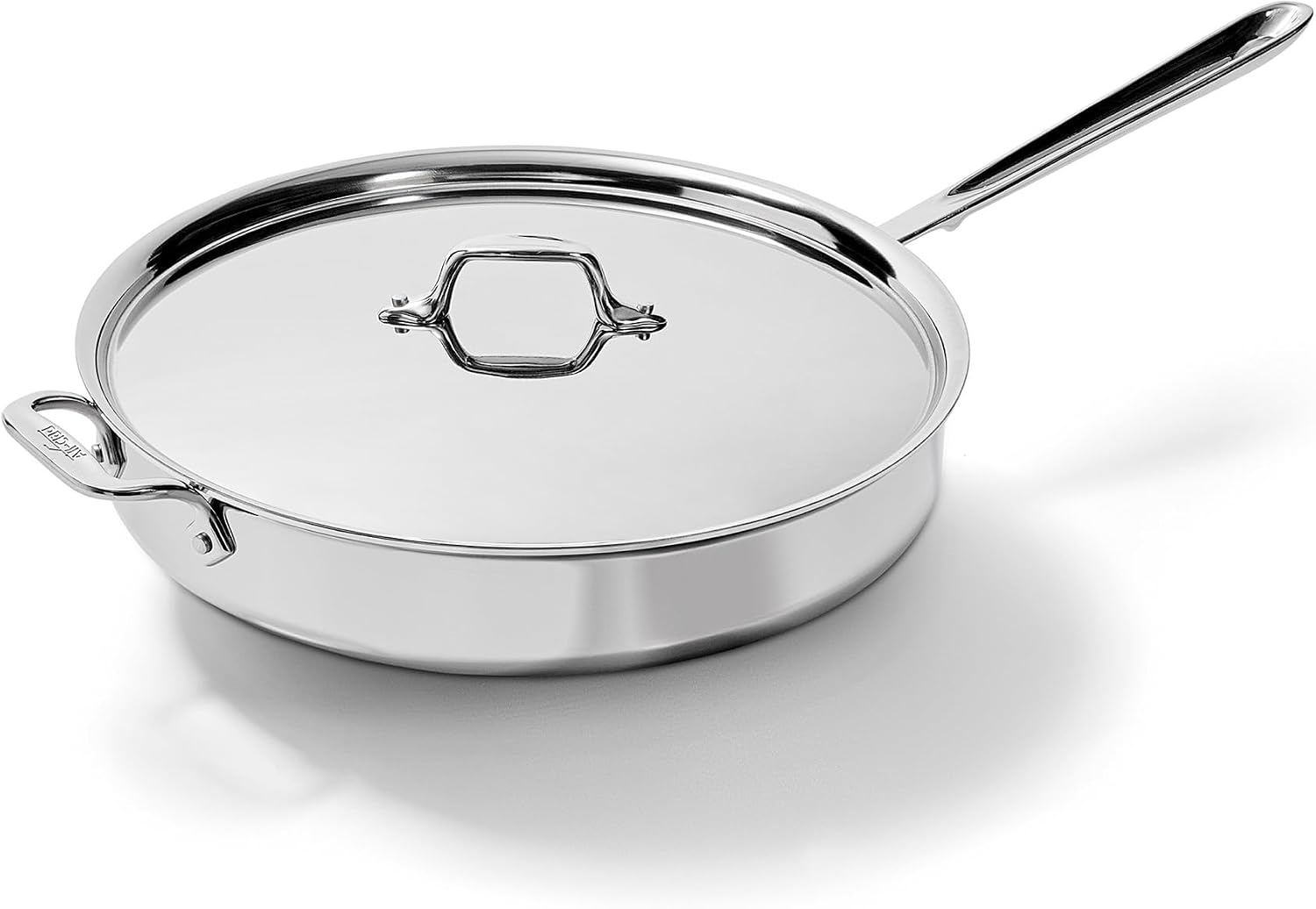
Best All Clad Saute Pan Options for Every Kitchen Task
Choosing the right cookware requires understanding how pan capacity, construction materials, and heat distribution impact everyday meal preparation in busy home kitchens. All-Clad offers versatile options designed to handle high-heat searing, simmering, braising, and complex one-pan meals with reliable consistency across electric, gas, and induction stovetops, ensuring dependable everyday cooking performance for various family sizes and recipes.
Whether you prefer traditional multi-layered stainless steel or modern nonstick surfaces, these distinct pans accommodate diverse cooking styles and cleaning routines. Exploring the specific attributes of each model helps match your household batch sizes and maintenance preferences with the ideal physical structure, edge design, handle style, and thermal capability for long-term use.
As an Amazon Associate, StacyLaughs earns from qualifying purchases.
Buying guide
Material Construction and Heat Distribution
Choosing between stainless steel and hard-anodized aluminum influences how heat moves through your cookware during meal preparation. Multi-layered bonded metals use conductive aluminum cores to spread thermal energy quickly across the entire base. This ensures even temperatures, preventing localized hot spots that can burn sensitive ingredients during extended simmering or high-heat searing sessions on your stovetop.
Stainless steel exteriors offer long-lasting durability and resist warping under intense heat conditions. Meanwhile, alternative aluminum bodies provide responsive handling properties while maintaining structural integrity. Matching your preferred construction material to your daily cooking habits guarantees reliable thermal performance and consistent culinary results over years of regular kitchen use.
Capacity Selection for Household Meals
Selecting the correct pan capacity depends directly on your household size and typical meal portions. Smaller three-quart models suit individual cooking, small side dishes, or quick reductions, whereas four-quart options handle standard family dinners comfortably. Larger six-quart pans provide ample room for bulk cooking, whole proteins, or complex multi-ingredient one-pan recipes without overcrowding the cooking surface.
Larger vessels also accommodate broader bases for searing multiple pieces of meat simultaneously without trapping excess steam. However, these larger pans require more storage space in cabinets and add considerable physical weight when filled with cooked food. Evaluating your typical recipe batch sizes prevents choosing a pan that feels cramped or unnecessarily bulky for daily kitchen routines.
Interior Coatings and Nonstick Options
Interior surface choices dictate how easily food releases and what cleaning methods you must employ after daily cooking. Traditional stainless steel interiors let you achieve deep pan fond and withstand metal utensils without scratching the base. They require proper preheating techniques to minimize sticking during delicate protein cooking tasks across various recipes and techniques.
Nonstick alternatives, including PTFE and ceramic coatings, offer effortless food release with minimal oil usage during meal preparation. These smooth surfaces simplify cooking delicate items like fish or eggs. However, they demand careful utensil selection, typically requiring silicone, nylon, or wooden tools to protect the coating from premature wear and surface damage over years of regular use.
Stovetop Compatibility and Thermal Limits
Modern cookware must accommodate diverse kitchen setups, including electric coil, gas burners, and smooth-surface induction cooktops. Ensuring your chosen pan features an optimized magnetic base guarantees efficient, uniform heating on induction ranges. Additionally, checking maximum temperature ratings helps determine whether the pan can transition safely from stovetop searing to high-heat oven roasting or broiling tasks.
Stainless steel models often withstand higher oven temperatures up to six hundred degrees Fahrenheit, including direct broiler use. Nonstick or ceramic variants frequently feature lower thermal limits or restrict companion glass lids to moderate oven settings. Aligning these technical specifications with your baking and broiling habits protects your cookware components from accidental heat damage over extended periods.
Handle Design and Ergonomic Control
Handle construction significantly affects comfort, balance, and safety when maneuvering heavy cookware filled with hot food. Riveted stainless steel handles designed for professional underhand grips offer exceptional control during precise kitchen tasks and heavy lifting. Comfort-grip coatings or ergonomic contours provide additional tactile security, reducing hand fatigue during prolonged cooking sessions and meal preparation.
Storage design also plays an important role when space is limited in kitchen cabinets. Models featuring flush exterior rivets allow clean, organized stacking without scratching neighboring pans or cookware sets. Evaluating how handles attach and feel in your hand ensures safe lifting and convenient storage matching your specific kitchen layout and spatial constraints.
Maintenance Routines and Cleaning Care
Understanding manufacturer care instructions helps preserve the appearance, structural integrity, and thermal performance of your cookware over extended periods of use. Certain stainless steel models require strict hand washing to maintain their highly polished exterior finishes. Other nonstick or hard-anodized options offer dishwasher-safe convenience, saving considerable time after heavy meal preparation routines.
Ceramic nonstick surfaces typically benefit from gentle hand washing with mild soap and soft sponges to protect the delicate coating. Adhering to these manufacturer maintenance guidelines prevents premature degradation and keeps your pans functioning reliably meal after meal. Reviewing cleanup requirements before purchasing ensures the upkeep aligns with your daily lifestyle and personal schedule constraints.
Frequently asked questions
Can All-Clad stainless steel sauté pans be used on induction cooktops?
Yes, All-Clad stainless steel sauté pans feature compatible base designs that work seamlessly on all stovetop types, including electric coil, gas, and smooth-surface induction cooktops. The bonded metal construction incorporates conductive aluminum cores coupled with magnetic stainless steel exterior layers, allowing the pans to generate heat efficiently on induction ranges. This universal compatibility ensures you can transfer your cookware between different kitchen setups or future appliance upgrades without losing cooking performance or thermal consistency.
What is the difference between stainless steel and nonstick sauté pans?
Stainless steel sauté pans offer exceptional durability, tolerate extremely high oven temperatures up to six hundred degrees Fahrenheit, and allow you to develop rich pan fond for sauces while using metal utensils safely. In contrast, nonstick models feature PTFE or ceramic coatings that provide effortless food release with minimal oil, making them ideal for delicate ingredients like eggs. However, nonstick pans generally require lower maximum oven temperatures and mandate nonmetal utensils to prevent scratching the delicate interior coating.
Are these sauté pans safe to put in the dishwasher?
Dishwasher safety depends entirely on the specific model and material construction you select. Certain stainless steel and ceramic nonstick variants explicitly specify hand wash only instructions to preserve their finishes and coatings. Conversely, specific hard-anodized nonstick models are rated as dishwasher safe for convenient cleanup. Always review the individual manufacturer care specifications for your chosen pan before placing it into an automatic dishwasher to prevent accidental surface damage or performance degradation over time.
Why do sauté pans feature straight sides instead of sloped edges?
Sauté pans feature straight, vertical sides designed specifically to hold in large volumes of liquid, reduce messy splattering onto kitchen counters during active simmering, and accommodate multi-ingredient one-pan meals. This physical geometry provides a wider flat cooking surface compared to traditional sloping skillets, maximizing the area available for browning meats or reducing sauces. While sloped pans facilitate easy flipping, straight-sided sauté pans excel at braising, poaching, and containing bubbling liquids securely and safely.
How do I choose the right pan capacity for my cooking needs?
Choosing the right capacity involves evaluating your typical meal portion sizes and household requirements. A smaller three-quart pan suits individual cooking, side dishes, or compact kitchen storage spaces. A four-quart model provides a versatile middle ground for standard family dinners and moderate one-pan recipes. A larger six-quart pan accommodates bulk cooking, whole proteins, and large family portions, though it demands more cabinet space and adds physical weight when filled with food during handling.