Appliances · Buying Guide
Best Aluminum Foil Roasting Pans for Baking and Large Holiday Meals
Choosing the right aluminum foil roasting pan simplifies cooking, meal prep, and cleanup for everyday dinners, neighborhood gatherings, or large holiday events. These versatile disposable pans support baking, roasting, and freezing without requiring post-meal scrubbing, letting you transition smoothly from the kitchen oven directly to the dining or serving table.
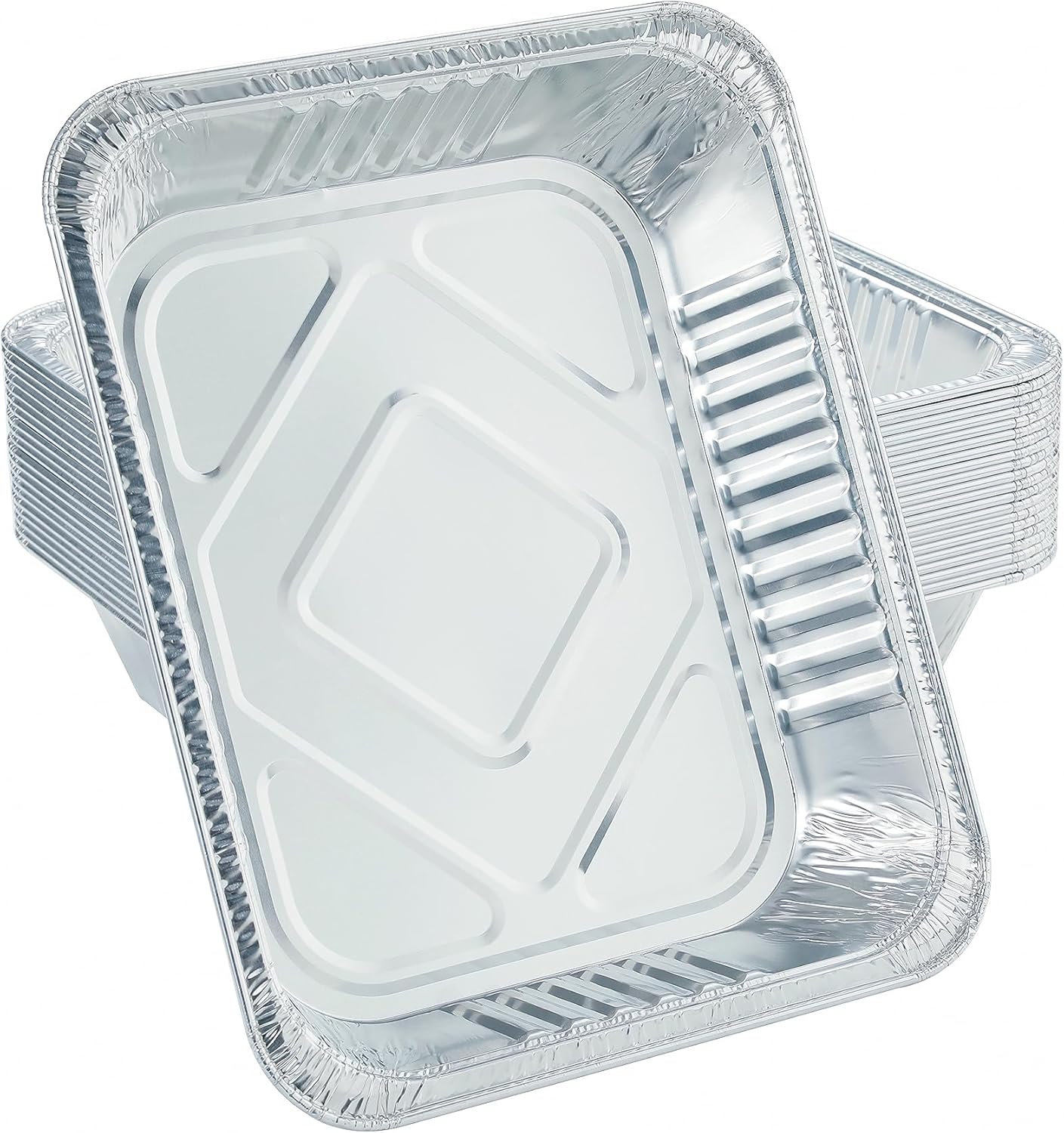
Options range from standard half-size bakeware to full-size steam table trays and high-capacity designs featuring reinforced walls or vertical ridges. Reviewing physical dimensions, pack counts, and upper temperature limits helps match a specific pan to your cooking habits, ensuring reliable thermal performance for casseroles, baked treats, and large cuts of meat.
As an Amazon Associate, StacyLaughs earns from qualifying purchases.
Buying guide
Material Thickness and Durability
Aluminum foil pan durability depends directly on foil gauge and wall construction. Heavy-duty designs feature thicker aluminum and reinforced rib walls that resist warping under heavy loads. This structural integrity prevents accidental buckling when moving heavy casseroles, large roasting meats, or dense holiday dinners between kitchen counters and hot ovens.
Thinner options work well for lighter baked goods like brownies, cookies, or quick side dishes. When choosing a pan, evaluate the total weight of your intended recipe. Selecting reinforced walls ensures safer transport and reliable thermal performance during extended baking cycles, reducing the likelihood of messy kitchen accidents or spilled ingredients.
Sizing and Physical Dimensions
Standard half-size pans match common 9x13 recipes, fitting easily into traditional home ovens and standard refrigerator shelves. Full-size steam table trays require much wider interior oven space and broader support racks. Checking outer dimensions against your kitchen appliances prevents frustrating clearance issues when attempting to bake multiple dishes simultaneously during busy cooking sessions.
Depth is equally important for preventing overflows. Deeper pans with three-inch profiles accommodate tall layer cakes and layered casseroles comfortably. Meanwhile, shallower designs facilitate faster browning for roasted vegetables and meats. Matching the physical dimensions and depth to your specific menu ensures efficient cooking results without messy spillover inside your oven.
Temperature Limits and Heat Sources
Aluminum foil pans handle a wide range of temperatures, but specific upper limits vary by manufacturer design. Many standard trays support freezer storage and moderate baking up to 215 degrees Celsius, while heavy-duty models safely handle higher heat settings or gas stovetops. Reviewing these thresholds prevents metal degradation and keeps your food cooking safely at correct rates.
Compatibility with heating sources also matters. Certain pans work well on grills, under broilers, or inside steam tables with sterno heat sources. However, most aluminum containers are strictly prohibited from microwave use. Confirming whether a pan supports open flames, broilers, or standard baking environments ensures safe food preparation without damaging your cookware.
Pack Quantities and Storage Needs
Buying aluminum foil pans in bulk packs ranging from twenty to thirty units offers strong value for frequent bakers, caterers, or holiday hosts. Smaller five-packs suit occasional users who only need a few heavy-duty roasting trays for special family dinners. Consider your typical usage frequency to avoid cluttering your pantry with excess inventory or running short unexpectedly.
Storage space is another practical consideration when purchasing bulk packs. Stacking deep aluminum trays takes up significant cabinet or pantry room. Ensure you have adequate dry storage space before committing to large quantities. Proper storage keeps your pans clean, unwarped, and ready for immediate use whenever impromptu baking or meal prep occasions arise in your kitchen.
Lids and Food Preservation
Transporting or storing prepped meals is much simpler when your aluminum pans include matching covers. Some options feature stretchable plastic lids that protect food freshness in the refrigerator. However, these plastic covers are rarely heat-resistant and must be removed before placing the tray into an oven, grill, or broiler during cooking preparation.
When pans arrive without lids, you must plan for alternative covering methods, such as aluminum foil sheets or separate food storage containers. Evaluating whether a package includes covers helps streamline your meal prep workflow, especially if you regularly deliver food to potlucks, family gatherings, or community events where secure transport is essential.
Cleanup and Environmental Considerations
One of the primary advantages of disposable aluminum foil pans is eliminating time-consuming post-meal cleanup. Tossing used trays directly into recycling bins saves considerable effort after large dinners or parties. Many aluminum containers are fully recyclable, allowing you to manage cleanup efficiently without creating excessive environmental harm through non-recyclable plastic waste.
While primarily designed for single-use convenience, certain heavy-duty aluminum pans feature sturdy construction that withstands careful hand washing or dishwasher cycles for multiple uses. Reviewing product care instructions helps determine whether you can reuse a particularly durable tray or simply recycle it immediately after your meal service concludes successfully.
Frequently asked questions
Can aluminum foil roasting pans be used on gas stovetops or grills?
Certain heavy-duty aluminum foil pans are manufactured to support gas stovetops, outdoor grills, and broiler settings, while others are strictly intended for conventional oven baking, freezing, and food storage. You should always check the specific product specifications and manufacturer guidelines before exposing any foil container to open flames, direct burners, or intense heat sources. Verifying these compatibility details prevents material damage and ensures safe, reliable cooking performance during your meal preparation.
Are plastic covers included with all disposable aluminum foil pans?
No, matching lids or protective covers are not included with every aluminum pan package on the market. Many bulk packs consist solely of bare foil trays, requiring you to source separate covers or use standard household aluminum foil sheets if you need to transport dishes or store leftovers. When a product listing explicitly includes stretchable plastic covers, remember that these lids are designed strictly for refrigerator or room-temperature storage and must be removed before heating.
Can disposable aluminum foil pans be cleaned and reused?
Many heavy-duty aluminum foil pans feature sturdy construction with reinforced walls that can withstand careful hand washing or dishwasher cycles for multiple uses. However, standard lightweight pans are typically designed primarily for single-use convenience, allowing you to toss them into recycling bins immediately after your meal to eliminate tedious scrubbing. Always inspect the product care instructions to determine whether a specific tray is durable enough for repeated culinary applications or intended strictly for single-use disposal.
What temperature limits apply to aluminum foil roasting pans?
Upper temperature limits vary significantly depending on the specific aluminum gauge and manufacturer design specifications. Some standard baking pans are rated for temperatures up to 215 degrees Celsius, while heavy-duty commercial models safely handle up to 260 degrees Celsius or 400 degrees Fahrenheit. Exceeding these specified thermal thresholds can cause the metal to warp, buckle, or degrade. Reviewing the listed upper temperature rating before cooking helps ensure your baked dishes and roasts process safely.
Are aluminum foil pans safe to use inside microwave ovens?
Most aluminum foil pans are explicitly not safe for use inside microwave ovens. Metal containers can cause dangerous sparking, arcing, and potential fire hazards when subjected to microwave radiation. If you need to reheat leftovers, you must always transfer your food out of the aluminum foil container and into a certified microwave-safe glass or ceramic dish. Always verify manufacturer safety notes regarding microwave compatibility before placing any metal item inside electronic kitchen appliances.