Appliances · Buying Guide
Best Antique Copper Frying Pan Choices for Traditional Kitchens
Choosing an antique copper frying pan brings classic visual warmth and exceptional thermal conductivity to everyday kitchen routines. These handcrafted culinary tools combine historical hammered aesthetics with highly responsive heating properties, making them a favorite choice among home cooks who value traditional craftsmanship alongside precise temperature control on compatible gas or electric coil stovetops.
Selecting the ideal skillet requires carefully evaluating physical dimensions, interior protective linings, handle configurations, and overall stovetop compatibility to match your distinct cooking habits. Whether you prefer heavily textured heritage finishes or sleek multi-layer French-inspired construction, understanding these core attributes ensures you discover a durable and attractive piece for daily searing, sautéing, and elegant table presentation.
As an Amazon Associate, StacyLaughs earns from qualifying purchases.
Buying guide
Material Composition and Purity
Evaluating the metal purity of an antique copper frying pan is essential for ensuring proper thermal conductivity during your daily meal preparation routines. Pure copper construction delivers unmatched responsiveness, allowing the skillet to heat up rapidly and eliminate stubborn hot spots during delicate searing, frying, and sautéing tasks.
Skilled artisans often employ heavy-gauge hammered copper to enhance structural durability and promote consistent heat retention across various traditional cooking activities. Checking whether a skillet uses certified pure copper helps confirm that you are receiving authentic thermal performance rather than simple decorative exterior plating that lacks deep culinary benefits.
Interior Linings and Coatings
Because raw copper can react negatively with acidic ingredients during cooking, most traditional pans feature protective interior linings such as Malaysian tin or 18/10 stainless steel. A quality tin lining offers a naturally non-stick cooking surface without relying on synthetic chemicals, making it exceptionally ideal for preparing delicate foods like eggs, pancakes, and seafood dishes.
Alternatively, stainless steel interiors provide outstanding long-term durability and robust browning capabilities while remaining straightforward to clean after heavy daily use in the kitchen. Reviewing the specific interior coating type ensures your chosen skillet matches your preferred cooking style, routine maintenance habits, and overall dietary comfort level without surprises.
Stovetop Compatibility
Stovetop compatibility represents a crucial purchasing factor because traditional copper cookware frequently lacks direct support for modern magnetic induction burners found in contemporary homes. Many classic copper frying pans function exceptionally well on traditional gas stoves and standard electric coil cooktops, leveraging open flames or electric heat sources efficiently and evenly across the entire base.
If your modern kitchen features an induction cooktop, you must carefully verify whether the selected pan includes a compatible magnetic base or requires an external adapter disc for operation. Checking burner requirements beforehand prevents functional disappointment and ensures your new cookware integrates smoothly into your existing household kitchen setup without unexpected operational restrictions.
Handle Design and Ergonomics
Handle design significantly impacts daily comfort, safety, and maneuverability when lifting heavy copper cookware filled with hot food. Options featuring specially insulated brass handles or durable cast stainless steel provide secure, balanced grips while actively resisting excessive heat transfer during extended stovetop cooking sessions on your kitchen stove burner.
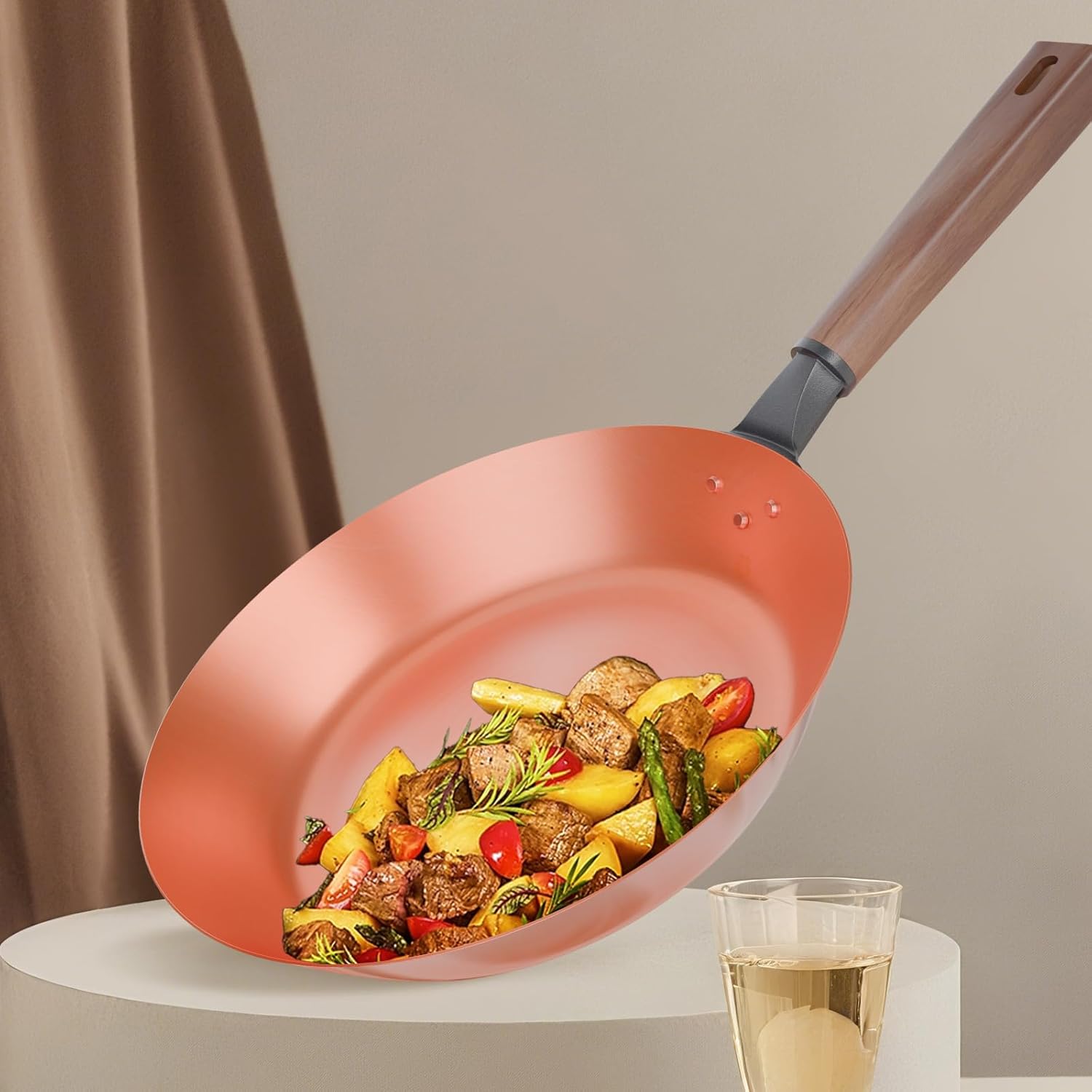
Some artisan pans also offer innovative detachable wooden handles, which significantly enhance kitchen cabinet storage convenience and prevent unwanted thermal buildup during regular use. Evaluating how a handle securely attaches and feels in your bare hand ensures comfortable, confident control when moving your heavy skillet from the hot stove to the dining table for serving guests.
Size and Capacity Selection
Choosing the correct pan size and volumetric capacity depends heavily on your household size and typical meal preparation habits. Compact 5.5-inch to 8-inch skillets excel at preparing single-serving eggs, omelets, and small side dishes without ever overcrowding the cooking surface during your busy morning kitchen routines.
Larger 10-inch to 11.2-inch models featuring generous volumetric capacities reaching up to three quarts provide ample physical space for family-style searing, sautéing, and frying tasks. Matching these physical pan dimensions to your regular recipes ensures optimal heat distribution and prevents ingredient spillage during vigorous cooking sessions on your stove, accommodating larger meals easily.
Maintenance and Care Requirements
Maintaining an antique copper frying pan requires consistent hand-washing routines because harsh automated dishwasher detergents can severely damage the exterior metallic finish and delicate interior lining. Washing your cookware gently by hand with warm soapy water and soft sponges preserves its polished look and prevents unwanted surface scratches during routine cleanup.
Additionally, applying a thin layer of vegetable oil after thorough drying helps protect exposed copper surfaces from natural oxidation over time in your dry cabinet storage. Adhering strictly to manufacturer care guidelines ensures your investment remains functional, beautiful, and visually stunning for many generations of regular family kitchen use without tarnishing.
Frequently asked questions
Are antique copper frying pans compatible with induction cooktops?
Most traditional copper frying pans are not compatible with modern magnetic induction cooktops because copper itself is non-magnetic. Unless a specific model features a bonded magnetic stainless steel base designed for induction use, these pans are restricted to traditional gas stoves and electric coil or ceramic cooktops. If you own an induction stove, you must carefully check manufacturer specifications or utilize a specialized adapter disc to bridge the technological gap before attempting to cook with your copper skillet.
How do you clean and maintain a pure copper frying pan?
Cleaning a pure copper frying pan requires gentle hand washing with warm soapy water and a soft sponge, completely avoiding abrasive scouring pads and automated dishwashers. To preserve the brilliant metallic finish and prevent natural oxidation over time, you should dry the pan thoroughly immediately after washing. Applying a very thin coat of vegetable oil to the copper surface before placing it into dry storage further protects the exterior and keeps your cookware looking pristine for future meal preparations.
Why do copper frying pans feature tin or stainless steel interior linings?
Pure copper is a reactive metal that can interact negatively with acidic ingredients like tomatoes, citrus, and vinegar, which might affect food flavor and safety. Manufacturers apply protective interior linings such as food-safe Malaysian tin or durable 18/10 stainless steel to create a safe, non-reactive cooking barrier. A tin lining also provides naturally non-stick performance without synthetic chemical coatings, whereas stainless steel offers enhanced durability for robust browning during everyday cooking tasks.
Can copper frying pans go straight from the stovetop into the oven?
Oven safety depends heavily on the specific handle materials and construction details of your chosen frying pan model. Skillets featuring insulated brass or cast stainless steel handles are generally engineered to transition seamlessly from the stovetop into the oven for baking or finishing dishes. However, pans equipped with wooden handles must be kept out of the oven because high heat can scorch or ruin the wood. Always review manufacturer guidelines before baking.
What are the benefits of a hand-hammered copper finish?
A hand-hammered finish is crafted individually by skilled artisans, meaning no two copper frying pans look identical. Beyond providing a stunning heritage aesthetic that transitions beautifully from the kitchen stove directly to the dining room table as a serving dish, heavy-gauge hammered construction often indicates superior craftsmanship. The texturing also adds minor structural reinforcement to the thick copper body, combining traditional artistry with reliable durability for everyday culinary tasks.