Appliances · Buying Guide
Best Antique Copper Roasting Pan Options for Classic Oven Cooking
Choosing an antique copper roasting pan involves balancing traditional aesthetic appeal with modern cooking performance. Copper brings exceptional thermal conductivity to the kitchen, allowing chefs to heat cookware rapidly and evenly on compatible stovetops or inside standard ovens. Whether you are preparing a large holiday turkey, baking delicate vegetables, or serving individual portions, understanding the physical properties of these vessels helps ensure successful meal preparation.
Different vessels offer distinct material combinations, such as traditional bimetal copper-stainless constructions or tri-ply builds featuring aluminum cores. Examining sizing, handle design, and shape ensures you select a roasting dish that fits your specific oven capacity and serving style. Below, we examine five prominent options designed to bring classic copper styling and practical functionality directly to your home kitchen.
As an Amazon Associate, StacyLaughs earns from qualifying purchases.
Buying guide
Material Composition and Thermal Conductivity
Understanding material composition is vital when selecting a traditional roasting vessel for your kitchen. Solid copper exterior pans deliver unmatched thermal conductivity, heating rapidly and spreading warmth evenly across the entire base. This exceptional responsiveness allows precise temperature control during delicate baking or browning tasks. However, raw copper often requires bonding with durable stainless steel or aluminum cores to ensure proper structural stability and daily food safety.
Buyers must carefully weigh these thermal advantages against specific maintenance demands. Traditional copper can react with acidic ingredients unless properly lined with protective stainless steel or tin surfaces. Examining the exact metal layers helps you balance rapid heat distribution with long-term durability and effortless upkeep in busy kitchen environments without sacrificing cooking quality.
Size and Oven Capacity Matching
Choosing the correct dimensions prevents frustrating installation issues inside standard home ovens. Roasting pans ranging from compact fourteen-inch models to expansive sixteen-inch designs require careful pre-measurement of oven racks and interior sidewalls before purchase. You must always ensure adequate clearance for heated air circulation and side handle clearance to avoid touching oven walls during baking.
Additionally, matching the pan capacity to your typical meal sizes ensures optimal cooking results for poultry, roasts, and vegetables. Overly large pans cause natural meat juices to disperse too thinly and burn, while undersized vessels crowd ingredients and prevent proper browning. Evaluating household cooking habits guides you toward the ideal physical footprint.
Handle Construction and Ergonomics
Handle design plays a critical role in safety and maneuverability when transporting heavy loaded dishes from hot ovens. Cast stainless steel, brass, and riveted multi-metal handles offer different tactile strengths for lifting heavy vessels out of high-temperature environments. Solid attachments using multiple robust rivets ensure long-term structural integrity and prevent loosening under heavy food loads over years of use.
Ergonomics also heavily influences daily convenience during busy meal preparation sessions. Handles designed to stay cool or provide wide grip clearances make it much easier to wear bulky oven mitts securely without slipping. Inspecting handle placement ensures stable balance when tilting or transferring pans from stovetops directly to dining tables for family serving.
Interior Linings and Maintenance Needs
The interior cooking surface dictates both food safety and post-meal cleaning requirements in your kitchen. Stainless steel interiors provide a durable, non-reactive layer that preserves natural food flavors and handles everyday scrubbing with minimal fuss. Alternative nonstick coatings offer effortless food release during serving but demand softer cleaning tools to protect delicate surfaces from scratches.
Maintenance routines vary widely depending on the chosen metal finish and exterior treatment. While some modern pans allow straightforward hand-washing, traditional copper exteriors often require specialized polishing compounds to maintain their brilliant luster over extended periods of storage and use. Understanding these care obligations prevents accidental cosmetic damage and preserves your cookware investment for future generations.
Rack Inclusion and Dripping Management
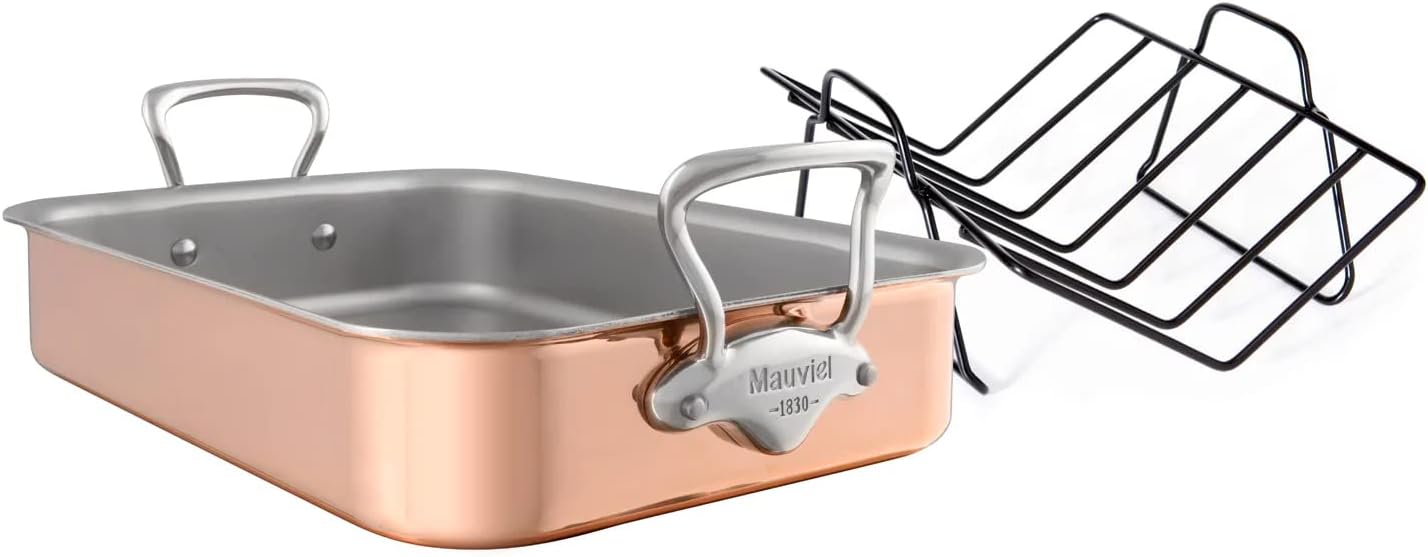
Including a roasting rack significantly improves cooking outcomes for large poultry items and heavy meat roasts. Specially shaped V-racks elevate meat well above the pan base, promoting complete 360-degree heat circulation for uniform browning across all sides. This elevation also prevents meat from boiling directly in its own accumulated juices, ensuring crisp exterior textures and savory results.
Furthermore, capturing savory drippings in the bottom of the pan simplifies making rich homemade gravies and sauces. Pans bundled with matching racks eliminate the need for separate accessory purchases, providing an integrated system designed specifically for holiday meals, festive gatherings, and traditional family Sunday roasts without extra shopping hassles.
Aesthetic Appeal and Serving Versatility
Copper cookware brings unmatched visual warmth and timeless elegance to both modern and traditional dining settings. A polished copper exterior transforms a basic baking vessel into a stunning decorative centerpiece suitable for seamless oven-to-table serving. This dual-purpose design reduces kitchen cleanup by allowing you to present meals proudly to guests directly from the cooking pan.
Evaluating serving versatility helps maximize the practical value of your cookware collection over the years. Whether you need a miniature vessel for individual sauces or an expansive dish for main holiday courses, selecting pieces with attractive handles and stable flat bases ensures seamless transitions from hot kitchen ovens straight to dining tabletops.
Frequently asked questions
Can a traditional copper roasting pan be used on modern stovetops?
Many traditional copper pans work well on gas, electric, and halogen cooktops, but induction compatibility often requires specific accessories like an interface disc because copper itself is non-magnetic. It is essential to check manufacturer guidelines regarding stovetop compatibility before cooking. Additionally, because copper conducts heat with extreme efficiency, cooktop controls should be operated at moderate settings rather than full power to prevent overheating the pan or damaging its delicate internal lining over time.
How do I clean and maintain a polished copper roasting exterior?
Cleaning a copper roasting pan requires careful hand-washing rather than using automatic dishwashers, which can erode metal finishes and damage handles. Avoid harsh scouring pads, steel wool, abrasive cleansers, or bleach that can scratch or permanently discolor the exterior surface. Instead, use mild dish soap with soft sponges and apply specialized copper cleaning compounds periodically to restore the brilliant polished luster. Following these manufacturer care guidelines ensures your roasting dish remains beautiful and functional for years.
Are stainless steel interiors better than tin linings for copper roasters?
Stainless steel interiors offer superior durability, corrosion resistance, and simplified daily maintenance compared to traditional tin linings. A stainless steel cooking surface can handle everyday scrubbing and metal utensils much more resiliently, making it ideal for general roasting and baking tasks. Tin linings, while historically traditional, require careful temperature management and professional relining over time. Choosing a stainless steel interior provides a reliable, low-maintenance cooking experience while retaining the rapid thermal benefits of a copper exterior body.
What size roasting pan do I need for a family holiday turkey?
Selecting the right pan size depends primarily on the weight of your poultry and the dimensions of your oven cavity. A roasting pan measuring between fifteen and sixteen inches typically accommodates medium to large turkeys while leaving adequate clearance for hot air circulation around the oven walls. Ensuring sufficient length and width prevents overcrowding, allows vegetables to roast evenly alongside the meat, and provides enough depth to capture savory drippings for homemade gravy without messy overflow.
Why do some copper roasters feature brass or stainless steel handles?
Handle materials are chosen for both durability and ergonomic comfort during high-heat cooking and heavy lifting tasks. Solid brass handles offer a classic, refined aesthetic that enhances oven-to-table serving appeal, while cast stainless steel handles provide exceptional strength and corrosion resistance. Both materials are engineered to stay cool during extended oven use, though wearing protective mitts is always recommended when handling hot cookware. These secure handle attachments ensure safe maneuverability when transferring heavy roasts.