Appliances · Buying Guide
Best Big Frying Pan With Lid Options For Every Kitchen Setup
Finding the right cookware for family meals often requires a spacious cooking surface and a matching cover to lock in moisture. A big frying pan with lid combines the high sides of a traditional saute pan with the wide base of a standard skillet, letting you simmer, sear, and stir-fry large batches of food without overcrowding your ingredients.
Selecting the ideal model depends on your specific stovetop type, preferred cleanup routine, and how often you transition cookware directly into the oven. Reviewing the core material composition, total capacity, and handle design helps you match a heavy-duty pan to your daily cooking habits and meal prep schedule.
As an Amazon Associate, StacyLaughs earns from qualifying purchases.
Buying guide
Stovetop Compatibility and Base Design
Ensuring your big frying pan matches your specific kitchen stove is essential for safe and efficient daily meal preparation. Gas and electric coil cooktops accommodate almost any pan material, but induction systems require specific magnetic bases to generate heat properly. Aluminum pans need bonded steel plates to work on induction units, while multi-clad stainless steel options inherently possess the required magnetic properties. Checking these specifications prevents heating failures.
Flatness across the bottom surface also influences cooking performance by stopping oil from pooling uncomfortably at the edges. Heavy-gauge constructions resist warping under high temperatures, maintaining steady contact with burner elements over years of frequent use. Evaluating your current range setup before purchasing guarantees reliable thermal transfer and prevents frustrating cooking delays caused by incompatible cookware materials.
Capacity and Dimensional Footprint
Large frying pans typically range from five to six quarts, offering deep sides designed to contain bubbling liquids and bulky family meals. A generous capacity prevents ingredients from spilling over the rim when you stir heavy stews or braise thick cuts of meat. However, larger volumes naturally increase the overall physical weight and width of the cookware, demanding more storage room inside crowded kitchen cabinets.
Measuring your stovetop burner size and oven interior before buying helps ensure the pan sits comfortably without blocking adjacent burners. Extra-wide diameters provide wonderful surface area for searing multiple items simultaneously, but they can easily overwhelm smaller sinks during cleanup. Balancing your typical batch size with available storage space ensures the cookware remains practical for everyday use.
Coating Materials and Nonstick Performance
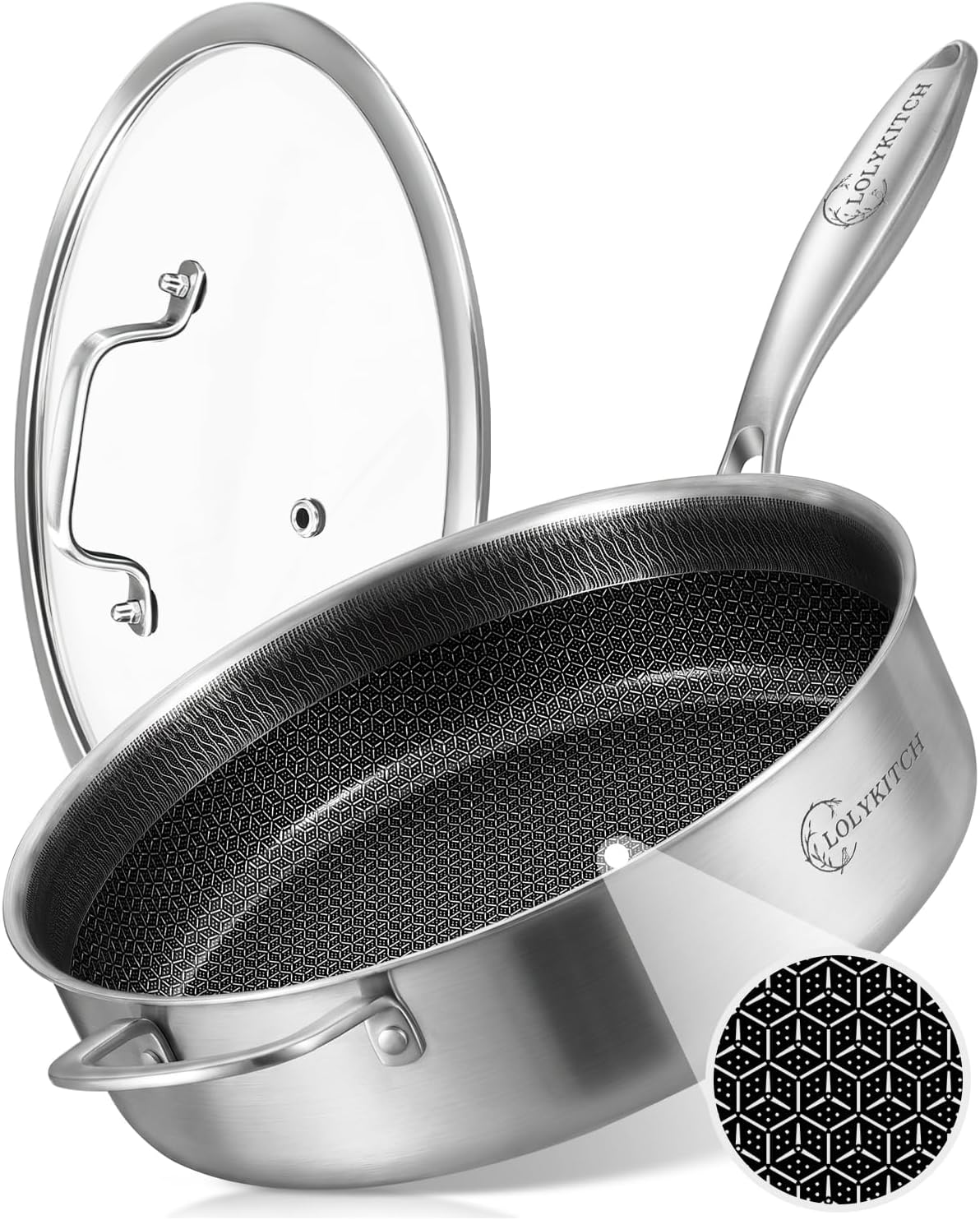
Nonstick coatings drastically simplify everyday cooking by allowing eggs and pancakes to slide smoothly with minimal added oil or butter. Modern options often feature ceramic, titanium, or reinforced ILAG formulations designed to eliminate toxic substances like PFOA and PFOS. These specialized surfaces reduce stuck-on food residue, cutting down the time spent scrubbing dishes after preparing complex family dinners or sticky glaze reductions.
Protective coatings do require mindful maintenance to preserve their slip properties over extended periods of time. Avoiding metal utensils on delicate surfaces unless explicitly rated safe prevents premature scratching and flaking. Matching your cleaning habits to the manufacturer guidelines, whether choosing hand washing or dishwasher cycles, ensures your nonstick pan maintains reliable performance through countless cooking sessions.
Handles and Ergonomic Support
Managing a heavy, filled frying pan requires secure, well-designed handles that offer a confident grip during transport from stove to table. Double-riveted joints provide long-term structural stability, while secondary helper handles assist greatly when lifting extra-large pans loaded with food. Materials like silicone, bakelite, and specialized stainless steel stay cool during stovetop cooking, protecting your hands from accidental burns while you monitor simmering sauces.
Ergonomic placement also influences how comfortably you can tilt or maneuver the cookware when plating finished meals. Handles featuring stay-cool properties eliminate the need for bulky oven mitts during standard stovetop tasks. Reviewing handle construction details ensures you select a pan that feels balanced and secure in your hands, reducing strain during heavy cooking sessions.
Temperature Limits and Oven Transitions
The ability to move cookware seamlessly from the stovetop into a hot oven unlocks advanced culinary techniques like braising and baking. Many aluminum and stainless steel pans withstand temperatures up to five hundred degrees Fahrenheit, while models with plastic components or specialized lids have lower thermal thresholds. Checking specific manufacturer limits for both the pan body and the included cover prevents warping or melting accidents.
Understanding these maximum temperature thresholds helps you choose versatile cookware that handles everything from initial searing to final oven finishing. Shatter-resistant glass lids allow you to monitor food progress without losing heat, provided they fall within the specified thermal range. Matching pan heat limits to your preferred recipes guarantees safe and durable operation across various cooking environments.
Maintenance and Long-Term Care
Proper cleaning routines extend the lifespan of your cookware, keeping nonstick surfaces slippery and stainless steel finishes bright. While many modern pans claim dishwasher compatibility, manufacturers frequently recommend gentle hand washing with warm soapy water to protect delicate coatings. Avoiding harsh abrasive pads and sudden thermal shocks prevents warping and preserves the structural integrity of your investment over years of daily meal preparation.
Storing your frying pans with protective felt dividers or hanging them on racks prevents scratching when stacked inside crowded cabinets. Following specific maintenance guidance ensures your cookware remains a reliable kitchen workhorse. Taking a few extra moments for proper upkeep protects your cooking surfaces and guarantees consistent, dependable results for every family meal you prepare.
Frequently asked questions
Can I use metal utensils in a nonstick big frying pan with lid?
Using metal utensils depends entirely on the specific coating specifications provided by the manufacturer. While some titanium-infused or reinforced ceramic surfaces are built to withstand metal tools without scratching, standard nonstick coatings easily flake or gouge when scraped with forks or metal spatulas. To protect your investment and maintain smooth food release, it is generally safest to use wooden, silicone, or heat-resistant plastic utensils unless the product documentation explicitly confirms metal utensil safety for your specific pan model.
Are all big frying pans compatible with induction cooktops?
No, not all big frying pans work on induction cooktops, as induction heating requires a magnetic base to generate heat properly. While heavy-duty cast aluminum pans often feature bonded magnetic plates or steel bases to ensure compatibility, many traditional aluminum or standard hard-anodized models lack this technology entirely. Always verify the manufacturer specifications before purchasing cookware to confirm whether a particular skillet supports electric coil, gas, or smooth induction stovetop surfaces.
What is the difference between a standard skillet and a jumbo cooker or deep frying pan?
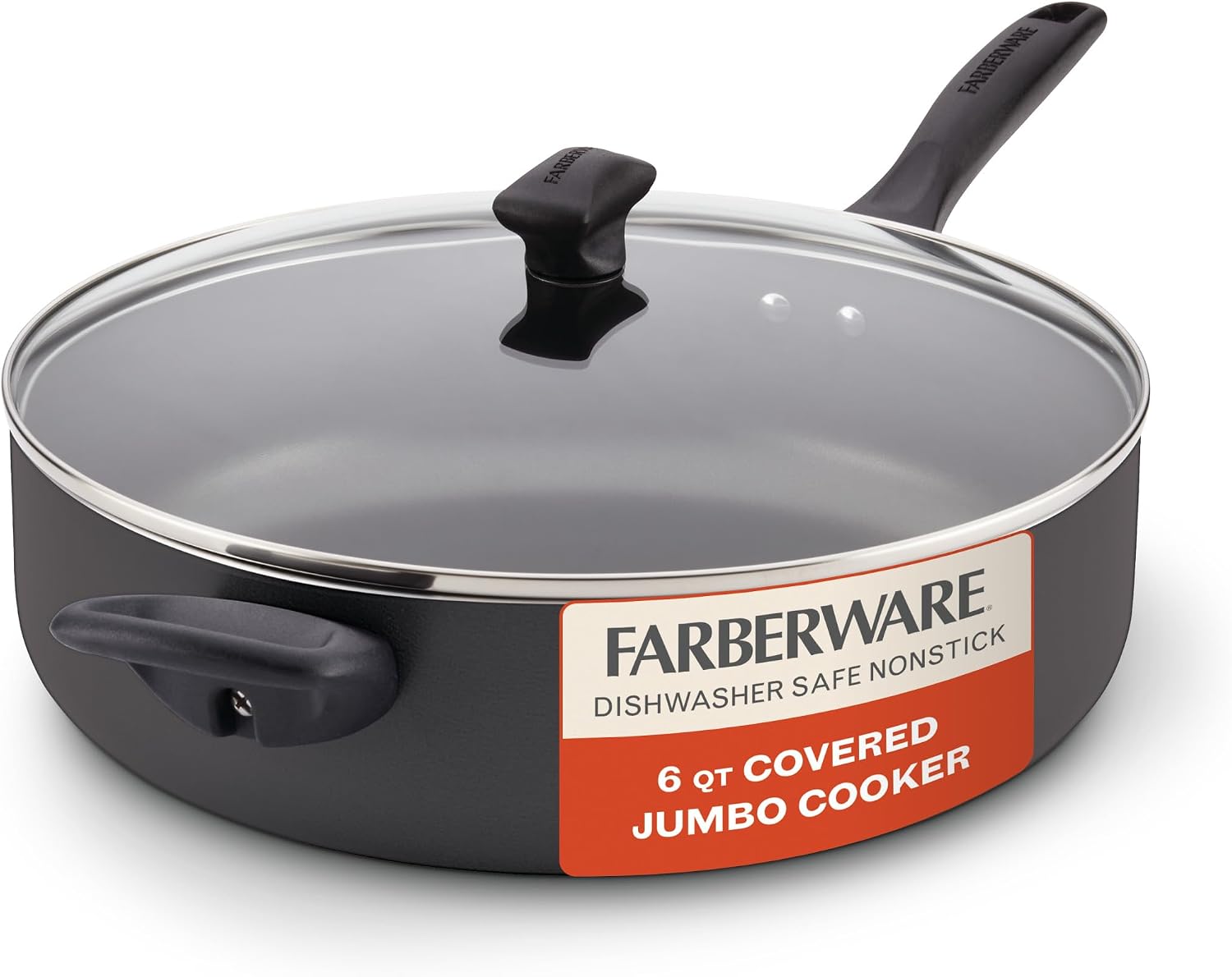
A standard frying pan typically features lower, flared sides designed for quick flipping and shallow cooking tasks like frying eggs. In contrast, a jumbo cooker or deep frying pan incorporates extra-high vertical sides and a generous five to six-quart capacity. This deeper profile transforms the skillet into a versatile workhorse capable of simmering thick stews, braising meats, deep frying, and cooking large family batches without causing messy splatters across your stovetop.
How should I clean my nonstick frying pan to make it last longer?
Although many modern pans feature dishwasher-safe designations, manufacturers frequently recommend washing nonstick cookware by hand using warm water, mild soap, and a soft sponge. Dishwasher detergents and harsh cycle heat can degrade specialized coatings over time, reducing their slippery performance. Avoiding metal scouring pads and sudden temperature changes, such as plunging a hot pan into cold water, further protects the structural integrity and extends the overall lifespan of your cookware surfaces.
Can I put my big frying pan with lid directly into the oven?
Oven safety depends heavily on the materials used in both the pan body and its handle or lid components. Many stainless steel and hard-anodized pans safely withstand oven temperatures up to four or five hundred degrees Fahrenheit, but components like plastic handles or glass lids often have lower maximum thresholds, such as 350 degrees. Always check the precise manufacturer guidelines to verify temperature limits before transferring your cookware from the stovetop into a heated oven environment.