Appliances · Buying Guide
Best Biggest Electric Frying Pan Models for Large Family Meals

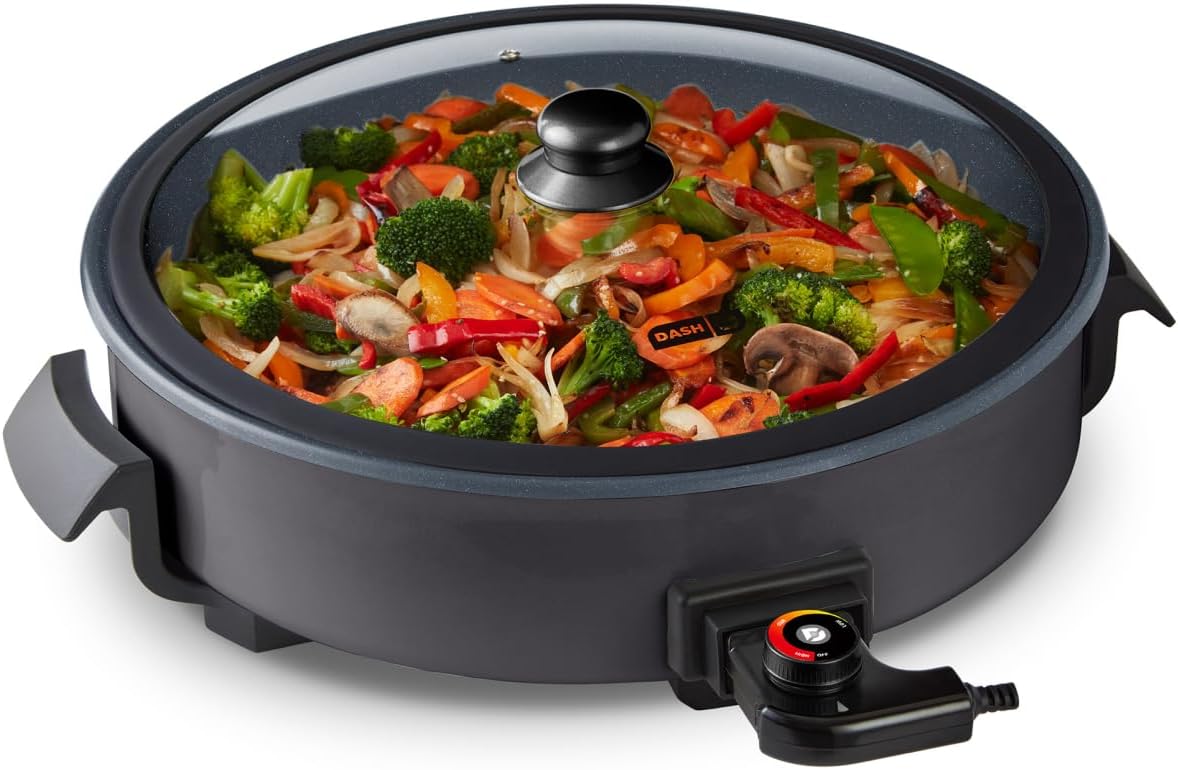
Finding the right countertop appliance for preparing large family meals requires looking closely at cooking surface dimensions, heating power, and sidewall depth. When cooking for a crowd, standard kitchen cookware often falls short, leading to cramped batches and uneven results. Selecting a spacious cooking vessel transforms how home cooks handle large portions, offering uniform heat distribution and dependable temperature regulation for everything from morning pancakes to evening stews.
This review examines five prominent large-capacity cooking appliances based strictly on their documented specifications and features. Each selection brings distinct advantages in surface area, temperature control precision, coating materials, and storage convenience. By focusing on tangible attributes rather than speculative performance, this overview helps shoppers match their specific kitchen requirements with the right high-capacity electric skillet without guesswork.
As an Amazon Associate, StacyLaughs earns from qualifying purchases.
Buying guide
Cooking Surface Capacity and Dimensions
Selecting a high-capacity electric skillet starts with evaluating the cooking surface dimensions and total volume. Larger households often require surfaces measuring fourteen to sixteen inches across, paired with capacities ranging from six to over ten quarts. These generous dimensions prevent overcrowding, ensuring ingredients cook evenly without bunching up against the sidewalls.
Buyers must also consider physical dimensions when planning where to store the appliance. A wider footprint offers fantastic cooking space but demands dedicated counter space during meal preparation and adequate shelf room afterward. Matching the internal volume to your typical household batch size ensures you purchase an appliance that meets daily cooking demands without taking up unnecessary kitchen real estate.
Temperature Control Precision and Heating Elements
Accurate temperature regulation is critical for mastering diverse culinary techniques, from delicate simmering to high-heat searing. Many electric skillets use standard dials with broad temperature increments, while digital models offer granular adjustments down to single-degree increments. Embedded heating elements running across the entire floor ensure uniform warmth, eliminating hot spots that can scorch food during long simmering sessions.
Reviewing the specified wattage helps determine how quickly the appliance heats up and recovers its temperature when cold ingredients are added. Higher wattage ratings, such as fifteen hundred watts, typically deliver faster preheating times. Evaluating these heating specifications ensures the skillet maintains steady performance across various cooking tasks, whether you are frying chicken, baking casseroles, or keeping food warm.
Interior Coating Materials and Maintenance
The interior coating directly influences food release ease and daily maintenance requirements. Modern electric frying pans frequently feature ceramic nonstick surfaces or traditional reinforced nonstick coatings designed to prevent food from sticking without excessive oil. Ceramic options often highlight chemical-free compositions, appealing to health-conscious cooks seeking straightforward cleaning routines after preparing sticky sauces or melted cheese dishes.
Maintenance needs vary depending on whether the unit features fully immersible designs or requires careful avoidance around electrical probe receptacles. Some models support dishwasher-safe glass lids or pans once probes are detached, while others specify hand washing only to preserve specialized ceramic coatings. Understanding these manufacturer maintenance guidelines helps protect the investment and extends the usable lifespan of the nonstick surface.
Sidewall Depth and Liquid Capacity
Sidewall depth dictates what types of meals you can comfortably prepare in an electric skillet. Shallow depths work wonderfully for pancakes, eggs, and basic frying, but higher sidewalls exceeding three inches are essential for deep-dish casseroles, stews, and bulky one-pot pasta meals. Evaluating depth alongside total quart capacity prevents liquid overflow and messy splatters during vigorous simmering or stir-frying.
Deeper walls also help contain oil splatters when frying foods, keeping surrounding countertops cleaner during high-heat cooking. However, increased depth often alters the overall profile of the appliance, making it bulkier to store inside standard kitchen cabinets. Balancing sidewall height with your preferred cooking style ensures the skillet handles everything from shallow browning to deep liquid simmering with ease.
Storage and Space-Saving Innovations
Countertop and cabinet storage represent common challenges when dealing with oversized kitchen appliances. Innovative space-saving designs, such as inverted lid systems with locking clamps, allow certain skillets to be stored securely on their sides, dramatically reducing vertical clearance requirements. Cord wraps and detachable temperature probes further streamline storage by eliminating dangling cords and awkward protrusions inside crowded cupboards.
Buyers with limited kitchen storage should examine whether a model features specialized stacking or vertical resting capabilities before purchasing. While standard designs require flat shelf placement, space-conscious engineering lets you tuck large appliances into narrow gaps. Assessing your available storage space beforehand ensures the appliance remains convenient to own rather than becoming a cumbersome cabinet obstacle.
Safety Features and Transport Portability
Transporting cooked meals to potlucks, family gatherings, or outdoor events requires reliable safety features and secure handling mechanisms. Ergonomic cool-touch handles prevent accidental burns when moving the appliance from the kitchen counter to a dining table or buffet station. Secure lid clamps or locking mechanisms are equally valuable for preventing spills and shifting during transit on the road.
Stable non-slip bases also contribute significantly to kitchen safety, keeping the heavy appliance firmly planted during enthusiastic stirring or flipping. Checking for integrated heat shields underneath the unit ensures that countertops and tables remain protected from excessive radiant heat. Prioritizing these transport and safety elements makes high-capacity cooking significantly more secure and convenient for everyday users.
Frequently asked questions
How do I clean my electric skillet safely?
Cleaning depends heavily on manufacturer guidelines and whether the electrical probe is removable. Most models require detaching the temperature control probe before washing. Many pans feature fully immersible aluminum bodies or dishwasher-safe glass lids, while ceramic-coated variants often specify hand washing only to protect the nonstick surface. Always allow the skillet to cool completely before cleaning, and avoid using abrasive metal scouring pads that can scratch or degrade the protective interior coating over time.
Can I use metal utensils on a nonstick electric frying pan?
Using metal utensils is generally discouraged on nonstick surfaces, including ceramic and reinforced coatings, because sharp edges can easily scratch and ruin the protective layer. Instead, manufacturers recommend using wooden, silicone, nylon, or plastic utensils to preserve the nonstick integrity. Protecting the interior coating ensures food continues to release effortlessly without sticking, maintaining smooth cooking performance and extending the overall lifespan of your electric skillet through countless meal preparations.
What is the advantage of an embedded heating element?
An embedded heating element, particularly M-shaped designs running across the entire floor of the pan, ensures uniform heat distribution with minimal cold spots. This consistent thermal coverage allows food to cook evenly across the entire surface, whether you are searing meat, simmering a large stew, or frying batches of pancakes. Unlike localized burner coils, embedded elements provide balanced warmth directly to the cooking surface, resulting in more predictable and reliable cooking outcomes every time.
How do I prevent thermal shock on glass lids?
Tempered glass lids are engineered to withstand high cooking temperatures and steam, but they remain vulnerable to sudden temperature extremes. To prevent thermal shock and potential shattering, always allow a hot glass lid to cool down completely on a resting rack or towel before placing it onto a cold surface or submerging it in cold water. Following these simple cooling precautions safeguards the glass durability and ensures long-term safety during everyday kitchen tasks.
Are electric skillets suitable for travel and RV use?
Electric skillets make fantastic companions for RV travel, camping trips, and potlucks, provided you have access to a standard electrical outlet. Their all-in-one design eliminates the need for a separate stovetop burner, allowing you to fry, bake, stew, or simmer meals in compact spaces. Models featuring secure lid clamps, cool-touch handles, and lightweight bodies offer added convenience for safe transport, letting you prepare hot, homemade dishes easily away from your primary kitchen.