Appliances · Buying Guide
Best Black Carbon Steel Wok Choices for High Heat Cooking
Selecting a black carbon steel wok involves understanding how material composition, handle configurations, and base shapes affect your everyday cooking tasks. These pans offer quick heat responses and durable builds suited for high-temperature stir-frying, searing, and pan-frying across various stovetop types and outdoor setups. Exploring these attributes helps match a pan to your specific cooking environment and culinary preferences.
Whether you need a flat bottom for standard range compatibility or a traditional round bottom for open fire cooking, comparing specific dimensions and seasoning methods ensures you find the right tool for your kitchen. Reviewing the build characteristics and included accessories guides you toward reliable performance over years of regular use.
As an Amazon Associate, StacyLaughs earns from qualifying purchases.
Buying guide
Material Composition and Heat Response
Carbon steel offers a balanced middle ground between heavy cast iron and lightweight stainless steel, delivering rapid thermal conductivity across the cooking surface. When you adjust burner temperatures during active meal preparation, the metal reacts instantly to prevent scorching or burning during fast-paced stir-frying tasks. This makes it an ideal medium for dishes requiring dynamic heat adjustments.
This responsive nature allows precise control over searing meats, crisping noodles, and tossing delicate vegetables. Choosing high-grade black carbon steel ensures long-lasting durability under intense kitchen heat sources without warping prematurely. Maintaining this material requires understanding its tendency to conduct heat efficiently from the base upward through the sidewalls.
Base Shape and Stovetop Compatibility
Flat-bottom woks provide stable contact across diverse cooktops, including electric coils, gas burners, smooth ceramic surfaces, and modern induction ranges. This design accommodates standard kitchen setups seamlessly. Selecting a flat base ensures the pan remains stationary while you stir, toss, or flip ingredients without requiring specialized support rings or altering your existing stovetop configuration.
Conversely, traditional round-bottom woks require open fires, specialized gas rings, or outdoor burners to cradle the curved exterior effectively. Buyers must evaluate their kitchen appliances before purchasing to ensure compatibility. Matching the wok base shape to your cooking environment prevents stability issues and ensures optimal heat transfer.
Seasoning and Non-Stick Maintenance
Carbon steel woks rely on a natural oil patina rather than synthetic chemical coatings to achieve non-stick food release. Many models arrive pre-seasoned at high temperatures, offering a functional start out of the box. However, sustaining this non-stick quality demands ongoing user care, including regular oil applications and avoiding abrasive cleaning pads that strip the developing seasoning layer.
Proper maintenance prevents rust and enhances the cooking surface over months of regular use. Owners must wash these pans exclusively by hand with warm water, dry them completely, and apply a thin oil film. Embracing this maintenance routine transforms the metal into a smooth, reliable cooking surface for eggs, rice, and sauces.
Handle Design and Ergonomics
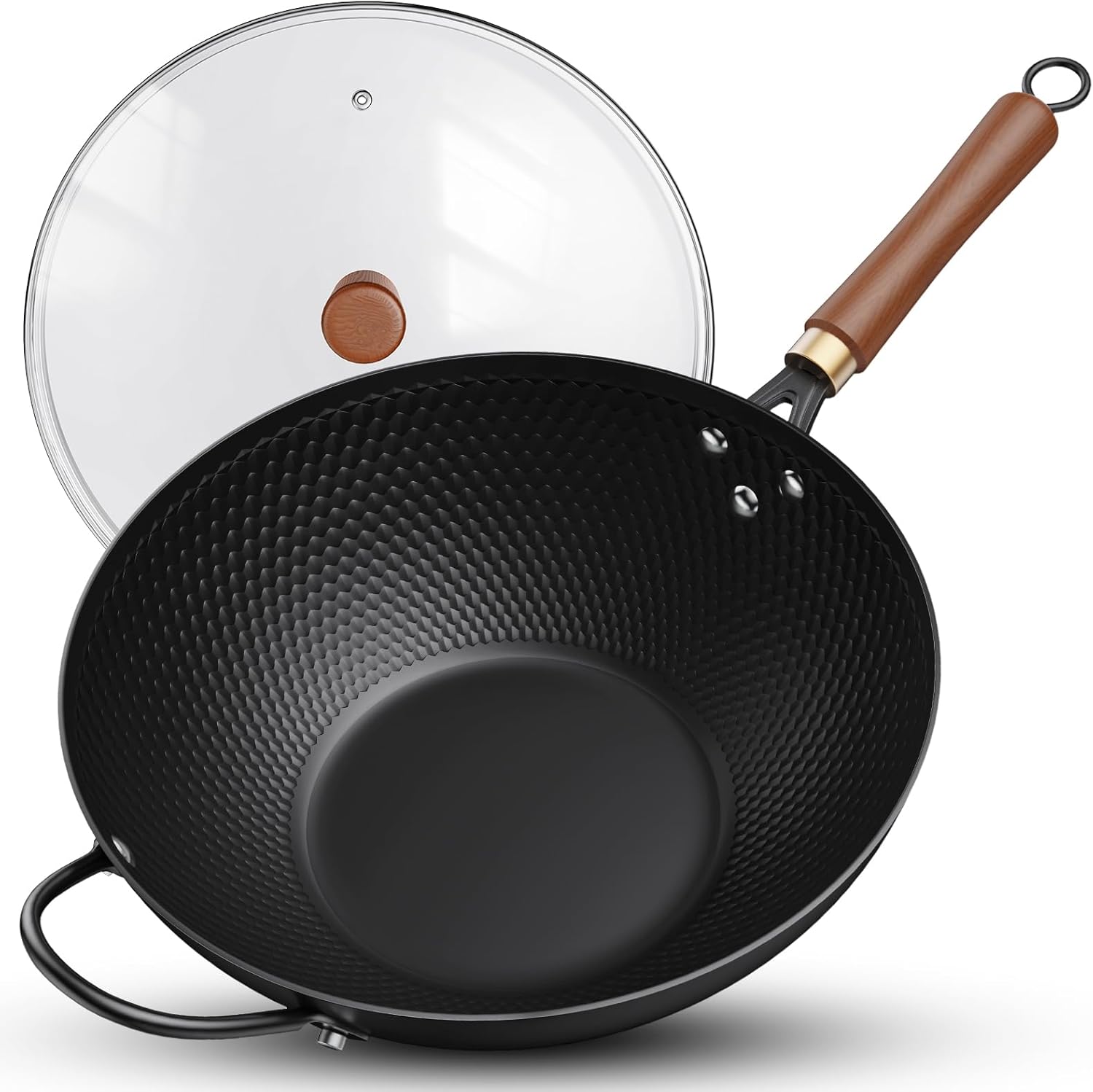
Handle configurations significantly impact how comfortably you maneuver a loaded wok during active cooking. Traditional wooden handles provide a secure, heat-resistant grip that stays comfortable during extended stovetop sessions. Some models also incorporate helper handles opposite the main grip, providing extra leverage when lifting heavy batches of food from the burner to the counter.
Detachable handles offer alternative benefits by allowing compact cabinet storage and safe oven use when required. Buyers should consider how handle length and attachment styles fit their available kitchen storage space and personal lifting preferences. Evaluating these ergonomic details ensures confident control during high-speed tossing movements.
Capacity and Depth Considerations
Selecting the correct capacity ensures your wok accommodates desired food portions without overcrowding the cooking surface. Smaller volumes suit individual meals or compact household cooking, while larger options with greater depth handle family-sized batches of stir-fry, soups, and fried rice easily. Deep walls prevent ingredients from spilling over the edges during vigorous tossing.
Dimension specifications, such as diameter and wall depth, dictate how much food you can prepare at once. A wider rim provides more surface area for evaporation, whereas deeper walls contain liquids during braising. Matching pan capacity to your household size prevents cooking limitations.
Lids and Included Accessories
Some carbon steel wok packages include matching lids, spatulas, or cleaning brushes, adding immediate utility for specific cooking techniques. Clear glass lids let you monitor simmering or steaming dishes without lifting the cover, locking in heat and moisture. Specialized silicone spatulas prevent scratching the seasoned metal surface during frequent stirring tasks.
Evaluating bundled accessories helps determine overall value and readiness for various recipes. If a package lacks a lid, users relying on braising or steaming must source a compatible cover separately. Assessing these included items streamlines your kitchen setup process effectively.
Frequently asked questions
Can I use a black carbon steel wok on an induction cooktop?
Flat-bottom black carbon steel woks are fully compatible with induction cooktops because their flat base maintains direct contact with the magnetic burner surface. Manufacturers design these flat-bottom variants to heat evenly across induction ranges, gas burners, and electric coils. However, traditional round-bottom woks cannot be used on induction surfaces due to their curved exterior, which lacks the necessary flat contact area. Always verify that your chosen wok features a flat base if you plan to cook primarily on an induction appliance.
Why is hand washing required instead of using a dishwasher?
Hand washing is strictly required for carbon steel woks because dishwasher detergents are excessively harsh and cycles use prolonged moisture that rapidly strips the natural oil seasoning. Exposing carbon steel to aggressive dishwasher environments causes immediate rusting and ruins the protective patina built up through cooking and oil maintenance. Cleaning these pans by hand with warm water, drying them thoroughly with a towel, and applying a thin coat of oil preserves the seasoned surface and prevents corrosion over time.
What is the purpose of pre-seasoning on carbon steel woks?
Pre-seasoning performed at high temperatures during manufacturing creates an initial protective layer on the bare carbon steel surface, offering a better non-stick start right out of the box. This factory treatment protects the metal from oxidation during shipping and gives users a head start on building a natural oil patina. While pre-seasoned models perform well initially, they still require ongoing oil seasoning and proper post-use care over time to maintain optimal non-stick release properties during regular cooking routines.
How do I prevent food from sticking to my carbon steel wok?
Preventing food from sticking involves maintaining the natural oil seasoning layer and practicing proper cooking techniques. Always heat the wok adequately before adding cooking oil, and ensure the oil coats the surface before introducing ingredients. Avoid cooking dry or empty on high heat, and refrain from using harsh metal utensils that might gouge the seasoned layer unless using compatible silicone tools. Regular hand washing followed by a light oil application after each use continuously strengthens the non-stick surface performance.
What is the difference between flat-bottom and round-bottom woks?
The primary difference lies in their base shape and stovetop compatibility. Flat-bottom woks feature a stabilized base designed to rest securely on flat cooktops like electric coils, glass ceramic surfaces, and induction ranges, while also working well on gas flames. Round-bottom woks feature a traditional curved exterior tailored for specialized gas rings, open campfires, and outdoor BBQ setups where they can cradle directly over flames. Choosing between them depends entirely on whether your kitchen features a flat cooktop or open flame heat source.