Appliances · Buying Guide
Best Blue Carbon Steel Cookware for High-Heat Kitchens
Upgrading your kitchen gear often leads to exploring professional-grade materials that balance manageable weight and precise heat control. Blue carbon steel cookware offers a compelling option for home cooks seeking responsive temperature adjustments combined with durable metal construction, bridging the gap between traditional cast iron and everyday stainless steel options.
These specialized pans and woks undergo unique heat treatments to provide initial corrosion resistance while supporting natural seasoning development over time. Whether you prefer searing thick proteins on a smooth induction cooktop or high-heat stir-frying over an open flame, selecting the correct design ensures reliable performance across your everyday culinary tasks.
As an Amazon Associate, StacyLaughs earns from qualifying purchases.
Buying guide
Material Thickness and Heat Response
Choosing the right blue carbon steel cookware starts with understanding metal thickness and how it affects daily cooking performance. Thicker two-millimeter pans provide excellent heat retention while resisting warping under intense stovetop temperatures. This sturdy construction supports consistent heat distribution across the cooking surface, ensuring your food browns evenly without developing hot spots during long frying sessions or high-heat baking tasks.
Thinner options heat up rapidly, giving you immediate temperature control when searing proteins or sautéing delicate vegetables. Balancing thickness helps match your preferred cooking style and burner setup. Keep in mind that heavier builds require more upper-body strength during transport, whereas lighter alternatives maximize agility on standard kitchen ranges.
Stovetop Compatibility and Bottom Shape
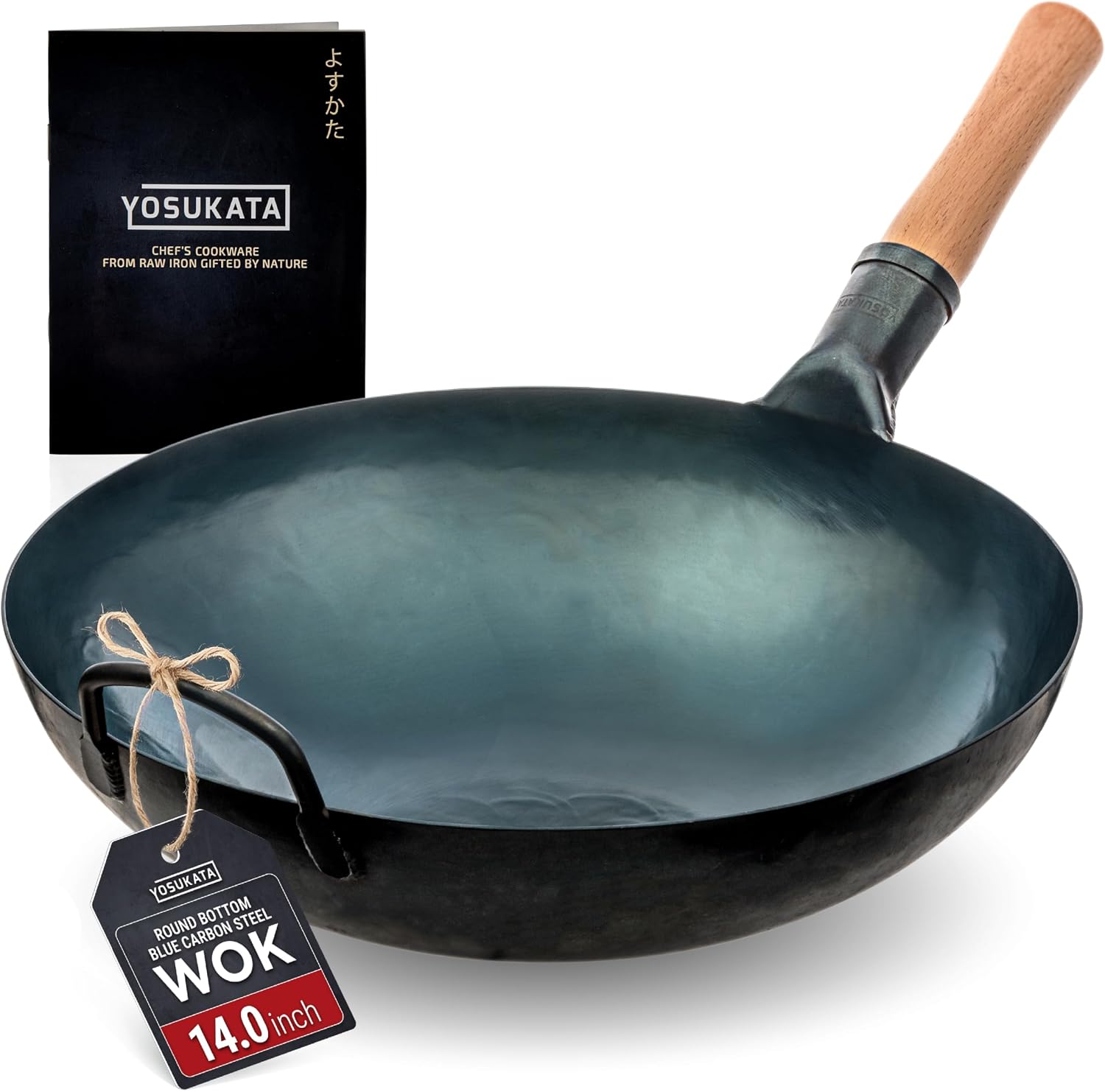
Stovetop compatibility represents a critical purchasing factor when evaluating blue carbon steel cookware options. Flat-bottom pans and woks work seamlessly across gas, electric, smooth ceramic, and induction cooktops, offering maximum versatility for modern kitchens. You can transition these flat designs easily from indoor ranges to outdoor grills or campfire setups without worrying about uneven contact surfaces or stability issues.
In contrast, traditional round-bottom woks require dedicated gas burners or open fire rings to remain stable during cooking. Selecting a round shape guarantees authentic stir-fry performance but restricts your setup if you rely on flat electric ranges. Review your kitchen appliances carefully before making a final selection.
Seasoning Requirements and Maintenance
Carbon steel requires proper seasoning and routine maintenance to develop and preserve its naturally non-stick cooking surface. While some options arrive pre-seasoned at high temperatures for immediate use, others require initial oil treatments at home. Regular seasoning builds a slick polymer layer that protects the raw metal from moisture and prevents food from sticking during frying or searing tasks.
Maintenance involves strict hand washing using hot water and brushes rather than automated dishwasher cycles. Avoiding harsh soaps preserves the protective oil layer. After washing, thoroughly drying the cookware and applying a light coat of high-smoke-point oil prevents rust formation, ensuring your pans remain reliable kitchen companions for decades.
Handle Design and Oven Safety
Handle construction significantly impacts both cooking comfort and overall safety during kitchen workflows. Welded metal handles, such as French curve styles, provide secure grips and allow pans to move directly from stovetop burners into hot kitchen ovens. This seamless transition expands your recipe options, letting you start dishes with a high-heat sear and finish them safely inside baking environments.
Wooden handles offer comfortable, heat-resistant grips during prolonged stovetop stir-frying sessions, protecting your hands from conducted heat. However, wooden components typically restrict oven use due to combustion temperature limits. Evaluate whether you need dual stovetop-oven flexibility or maximum stovetop handling comfort.
Weight and Ergonomic Handling
Evaluating the weight of blue carbon steel cookware is essential for comfortable everyday handling and long-term kitchen usability. Heavy-duty options weighing over four pounds offer robust durability and steady heat retention but require deliberate upper-body strength during lifting or tossing tasks. These heavier builds mirror professional restaurant equipment designed for stationary burner use rather than rapid maneuvering.
Lighter pans reduce arm fatigue, making them easier to lift, tilt, and clean after preparing large meals. Consider your physical comfort and cooking habits when choosing between heavy-duty stability and lightweight agility to ensure an enjoyable cooking experience every day.
Size Selection and Cooking Surface
Choosing the correct diameter and cooking surface size ensures your cookware accommodates your typical portion sizes without overcrowding. Larger twelve-inch and fourteen-inch models provide ample room for family meals, large proteins, and multi-ingredient stir-fries. However, these oversized pans demand substantial burner space and careful storage management inside standard kitchen cabinets.
Compact eleven-inch options fit smaller households and tighter storage spaces while remaining nimble on standard burners. Measure your available kitchen storage and primary burner dimensions to select a size that balances capacity with practical convenience.
Frequently asked questions
How do I maintain the seasoning on blue carbon steel cookware?
Maintaining the seasoning requires washing your cookware by hand using hot water and a scrub brush while avoiding harsh dish soaps that strip the protective oil layer. After washing, place the pan on a burner over low heat to ensure it is completely dry. Once dry, apply a very thin layer of high-smoke-point oil across the entire surface using a paper towel. Heat the pan lightly until the oil begins to smoke, then let it cool before storing. This simple routine prevents rust and continuously enhances the natural non-stick surface over time.
Can I use blue carbon steel pans on induction cooktops?
Many blue carbon steel frying pans and flat-bottom woks are fully compatible with smooth surface induction cooktops because carbon steel is a magnetic metal. Manufacturers clearly designate induction compatibility in their specifications. However, traditional round-bottom woks cannot be used on flat induction glass surfaces because their curved design prevents proper physical contact with the burner element. Always verify your specific cooktop type and review the manufacturer listing details to confirm whether your chosen pan or wok supports induction heating before making a purchase decision.
Why does blue carbon steel cookware feature a unique blue finish?
The distinctive blue finish found on these pans and woks is achieved through a specialized high-temperature heat treatment process during manufacturing. This thermal treatment provides initial corrosion resistance to protect the metal during shipping and storage while also helping to anchor your first layers of seasoning. Natural color variations are entirely normal and expected characteristics of this treatment process rather than manufacturing defects. Over time, as you cook and season the cookware, this blue hue will gradually darken and blend into a rich patina.
Are carbon steel pans safe to use inside kitchen ovens?
Most carbon steel fry pans featuring all-metal construction or welded metal handles are completely oven safe, often enduring very high temperatures up to twelve hundred degrees Fahrenheit. This allows you to sear steaks or vegetables on the stovetop and transfer the entire pan directly into the oven to finish cooking. However, you must check the handle specifications carefully; models equipped with traditional wooden handles generally cannot tolerate high oven temperatures and must be kept on stovetops or open fires to prevent scorching.
What is the difference between carbon steel and cast iron cookware?
While both materials require seasoning and offer exceptional durability, carbon steel is generally lighter and heats up much faster than traditional cast iron. Carbon steel pans feature smoother surfaces and respond instantly to temperature adjustments, making them ideal for rapid sautéing and flipping. Cast iron retains heat slightly longer due to its heavier mass but takes longer to preheat. Carbon steel bridges the gap between the heat retention of cast iron and the speed of stainless steel, providing agile professional performance for everyday home cooking tasks.