Appliances · Buying Guide
Best Blue Diamond Frying Pan Options for Everyday Cooking
Choosing the right cookware involves looking closely at surface materials, heat distribution, and cleaning convenience for everyday meal preparation. Blue Diamond frying pans utilize diamond-infused ceramic nonstick coatings designed to deliver rapid heating and dependable food release without traditional toxins like PFAS, PFOA, lead, and cadmium, ensuring safe everyday cooking routines.
Whether you need a compact single skillet for quick morning eggs or a multi-piece set for full family dinners, understanding core features helps match your stovetop setup to the ideal pan construction, ergonomic handling design, and maximum temperature limits for diverse kitchen tasks.
As an Amazon Associate, StacyLaughs earns from qualifying purchases.
Buying guide
Evaluating Pan Construction and Materials
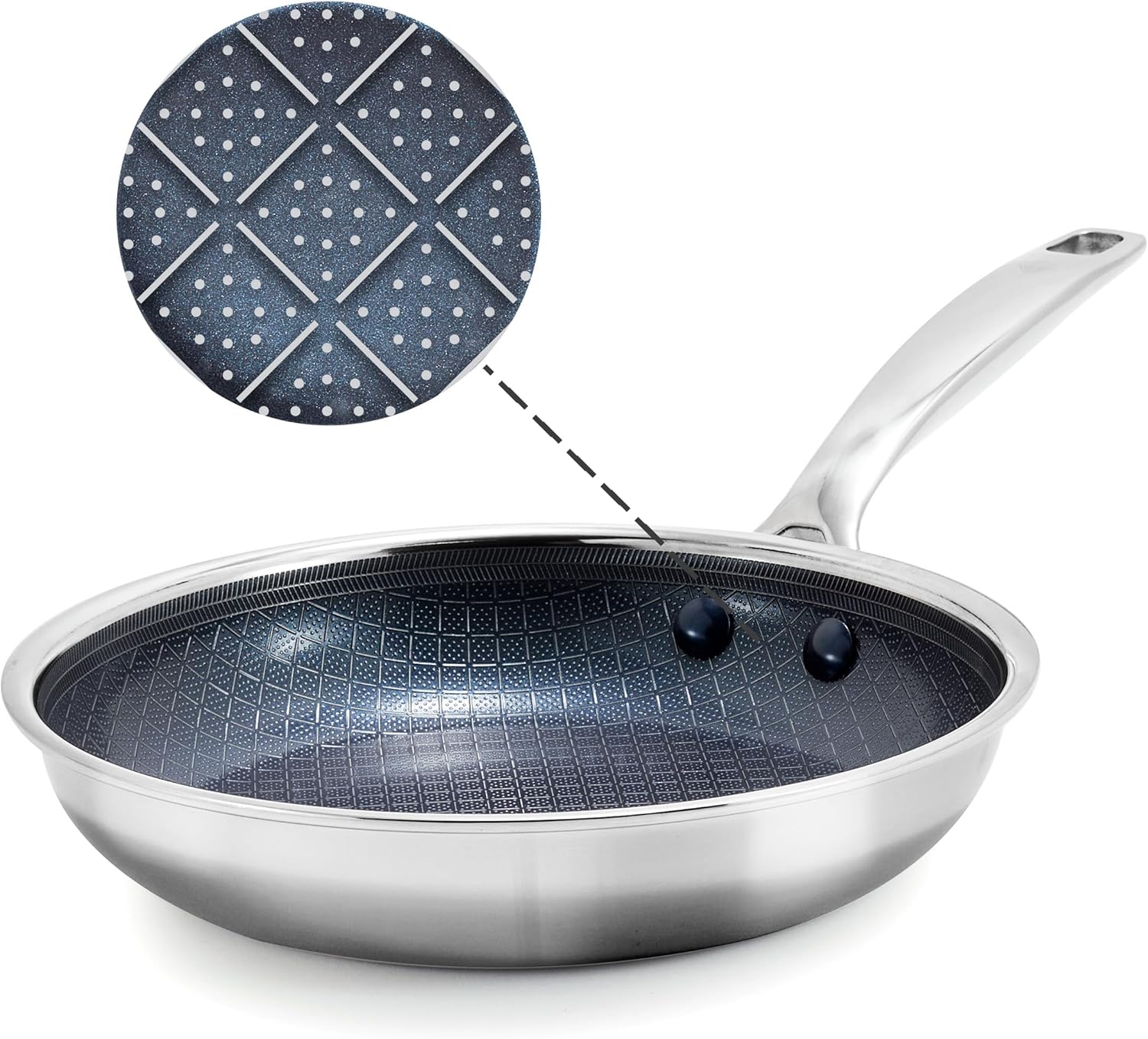
When selecting a Blue Diamond frying pan, understanding the core material construction is essential for long-term kitchen performance. Standard models utilize heavy-duty forged aluminum bases designed to resist warping and ensure steady heat transfer. Hard anodized variants offer increased durability, while hybrid options combine tri-ply stainless steel with laser-etched diamond textures for superior structural resilience.
Choosing the correct body material impacts how the skillet responds to heat and handles daily wear. Aluminum provides lightweight handling, whereas stainless steel hybrids deliver heavy-duty performance. Matching your physical strength and cooking frequency to the right material ensures comfortable daily use without premature degradation.
Coating Technology and Nonstick Performance
The signature diamond-infused ceramic nonstick coating provides significant advantages for food release and cleanup. Diamonds possess high thermal conductivity, helping pans heat up quickly and evenly. This surface allows you to cook with minimal oil and simplifies post-meal maintenance, as most food residues wipe away effortlessly or clean safely inside the dishwasher without harsh scrubbing.
Furthermore, select lines feature metal utensil safe surfaces that resist scratching from everyday kitchen tools. While traditional nonstick surfaces require gentle silicone or wood utensils, certain diamond-reinforced models accommodate metal spatulas. Evaluating your utensil preferences helps protect the coating integrity over years of regular family meal preparation.
Stovetop Compatibility and Heat Sources
Before purchasing any frying pan, verifying your kitchen stovetop compatibility prevents operational mismatches. Most standard Blue Diamond ceramic nonstick skillets support electric coil, gas, and smooth surface non-induction cooktops. However, they are generally incompatible with magnetic induction burners unless you specifically select an induction-ready hybrid model featuring a tri-ply stainless steel body.
Matching your heat source ensures efficient energy transfer and prevents uneven cooking results. If your kitchen utilizes magnetic induction technology, double-check specifications to select compatible hybrid vessels. Standard aluminum and ceramic models work seamlessly on traditional gas and electric ranges without losing thermal efficiency.
Oven Safety and Temperature Limits
Versatility often extends beyond the stovetop when pans transition directly into the oven for finishing dishes or broiling. Many Blue Diamond skillets are engineered to withstand oven and broiler temperatures up to six hundred degrees Fahrenheit. Hybrid stainless steel variants push these limits even higher, accommodating extreme environments up to eight hundred fifty degrees Fahrenheit for intensive searing.
Checking maximum temperature ratings ensures you avoid damaging handles, rims, or nonstick coatings during high-heat baking tasks. Riveted stainless steel handles provide secure grips suited for hot oven conditions. Always confirm specific manufacturer thresholds before transferring cookware from burners to enclosed broiler compartments.
Sizing and Set Configurations
Selecting the appropriate pan size or set configuration depends heavily on household size and typical meal preparation volumes. Compact eight-inch skillets suit single eggs and quick side dishes, while ten-inch models offer balanced versatility for daily recipes. Larger eleven-inch and twelve-inch pans, or multi-piece sets, accommodate family-sized portions and simultaneous multi-ingredient cooking tasks effectively.
Assessing your storage space alongside portion requirements helps determine whether a single pan or a bundled set fits best. Sets provide immediate variety for complex meals but demand greater cabinet storage room. Single skillets minimize clutter for cooks who prepare smaller meals regularly.
Cleaning and Maintenance Practices
Proper maintenance preserves the lifespan and performance of diamond-infused ceramic nonstick cookware. While many models feature dishwasher safe construction for convenient cleanup, hand washing with mild soap often prolongs surface quality. Most everyday messes wipe clean easily due to the slick ceramic coating, reducing the need for aggressive abrasive scrubbing pads.
Following manufacturer guidelines regarding cleaning protects the nonstick properties and prevents premature wear. Avoiding harsh chemical cleaners and metal scouring pads keeps the ceramic layer smooth. Adhering to simple upkeep routines ensures reliable food release and consistent cooking results over countless meals.
Frequently asked questions
Are Blue Diamond frying pans safe from harmful toxins?
Yes, Blue Diamond frying pans feature toxin-free ceramic nonstick coatings that are completely free of PFAS, PFOA, lead, and cadmium. This formulation ensures that you can cook daily meals with peace of mind, knowing that harmful chemicals will not leach into your food even when cooking at elevated temperatures. The absence of traditional toxic chemicals makes these skillets a popular choice for health-conscious home cooks seeking reliable, nonstick food release without synthetic additives.
Can I use metal utensils on a Blue Diamond frying pan?
Certain Blue Diamond frying pans feature a metal utensil safe surface designed to withstand regular contact from metal spatulas, spoons, and whisks without scratching. However, checking the specific product specifications is recommended, as coating durability varies across standard aluminum, hard anodized, and hybrid stainless steel collections. Using appropriate tools according to your specific pan model helps maintain the longevity and smoothness of the nonstick ceramic cooking surface over time.
Are Blue Diamond pans compatible with induction cooktops?
Most standard Blue Diamond ceramic nonstick frying pans are compatible with electric coil, gas, and smooth surface non-induction cooktops, but they do not work on induction ranges. If your kitchen relies on an induction cooktop, you must select specific induction-ready models, such as the Blue Diamond hybrid stainless steel skillet, which incorporates the necessary magnetic properties and tri-ply construction required for efficient induction heating and reliable performance.
What is the maximum oven temperature for these frying pans?
The maximum oven temperature depends on the specific Blue Diamond collection you choose. Standard ceramic and hard anodized frying pans are typically oven and broiler safe up to six hundred degrees Fahrenheit. Advanced hybrid stainless steel models feature higher thermal tolerances, withstanding extreme oven and broiler environments up to eight hundred fifty degrees Fahrenheit. Always verify the exact temperature limits for your specific skillet before transferring cookware to the oven.
Are Blue Diamond frying pans dishwasher safe?
Yes, Blue Diamond frying pans are designed to be dishwasher safe for convenient cleaning after preparing meals. The slick diamond-infused ceramic nonstick coating also allows most everyday messes to wipe clean easily by hand with warm soapy water and a soft sponge. While dishwasher cleaning is fully supported, hand washing with mild soap is a practical way to preserve the long-term appearance and performance of the nonstick surface.