Appliances · Buying Guide
Best Blue Non Stick Cookware Sets for Everyday Kitchen Cooking
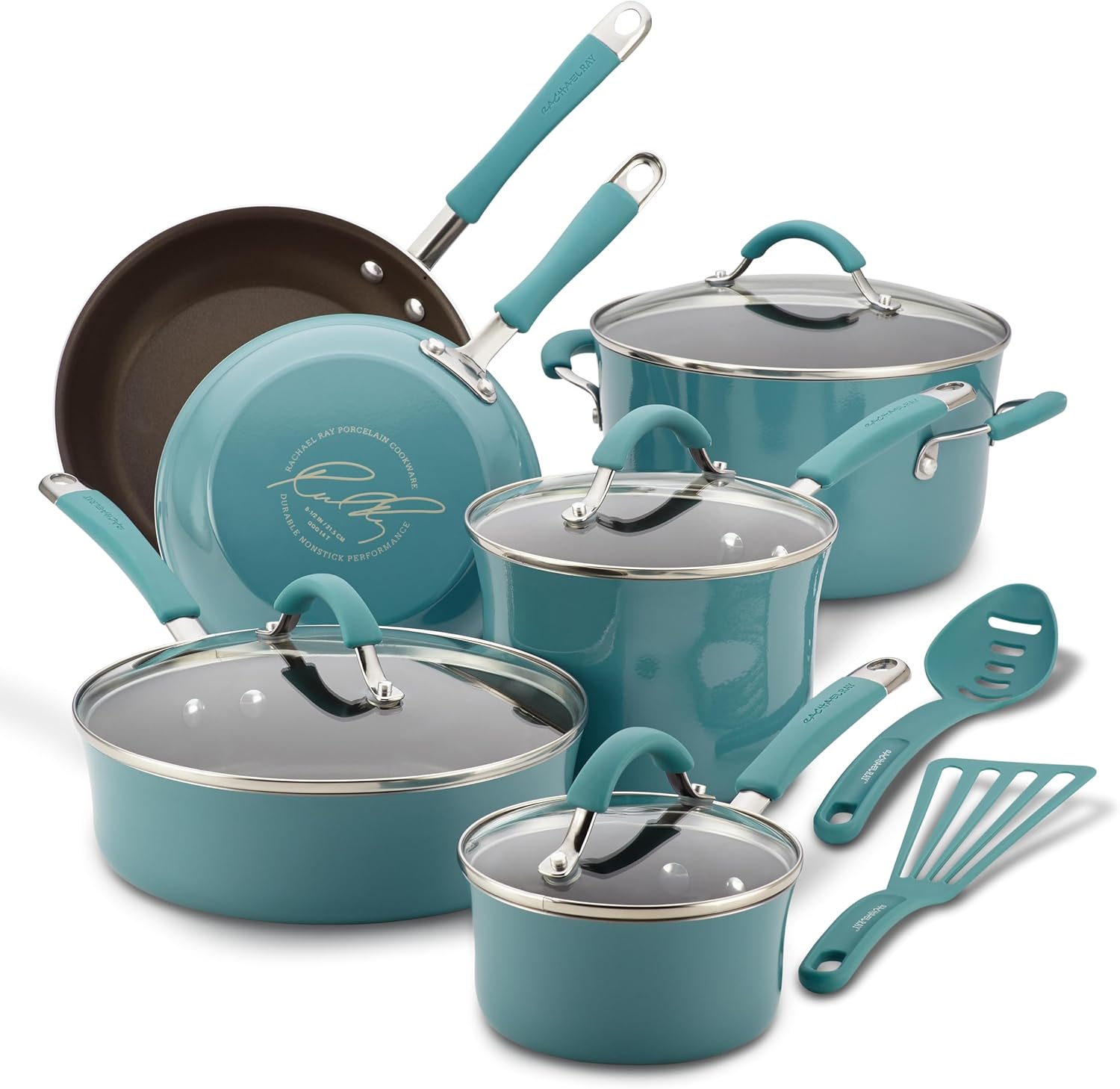
Finding reliable kitchen equipment often starts with choosing the right surface materials and color finishes to match your cooking style. Blue non stick cookware brings a vibrant aesthetic to the kitchen while offering specialized coatings designed to make food release straightforward. Shoppers can choose from various configurations, ranging from compact starter sets to massive multi-piece collections outfitted with helpful utensils and lids.
Different configurations support diverse stovetops, including gas, electric, and induction cooktops, along with various oven temperature thresholds. Understanding core materials like forged aluminum or steel helps buyers match their specific culinary habits to the right set. The following evaluations review five distinct blue options based strictly on their documented manufacturer features and practical specifications.
As an Amazon Associate, StacyLaughs earns from qualifying purchases.
Buying guide
Material Composition and Core Construction
Understanding the core material of blue non stick cookware helps buyers anticipate heating speed and overall durability. Options frequently feature forged aluminum, heavy-duty die-cast aluminum, or reinforced steel bases paired with smooth ceramic or granite interior coatings. Aluminum cores provide rapid heat transfer to minimize hot spots during daily meal preparation, ensuring consistent results for delicate sauces and searing tasks alike.
Selecting a sturdy base construction prevents warping over extended use on high-temperature burners. Buyers should review whether a forged or die-cast body best suits their routine cooking demands, ensuring the cookware maintains structural stability across countless meals without degrading, wobbling, or losing thermal efficiency on the stovetop.
Stovetop Compatibility and Heat Sources
Stovetop compatibility remains a primary factor when selecting cookware for domestic kitchens. Many available sets support traditional gas, electric, and glass-ceramic cooktops, while induction-ready models feature specialized magnetic bases designed for rapid energy transfer. Checking kitchen burner types beforehand prevents purchasing items that fail to interact properly with specific home ranges.
Transitioning pans between the stovetop and the oven requires verifying temperature limits provided by the manufacturer. Certain specialized collections withstand high broiling thresholds up to six hundred degrees, while others maintain lower maximum limits suitable for standard baking routines. Matching these thermal specifications ensures safe performance during complex dual-stage recipes without damaging handles or coatings.
Coating Technology and Safety Standards
Nonstick coatings apply various modern formulations, including diamond-infused ceramic, granite minerals, and advanced Duralon layers. These specialized surfaces allow food to release easily with minimal oil usage, streamlining everyday meal preparation and subsequent cleanup. Manufacturers frequently highlight chemical safety by constructing interior layers entirely free from PFOA, PTFE, and PFOS substances to support health-conscious households.
Evaluating surface hardness helps buyers gauge resistance to scratching and daily wear from standard kitchen utensils. Hardened ceramic layers provide high abrasion resistance, helping cookware maintain nonstick release properties over extended periods of regular household cooking and washing routines. Reviewing these structural ratings ensures long-term reliability in active kitchens where family meals are prepared daily and cleaned frequently.
Handle Design and Storage Practicality
Handle construction significantly influences comfort and safety during lifting, pouring, and carrying heavy pots across the kitchen. Options range from dual-riveted stainless steel and silicone grips to detachable Bakelite handles designed specifically for modular storage. Detachable mechanisms allow pots to nest closely together, saving substantial cabinet space in smaller kitchens or tight living quarters.
Buyers with limited storage in apartments, dormitories, or recreational vehicles benefit greatly from stackable configurations that maximize spatial efficiency. Traditional riveted handles offer permanent stability for heavy stockpots, requiring careful measurement of available cupboard space prior to purchasing larger multi-piece cookware sets. Balancing storage needs with handle preference guides an informed final purchase decision.
Set Composition and Included Accessories
Cookware sets vary dramatically in piece count and accessory inclusion, ranging from compact ten-piece kits to expansive twenty-seven-piece collections. Smaller sets generally cover core fry pans and basic saucepans, while larger bundles incorporate deep stockpots, specialty sauté pans, universal lids, and matching utensils. Evaluating these inclusions helps buyers find a balanced collection tailored to specific culinary tasks.
Reviewing included accessories helps shoppers avoid purchasing separate kitchen tools, trivets, or pan protectors. Matching the specific piece count to household cooking habits ensures every item gets utilized rather than taking up unnecessary room in crowded kitchen pantries. Assessing these bundled items prevents unnecessary clutter while delivering immediate cooking readiness right out of the box.
Maintenance and Cleaning Considerations
Maintaining nonstick cookware involves carefully understanding manufacturer cleaning recommendations to preserve delicate surface coatings over years of active use. Many ceramic and granite pans feature easy-release properties that allow food residue to wipe away quickly with mild soap and warm water. Following proper daily cleaning habits prevents premature degradation of the bonded nonstick layer.
While certain sets advertise dishwasher safety, routine hand washing often extends the lifespan of specialty exterior finishes and nonstick interior coatings. Avoiding harsh metal scouring pads prevents unwanted surface scratches, keeping the cookware looking vibrant and functioning smoothly across countless cooking sessions without losing performance efficiency over time.
Frequently asked questions
Can blue non stick cookware be used on induction stovetops?
Induction compatibility depends entirely on the specific manufacturing design of each cookware set. Some blue ceramic and granite collections feature specialized magnetic stainless steel bases that interact seamlessly with induction burners, while other traditional aluminum sets are engineered specifically for gas, electric, and glass-ceramic cooktops. Buyers must always review the manufacturer specifications before purchasing if they plan to cook on an induction range, ensuring the chosen set includes the necessary magnetic base properties required for proper heating performance.
Are detachable handle cookware sets secure during heavy cooking tasks?
Removable handle systems utilize engineered locking mechanisms designed to clip on and off securely. High-quality models incorporate dual-layer safety locks to minimize wobbling or accidental release while lifting heavy pots filled with food. These locking designs allow users to transition vessels smoothly from stovetops to ovens or tables while saving substantial storage space when nested. Buyers should follow proper attachment instructions and ensure the lock engages completely before lifting any filled pot or pan during meal preparation.
What materials are typically used in nonstick blue coatings?
Modern blue nonstick cookware frequently applies advanced ceramic coatings, diamond-infused materials, or mineral-reinforced granite surfaces rather than traditional chemical treatments. These formulations are commonly manufactured without harmful substances such as PFAS, PFOA, PFOS, and PTFE, supporting health-conscious cooking routines. The ceramic or granite layers provide smooth food release, allowing users to cook with little to no oil while facilitating quick cleanup using mild soap, warm water, and soft sponges after everyday meals.
How should ceramic nonstick pots and pans be cleaned properly?
Preserving ceramic nonstick surfaces involves following manufacturer maintenance guidelines, which generally recommend gentle hand washing with mild dish soap and soft sponges. Although certain collections state they are dishwasher safe, routine hand washing helps protect exterior finishes and interior coatings from harsh detergents. Users should avoid metal scouring pads and abrasive cleaners that might scratch or degrade the nonstick layer over time, ensuring the cookware retains its food-release performance across countless family meals and cooking sessions.
What is the maximum oven safe temperature for these blue sets?
Maximum oven safe temperature thresholds vary widely among different cookware collections based on their handle materials and structural construction. Some specialized sets withstand extreme temperatures up to six hundred degrees for intensive broiling, while others support moderate baking up to four hundred or five hundred degrees. Sets featuring detachable handles typically require removing the handle prior to oven placement since plastic or Bakelite components are rarely oven safe. Checking individual manufacturer guidelines prevents accidental damage to handles or coatings during baking.