Appliances · Buying Guide

Best Ceramic Nonstick Fry Pans for Everyday Cooking

Choosing the right ceramic nonstick fry pan involves balancing surface durability, heat distribution, and your preferred cooking style. Modern ceramic alternatives offer chemical-free cooking surfaces without traditional nonstick treatments. Selecting a skillet that fits your daily meal prep means evaluating how the core material handles different stovetops, maximum oven temperatures, and routine cleaning methods.

Manufacturers use various construction methods, from hard-anodized aluminum to multi-ply stainless steel cores, directly impacting overall weight and heat retention. Understanding these structural differences ensures you find a reliable skillet matching your kitchen setup. Whether you need a compact single pan or a versatile multi-piece set, exploring distinct design specifications helps streamline your daily cooking and cleanup process.

As an Amazon Associate, StacyLaughs earns from qualifying purchases.

Calphalon Premier Ceramic Nonstick 10-Inch Fry Pan
#1 Best Overall

Calphalon Premier Ceramic Nonstick 10-Inch Fry Pan

The Calphalon Premier Ceramic Nonstick Fry Pan measures 10 inches and features a hard-anodized aluminum construction designed for fast, even heating. Its ultra-durable ceramic interior is built to withstand metal utensils and resist scratching. The stainless steel handle stays cool on the stovetop, and the entire pan is oven safe up to 500 degrees Fahrenheit for seamless transition from burner to baking.

Best for Quick weekday meal preparation

PFAS-free nonstick surfaceDishwasher safe cleanupOven safe to 500FMetal utensil safeStay-cool handles
View on Amazon →

What stands out

  • Hard-anodized aluminum body delivers fast and even heat distribution across the entire cooking surface for consistent results.
  • Special ceramic surface provides enhanced scratch resistance designed to safely withstand routine use with metal utensils.
  • Stainless steel handle stays cool during stovetop cooking and transitions safely into ovens up to five hundred degrees.

What to consider

  • While the surface handles dishwasher cycles, routine hand washing is recommended to properly maintain the premium ceramic finish and extend its overall lifespan.
  • The single ten-inch size profile may present space constraints when preparing larger family meals or bulk cooking tasks on the stovetop.
Key specifications
Material Type
Aluminum
Product Care Instructions
Dishwasher Safe
Handle Material
Stainless Steel
Coating Description
ceramic
Maximum Temperature
500 °F
Item Weight
2.4 pounds

The practical verdict

This Calphalon 10-inch skillet suits cooks seeking a durable, hard-anodized pan that handles high oven temperatures and metal utensils. Avoid this option if you require a multi-piece set or a larger cooking surface for family-sized portions. The primary trade-off involves balancing the scratch-resistant metal-safe interior with the manufacturer recommendation for hand washing to preserve the coating.

#2
GreenPan Valencia Pro 3-Piece Ceramic Nonstick Skillet Set
Complete Multi-Size Set

GreenPan Valencia Pro 3-Piece Ceramic Nonstick Skillet Set

Best for Comprehensive kitchen cookware upgrade

The GreenPan Valencia Pro set includes 8-inch, 9.5-inch, and 11-inch frying pans featuring diamond-infused ceramic nonstick surfaces. Built with hard-anodized aluminum bodies, these skillets deliver balanced heating and robust scratch resistance. They accommodate all stovetops, including induction, and withstand high oven temperatures. Ergonomic stainless steel handles provide a secure grip, and the set is completely dishwasher safe for straightforward cleanup.

What stands out

  • Three distinct pan sizes provide versatile cooking options for everything from morning eggs to large evening dinner portions.
  • Diamond-infused ceramic nonstick coating offers exceptional durability, scratch resistance, and effortless food release without traditional chemical treatments.
  • Hard anodized aluminum construction ensures reliable, balanced heating across all stovetops including modern induction cooktops.

What to consider

  • Owning a three-piece skillet set requires dedicated cabinet storage space compared to storing a single standalone frying pan in compact kitchens.
  • Handling multiple pan sizes demands extra organization during busy cooking sessions where counter space and cleaning routines multiply quickly.
Key specifications
Capacity
8 cups
Material Type
Ceramic, Stainless Steel
Product Care Instructions
Dishwasher Safe, Oven Safe
Handle Material
Stainless Steel
Coating Description
Ceramic nonstick with diamond infusion
Maximum Temperature
600 °F

The practical verdict

Best for home cooks looking to cover multiple pan sizes with a single purchase. Avoid if you have very limited cabinet storage or only need one dedicated skillet. The primary trade-off is managing a multi-piece set that requires more storage footprint in exchange for comprehensive cooking versatility across three distinct diameters.

#3
All-Clad HA1 Ceramic Nonstick 12-Inch Fry Pan with Lid
Covered Family Skillet

All-Clad HA1 Ceramic Nonstick 12-Inch Fry Pan with Lid

Best for Large family meal production

The All-Clad HA1 12-inch fry pan comes with a tempered glass lid and features HardCore Ceramic Technology over a recycled aluminum body. Designed with an optimized stainless steel base, it resists warping on induction and traditional stovetops. The ProStack handle design allows clean stacking, while the ceramic interior ensures easy food release and stain resistance for large family meals.

What stands out

  • Included tempered glass lid allows easy monitoring of cooking progress while containing splatters during simmering or braising tasks.
  • ProStack handle design features flush exterior rivets that facilitate clean, organized stacking inside crowded kitchen cabinets.
  • Optimized stainless steel base delivers reliable warp resistance and consistent heat distribution across various stovetop types.

What to consider

  • Hand washing is explicitly required for maintenance, meaning you cannot run this large skillet through an automated dishwasher cycle.
  • The twelve-inch diameter footprint and included glass lid require substantial storage clearance compared to smaller, lidless fry pan models.
Key specifications
Material Type
Aluminum, Ceramic
Product Care Instructions
Hand Wash Only, Oven Safe
Handle Material
Stainless Steel
Coating Description
ceramic
Maximum Temperature
450 °F
Compatible Devices
Electric Coil, Gas, Smooth Surface Induction, Smooth Surface Non Induction

The practical verdict

Best for households needing a wide, covered pan for searing and simmering large portions. Avoid if you prefer dishwasher cleanup or have minimal storage space for wide cookware. The main trade-off is accepting hand-wash-only maintenance and a larger storage footprint in exchange for a dedicated lid and wide cooking surface.

#4
SENSARTE 12-Inch Ceramic Nonstick Deep Frying Pan with Lid
Deep Saute Cooking

SENSARTE 12-Inch Ceramic Nonstick Deep Frying Pan with Lid

Best for Deep dish and braising tasks

The Sensarte 12-inch deep frying pan offers a five-quart capacity with a helper handle and a tempered glass lid. Constructed from heavy-duty cast aluminum, it prevents warping and includes an induction-compatible base. The smooth natural ceramic surface requires minimal oil for cooking various dishes like stir-fries and stews. An anti-scald bakelite handle with a woodgrain design remains cool during use.

What stands out

  • Five-quart deep capacity accommodates braising, stewing, and large-batch stir-frying without spilling ingredients over the rim.
  • Anti-scald bakelite handle features a comfortable woodgrain design that stays cool to the touch on stovetops.
  • Heavy-duty cast aluminum body resists warping while providing fast and even heat distribution on induction cooktops.

What to consider

  • The pan requires manual hand washing with mild soap to help preserve the nonstick ceramic surface over extended periods of use.
  • The bakelite handle construction limits maximum oven safety temperatures compared to full stainless steel cookware alternatives on the market.
Key specifications
Capacity
5 quarts
Material Type
Aluminum
Product Care Instructions
Hand Wash Only
Handle Material
Anti-scald Bakelite handle
Coating Description
Ceramic healthy nonstick
Compatible Devices
Electric Coil, Gas, Smooth Surface Induction

The practical verdict

Best for home cooks who need a deep saute pan for liquids, stews, and large one-pan meals. Avoid if you require high-temperature oven compatibility or automated dishwasher cleanup. The primary trade-off involves accepting hand-wash care and lower oven limits in exchange for a generous five-quart deep cooking vessel with a helper handle.

#5
Made In Cookware 10-Inch Ceramic Nonstick Frying Pan
Professional Stainless Clad

Made In Cookware 10-Inch Ceramic Nonstick Frying Pan

Best for Precision high-heat searing

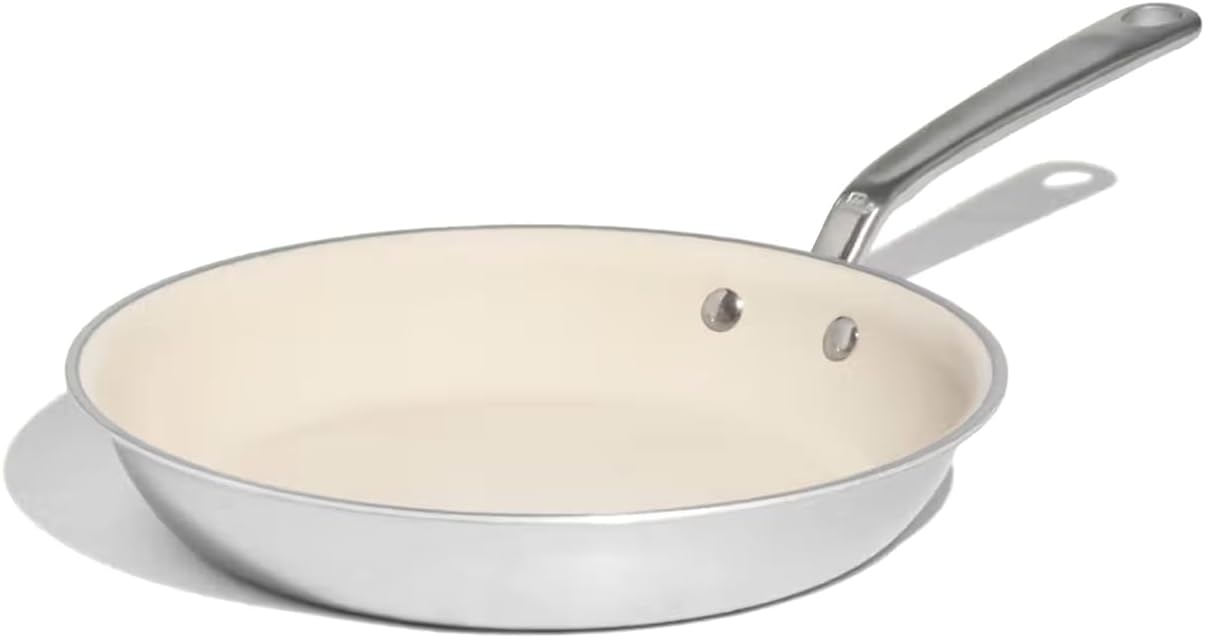
The Made In Cookware 10-inch frying pan pairs a ceramic nonstick coating with a five-ply stainless clad core, crafted in Italy. It provides even heat distribution without hot spots, making delicate foods like fish and eggs slide freely. The hollow stainless steel stay-cool handle offers a balanced grip. It is induction ready and safe for high oven temperatures up to 550 degrees Fahrenheit.

What stands out

  • Five-ply stainless clad core spreads heat evenly across the cooking surface, eliminating hot spots for delicate ingredients.
  • High maximum oven temperature resistance up to 550 degrees Fahrenheit allows seamless stovetop-to-oven cooking techniques.
  • Hollow stainless steel handle stays comfortable during stovetop use and provides a balanced grip for tossing foods.

What to consider

  • The pan requires careful manual hand washing with a soft sponge and mild soap to protect the bonded metal and coating.
  • Users must avoid metal utensils and abrasive cleaning pads to prevent accidental surface damage during routine kitchen maintenance tasks.
Key specifications
Capacity
2.5 quarts
Material Type
Stainless and Aluminum
Product Care Instructions
Hand Wash Only, Oven safe to 550F
Handle Material
Stainless Steel
Coating Description
ceramic
Maximum Temperature
550 °F

The practical verdict

Best for culinary enthusiasts wanting professional multi-ply construction paired with a ceramic nonstick surface. Avoid if you prefer dishwasher-safe convenience or low-maintenance cleaning routines. The main trade-off requires strict adherence to hand washing and non-metal utensils in exchange for a heavy-duty five-ply stainless core and high oven tolerance.

Buying guide

Evaluating Core Materials and Heat Distribution

Selecting the right internal metal core dictates how evenly your ceramic pan heats across the burner. Aluminum bodies offer lightweight handling and rapid thermal response, while hard-anodized variants add robust scratch resistance. Multi-ply stainless steel options provide superior structural rigidity and eliminate cooking hot spots. Understanding these underlying materials ensures your skillet performs reliably during daily meal preparation tasks.

When reviewing options, match the core construction to your typical cooking habits and stove type. If you frequently sear meats or require precise temperature control, thicker multi-ply bases prevent warping and maintain steady heat. Lighter aluminum pans suit quick stir-fries and fast breakfast routines. Assessing how the metal foundation interacts with your heat source prevents uneven cooking results over years of regular kitchen use.

Understanding Coating Technology and Durability

Ceramic nonstick coatings provide chemical-free food release without traditional agents. Modern manufacturing processes often reinforce these surfaces with diamond particles or hard-anodized layers to improve longevity against everyday wear. Inspecting how a brand constructs its coating helps determine whether the skillet can withstand frequent use or heavy-handed spatula contact. Prioritizing robust surface treatments minimizes premature coating breakdown during regular cooking cycles.

Maintenance habits directly influence how long a ceramic nonstick coating retains its slick properties. While certain models feature metal-utensil-safe engineering, using wooden or silicone tools generally prolongs surface life. Reviewing manufacturer care instructions clarifies whether a pan tolerates automated dishwasher cycles or requires gentle manual hand washing. Balancing your preferred cleanup routine with the coating specifications ensures lasting nonstick performance.

Stovetop Compatibility and Induction Readiness

Modern kitchens feature diverse cooktop types, making compatibility an essential purchasing factor. Gas burners and electric coils accommodate standard aluminum pans, whereas induction cooktops require specific magnetic metallic bases to generate heat efficiently. Verifying that a skillet includes an induction-safe disc or bonded magnetic exterior prevents frustrating performance issues after purchase. Always check the manufacturer specifications to confirm your chosen pan matches your specific stove.

Transitioning cookware between different heating elements requires stable base construction. Pans with optimized stainless steel bases resist thermal warping when exposed to rapid temperature changes on smooth glass or induction surfaces. Ensuring proper contact between the pan bottom and the burner maximizes energy transfer and cooking speed. Selecting universally compatible cookware provides flexibility if you decide to upgrade your kitchen appliances later.

Handle Design and Ergonomic Comfort

The handle configuration impacts maneuverability, safety, and comfort during extended cooking sessions. Stainless steel handles offer high heat tolerance for oven transitions, while bakelite or silicone grips provide cool-touch properties on the stovetop. Riveted attachments ensure long-term structural stability, though flush rivets simplify interior cleaning. Evaluating how a handle feels in your hand helps prevent fatigue when lifting heavy, food-filled skillets.

Consider helper handles if you frequently purchase larger deep skillets or multi-quart saute pans. A secondary grip distributes weight evenly when moving heavy meals from the burner to the dining table or sink. Hollow handle designs also help dissipate heat, keeping the grip comfortable during long simmers. Assessing handle materials against your maximum oven temperature requirements ensures safe, versatile cooking routines.

Oven Safety and Maximum Temperature Limits

Many recipes require starting a dish on the stovetop and finishing it inside a hot oven. Checking the maximum temperature rating is crucial before transferring your skillet to baking environments. Stainless steel handles and hard-anodized aluminum bodies often tolerate heat up to five hundred degrees or higher. Conversely, plastic or bakelite components impose strict thermal limits that restrict oven usage to lower temperatures.

Reviewing lid specifications is equally important if your frying pan includes a glass cover. Tempered glass lids frequently feature lower heat thresholds than the metal pans themselves, requiring careful attention during broiling or high-heat baking. Matching the oven rating to your culinary preferences ensures you can safely bake frittatas, roast meats, or melt cheese without damaging hardware components or compromising safety.

Size Selection and Storage Management

Choosing the correct pan diameter depends entirely on your household size and typical meal portions. Compact eight or ten-inch skillets suit single-serving eggs and quick side dishes, while twelve-inch pans handle family meals. Deep saute pans with vertical walls provide extra volume for liquids and braising tasks. Matching dimensions to your everyday cooking requirements prevents overcrowding ingredients and ensures proper heat transfer.

Storage considerations matter significantly when organizing kitchen cabinets or pantry shelves. Multi-piece cookware sets require dedicated storage footprints, whereas specialized stackable handle designs help minimize clutter in tight spaces. Accounting for protruding handles and accompanying glass lids prevents storage frustrations. Balancing pan capacity against available kitchen space guarantees a practical addition to your culinary routine without creating daily organizational hurdles.

Frequently asked questions

Are ceramic nonstick fry pans safe to use on induction stovetops?

Many ceramic nonstick fry pans offer full induction compatibility through a bonded magnetic stainless steel base embedded in their construction. However, lightweight aluminum pans lacking a specialized magnetic base will not function on induction cooktops. Reviewing manufacturer specifications before purchasing is essential to confirm whether a particular skillet works with your specific stove type, preventing compatibility issues and ensuring efficient, rapid heat transfer during everyday meal preparation tasks.

Can I put ceramic nonstick frying pans in the dishwasher?

Dishwasher safety varies depending on the specific model and manufacturer guidelines provided for each individual pan. While certain hard-anodized and diamond-infused skillets are rated as dishwasher safe, many brands explicitly recommend manual hand washing with mild soap and a soft sponge. Hand washing helps protect the delicate ceramic nonstick coating from harsh automatic detergents and abrasive water jets, ultimately extending the active lifespan and preserving the smooth release performance of your cookware over time.

Are metal utensils safe to use on ceramic nonstick surfaces?

Using metal utensils depends entirely on the specific manufacturing technology integrated into the ceramic coating. Certain advanced models feature reinforced, scratch-resistant surfaces engineered to withstand metal spoons and spatulas without sustaining major damage. However, many traditional ceramic pans require wooden, silicone, or plastic tools to prevent accidental scratching and premature wear. Checking product specifications clarifies whether metal tools are permitted or if non-scratch utensils are required for routine cooking tasks.

What is the difference between standard aluminum and hard-anodized aluminum?

Hard-anodized aluminum undergoes an electrochemical treatment process that hardens the metal, making it significantly denser and more durable than traditional untreated aluminum. This specialized manufacturing technique creates a robust exterior that resists scratching, corrosion, and everyday wear much more effectively. While both materials provide excellent thermal conductivity and fast heating, hard-anodized cookware offers enhanced structural stability and warp resistance, making it a popular choice for high-performance kitchen frying pans.

How do I prevent food from sticking to a ceramic nonstick pan?

Preventing food from sticking involves maintaining moderate cooking temperatures and using a small amount of oil or butter, even on nonstick surfaces. High heat can carbonize oil residues onto the coating, creating a microscopic film that diminishes nonstick performance over time. Additionally, washing the pan thoroughly after every use removes invisible grease buildup. Following proper preheating habits and avoiding cooking sprays with heavy additives will keep your ceramic surface slick and responsive.

Final thoughts

Selecting the ideal ceramic nonstick fry pan requires balancing surface durability, core construction, and daily cleaning preferences. Whether you opt for a compact ten-inch skillet, a deep saute pan, or a comprehensive multi-piece set, matching specifications to your cooking habits ensures lasting satisfaction. Evaluating stovetop compatibility and oven temperature limits protects your investment.

Ultimately, understanding material differences helps you choose cookware that streamlines meal preparation and cleanup routines. By respecting manufacturer care instructions and selecting appropriate utensils, your ceramic pans will maintain reliable food release. Thoughtful selection transforms everyday cooking tasks into an efficient, enjoyable part of your daily kitchen routine.