Appliances · Buying Guide
Best Ceramic Nonstick Frying Pans for Everyday Cooking and Searing
Choosing the right ceramic nonstick frying pan transforms how you handle delicate foods like eggs, pancakes, and fish on daily stovetop routines. Modern cookware brings together advanced coatings and sturdy metal bases to help food release smoothly without relying on excessive oils or fats while maintaining reliable durability over time through repeated use.
Navigating the various market options requires looking closely at core materials, maximum heat tolerances, handle designs, and stovetop compatibility. Whether you need a compact single skillet or a multi-piece set for versatile meal preparation, understanding these specific physical attributes ensures you select dependable kitchen tools matching your cooking style, household demands, and recipe preferences.
As an Amazon Associate, StacyLaughs earns from qualifying purchases.
Buying guide
Material Construction and Heat Distribution
The foundational material of a ceramic nonstick frying pan dictates how rapidly it heats up and how evenly temperature spreads across the cooking surface. Hard-anodized aluminum builds provide robust durability and consistent thermal transfer, while multi-ply stainless clad cores combine the structural rigidity of steel with rapid aluminum conductivity. Selecting the right body composition prevents annoying hot spots that can scorch delicate foods during long searing sessions.
Different core materials also influence the overall weight and balance of the pan in your hand. Heavy-duty cast aluminum models offer exceptional resistance to warping under high heat, whereas multi-ply stainless construction adds substantial heft. Consider how much weight you comfortably manage when lifting a full pan from burner to countertop. Matching the material profile to your daily cooking habits ensures long-term satisfaction and reliable performance.
Coating Technology and Nonstick Performance
Ceramic nonstick coatings provide a slick cooking surface that allows eggs, pancakes, and delicate fish fillets to slide free with minimal butter or oil. Modern manufacturing techniques often reinforce these ceramic layers with diamond infusions or multi-layer bonding to enhance scratch resistance. Understanding these coating enhancements helps you choose cookware designed to withstand frequent daily meal preparation without losing its smooth release properties over time.
It is equally important to examine whether a coating permits metal utensils or requires silicone and wooden tools to prevent surface damage. Some diamond-reinforced formulations tolerate standard metal spatulas, whereas traditional ceramic finishes demand softer instruments. Reviewing manufacturer care instructions regarding utensils and oils preserves the lifespan of your nonstick surface, ensuring consistent food release throughout the entire lifespan of the cookware investment.
Stovetop Compatibility and Induction Readiness
Before purchasing any ceramic frying pan, verify that its base matches the specific heat source installed in your kitchen. Traditional gas and electric coil cooktops accommodate virtually all aluminum and stainless-clad pans, but induction cooktops require a magnetic stainless steel base or embedded induction plate. Checking compatibility specifications prevents frustrating situations where a newly purchased skillet fails to heat on a modern magnetic cooktop surface.
Optimized metal bases also contribute significantly to warp resistance when exposing the pan to rapid temperature changes. Pans engineered with specialized steel plates maintain flat contact with glass and ceramic stove surfaces, ensuring uniform heat transfer. Evaluating base construction guarantees that your cookware remains stable and efficient, whether you are simmering sauces over low heat or searing proteins at maximum stovetop temperatures.
Handle Ergonomics and Storage Design
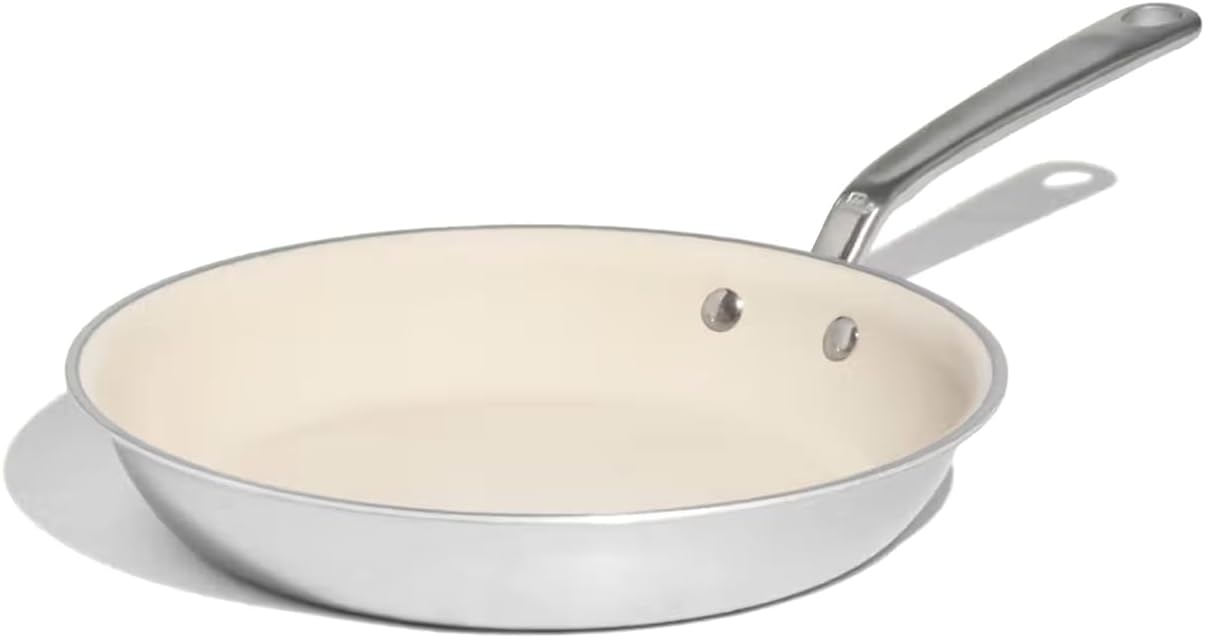
The design of a frying pan handle directly affects your comfort, safety, and control during cooking routines. Polished stainless steel handles often feature ergonomic contours for a secure grip, while hollow or stay-cool constructions minimize heat transfer from the burner. Bakelite handles offer comfortable, heat-resistant grips but typically restrict oven-safe temperatures, meaning you must balance stove comfort against high-heat baking capabilities depending on your recipes.
Storage considerations are equally vital, especially if your kitchen cabinet space is limited. Some cookware lines incorporate flush exterior rivets and stackable designs that prevent scratching neighboring pans, while larger deep skillets with helper handles require extra clearance. Assessing your storage space alongside handle configurations ensures your new pans integrate smoothly into your existing kitchen organization without causing clutter or awkward stacking issues.
Cleaning Maintenance and Care Guidelines
Proper maintenance routines significantly extend the usable life of ceramic nonstick frying pans. While certain models carry dishwasher-safe ratings, manufacturers frequently recommend gentle hand washing with mild soap and soft sponges to protect the delicate nonstick surface from harsh detergents. Adopting a manual cleanup habit prevents premature coating degradation and keeps your cookware looking pristine through years of regular meal preparation.
Thermal shock prevention is another crucial aspect of daily pan care. Allowing hot pans to cool gradually before immersion in water prevents warping and preserves the structural integrity of both aluminum bodies and bonded ceramic coatings. Following these straightforward care practices ensures your frying pans maintain optimal nonstick performance and structural stability, reducing the need for premature replacements and protecting your initial investment.
Size Selection and Capacity Needs
Choosing the correct pan size depends entirely on your typical household size and the types of dishes you prepare most frequently. Smaller 8-inch and 9.5-inch skillets excel at frying single eggs, omelets, or small portions, whereas 10-inch to 12-inch pans provide ample room for multi-person meals. Deep saute pans with generous multi-quart capacities expand your cooking options further, allowing you to braise, stew, and simmer larger batches of food.
Multi-piece sets offer a balanced approach by bundling various diameters to cover everything from breakfast sides to large dinner sautés. However, purchasing a single specialized pan avoids paying for sizes you might never use. Assessing your daily meal preparation volume helps you determine whether a versatile set or a standalone skillet best fulfills your culinary requirements without crowding your stove burners.
Frequently asked questions
Are ceramic nonstick frying pans safe for metal utensils?
Not all ceramic frying pans support metal utensils, so checking specific manufacturer guidelines is essential before cooking. Standard ceramic coatings can scratch or chip when scraped with metal spatulas or whisks, which damages the nonstick release properties over time. However, select advanced models featuring diamond-infused ceramic surfaces or hardened stainless interiors explicitly state that they are safe for metal tools. If your chosen pan lacks this explicit metal-utensil-safe rating, sticking to silicone, wooden, or plastic utensils remains the safest practice to protect the coating.
Can I put ceramic nonstick frying pans in the dishwasher?
While several ceramic frying pans carry dishwasher-safe ratings in their specifications, most manufacturers recommend manual hand washing with mild soap and a soft sponge. Dishwasher detergents often contain harsh chemicals and abrasive agents that can gradually degrade the nonstick coating and dull the exterior finish. Hand washing removes food debris easily due to the slick ceramic surface and significantly extends the operational lifespan of your cookware, ensuring reliable food release persists for years.
Are ceramic frying pans compatible with induction cooktops?
Ceramic frying pans work on induction cooktops only if their base contains magnetic materials, such as an optimized stainless steel plate or an induction-ready bonded core. Pure aluminum pans without a magnetic stainless steel layer will fail to generate heat on modern induction burners. Always review the compatible devices listed for each specific model to confirm whether it supports electric coil, gas, and smooth surface induction cooktops before making your final purchasing decision for your kitchen setup.
What is the maximum oven temperature ceramic pans can handle?
Maximum oven temperature ratings vary widely depending on the specific materials used in the pan construction. Many hard-anodized and diamond-infused models withstand oven heat up to 500 or 600 degrees Fahrenheit, allowing seamless transitions from stovetop searing to oven finishing. Conversely, pans equipped with bakelite or plastic handles typically have strict thermal limits that restrict oven use entirely or cap it at lower thresholds. Always check the temperature rating of both the pan body and any included glass lids.
Do ceramic nonstick pans require oil or butter when cooking?
Ceramic nonstick frying pans are engineered with smooth release surfaces that allow eggs, pancakes, and delicate proteins to slide free easily. While you can cook with significantly less oil or butter compared to traditional uncoated cookware, using a small amount of fat is often recommended to enhance browning and flavor. The slick nonstick coating ensures that food does not stick aggressively, making cleanup quick and simple regardless of whether you choose to use minimal oils during meal preparation.