Appliances · Buying Guide
Best Carbon Steel Roasting Pan Options for Every Kitchen
Selecting a carbon steel roasting pan brings together the fast, even heating of professional metal cookware with the reliable structural depth needed for heavy holiday turkeys, whole chickens, and daily vegetable prep. Unlike traditional heavy cast iron or delicate stainless steel, carbon steel offers impressive heat responsiveness on both stovetops and inside high-heat ovens, handling everything from searing meat to roasting root vegetables.
Whether you prefer a pre-seasoned surface that is ready for immediate cooking or a raw model that builds a custom non-stick patina over time, understanding physical dimensions, coating types, and included rack styles helps match the right roaster to your everyday kitchen habits, storage space, and oven capacity.
As an Amazon Associate, StacyLaughs earns from qualifying purchases.
Buying guide
Material Gauge and Heat Distribution
Carbon steel provides exceptional heat responsiveness, bridging the gap between heavy cast iron and thin aluminum baking sheets. Selecting the right vessel gauge ensures your roasting pan distributes heat evenly across burners and oven floors without warping during extended cooking cycles. A sturdier gauge maintains structural integrity under frequent high-heat use, supporting heavy turkeys and dense root vegetables without flexing.
When evaluating options, look at how the carbon steel thickness supports your typical recipes and preferred heat sources. Thicker walls retain warmth longer for steady roasting, while lighter models heat up rapidly for quick searing and browning tasks. Matching the metal weight and thickness to your cooking style ensures reliable, long-lasting performance in any home kitchen environment.
Sizing and Oven Fit
Roasting pans come in various physical dimensions, typically ranging from compact models for small chickens to large units built for holiday turkeys and festive family dinners. Measuring your oven interior and storage cabinets before purchasing prevents frustrating fit issues. Always ensure the rim-to-rim length accounts for side handles, which often extend several inches beyond the main cooking vessel.
A pan that is too large will not fit securely on standard oven racks, while an undersized model limits your ability to surround main meats with aromatic vegetables and potatoes. Consider your standard guest count and recipe volume to select a footprint that balances generous interior cooking space with practical storage dimensions in your kitchen cabinets.
Rack Design and Air Circulation
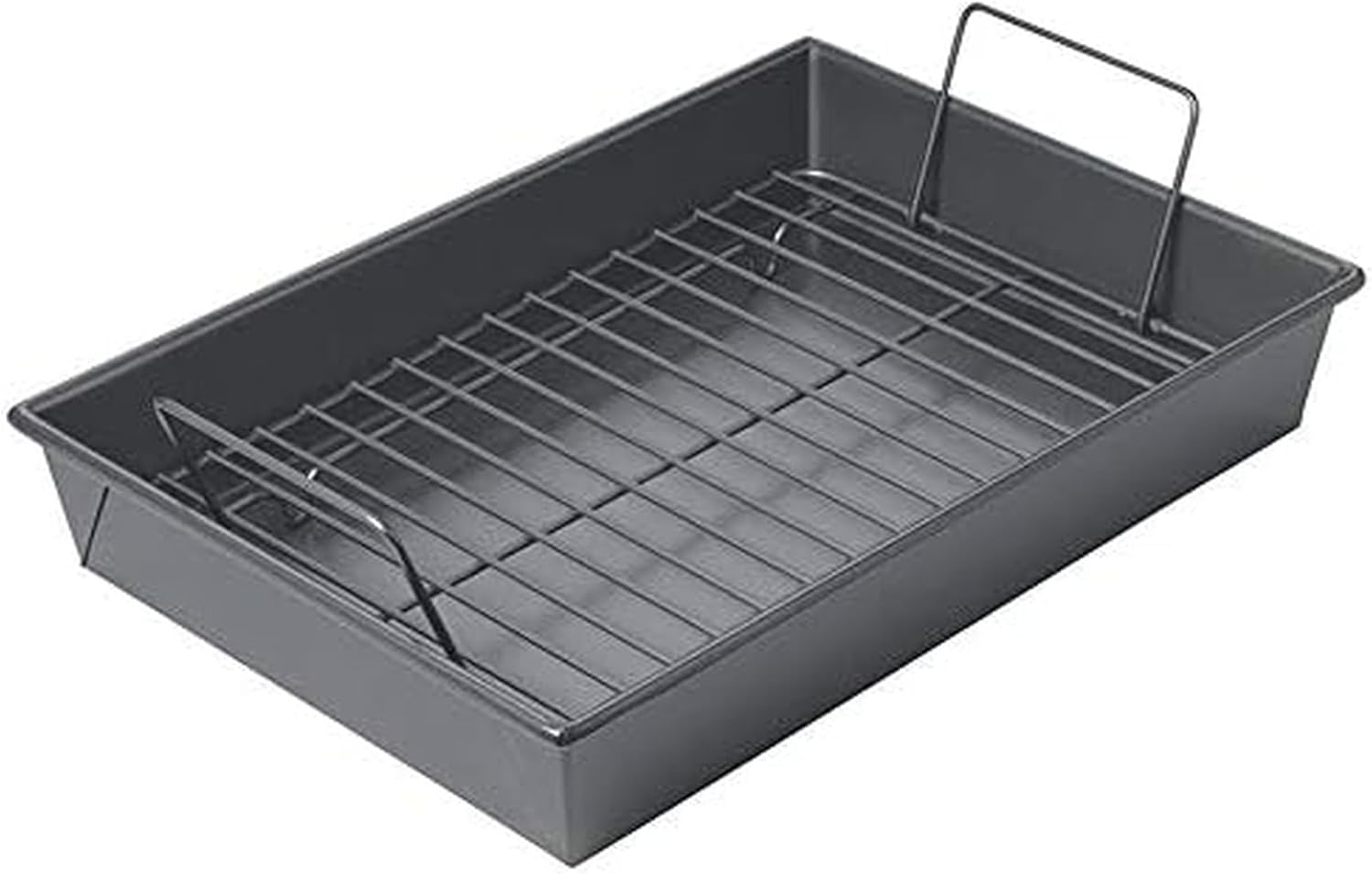
Included roasting racks elevate poultry and roasts above accumulated fats and cooking juices, promoting all-around air circulation for crisp skin and even browning. Flat racks sit low inside the bottom surface, whereas V-shaped and angled racks cradle round cuts securely and leave ample space underneath for roasting vegetables, root crops, and savory aromatics alongside your main dish.
Choosing the right rack style depends heavily on what you plan to cook most frequently throughout the year. V-shaped racks excel at holding whole holiday turkeys steady, while flat or angled wire inserts work well for general baking, steaks, and multi-purpose meal prep tasks without trapping food against the metal base of the pan.
Surface Finishes and Pre-Seasoning
Carbon steel surfaces generally fall into two distinct categories: factory pre-seasoned models ready for immediate use and raw models requiring initial oil curing and protective wax removal. Pre-seasoned pans offer immediate convenience, letting you start cooking right out of the box without manual setup steps, which appeals to busy home cooks seeking quick culinary results.
Unfinished carbon steel pans allow you to build a custom non-stick patina over time through repeated use and proper oil seasoning. While raw models require extra initial effort at the sink and stove, they reward traditional cooking enthusiasts with a natural, chemical-free surface that continuously improves with age and consistent kitchen maintenance habits.
Temperature Thresholds and Heat Sources
Carbon steel is celebrated for high-heat tolerance, but individual roasting pans specify different maximum temperature limits based on handle attachments, nonstick coatings, and manufacturing design. High-heat models withstand extreme oven temperatures up to 600 or 660 degrees Fahrenheit, safely accommodating intense searing, broiling, and outdoor grilling tasks without compromising the structural integrity of the vessel.
Stovetop compatibility is another vital purchasing criterion for modern home kitchens. Many carbon steel roasters work seamlessly across gas, electric, and induction cooktops, allowing you to transition a hot pan straight from the oven to the burner for making rich pan gravies, pan sauces, and vegetable reductions using the leftover cooking drippings and fond.
Cleaning and Maintenance Requirements
Maintaining carbon steel cookware requires careful attention to manufacturer cleaning instructions, as harsh detergents and abrasive scrubbers can strip natural seasoning or damage applied nonstick coatings. Many traditional carbon steel pans require hand washing with warm water to preserve their protective patina, while certain coated variants offer partial dishwasher-safe convenience for the main body.
Understanding these maintenance demands helps protect your cookware investment over years of holiday family meals and routine Sunday dinners. Whether you must hand wash racks and pans carefully or utilize safe dishwasher cycles for compatible coated surfaces, following proper care guidelines ensures long-lasting food release performance, prevents premature wear, and stops rust formation on exposed metal.
Frequently asked questions
Can carbon steel roasting pans be used on induction stovetops?
Yes, carbon steel is naturally magnetic, making most carbon steel roasting pans fully compatible with induction stovetops along with gas and electric burners. This magnetic property allows the pan base to heat up rapidly and distribute thermal energy evenly across the cooking surface. However, you should always check that the flat bottom of the roaster matches the size of your induction burner zone to ensure proper sensor contact and efficient heating performance during stovetop gravy making or searing tasks.
Do carbon steel roasting pans require seasoning before use?
Seasoning requirements depend entirely on the specific model you purchase. Factory pre-seasoned carbon steel pans arrive ready for immediate cooking straight out of the box without requiring manual oil curing or wax removal. In contrast, traditional unfinished carbon steel pans, such as those coated with protective beeswax for shipping, require a thorough initial wash and a manual high-heat oil seasoning process to build up a natural, non-stick cooking patina over time.
Are carbon steel roasting pans safe to put in the dishwasher?
Dishwasher safety varies by specific product design and surface treatment. Some carbon steel roasting pans feature dishwasher-safe pan bodies while requiring the accompanying wire racks to be washed by hand. Other models recommend strict hand washing for all components to protect applied nonstick coatings or preserve the natural seasoning patina. Always review the manufacturer care instructions provided with your specific pan before loading it into a dishwasher.
What is the main advantage of using a carbon steel roasting pan over cast iron?
Carbon steel offers several distinct advantages over traditional heavy cast iron cookware. It is significantly lighter in weight, making it much easier to lift in and out of hot ovens, especially when loaded with a heavy holiday turkey or large roast. Additionally, carbon steel provides faster heat responsiveness, meaning it heats up and adjusts to temperature changes much quicker than bulky cast iron while still delivering excellent searing capabilities.
Can I use metal utensils on a carbon steel roasting pan?
Metal utensil compatibility depends on whether the carbon steel pan has a specialized nonstick coating or a bare pre-seasoned surface. Certain pre-seasoned carbon steel roasters are built to withstand metal utensils without sustaining damage. However, models featuring applied nonstick interior coatings generally recommend using wooden, silicone, or plastic utensils to prevent scratching and preserve the integrity of the non-stick surface over years of regular kitchen use.