Appliances · Buying Guide
Best Carbon Steel Wok Induction Options for Versatile Cooking
Finding the right carbon steel wok induction compatible pan can completely transform how you prepare stir-fry, fried rice, and seared vegetables at home. These versatile pans combine the rapid heat response and lasting durability of traditional carbon steel with specially engineered flat bases designed for modern smooth surface cooktops.
Whether you regularly cook on traditional gas ranges, electric coils, or advanced induction burners, selecting a well-balanced wok requires looking closely at handle materials, overall diameter, pre-seasoning methods, and whether a glass lid is included. Reviewing these specific structural attributes carefully helps match a pan directly to your everyday cooking habits without guesswork.
As an Amazon Associate, StacyLaughs earns from qualifying purchases.
Buying guide
Material Thickness and Heat Distribution
Carbon steel provides an exceptional balance between heavy cast iron and lightweight stainless steel cookware options available today. It heats up rapidly and responds instantly to precise temperature adjustments on your kitchen cooktop. This thermal responsiveness is essential for successful stir-frying, where controlling heat prevents scorching and locks in fresh vegetable textures while maintaining authentic cooking results across meals.
When selecting an induction wok, look closely for heavy-gauge metal constructions that resist warping over time under intensive flame or burner use. Thicker carbon steel retains heat evenly across the entire cooking surface, reducing localized hot spots that can burn delicate ingredients during high-heat searing, frying, or boiling tasks performed daily in busy kitchens.
Base Flatness and Induction Compatibility
Traditional woks feature rounded bottoms designed for open gas flames, but modern induction cooktops require flat contact surfaces. A well-designed induction wok includes a machined flat base that rests securely against smooth glass burners. This flat area ensures magnetic energy transfers efficiently to heat the pan without rocking or sliding around the cooktop.
Evaluating the specific diameter of the flat bottom helps determine how much stable cooking space you actually have available. A wider base supports steady flipping and tossing, while maintaining constant contact with the induction coil for reliable thermal performance during everyday meal preparation and intensive high-heat cooking routines in busy home environments.
Seasoning and Natural Nonstick Surfaces
Carbon steel relies entirely on a seasoned oil patina rather than synthetic chemical coatings to achieve reliable nonstick performance during cooking. Many woks arrive pre-seasoned from the factory using advanced high-heat nitrogen treatments or baked-on vegetable oils. This initial factory coating gives you a great head start, though ongoing domestic maintenance remains necessary for long-term success.
Building and preserving this natural patina involves regular gentle hand cleaning, thorough drying with a clean towel, and applying very thin layers of cooking oil after each cooking session. Over time, this ongoing process naturally darkens the metal and creates a slick surface that makes releasing delicate foods like eggs, rice, and noodles effortless without sticking.
Handle Design and Ergonomic Control
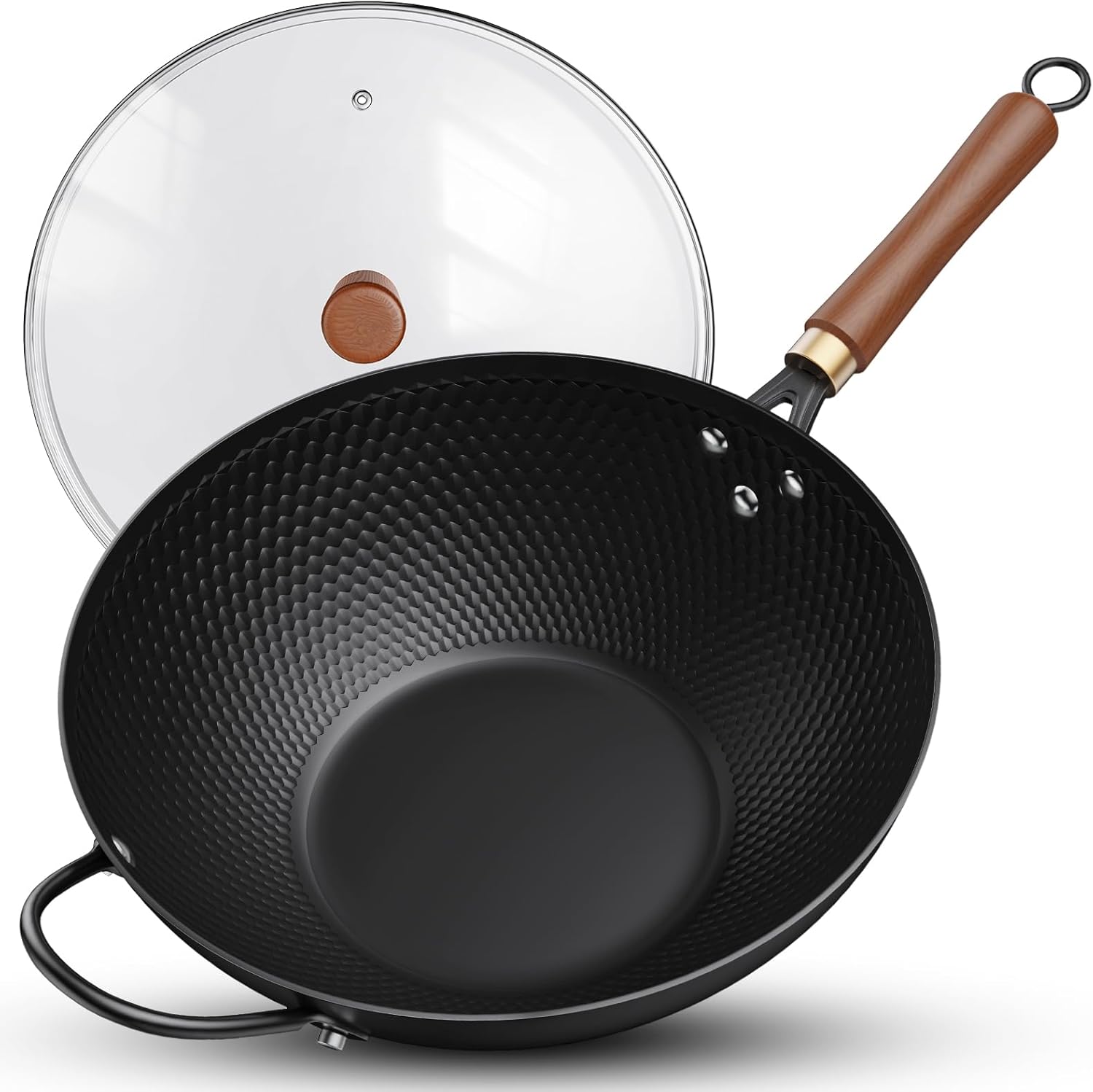
Cooking with a wok involves frequent lifting, tilting, and tossing of heavy ingredients across a hot cooking surface. Ergonomic handle designs featuring natural wood, stainless steel, or dual helper grips play a vital role in daily user comfort and safety. Wooden handles typically stay cool to the touch during standard stove use, protecting your hands from heat.
Helper handles positioned opposite the main grip provide crucial extra leverage when safely transferring a heavy, food-filled wok from the induction burner to a kitchen countertop. Reviewing handle placement, sturdy riveted construction, and material type ensures you maintain safe, secure control throughout every demanding high-heat cooking task without experiencing wrist strain.
Lids and Versatile Cooking Methods
While traditional stir-frying is primarily an open-pan technique, many modern carbon steel woks include transparent glass lids to unlock broader culinary applications at home. A clear lid allows you to easily steam fresh vegetables, braise tender meats, or simmer rich sauces while keeping a close visual eye on your food without unnecessarily releasing trapped heat.
Choosing a wok with a matching lid expands your daily cooking repertoire far beyond rapid frying into comforting one-pan meals and stews. Ensure the lid fits snugly over the metal rim to trap moisture and heat effectively whenever your favorite recipe calls for covered simmering, slow braising, or boiling tasks on induction cooktops.
Care, Maintenance, and Durability
Carbon steel cookware requires specific hand-washing habits to ensure long-lasting performance in your busy home kitchen environment. Unlike stainless steel or aluminum pans with synthetic coatings, carbon steel must never be placed in an automated dishwasher. Harsh detergents and prolonged soaking water strip away the carefully built seasoned patina and quickly cause unwanted rust.
Proper care involves washing the pan by hand with warm water, drying it completely on a warm burner, and wiping a very thin film of cooking oil across the metal surface. Following these straightforward maintenance steps protects your cookware investment and preserves natural nonstick qualities for many years of reliable daily cooking use.
Frequently asked questions
Can carbon steel woks be used on induction cooktops?
Yes, carbon steel woks work exceptionally well on induction cooktops as long as they feature a machined flat bottom. Induction burners rely on magnetic fields to heat compatible metal cookware directly. Because carbon steel is a ferrous metal, it interacts seamlessly with induction coils, providing rapid and even heating across the flat base. However, woks with entirely rounded traditional bottoms will not make proper contact with a flat glass induction surface, making flat-bottomed variants essential for induction cooking.
Do carbon steel woks require seasoning before use?
Many carbon steel woks arrive pre-seasoned from the manufacturer using advanced high-heat techniques, offering a functional non-stick start right out of the box. Despite this initial factory seasoning, traditional carbon steel still requires ongoing oil maintenance over time. Regular seasoning involves applying thin layers of cooking oil and heating the pan to build a durable, natural nonstick patina that improves food release and protects the metal from rust during everyday kitchen use.
How should I clean and maintain my carbon steel wok?
Cleaning carbon steel woks requires hand washing with warm water rather than placing them in a dishwasher. Dishwasher detergents and prolonged moisture exposure will strip away the seasoned oil patina and cause the metal to rust. After washing, you should dry the wok completely, often by placing it on a warm burner, and apply a very thin coat of cooking oil to protect the surface before storing it away in your kitchen cabinet.
Why is a flat bottom important for induction wok cooking?
A flat bottom is crucial for induction cooking because glass cooktops require continuous, direct physical contact to transfer magnetic energy efficiently into cookware. Traditional rounded woks designed for open gas flames will wobble and fail to heat properly on a smooth glass surface. A machined flat base keeps the pan stable and ensures that the magnetic field generates rapid, even heat distribution across the entire cooking surface for successful stir-frying and searing.
Can I use metal utensils with a carbon steel wok?
Yes, carbon steel is exceptionally tough and durable, making it fully compatible with metal utensils such as spatulas, ladles, and tongs. Unlike pans with delicate synthetic nonstick coatings that scratch easily, carbon steel features a hardened metal surface that withstands rigorous scraping and tossing during high-heat stir-frying. While metal tools may leave minor cosmetic marks on the seasoned oil patina, they will not damage the underlying steel structure or impair the performance of your wok.