Appliances · Buying Guide
Best Carbon Steel Wok with Lid Choices for Every Kitchen
Choosing a reliable carbon steel wok with a lid can completely transform how you approach daily stir-frying, searing, boiling, and steaming at home. Unlike traditional heavy cast iron pans, carbon steel offers a responsive structure that heats rapidly and adapts quickly to temperature shifts on your stovetop, giving you precise control over every single dish you prepare.
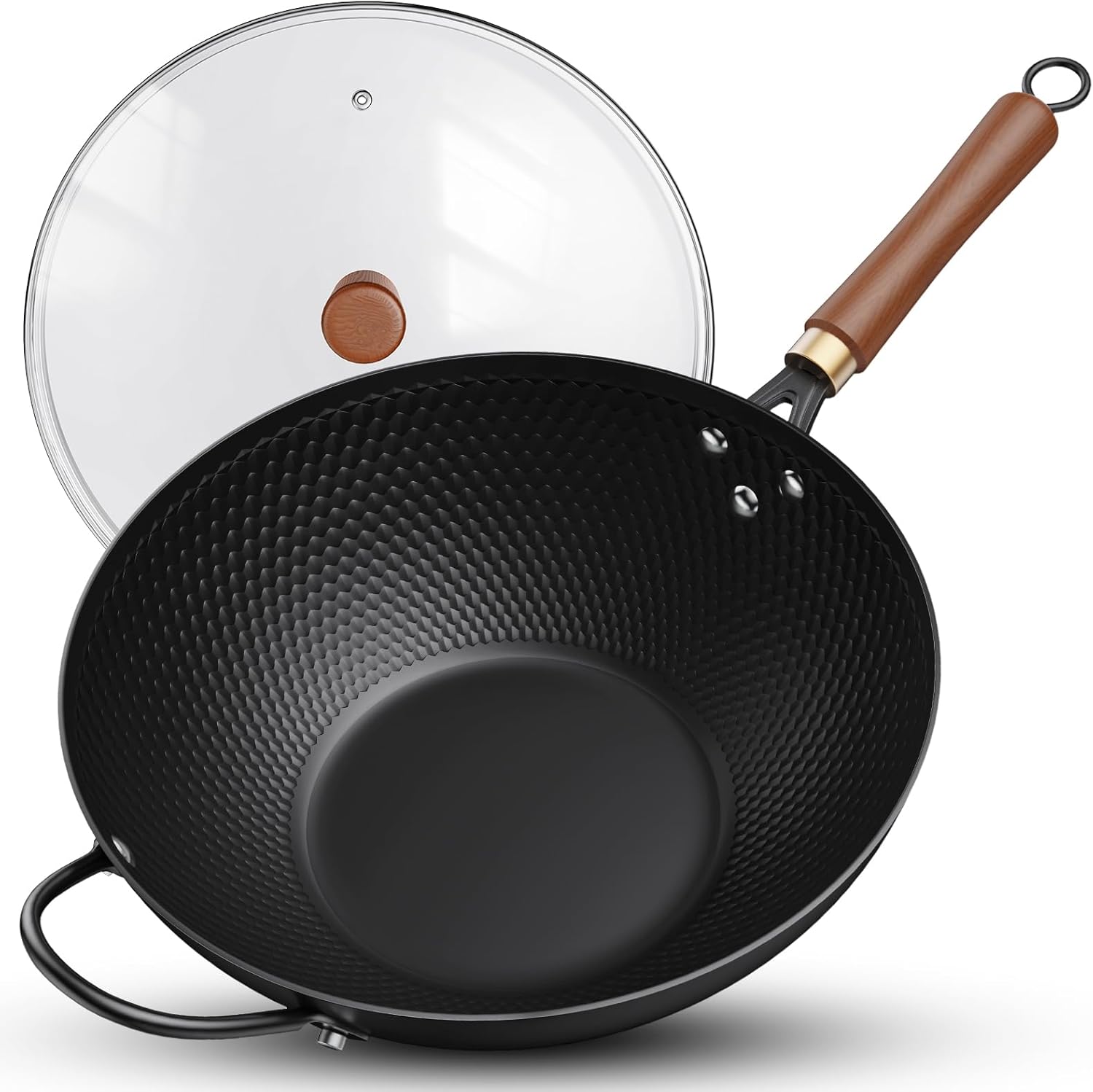
Whether you need an ultra-large model designed for feeding a crowd or a balanced 13-inch pan equipped with a clear glass lid for monitoring cooking progress without heat loss, available options vary widely. Evaluating materials, handle styles, and surface treatments helps match the right wok to your specific cooking habits, stove type, and overall kitchen setup.
As an Amazon Associate, StacyLaughs earns from qualifying purchases.
Buying guide
Understanding Carbon Steel Gauge Thickness
Carbon steel thickness directly impacts how a wok handles heat and manages weight during everyday cooking tasks. Thinner gauges heat up rapidly and respond instantly to temperature adjustments on your burner, making them exceptionally nimble for quick stir-fries and vegetable tossing. This rapid thermal responsiveness gives you precise control over your cooking environment without holding onto excess heat.
However, slightly thicker gauges provide superior stability on flat cooktops and resist warping under intense thermal output. Balancing gauge thickness with your physical strength ensures you select a pan you can comfortably lift, toss, and control during heavy family meal preparation without experiencing arm fatigue. Always consider your typical batch sizes.
Evaluating Flat Bottoms Versus Round Bottoms
Flat bottom woks are engineered specifically for modern kitchen environments, sitting securely and stably on electric, ceramic, and induction stovetops. They maintain direct contact with heating elements to ensure even energy transfer across the base of the pan. This direct contact maximizes thermal efficiency and prevents wobbling during active cooking sessions across various burner types.
While traditional round bottom woks excel over dedicated gas burners or open fires, flat bottom models eliminate the need for extra support rings on smooth glass surfaces. This stability makes flat bottom designs much more versatile for standard household ranges while still accommodating traditional flipping and tossing motions effortlessly every single day.
Managing Seasoning and Natural Nonstick Maintenance
Carbon steel cookware relies entirely on oil seasoning rather than synthetic chemical coatings to achieve reliable nonstick performance. Initial seasoning builds a protective barrier that prevents food from sticking and shields the raw metal against moisture and rust. Pre-seasoned models simplify this initial step, though ongoing maintenance remains essential for long-term kitchen success and reliable food release.
Over time, routine cooking with healthy oils deepens this dark patina, making the cooking surface increasingly slick and efficient. Maintaining this surface requires washing by hand with warm water, drying completely on the warm stove, and applying a thin coat of cooking oil after every single cleaning session without exception to prevent oxidation.
Selecting Lid Types and Handle Configurations
Lids and handles greatly influence how comfortable a wok is to operate and store in your kitchen space. Clear glass lids let you monitor simmering broths, steaming vegetables, and braised dishes without lifting the cover and losing precious cooking heat. This visibility helps ensure optimal results for delicate recipes and simmering sauces alike throughout the entire cooking process.
Meanwhile, handle configurations range from traditional single wooden grips to dual helper handles that provide extra stability during heavy lifting and tossing. Detachable handles are particularly useful if you plan to transfer your wok directly into the oven for specialized baking tasks or compact cabinet storage without any obstruction.
Matching Capacity to Household Size
Choosing the correct wok capacity ensures you can prepare enough food for your household without overcrowding the cooking surface. Smaller 13-inch models comfortably serve everyday meals for small families or couples without taking up excessive storage space on your shelves. They handle standard dinner portions efficiently while remaining easy to maneuver with one hand during active stir-frying sessions.
Larger 14-inch woks with deep, wide bodies provide the extra room needed for generous batch cooking, whole fish preparation, and hosting lively dinner parties quite comfortably. Assessing your typical portion requirements prevents buying a pan that feels too small for guests or excessively cumbersome for routine solo weeknight cooking tasks.
Understanding Stovetop Compatibility and Heat Limits
Modern carbon steel woks feature flat bases designed to work across a wide variety of heat sources, including gas, electric coil, ceramic, and induction cooktops. This universal compatibility ensures you can use your preferred wok regardless of future kitchen appliance upgrades or moves to new homes. It offers remarkable cooking flexibility across different daily living environments.
However, it is vital to respect thermal limits, especially when cooking on powerful induction burners that heat metal almost instantly. Avoiding empty dry heating completely and keeping operating temperatures within manufacturer guidelines protects both your glass cooktop and the carbon steel wok from permanent thermal distortion, warping, or structural damage over time.
Frequently asked questions
Do carbon steel woks require seasoning before first use?
Many modern carbon steel woks arrive pre-seasoned using advanced nitriding treatments, but traditional models and certain uncoated variants still require thorough initial seasoning with oil. Even pre-seasoned woks benefit greatly from ongoing oil seasoning over time, which builds a darker, smoother patina. This natural nonstick layer improves food release and protects the raw metal against rust. Always consult the specific manufacturer instructions provided with your pan to determine whether an initial seasoning bake or simple washing is recommended before your first cooking session.
Can I use metal utensils with a carbon steel wok?
Yes, one of the major advantages of carbon steel cookware is its durability against metal spatulas and utensils. Unlike synthetic nonstick coatings that easily scratch and peel off, a seasoned carbon steel surface is tough enough to handle metal tools during active stir-frying. However, you should still use utensils carefully to avoid gouging the seasoning layer or scratching the metal. Over time, any minor marks made by spatulas will naturally fill back in as you continue cooking with oils and building up the seasoned patina.
Can carbon steel woks be cleaned in a dishwasher?
No, carbon steel woks must never be cleaned in a dishwasher. Dishwashers expose the bare metal to harsh detergents, prolonged moisture, and intense heat cycles that will instantly strip away the protective seasoning and cause severe rusting. You should always wash your carbon steel wok by hand using warm water and a gentle brush or sponge. After washing, dry the wok thoroughly on a warm burner to eliminate all moisture, and apply a very thin layer of cooking oil to protect the surface until your next meal.
Are flat bottom carbon steel woks compatible with induction stoves?
Yes, flat bottom carbon steel woks are fully compatible with induction cooktops, along with gas, electric, and ceramic ranges. The flat base rests securely and directly against the glass surface, allowing magnetic induction elements to heat the metal rapidly and evenly. However, you must be careful never to heat an empty carbon steel wok on an induction burner. Induction cooktops transfer heat extremely fast, and dry heating can warp the metal or damage both the pan and your cooktop if temperature thresholds are exceeded.
Why do carbon steel woks feature wooden or detachable handles?
Wooden handles are utilized on many carbon steel woks because wood remains cool to the touch during stovetop cooking, preventing burns when you lift or toss food. Many woks also feature detachable handle designs, which offer two major benefits. First, removing the handle allows you to place the wok securely inside an oven for high-heat roasting or baking. Second, detachable handles make storing the pan in tight kitchen cabinets or crowded drawers significantly easier by reducing its overall footprint when space is limited.