Appliances · Buying Guide
Best Cast Iron Cookware Sets for Versatile Kitchen and Outdoor Cooking
Finding reliable kitchen gear involves understanding how traditional materials perform across different heat sources. Cast iron cookware offers dependable heat retention and distribution, making it a popular choice for home cooks seeking durable equipment. Whether searing meats on a stovetop or baking bread outdoors, these heavy-duty items handle high temperatures without synthetic coatings.
Exploring available sets helps buyers match specific pieces to their daily cooking routines and storage limits. From multi-piece seasoned bundles to colorful enameled Dutch ovens, options vary by capacity and configuration. Reviewing the core features of each selected collection allows you to determine which package fits your culinary style and kitchen space requirements.
As an Amazon Associate, StacyLaughs earns from qualifying purchases.
Buying guide
Material Composition and Seasoning Options
Selecting the right cast iron cookware starts with understanding material composition and surface finishes. Traditional iron options rely on vegetable oil seasoning bonded directly to the metal through heat. This creates a natural non-stick surface that improves over time with regular use and proper care. Buyers must choose between traditional black iron that requires periodic oil maintenance and modern enameled porcelain coatings that eliminate seasoning steps entirely.
Traditional seasoned surfaces handle extreme temperatures and metal utensils without worry, developing rich patinas over years of cooking. Conversely, enameled alternatives offer bright colors and effortless food release for acidic sauces, but they demand more gentle handling to avoid chipping. Assessing your cooking habits helps determine whether traditional seasoning or smooth enamel porcelain best suits your kitchen style.
Understanding Piece Counts and Set Configurations
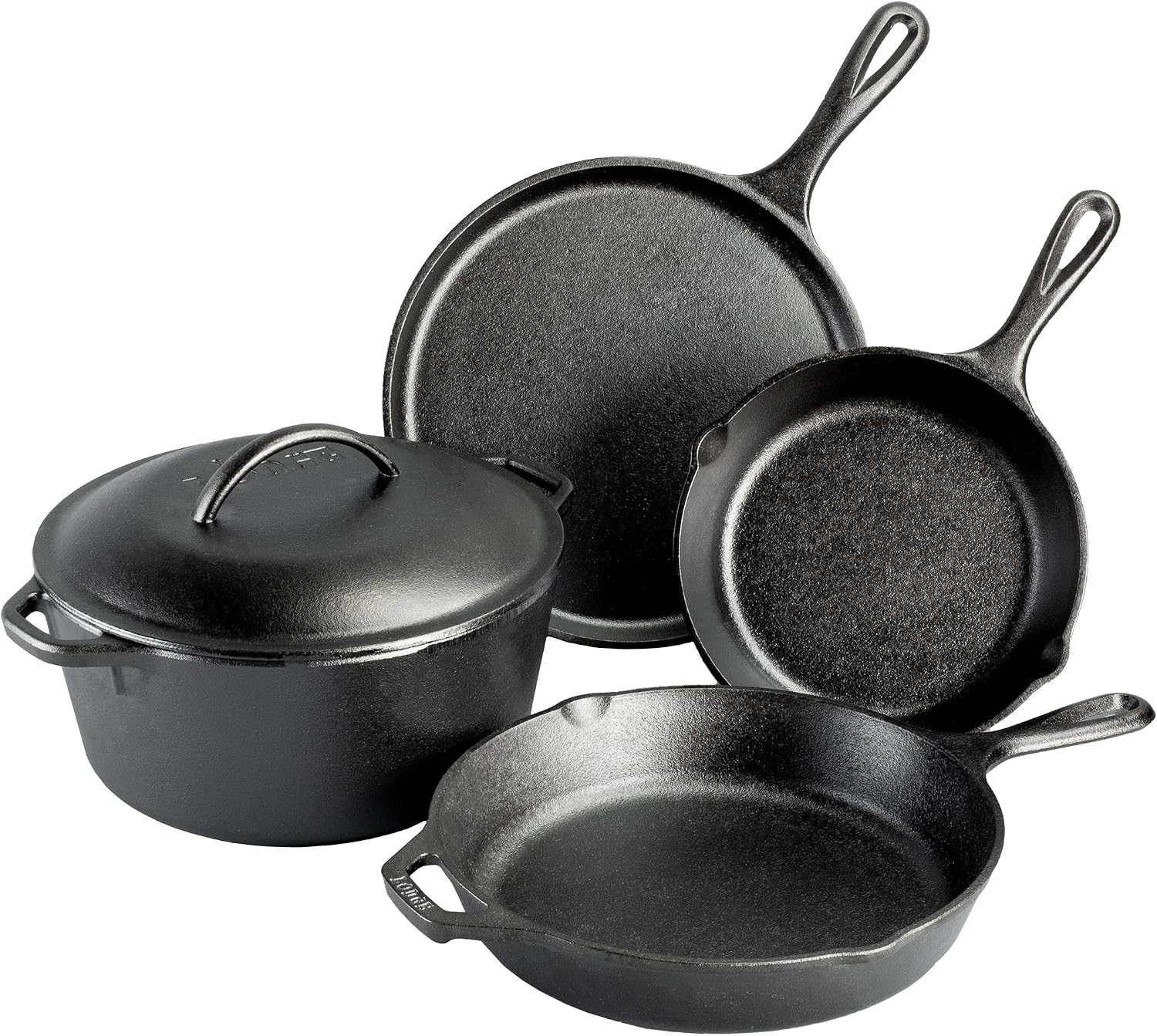
Cookware sets vary widely in piece counts, ranging from focused three-pan skillet trios to comprehensive six-piece culinary bundles. Smaller sets concentrate purely on frying, searing, and baking tasks with graduated pan diameters. Larger bundles often combine deep Dutch ovens, square grill pans, griddles, and matching lids to cover an extensive array of recipes. Evaluating your regular meal preparation routines prevents purchasing redundant pans.
Consider whether your kitchen requires specialized shapes like square grill pans for steak marks or flat round griddles for pancakes. Matching the included components to your favorite recipes ensures every item in the collection sees regular action rather than sitting unused in crowded cabinets. Reviewing package contents carefully guarantees you get practical utility from your investment.
Heat Distribution and Retention Properties
Cast iron is celebrated for its exceptional thermal mass and steady heat retention capabilities. This physical property allows heavy pans to absorb heat gradually and distribute it evenly across the cooking surface. Such thermal stability helps reduce hot spots during high-temperature searing, frying, and baking. Foods brown uniformly because the metal maintains a consistent temperature even when cold ingredients are added.
While traditional iron and enameled variants both retain heat impressively well, they require a short preheating period to reach optimal cooking temperatures. Understanding this heating behavior ensures you allow adequate time for pans to warm up before adding cooking oils or food. This characteristic makes heavy iron ideal for baking crusty artisan bread and achieving deep crusts on meats.
Stovetop and Outdoor Compatibility
Modern cast iron cookware is engineered to perform across a wide spectrum of cooking environments. Most options function seamlessly on traditional gas and electric burners, smooth induction glass surfaces, and inside kitchen ovens. Many traditional seasoned items also withstand direct campfire flames and outdoor grill grates without sustaining damage. This broad compatibility makes iron gear exceptionally adaptable for backyard barbecues and camping trips.
Buyers should verify maximum temperature limits specified for each collection, especially regarding enameled pieces or handles. While raw iron handles endure very high outdoor temperatures safely, certain enameled pots have specific heat thresholds for oven use. Matching your intended cooking heat sources to the manufacturer specifications ensures safe, long-lasting performance across all culinary adventures.
Storage and Nesting Solutions
The substantial weight and dense structure of cast iron require thoughtful kitchen storage planning. Many modern cookware collections feature smart nesting designs and stackable components engineered to save up to seventy-five percent of cabinet space. These space-saving configurations prove especially valuable for small apartments, RVs, and campers where storage footprints are strictly limited.
When storing stacked iron pieces, placing protective pads or soft cloth barriers between pans helps prevent scratching pre-seasoned or enameled surfaces. Assessing your available cabinet capacity before purchasing helps determine whether stackable multi-piece sets or individual hanging skillets best fit your kitchen layout. Proper storage protects your cookware investments while keeping heavy items safely organized and easily accessible for daily meal preparation.
Maintenance and Cleaning Guidelines
Proper cleaning and routine maintenance are essential for preserving the lifespan of cast iron cookware. Traditional seasoned pieces typically require hand washing with warm water, immediate drying on a warm burner, and the application of a very thin coat of natural oil. Avoid automated dishwashers, harsh chemical detergents, and prolonged soaking to prevent rust formation on raw iron surfaces.
Enameled cast iron collections simplify maintenance by eliminating seasoning requirements, relying instead on porcelain coatings that clean easily with gentle dish soap and non-metal utensils. Following manufacturer care instructions ensures your cookware maintains its non-stick qualities and structural integrity over years of regular family cooking. Establishing a consistent post-cooking cleanup routine protects your investment.
Frequently asked questions
Can I use cast iron cookware on modern induction stovetops?
Yes, cast iron is naturally magnetic and performs exceptionally well on smooth surface induction cooktops. The dense material interacts efficiently with magnetic fields to generate steady heat. Users should place pans down gently on glass cooktops to avoid scratching or cracking the surface, as heavy iron items possess considerable weight. Ensuring the bottom of the pan makes full contact with the burner helps optimize energy transfer and cooking consistency across meals.
What is the difference between pre-seasoned and enameled cast iron?
Pre-seasoned cast iron features raw metal baked with natural vegetable oils to create a chemical-free, non-stick surface that improves through continuous use. It handles extremely high heat and metal utensils comfortably. Enameled cast iron is coated with a smooth porcelain layer, eliminating the need for seasoning or oil upkeep. While enameled pieces clean easily and resist acidic foods, they require careful handling with silicone or wooden tools to prevent surface chipping.
How do I prevent my seasoned cast iron pans from rusting?
Preventing rust requires keeping moisture away from raw iron surfaces after cleaning. Always wash seasoned pans by hand using warm water, then dry them completely on a warm stovetop burner to evaporate hidden water traces. Apply a very thin layer of natural vegetable oil across the warm surface with a cloth or paper towel before storing. Never soak seasoned cast iron in water or leave it to air dry naturally.
Are cast iron cookware sets safe for use inside kitchen ovens and outdoor campfires?
Most raw seasoned cast iron pieces are exceptionally rugged, handling high-heat oven baking up to five hundred degrees Fahrenheit or higher, as well as open campfire flames and outdoor grill grates. Enameled cast iron sets are also oven-safe up to specified temperature limits, typically around five hundred degrees. Always check specific manufacturer guidelines regarding temperature ratings and handle construction before exposing enameled pots or specialized lids to direct open campfires.
Can I safely use metal utensils with my cast iron cookware during meal preparation?
Traditional pre-seasoned cast iron cookware is exceptionally robust, easily accommodating metal spatulas, spoons, and whisks during cooking without damaging the hardened oil finish. Over time, metal tools may even help smooth out the seasoned cooking surface further. However, enameled cast iron requires a different approach; users should strictly employ wooden, silicone, or plastic utensils on porcelain enamel surfaces to prevent scratching, chipping, or permanently marring the smooth protective coating.