Appliances · Buying Guide
Best Cast Iron and Ceramic Electric Skillets for Home Cooking
Electric skillets offer a convenient way to prepare family meals, handle breakfasts, and manage one-pan dinners without tying up a regular stove burner. These versatile appliances combine built-in heating elements with spacious cooking surfaces, making them a practical choice for home cooks who need extra room or reliable portable cooking options for daily meal preparation.
When selecting an electric skillet, features like surface material, temperature control precision, and overall capacity determine how well the appliance fits everyday routines. Options ranging from compact family models to extra-large units provide distinct advantages for searing, simmering, and serving meals directly at the table with minimal cleanup required afterward.
As an Amazon Associate, StacyLaughs earns from qualifying purchases.
Buying guide
Cooking Surface Materials
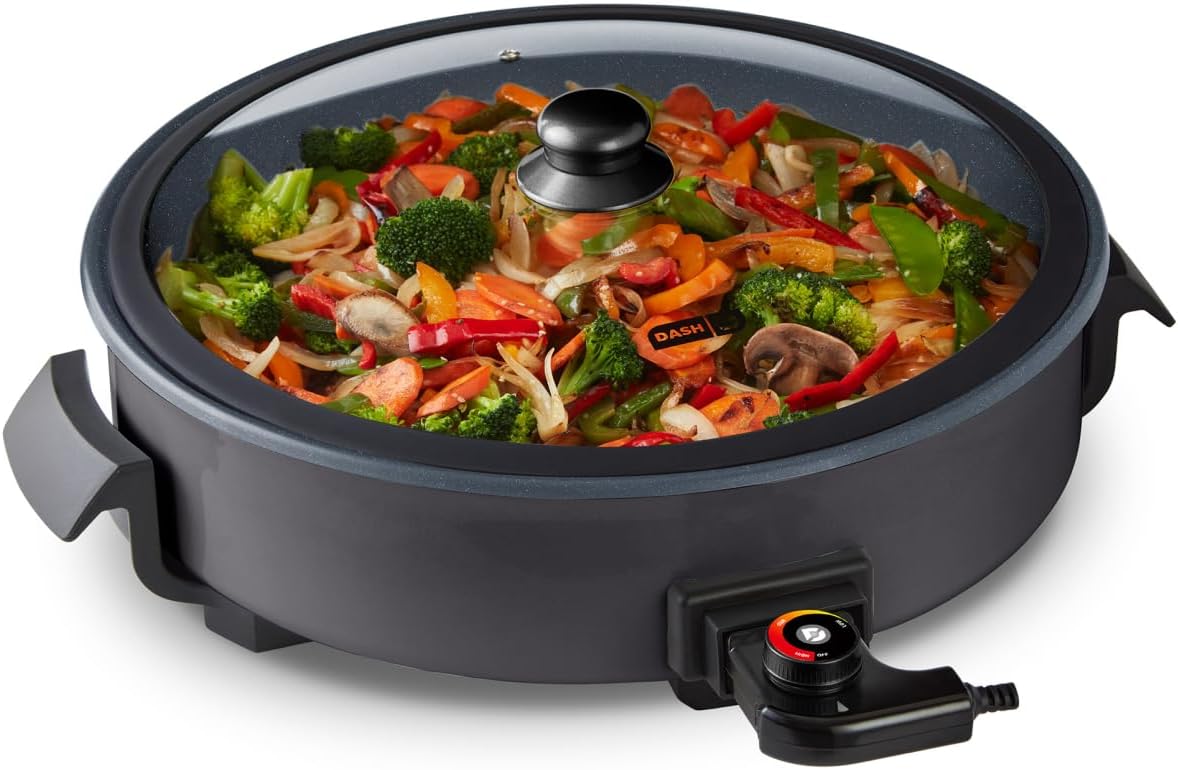
Choosing the right cooking surface material affects heat distribution and food release. Ceramic nonstick surfaces allow food to slide off smoothly without sticking, reducing the need for excess oils. Many models use cast aluminum or forged iron bases that provide durability, resisting warping under high heat to keep your pan flat and stable across the element.
Maintenance also depends on the surface coating. PFAS-free ceramic options handle high temperatures safely while maintaining scratch-resistant properties. Preserving these surfaces often requires gentle hand washing or specific dishwasher placement depending on manufacturer guidelines. Always review the cleaning instructions to protect your skillet's lifespan during daily meal preparation routines at home.
Capacity and Sizing
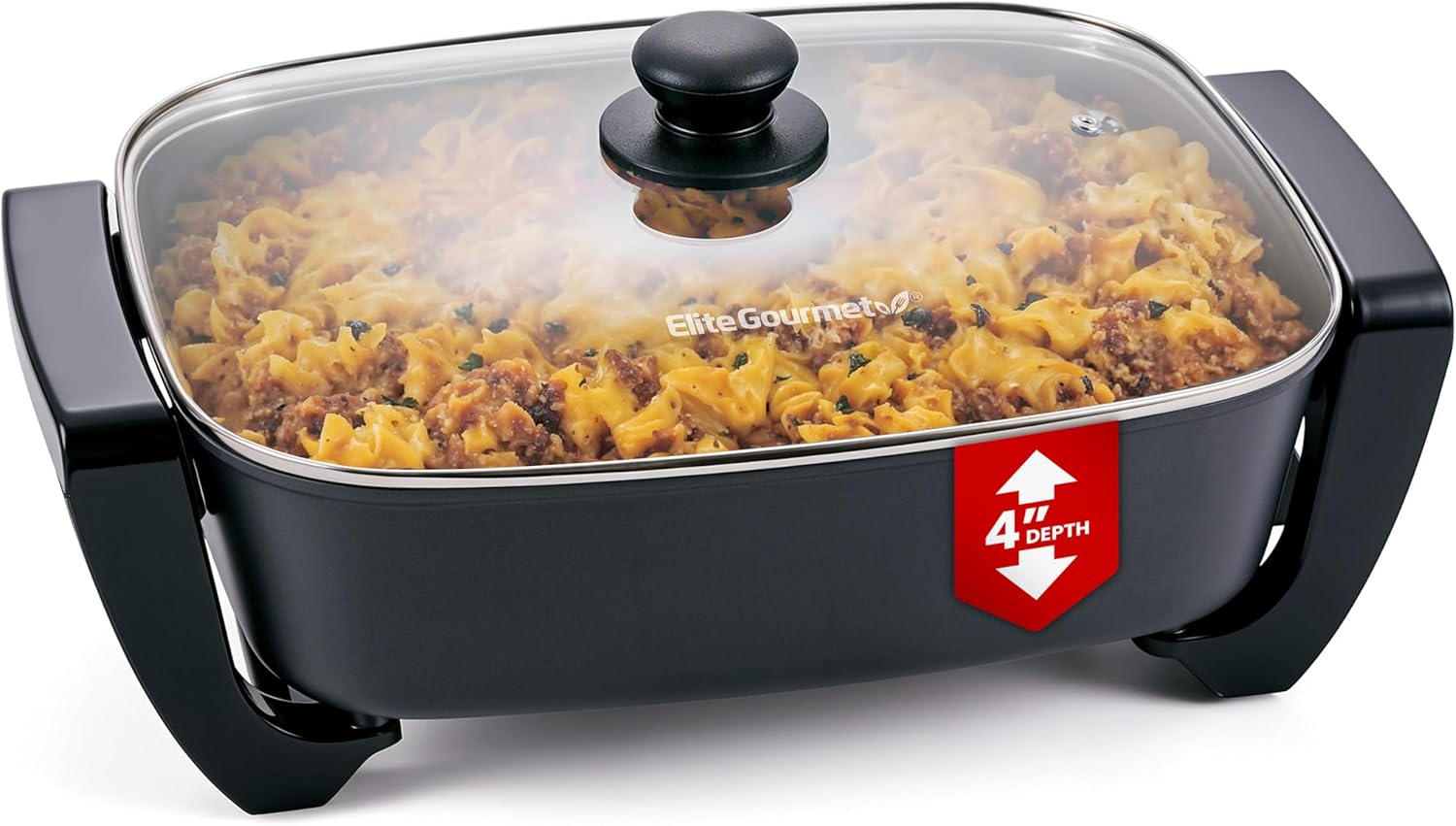
Skillet capacity dictates how much food you can prepare in a single batch. Models range from compact 6-quart pans suitable for smaller households to extra-large 16-inch units holding over nine quarts. A larger surface area lets you cook multiple ingredients simultaneously, preventing overcrowding when preparing stir-fries, pancakes, or large breakfast spreads for guests.
However, larger capacities require more storage space in your kitchen cabinets and take up a greater footprint on countertops. Consider your typical meal sizes and available storage before selecting an extra-deep or wide skillet. Balancing physical dimensions with your household cooking volume ensures the appliance remains practical for daily use.
Temperature Control Options
Precise temperature control is essential for achieving consistent cooking results across various recipes. Electric skillets typically feature removable probes equipped with adjustable dials ranging from low warming levels to high searing temperatures around 400 or 450 degrees Fahrenheit. Embedded heating elements help eliminate hot spots, ensuring uniform heat distribution throughout the entire base.
Having multiple temperature settings allows you to transition smoothly from slow simmering stews to rapid frying tasks. When selecting an appliance, check the control mechanism design. Removable probes make cleaning and storage much easier, while fixed controls offer straightforward operation without extra parts to detach before washing the main pan body.
Lid Design and Visibility
Glass lids play a vital role in trapping heat, moisture, and flavor during extended simmering or braising sessions. Tempered glass construction withstands high cooking temperatures and steam exposure without cracking. A clear lid allows you to monitor cooking progress visually without lifting the cover, preventing heat loss and maintaining stable internal temperatures.
Handle design on the lid is equally important for safe operation. Stay-cool knobs or handles prevent accidental burns when checking food. Additionally, lids fitted tightly to the rim help contain splatters, keeping your surrounding countertops cleaner during messy frying or saucy stewing tasks.
Cleaning and Maintenance
Ease of cleanup often determines how frequently you use your electric skillet. Many modern models feature fully immersible bodies once the electronic temperature probe is detached. This allows you to wash the pan in the sink or place compatible models on the top rack of a dishwasher for effortless post-meal maintenance.
Nonstick coatings further simplify washing by preventing burned food from adhering permanently to the base. Always follow manufacturer guidelines regarding cleaning tools, avoiding abrasive pads that could scratch ceramic surfaces. Proper maintenance protects the nonstick coating and extends the operational lifespan of your electric skillet.
Storage and Portability
Electric skillets offer a portable cooking solution that works anywhere with an electrical outlet, freeing up stove burners during busy holiday cooking sessions. However, their wide frames and bulky handles require dedicated storage space in cabinets or pantries. Check your available storage dimensions before purchasing larger 16-inch units.
Removable temperature probes and stackable lids help make storage more compact. Side handles also improve portability, allowing you to carry the skillet safely from the kitchen counter directly to the dining table for family-style serving. Selecting a model that balances size with easy handling ensures convenient everyday use.
Frequently asked questions
Can I put my electric skillet in the dishwasher?
Whether you can put your electric skillet in the dishwasher depends entirely on the specific manufacturer guidelines for that model. Many electric skillets are designed to be fully immersible in water for sink cleaning once the electrical temperature control probe is completely detached. Some specific models also permit top-rack dishwasher placement for the main pan body and lid. However, you must always remove the probe beforehand and verify instructions to prevent damaging electrical components or ruining nonstick coatings.
How do I clean a ceramic nonstick electric skillet without damaging the surface?
Cleaning a ceramic nonstick electric skillet safely requires mild dish soap, warm water, and a non-abrasive sponge or cloth. Never use steel wool, harsh scouring pads, or abrasive cleaning powders, as these materials can scratch and degrade the ceramic coating over time. Allow the skillet to cool down completely before washing to prevent thermal shock warping. For stubborn stuck-on food, let the pan soak in warm soapy water for a short period before gently wiping the surface clean.
What can I cook in an extra-large electric skillet?
An extra-large electric skillet provides ample versatility for cooking a wide variety of meals for families and gatherings. You can use it to roast meats, fry large batches of chicken, sauté vegetables, simmer chili, bake casseroles, or prepare breakfast spreads including pancakes, eggs, and bacon simultaneously. The spacious surface area and deep sidewalls also make these appliances effective for tossing pasta dishes, making stir-fries, or serving food directly at the table during buffet-style entertaining events.
Do electric skillets require a lot of counter space?
Electric skillets vary significantly in size, with standard models taking up moderate counter space and extra-large 16-inch units requiring a substantial footprint. Because of their wide handles, glass lids, and broad heating bases, they occupy more room than a standard frying pan. Before purchasing a larger model, measure your kitchen counter and cabinet storage space to ensure you have adequate room for both cooking safely and storing the appliance between uses.
Why is precise temperature control important in an electric skillet?
Precise temperature control is vital because it prevents food from burning or cooking unevenly across a broad heating surface. Adjustable temperature dials let you dial in exact heat levels ranging from low warming settings to high searing temperatures, accommodating different cooking techniques like simmering, frying, or baking. An embedded heating element works alongside the control probe to eliminate hot spots, ensuring consistent heat distribution so your meals cook uniformly without requiring constant manual adjustments.