Appliances · Buying Guide
Best Cast Iron Enamel Skillet Options for Everyday Cooking
Finding the right cookware for searing meats, frying eggs, and baking delicious meals depends directly on matching your specific stove type and daily cooking style. Enameled cast iron skillets combine heavy-duty heat retention with smooth porcelain or ceramic surfaces that eliminate traditional seasoning steps entirely, offering reliable thermal performance across various household kitchen tasks.
These versatile pans transition smoothly from standard stovetop burners to hot ovens while handling everything from morning breakfast platters to evening skillet cookies, braised dishes, and roasted vegetables. Reviewing individual material specifications helps match the right pan size, total weight, and handle configuration to your specific kitchen setup without any unnecessary guesswork.
As an Amazon Associate, StacyLaughs earns from qualifying purchases.
Buying guide
Matching Skillet Size to Cooking Needs
Choosing the correct skillet diameter ensures you can prepare enough food without overcrowding the cooking surface. Smaller ten-inch models work efficiently for single portions, fried eggs, and quick breakfast sides. Measuring your burner dimensions and storage space helps narrow down whether a compact model or an expansive cooking surface fits your daily routine best.
Larger eleven or twelve-inch pans accommodate family-sized roasts, whole chickens, and multi-ingredient stir-fries with room to spare. Consider your typical meal volume before purchasing to avoid buying a pan that feels too restrictive or proves excessively heavy when filled with heavy ingredients. Matching dimensions to your household ensures comfortable use.
Understanding Enamel Coating Benefits
Enameled cast iron provides the exceptional thermal retention of traditional iron without requiring tedious seasoning maintenance. The smooth porcelain or ceramic interior surface prevents food from sticking naturally while remaining completely unreactive to acidic ingredients like tomatoes or citrus juices. This coating ensures that metallic flavors do not leach into your delicate recipes.
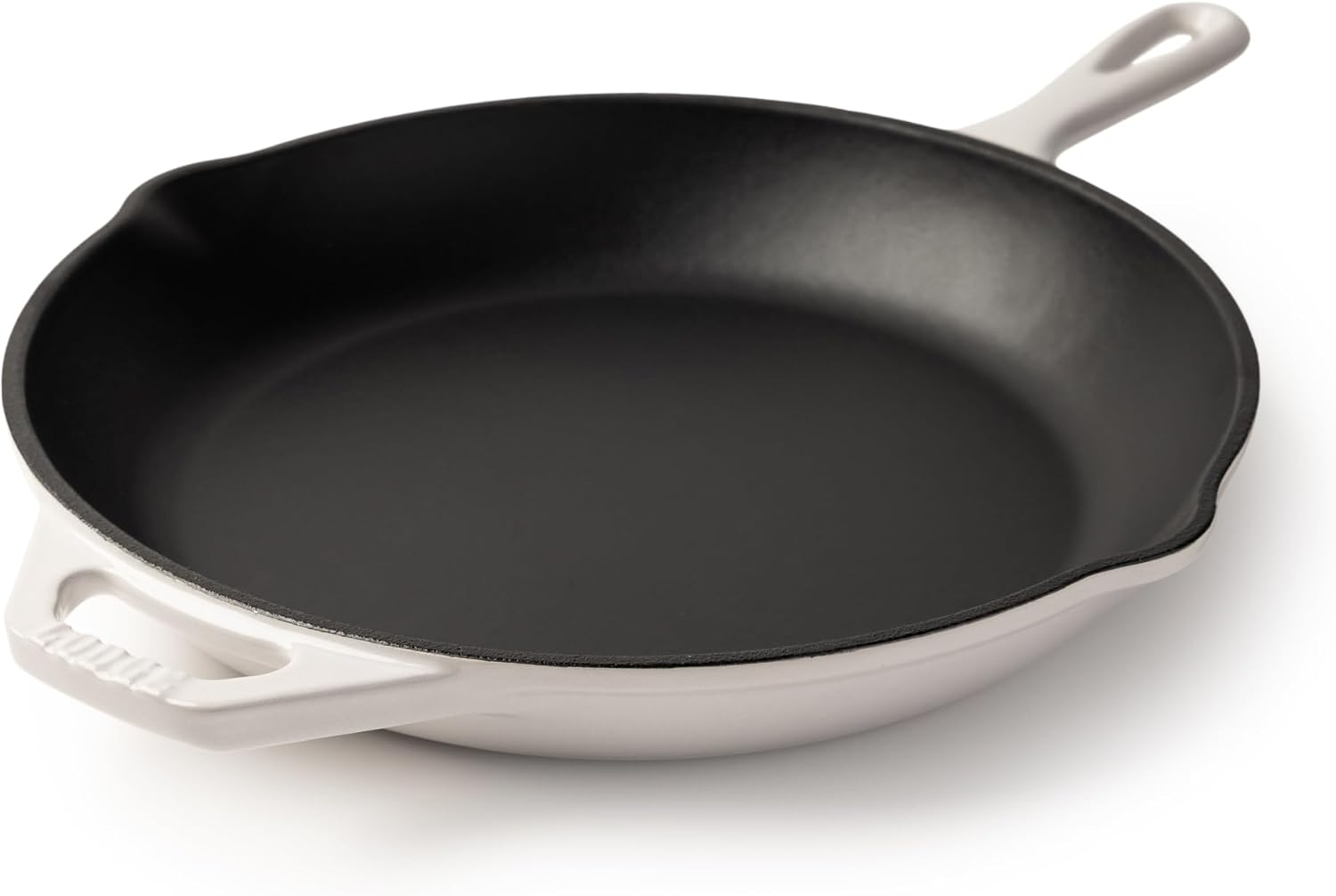
Choosing between black matte enamel and smooth colored porcelain interiors depends on your preferred searing and cleaning habits. Matte surfaces assist with developing rich crusts on meats, while glossy interiors simplify everyday washing. Reviewing these interior coating specifications helps you select cookware that matches your culinary expectations and maintenance preferences over time.
Cooktop and Oven Compatibility
Before purchasing any enameled skillet, verify that its base matches your specific kitchen stove type. While many options function seamlessly across gas, electric, and ceramic cooktops, induction compatibility varies significantly depending on the exact manufacturing materials used. Checking appliance symbols prevents compatibility issues in your kitchen setup.
Oven safety ratings also dictate how versatile your cookware will be for baking cornbread, skillet cookies, or roasted meats. Many models withstand temperatures up to five hundred degrees Fahrenheit, allowing smooth transitions from burners straight into hot ovens. Always confirm maximum temperature limits before undertaking high-heat baking tasks.
Weight and Handle Ergonomics
Cast iron cookware inherently carries substantial weight, often ranging from five to seven pounds before adding any food. Evaluating total pan weight ensures you can lift and transport the filled skillet safely between burners, oven racks, and dining tables without strain. Dual handles or helper grips make heavy lifting much more manageable.
Handle design significantly influences comfort during daily cooking tasks and transport. Wide cast iron handles provide sturdy gripping points, while removable silicone covers offer heat protection during stovetop use. Reviewing handle configurations helps you choose a skillet that feels balanced and secure in your hands.
Pour Spouts and Drainage Features
Pour spouts integrated into the rim of a cast iron skillet add notable convenience when draining excess cooking fats or pouring pan sauces. These small channels prevent liquids from spilling over the side and creating messes on your stovetop or countertops. Pans equipped with dual spouts offer ambidextrous pouring ease.
While pour spouts increase functionality for liquids, traditional round rims without spouts provide a fully enclosed cooking perimeter for baking bread or retaining batters. Consider whether you frequently drain oils or prefer a continuous rim before selecting a specific skillet design for your kitchen.
Maintenance and Cleaning Guidelines
Proper maintenance preserves the longevity and appearance of your enameled cast iron skillet over years of daily use. While some modern models feature dishwasher-safe construction for effortless cleanup, many traditional enameled pans require gentle hand washing with mild soap and warm water to protect exterior finishes.
Avoiding abrasive scrubbers prevents scratching the smooth porcelain or ceramic glaze. Additionally, certain unglazed rims or specific multi-piece sets may require periodic oil seasoning to prevent rust. Reviewing manufacturer care instructions ensures your cookware remains in prime condition for every meal.
Frequently asked questions
Do enameled cast iron skillets require seasoning before use?
Unlike traditional raw cast iron cookware, enameled cast iron skillets feature a smooth porcelain, glass, or ceramic coating that seals the metal completely. This glazed surface means you do not need to season the cooking area with oil before your first use or after regular cleaning routines. However, some specific manufacturers recommend applying a light coat of cooking oil to exposed rims or unglazed edges to prevent rust over time. Always check the specific care manual provided with your cookware model to follow the manufacturer's exact maintenance guidance.
Can I use metal utensils on an enameled cast iron skillet?
Using metal utensils on enameled cast iron surfaces is generally discouraged because sharp edges can scratch, chip, or dull the porcelain or ceramic glaze over extended periods of cooking. To protect the smooth cooking surface and maintain its longevity, it is best to use wooden, silicone, or heat-resistant plastic utensils when stirring, flipping, or serving food. If accidental contact with metal occurs, it rarely ruins the pan immediately, but repeated abrasive scraping will degrade the protective enamel finish, reducing its non-stick qualities and visual appeal.
Are enameled cast iron skillets safe to use inside a hot oven?
Most enameled cast iron skillets are oven safe, making them exceptional tools for baking cornbread, roasting meats, or finishing skillet cookies directly after stovetop searing. However, you must always check the manufacturer's specified maximum temperature limit, which frequently sits around five hundred degrees Fahrenheit for standard models. Additionally, if your skillet includes attached silicone handle covers or non-heat-resistant accessories, you must remove them before placing the pan into a hot oven to prevent melting or damage to the attachments.
How should I clean my enameled cast iron skillet after cooking?
Cleaning methods depend entirely on the specific manufacturer guidelines listed for your skillet model. Some enameled cast iron pans feature dishwasher-safe construction for convenient automated maintenance, while others explicitly require manual hand washing using warm water, mild dish soap, and a non-abrasive sponge. Avoid using harsh steel wool or abrasive scouring powders, as these harsh materials can permanently scratch and ruin the glossy enamel glaze. For stubborn stuck-on food residues, soaking the cooled pan in warm soapy water helps loosen debris safely without damaging the protective coating.
Do enameled cast iron pans work on induction cooktops?
Because enameled cast iron pans feature a heavy iron core, many models are fully compatible with induction cooktops, along with traditional gas, electric, and ceramic stoves. The magnetic properties of the cast iron material allow induction burners to heat the pan efficiently and evenly. However, compatibility is not universal across every single brand or multi-piece set on the market. You should always verify the specific appliance compatibility details provided in the product specifications to ensure the skillet will function correctly on your specific cooktop surface.