Appliances · Buying Guide
Best Cast Iron Frying Pan Pizza Cookware for Crispy Homemade Crusts
Baking pizza in heavy iron equipment creates a wonderfully crisp crust by utilizing robust heat retention and uniform thermal distribution. These versatile pans handle high cooking temperatures effortlessly on standard stovetops, inside home ovens, and directly over open campfires or outdoor grills. Selecting proper iron cookware elevates homemade baking results significantly across multiple savory recipes.
Choosing the ideal cast iron skillet or pizza pan depends closely on your oven interior dimensions, preferred crust thickness, and desired cooking surface area. Reviewing these distinct product selections helps match specific baking styles and meal sizes with exceptionally durable iron construction designed for lasting household utility, ensuring reliable daily performance for enthusiastic home cooks everywhere.
As an Amazon Associate, StacyLaughs earns from qualifying purchases.
Buying guide
Pan Diameter and Oven Fit
Measuring your oven interior before purchasing a cast iron pizza pan prevents frustrating spatial conflicts during high-temperature baking sessions. Cast iron cookware ranges from compact ten-inch skillets to expansive sixteen-inch round griddles, each demanding specific clearance considerations. Confirming interior oven rack dimensions ensures the selected pan clears heating elements and side walls entirely, preventing jammed cookware.
Larger pans require careful physical clearance checks against closed oven doors and inner side walls. Selecting the correct diameter guarantees safe placement and unhindered thermal circulation throughout the baking cycle. Taking precise measurements beforehand ensures your chosen iron pan fits comfortably and performs reliably without risking accidental burns or spills.
Pre-Seasoned Versus Bare Iron Surfaces
Factory pre-seasoned cast iron pizza pans arrive ready for immediate use, featuring natural non-stick properties right out of the box. This initial coating helps prevent sticking during early baking attempts. However, bare iron pans require thorough cleaning, oil application, and oven baking sessions before their first official pizza recipe.
Understanding surface preparation differences helps you choose between immediate convenience and custom seasoning control. Over time, both types benefit from consistent oil maintenance and gentle hand washing. Establishing a proper seasoning routine prevents unwanted rust formation and preserves the cooking surface integrity across years of heavy weekly meal preparation.
Handle Design and Maneuverability
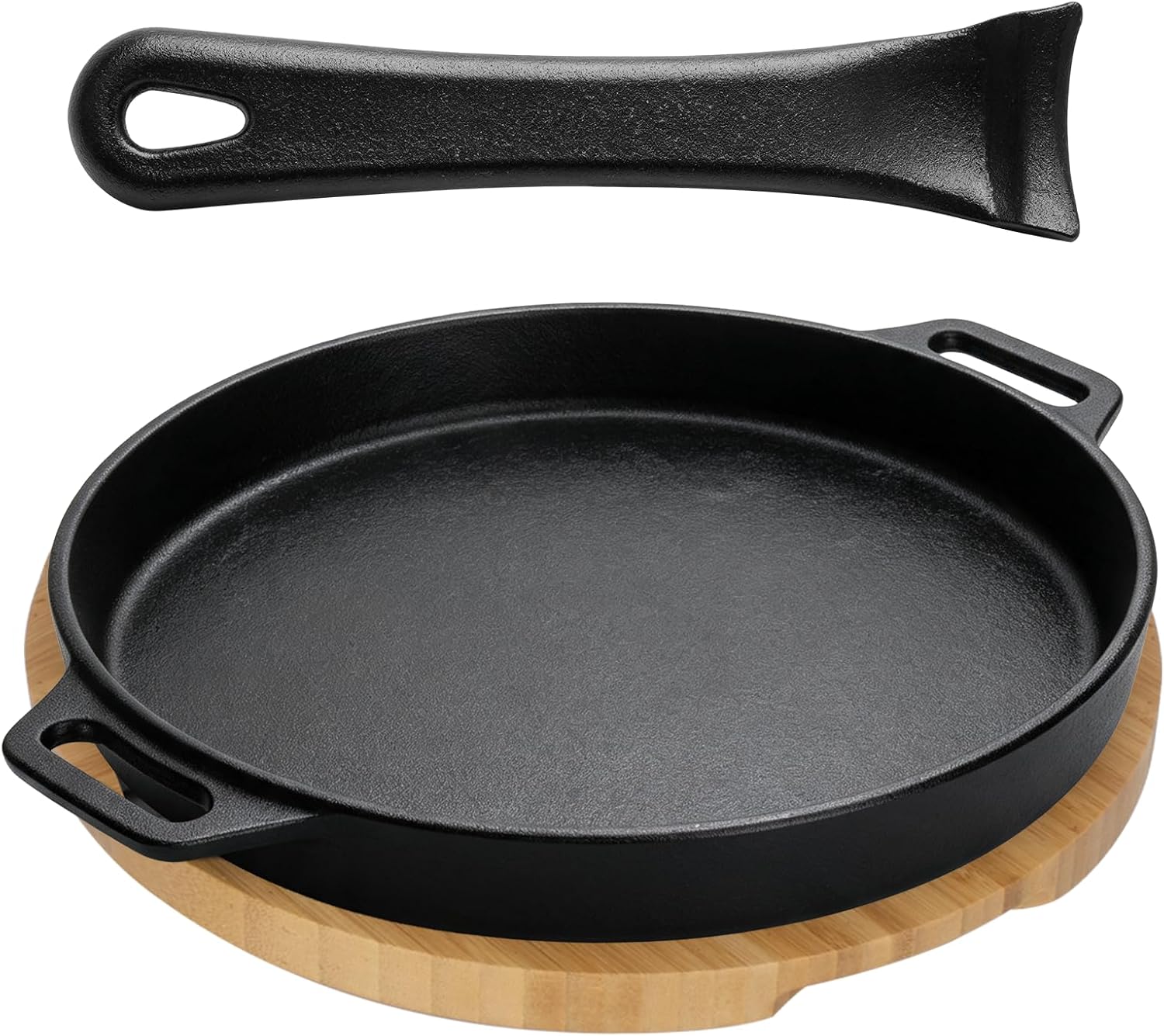
Heavy cast iron cookware demands secure handling methods, especially when transferring scorching pans between ovens, grills, and dining tables. Integral dual handles cast directly into the pan body offer a seamless, weld-free structure for maximum stability. Other models feature removable handles or protective silicone grips to enhance user comfort during hot transfers.
Evaluating your lifting comfort helps prevent accidental drops or burns in busy kitchen environments. Fixed handles provide permanent strength but require thick protective mitts. Detachable handles simplify storage and oven lifting, while silicone grips shield hands from high thermal conductivity during serving tasks.
Crust Thickness and Edge Depth
The depth of your cast iron pan dictates the style of pizza you can successfully bake at home. Flat pans with minimal edge height excel at producing thin, ultra-crisp crusts with charred edges. Conversely, deeper pans featuring taller walls accommodate thick-dish pizzas, rich lasagnas, and savory casseroles with ease.
Matching pan depth to your preferred recipes ensures optimal ingredient containment and baking performance. Deep-dish designs hold abundant cheese and sauce without spilling over oven racks, while shallow griddles distribute direct radiant heat swiftly across thin dough. Consider your culinary preferences carefully before selecting wall heights.
Heat Source Compatibility
Cast iron pans offer remarkable versatility across a wide spectrum of domestic and outdoor cooking appliances. Most models function seamlessly on gas, electric, and smooth induction stovetops, as well as inside conventional ovens. Selecting a pan compatible with outdoor grills, broilers, or open campfires expands your cooking horizons significantly.
Checking manufacturer compatibility guidelines ensures your cookware withstands targeted temperatures without structural damage. High heat retention allows cast iron to maintain steady thermal energy whether resting on a campfire grate or a kitchen burner. Verify your preferred heat sources before finalizing your cookware investment.
Maintenance and Cleaning Routines
Proper maintenance preserves the longevity and performance of cast iron pizza pans across years of regular use. Cleaning generally involves rinsing with hot water, wiping with a soft sponge, and drying thoroughly to prevent rust. Avoiding harsh dishwasher cycles and abrasive steel wool protects the seasoned cooking surface from premature degradation.
Applying a thin layer of fresh oil after drying keeps the iron protected between baking sessions. For stubborn food remnants, scrubbing with coarse salt offers an effective natural cleaning method. Following these straightforward maintenance steps ensures your cast iron cookware remains dependable and naturally non-stick.
Frequently asked questions
Can I use soap to clean my cast iron pizza pan?
Manufacturer care instructions typically advise against using traditional dish soap on cast iron cookware to protect the seasoned surface. Instead, cleaning involves rinsing the pan with hot water and wiping food remnants away using a soft sponge. If stubborn food particles remain stuck to the iron, scrubbing gently with coarse salt provides an effective abrasive alternative. After washing, drying the pan completely and rubbing a thin layer of fresh oil across the surface prevents unwanted rust formation and maintains the natural non-stick qualities over time.
How do I prevent my cast iron pizza pan from rusting?
Preventing rust on cast iron cookware requires thorough drying immediately after every wash. Leaving moisture on the metal surface or allowing it to air dry naturally invites oxidation. Once the pan is completely dry, applying a very thin coat of cooking oil helps seal the iron pores against moisture in the air. Storing the pan in a dry environment and re-seasoning the metal periodically ensures long-term durability and keeps your pizza baking surface smooth, clean, and ready for future culinary tasks.
Can cast iron pizza pans be used on outdoor grills and campfires?
Cast iron pizza pans excel in outdoor cooking environments due to their rugged material construction and high thermal tolerance. Many models are engineered to withstand direct flames, making them fully compatible with outdoor charcoal grills, gas grills, and open campfire flames. When cooking outdoors, the heavy iron retains and distributes heat evenly, allowing you to achieve authentic charred crusts. Always use thick protective mitts when moving hot pans between campfire grates and outdoor dining tables to ensure safety during handling.
What is the advantage of a pre-seasoned cast iron pan?
Pre-seasoned cast iron pizza pans arrive from the manufacturer with an initial baked-on oil layer that provides immediate natural non-stick properties right out of the box. This factory treatment saves users the initial time and effort required to season bare iron from scratch. While unseasoned pans demand an upfront seasoning cycle in the oven before their first use, pre-seasoned options let you start baking pizza immediately. Continuing to oil and maintain the surface ensures performance improves steadily with continued use over time.
How do I choose the correct size cast iron pizza pan?
Choosing the correct size cast iron pizza pan requires measuring your oven interior dimensions and checking oven rack clearances to ensure unhindered fit. Pans range from compact ten-inch skillets suited for individual portions or small ovens to large sixteen-inch griddles designed for family-sized meals. Consider your typical baking volume and whether you prefer thin, crispy crusts or deep-dish styles. Matching the pan diameter and edge height to your specific cooking habits guarantees successful baking without spatial restrictions or handling difficulties.