Appliances · Buying Guide
Best Cast Iron Frying Pan Options for Everyday Searing and Baking
Choosing the best cast iron frying pan for your kitchen depends heavily on your daily cooking style, typical meal sizes, and preferred stovetop setup. These traditional iron tools provide exceptional heat retention and heavy-duty durability, making them exceptionally reliable for everything from high-heat meat searing to oven baking and rugged campfire cooking.
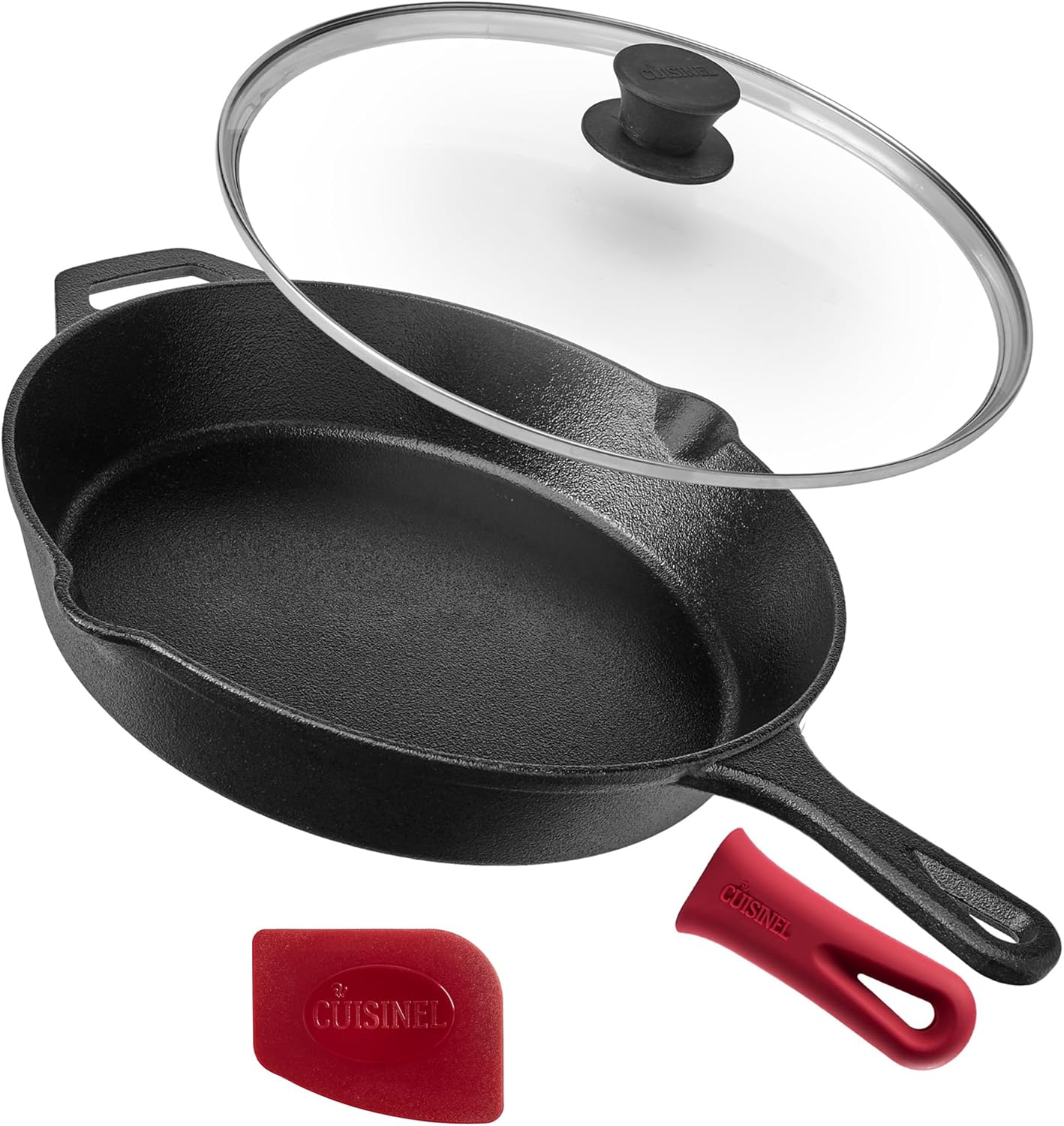
Various models offer specific design attributes such as dual loop helper handles, tempered glass lids, or finely machined smooth cooking surfaces for enhanced food release. Reviewing how these distinct physical traits align with your household cooking routines helps you select a dependable skillet that performs consistently across multiple indoor and outdoor heat sources.
As an Amazon Associate, StacyLaughs earns from qualifying purchases.
Buying guide
Material Composition and Safety
Traditional cast iron cookware relies on simple, natural components consisting primarily of pure iron and vegetable oil. When shopping for a reliable frying pan, verifying that the manufacturing process is completely free of synthetic coatings like PFOA and PTFE ensures you can cook with confidence. Traditional seasoning builds naturally over time, developing a dependable cooking surface that improves with repeated use.
Manufacturers apply initial vegetable oil pre-seasoning to protect the raw metal during shipping and provide immediate usability. Following manufacturer care instructions helps maintain this protective layer without harsh chemical intervention. Choosing a pure iron skillet guarantees a traditional cooking experience free from artificial additives, supporting high-temperature recipes safely across multiple stovetop types.
Size and Cooking Capacity
Selecting the correct pan diameter directly influences how effectively you can prepare meals for your household. Smaller 10.25-inch skillets suit single portions, morning eggs, and quick side dishes. In contrast, 12-inch options provide ample room for family-sized steaks, whole chicken pieces, and baked cornbread without overcrowding the cooking surface during high-heat searing sessions.
Oversized 17-inch models cater specifically to crowd-sized batch cooking and large family gatherings where high volume is essential. Evaluating your typical meal sizes prevents purchasing a skillet that is either too cramped for multiple ingredients or too massive to handle comfortably on standard stovetops. Matching the physical diameter to your daily menu ensures efficient heat utilization.
Surface Finish and Texture
The texture of the cooking surface varies significantly between traditional textured iron and modern machined smooth finishes. Standard textured cast iron offers a rustic finish that holds seasoning securely. Meanwhile, meticulously polished smooth surfaces minimize food sticking right away, offering a different tactile experience when flipping delicate items like eggs or pancakes.
Deciding between a textured or smooth finish depends entirely on personal preference and cleaning expectations. Smooth surfaces provide effortless food release and sleek aesthetics, while traditional textured pans build up non-stick qualities progressively over months of regular cooking. Reviewing these surface traits helps align your purchase with your preferred cooking style.
Handle Design and Maneuverability
Handling heavy cast iron requires thoughtful consideration of handle configurations, overall lengths, and grip additions. Standard teardrop handles offer comfortable single-handed control for smaller pans, while extended stay-cool handles help keep your grip secure away from high heat zones. Dual loop handles distribute heavy weight evenly for safe lifting of massive pans across busy kitchens.
Some models also include silicone grip covers to protect hands during active stovetop cooking, though auxiliary oven mitts remain necessary during high-temperature baking sessions. Evaluating how you lift and transport your cookware ensures you select a handle style that matches your physical strength and kitchen storage layout without causing strain.
Heat Retention and Stovetop Compatibility
Cast iron is celebrated for its exceptional heat retention, maintaining steady cooking temperatures across gas, electric coil, and smooth glass or induction stovetops. This heavy thermal mass ensures that adding cold ingredients does not cause sudden temperature drops, which is vital for achieving deep, even sears on steaks, chops, and vegetables during busy meal preparation.
Many versatile skillets are also rated safe for high-temperature oven baking, outdoor grills, and open campfires up to 500 degrees Fahrenheit. Verifying your primary cooking environment ensures the pan you choose transitions smoothly from indoor ranges to rugged outdoor adventures without any structural compromise, warping, or overall performance loss.
Maintenance and Cleaning Requirements
Proper maintenance is essential for preserving the longevity and natural non-stick seasoning of cast iron cookware over years of daily use. Because these heavy metal pans are never dishwasher safe, owners must commit to hand washing them in warm water using mild soap, followed by immediate and thorough drying to prevent rust and moisture damage.
Applying a thin protective coating of vegetable oil after every single wash helps maintain the seasoned finish and protects the raw iron from oxidation. Following these straightforward care routines ensures your skillet remains durable, highly functional, and ready to perform flawlessly across countless home cooking sessions and family meals.
Frequently asked questions
Can I put cast iron frying pans in the dishwasher?
Cast iron frying pans should never be placed in an automatic dishwasher. Harsh dishwasher detergents and prolonged exposure to standing water strip away the natural vegetable oil seasoning and cause the raw iron to oxidize and rust. Instead, manufacturers recommend washing cast iron by hand in warm water using a sponge or mild dish soap when necessary. Always allow the skillet to cool completely before cleaning, dry it thoroughly on low heat on your stovetop, and wipe a thin layer of vegetable oil across the surface to maintain its protective finish.
What heat sources are compatible with cast iron skillets?
Cast iron skillets offer exceptional versatility across a wide variety of indoor and outdoor cooking devices. They perform reliably on standard gas burners, electric coils, and smooth glass or induction stovetops. Furthermore, most cast iron pans are safe for high-temperature oven baking up to 500 degrees Fahrenheit. Many heavy-duty models also transition seamlessly to outdoor grills, open campfires, and braising setups. Always check specific manufacturer guidelines regarding maximum temperature limits and stovetop compatibility to ensure safe operation during high-heat cooking and baking adventures.
Do cast iron pans come pre-seasoned or ready to use?
Most modern cast iron frying pans arrive pre-seasoned with natural vegetable oil directly from the manufacturer. This initial seasoning layer provides a usable finish right out of the box without requiring complex home seasoning before your first meal. However, the non-stick performance naturally improves over time the more frequently you cook with the pan. To maintain this finish, routine post-wash oil conditioning is recommended. This simple care habit preserves the iron, prevents sticking, and enhances the overall cooking experience with every subsequent use.
How do I clean and maintain a cast iron skillet?
Cleaning a cast iron skillet requires a few straightforward steps to protect the metal and seasoning. Allow the pan to cool completely after cooking, then wash it by hand using warm water and a regular dishwashing liquid or sponge. Avoid soaking the skillet in water for extended periods. After washing, dry the pan completely by hand or by heating it briefly on a warm stovetop to evaporate remaining moisture. Finally, rub a very light coating of vegetable oil over the entire surface before storing it in a dry location.
Why do some cast iron pans have smooth surfaces while others are textured?
The difference in surface texture comes down to manufacturing techniques and finishing processes. Standard cast iron pans often feature a slightly textured, rustic finish straight from the mold, which holds initial seasoning securely. In contrast, premium models are meticulously polished to create a flawlessly machined smooth cooking surface. This smooth finish minimizes food sticking immediately and offers a refined tactile experience when cooking delicate items. Both styles develop better non-stick properties over time with proper use, oil conditioning, and regular cooking habits.