Appliances · Buying Guide
Best Cast Iron Griddle Skillet Options for Every Kitchen
Selecting a cast iron griddle skillet can completely transform how you cook everyday meals, ranging from morning breakfast pancakes to weekend seared steaks. These versatile cooking tools provide exceptional heat retention, sturdy construction, and reliable durability across traditional stovetops, modern ovens, outdoor grills, and open campfires.
Because every kitchen layout and cooking style is unique, choosing the right shape and size ensures dependable performance for daily recipes and family meals. Whether you need a compact round pan for warm tortillas, a square profile for high heat, or a large double-burner plate for large batches, reviewing core specifications helps you select a lasting kitchen essential.
As an Amazon Associate, StacyLaughs earns from qualifying purchases.
Buying guide
Choosing the Right Shape for Your Meals
Selecting the proper shape for your cast iron griddle skillet depends heavily on the types of food you prepare most often. Round options fit neatly onto single burners and suit circular items like tortillas or pancakes. Square models maximize corner space, giving you slightly more usable surface area for sandwiches and eggs without crowding your cooktop burner layout.
Rectangular double-burner units span two heating elements to handle large family breakfasts all at once. Consider your everyday menu before deciding on a specific profile. Matching the shape to your typical recipes prevents overcrowding and ensures that heat transfers efficiently from your burner to the iron surface every time you cook.
Understanding Weight and Handling Practicalities
Cast iron cookware is renowned for its solid mass, which directly influences how you lift, clean, and store your skillet. Smaller round griddles typically weigh around four to five pounds, making them relatively manageable for daily stovetop use. Larger square or double-burner variations can weigh up to nine pounds or more, demanding extra lifting strength.
Think about your physical comfort when evaluating heavier pans, especially if you regularly move them between hot ovens and high stovetops. Choosing a model with a silicone handle holder or balanced side grips can make managing the weight much easier during busy cooking routines, heavy meal preparation, and post-meal kitchen cleanup sessions.
Evaluating Cooktop and Heat Source Compatibility
Before purchasing a cast iron griddle skillet, verify that it matches your specific kitchen heat sources. Most seasoned iron pans function seamlessly across traditional gas burners, electric coils, and modern smooth surface induction cooktops. Furthermore, their sturdy metallic composition allows them to transition smoothly into indoor ovens or directly onto outdoor backyard grills and open campfires.
However, temperature limits can vary depending on attached accessories like silicone handle grips. Standard iron-only models handle very high oven temperatures, while handle attachments may impose lower thresholds. Always check manufacturer guidelines regarding maximum heat exposure to prevent damaging any protective sleeves during high-temperature baking or searing tasks.
Managing Pre-Seasoned Surfaces and Maintenance
Most quality cast iron griddles arrive pre-seasoned with vegetable oil, providing a natural cooking surface right out of the box. This traditional finish eliminates synthetic non-stick coatings, relying instead on baked-on oil to create a reliable cooking barrier for everyday meals. Maintaining this seasoning requires consistent hand washing with warm water and thorough drying after each use.
Avoid putting seasoned iron cookware into automated dishwashers, as harsh detergents and prolonged moisture exposure can strip the protective layer and cause rust. Applying a very thin layer of cooking oil after cleaning helps preserve the surface texture over years of frequent use, ensuring consistent food release and dependable performance.
Heat Distribution and Searing Performance
One of the primary advantages of cast iron is its exceptional ability to absorb, retain, and distribute heat evenly across the cooking plane. This property helps eliminate troublesome hot spots that can scorch food, ensuring uniform results whether you are browning pancakes or frying eggs. Thick iron walls maintain high temperatures effectively during heavy cooking tasks.
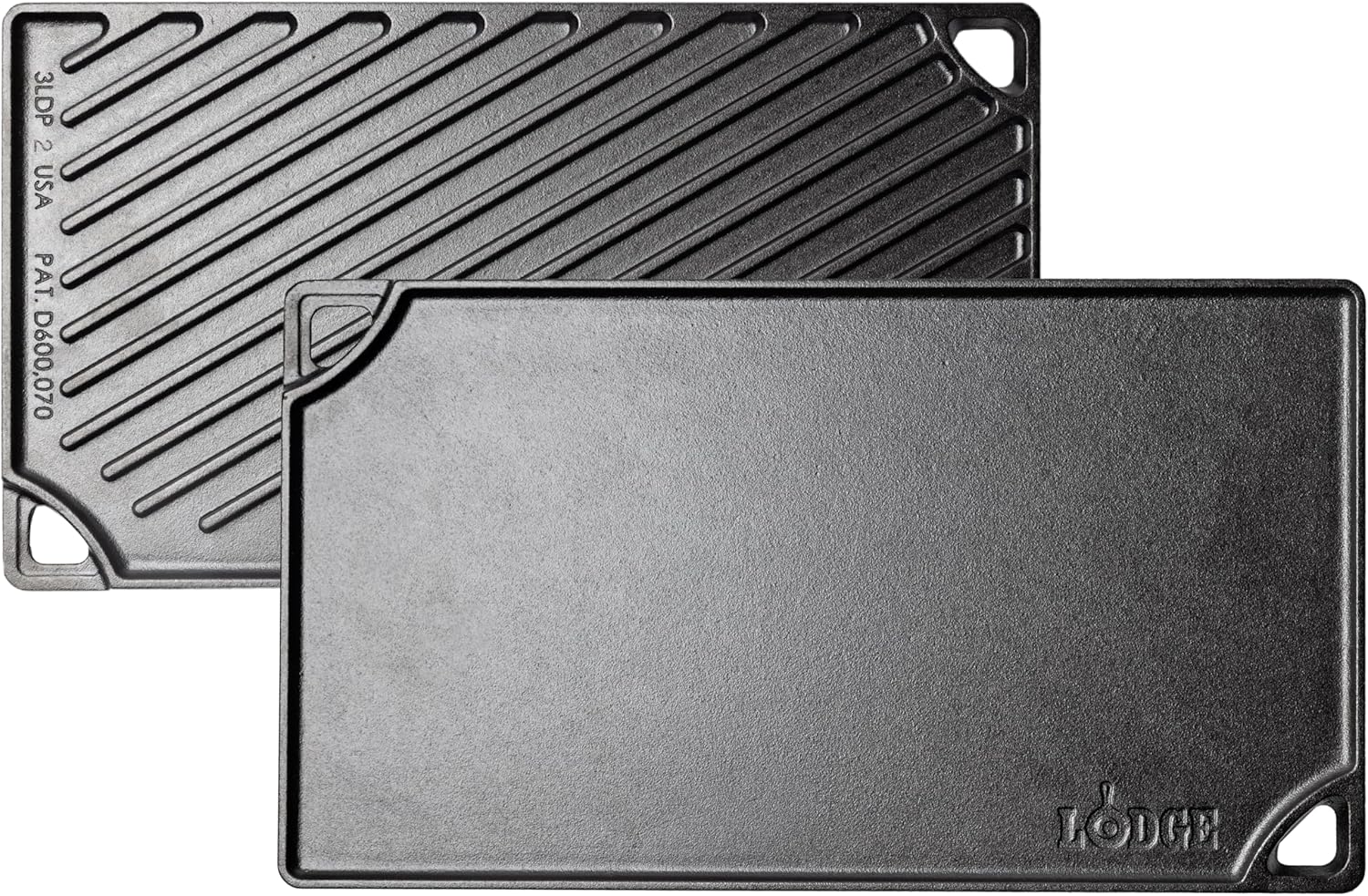
Grill pans with raised ridges take this a step further by elevating meats to create distinct steakhouse sear marks while channeling excess grease away from the food surface. Consider whether you prefer a completely flat griddle for breads or a ribbed grill design for meats when building your kitchen collection.
Storage and Kitchen Space Considerations
Storing cast iron cookware requires careful planning because of its weight and rigidity. Compact round skillets fit easily into standard cabinet shelves or hang from kitchen hooks if an integrated hanging hole is present. Larger rectangular double-burner griddles occupy significant footprint area, requiring dedicated cabinet space or flat storage solutions.
Assess your available kitchen storage before committing to oversized pans that might not fit on standard cabinet shelves or drawers. Ensuring you have a secure, dry place to store your griddle prevents accidental scratches to adjacent cookware and keeps your kitchen counters neatly organized when the heavy iron pan is not actively in use.
Frequently asked questions
Can I use a cast iron griddle skillet on an induction cooktop?
Yes, cast iron is naturally magnetic and works exceptionally well with smooth surface induction cooktops. The iron material responds directly to the magnetic field, providing fast and even heating across the entire cooking surface. When placing the griddle on an induction glass top, lower it gently and avoid sliding it aggressively to prevent scratching the glass cooktop surface. Many cast iron griddles and grill pans explicitly support induction compatibility alongside gas, electric, and outdoor campfire heat sources.
How do I clean and maintain a pre-seasoned cast iron griddle?
Cleaning a pre-seasoned cast iron griddle requires hand washing with warm water rather than placing it in an automated dishwasher. Harsh detergents and soaking can strip the natural vegetable oil seasoning and encourage rust. After washing, dry the pan completely with a towel or place it on a warm burner to evaporate lingering moisture. Rubbing a very thin layer of cooking oil onto the surface while it is still warm helps preserve the seasoned finish for future cooking.
What is the difference between a flat griddle and a ribbed grill pan?
A flat griddle features a smooth, continuous surface that is ideal for cooking items like pancakes, eggs, tortillas, and grilled sandwiches. It allows maximum contact with the food for uniform browning. In contrast, a ribbed grill pan includes raised ridges designed to lift meats and vegetables, creating distinct sear marks while allowing excess grease to drain away into the channels. Your choice depends on whether you primarily cook flatbreads or prefer seared steaks and burgers.
Are cast iron griddles safe to use in the oven and over campfires?
Most cast iron griddles are exceptionally versatile and compatible with ovens, outdoor grills, and open campfires. However, you must check specific product specifications if your griddle includes attachments like silicone handle holders. While bare iron handles withstand very high oven temperatures, silicone grips often carry lower maximum temperature limits around 450 degrees Fahrenheit. Always remove any detachable silicone sleeves before exposing the cookware to high-heat baking or direct campfire flames to prevent material damage.
Why does my cast iron griddle require seasoning?
Seasoning is the process of baking vegetable oil into the porous iron surface, creating a natural, non-toxic cooking barrier. This layer prevents food from sticking directly to the raw metal and protects the iron from moisture and rust during storage and use. Pre-seasoned cast iron cookware arrives ready to use right out of the box, but maintaining this seasoning through regular oiling ensures long-lasting performance, smooth food release, and reliable durability across years of daily kitchen cooking tasks.